A garden full of surprises
It is important that your garden offers reassuring continuity but surprises are often welcome

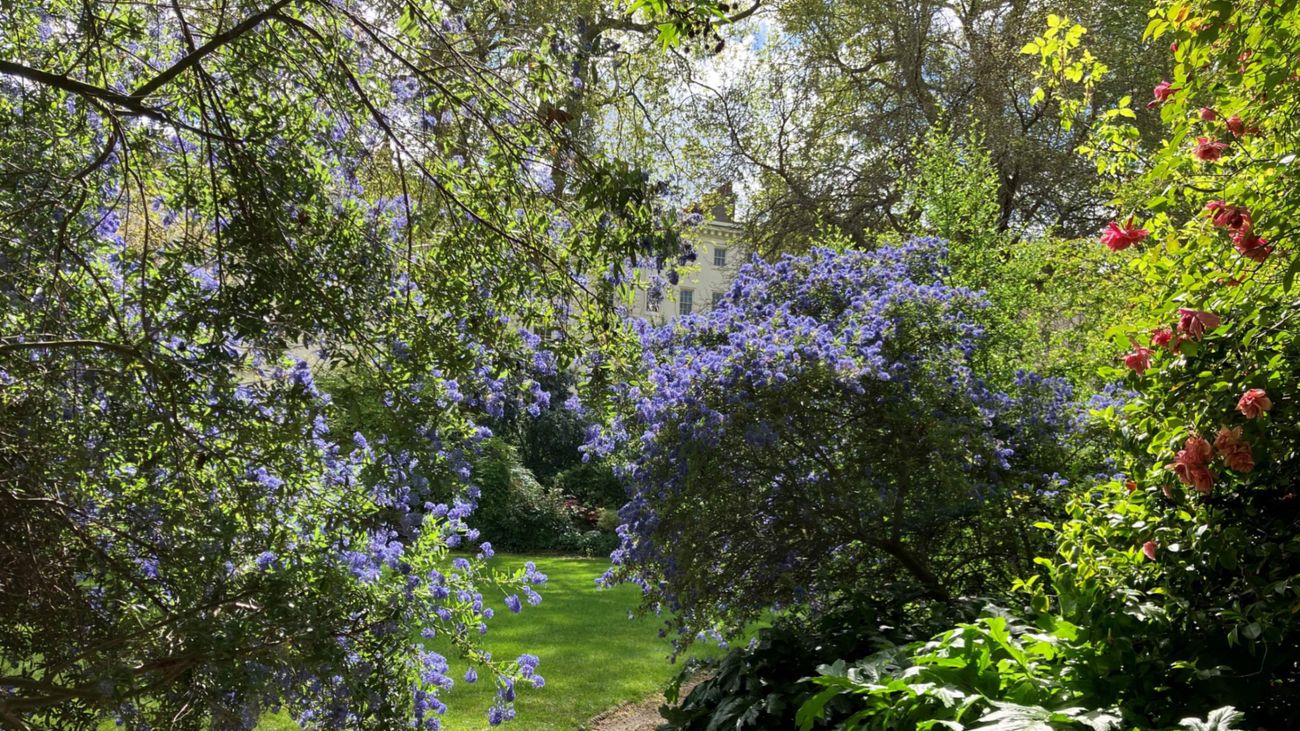
The garden of Eccleston Square, where we have lived for some 20 years, has often reminded me of the opening verse of a poem by A.A. Milne in his classic book of poems for children, When We Were Very Young, which was a staple of my early childhood:
‘Jonathan Jo has a mouth like an O
And a wheelbarrow full of surprises’.
If there is any time of the year when the garden is full of surprises it is April and early-May, because it is the most prolific and dynamic few weeks in the garden’s annual cycle. This is true of many people’s gardens; the combination of lengthening daylight hours, increased and warmer sunlight, and soil temperatures reaching the optimum for growth, together trigger the transformation from winter hibernation to summer riches.
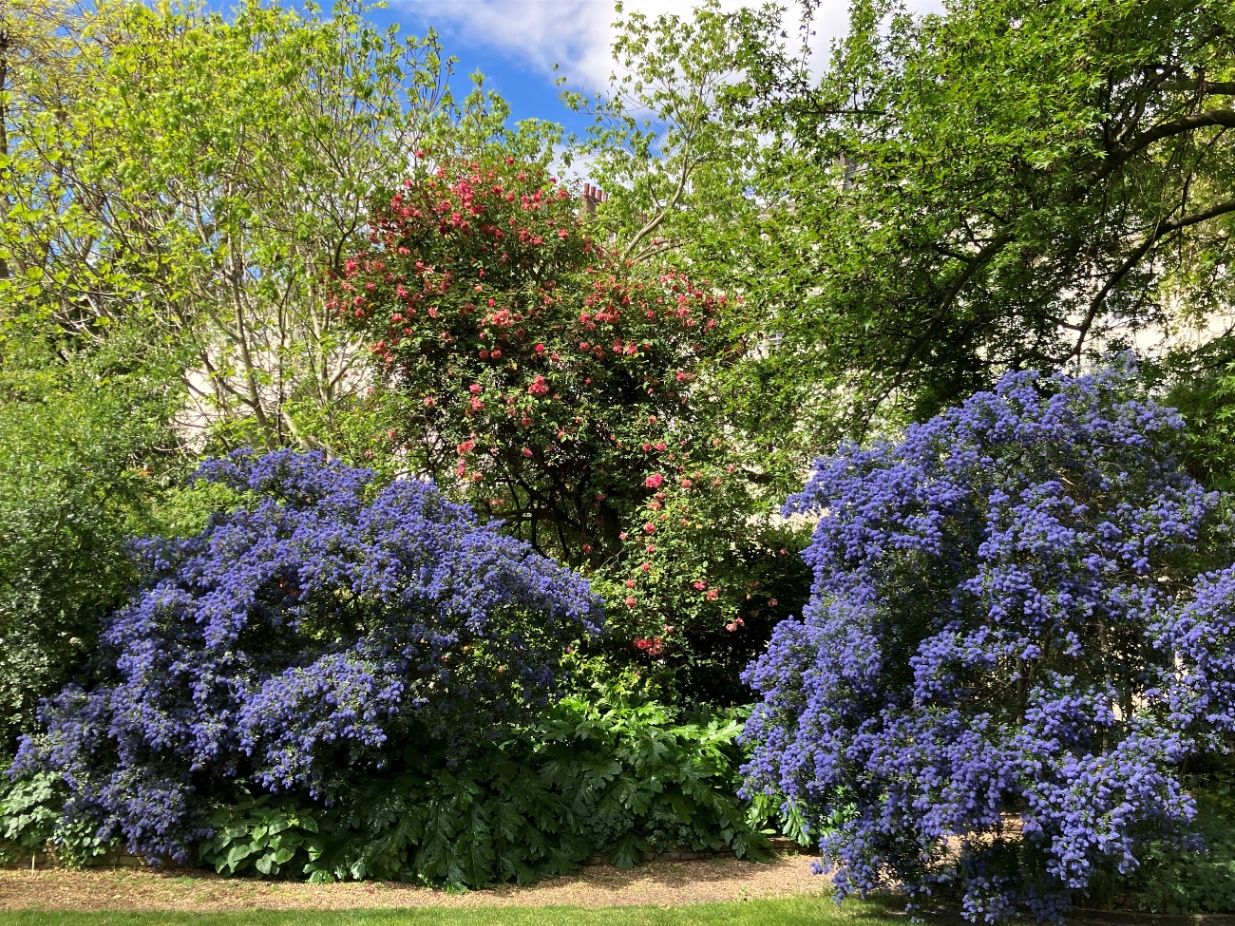
In Eccleston Square I think what makes this time of year especially surprising is the sheer quantity and variety of plants for which we have to thank the peerless Roger Phillips – who I have written about in previous articles – who lived on the square for 40 years and brought in an extraordinary mixture of ornamental trees and shrubs, roses, perennials and bulbs.
Of course, the April display is encouraged and facilitated by two other factors, the protecting framework of London plane trees which were planted shortly after the houses around the square were built in the late-1830s, and the microclimate of central London which means that long periods of low winter temperatures – let alone any frost – are extremely rare. In particular these two factors mean that a good number of plants flower considerably earlier than usual, thereby bringing together combinations of spring and early-summer that would not normally perform together.
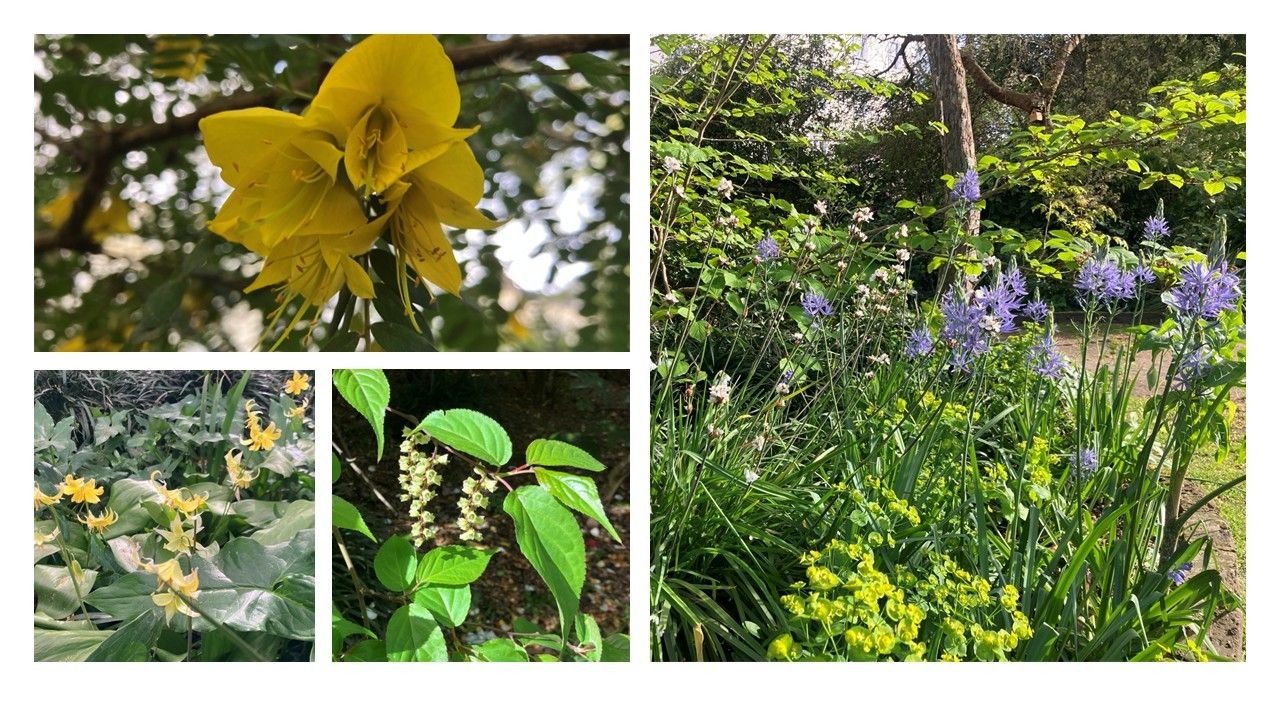
And so however well you think you know the garden, at this time of year there will always be surprises; either unobtrusive plants you have not noticed before such as the dangling racemes of Corylopsis and Stachyurus, a half-hidden clump of erythroniums enjoying the semi-shade beneath a magnolia, or the satisfying combination of tall slender libertias mixing with camassias. Or it could be one of the exotic rarities originating from New Zealand of which Roger was especially fond, such as the ‘Kowhai’ – Sophora microphylla which has grown into a handsome tree and is covered in slightly strange looking bright yellow flowers.
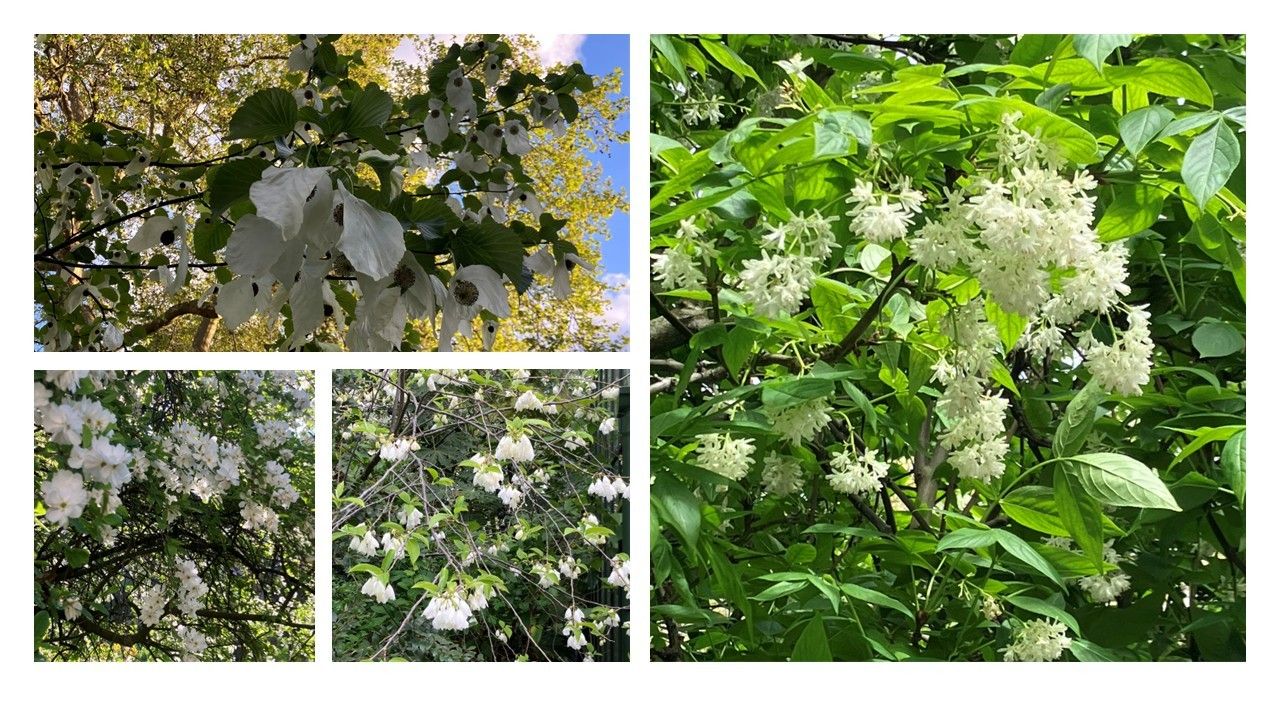
Flowering trees, some rare, some more familiar are an outstanding feature of the garden and come into flower in steady succession through April and into May. On one boundary of the garden Staphylea colchica – one of the unglamorously named Bladder Nut family – dangles its panicles of creamy-white flowers over the passing pavement. Close to the greenhouse is one of the most delicate, Halesia carolina – the ‘Snowdrop Tree’ which has clusters of white bell-like flowers. One of the tallest, which Roger must have planted soon after his arrival, is Davidia involucrata – variously known as the ‘Handkerchief, Dove or Ghost Tree’.
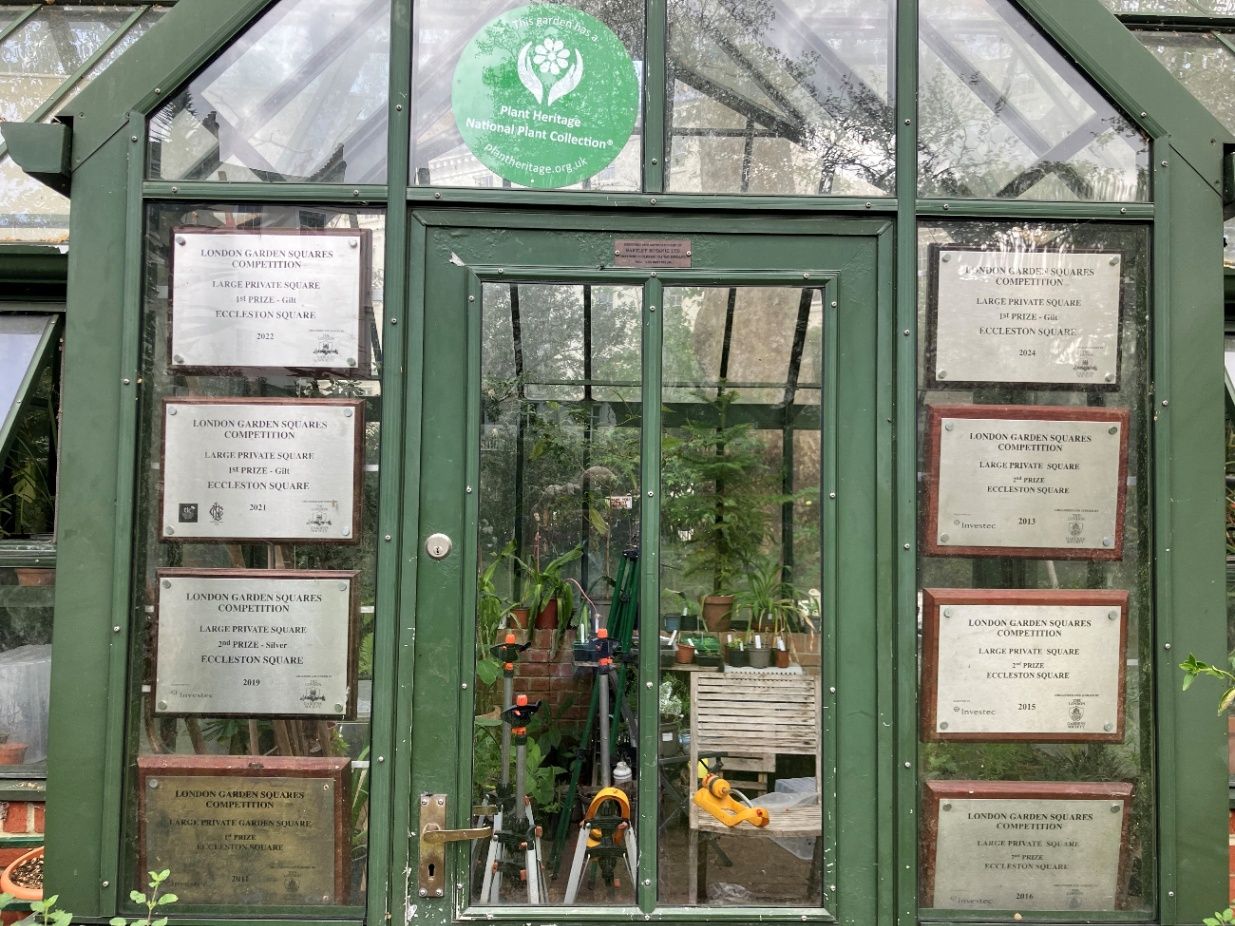
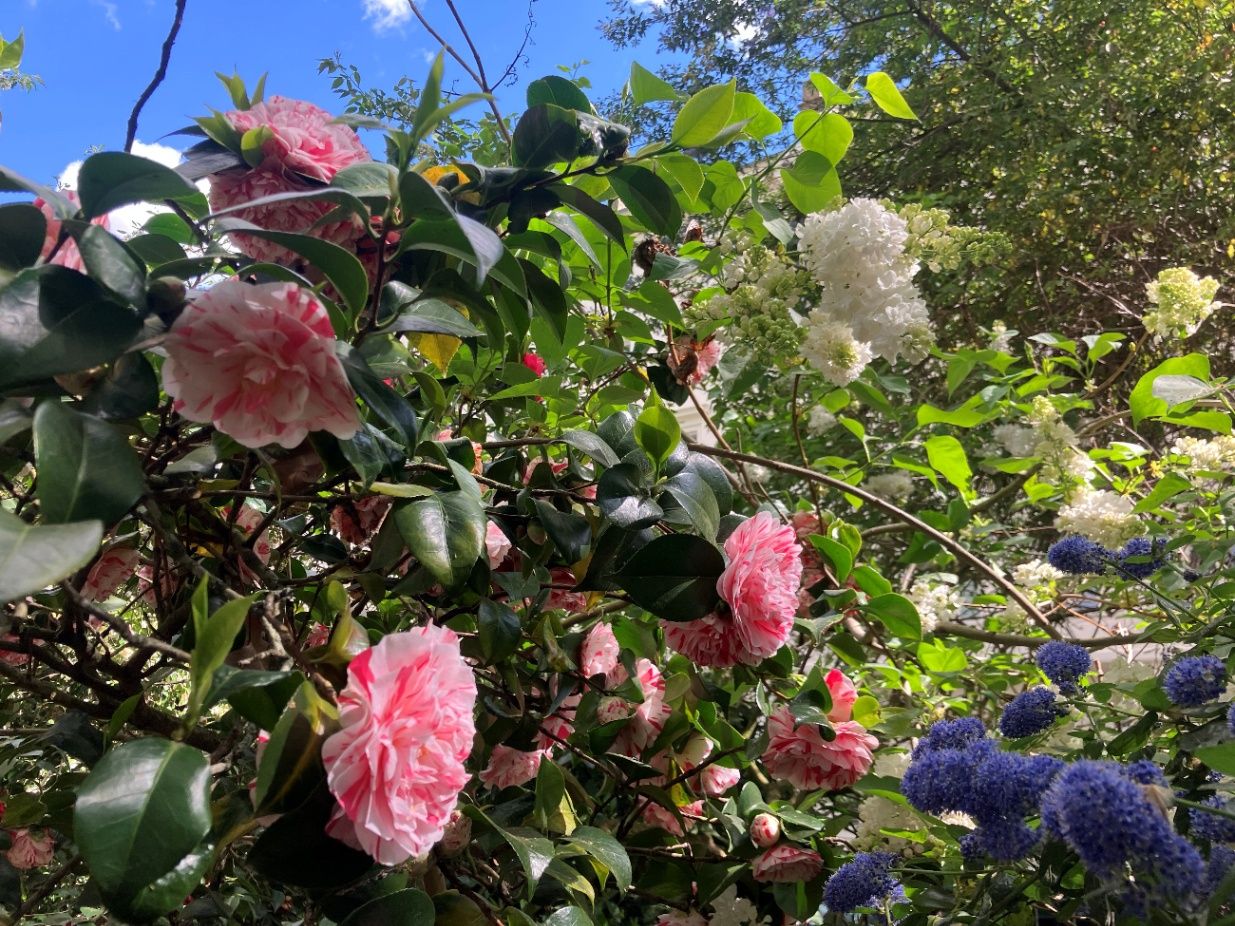
Quite different is the family of ceanothus – Californian Lilacs - of which, perhaps surprisingly, the Eccleston Square garden holds the Plant Heritage National Collection. They are usually classed as shrubs but they clearly thrive in our conditions as virtually all have grown into handsome trees which at this time of year are covered in varying shades of powdery-blue or mauve flowers – punctuated by a select few white-flowered varieties. The presence of the National Collection and various successes in the annual London Garden Squares competition.
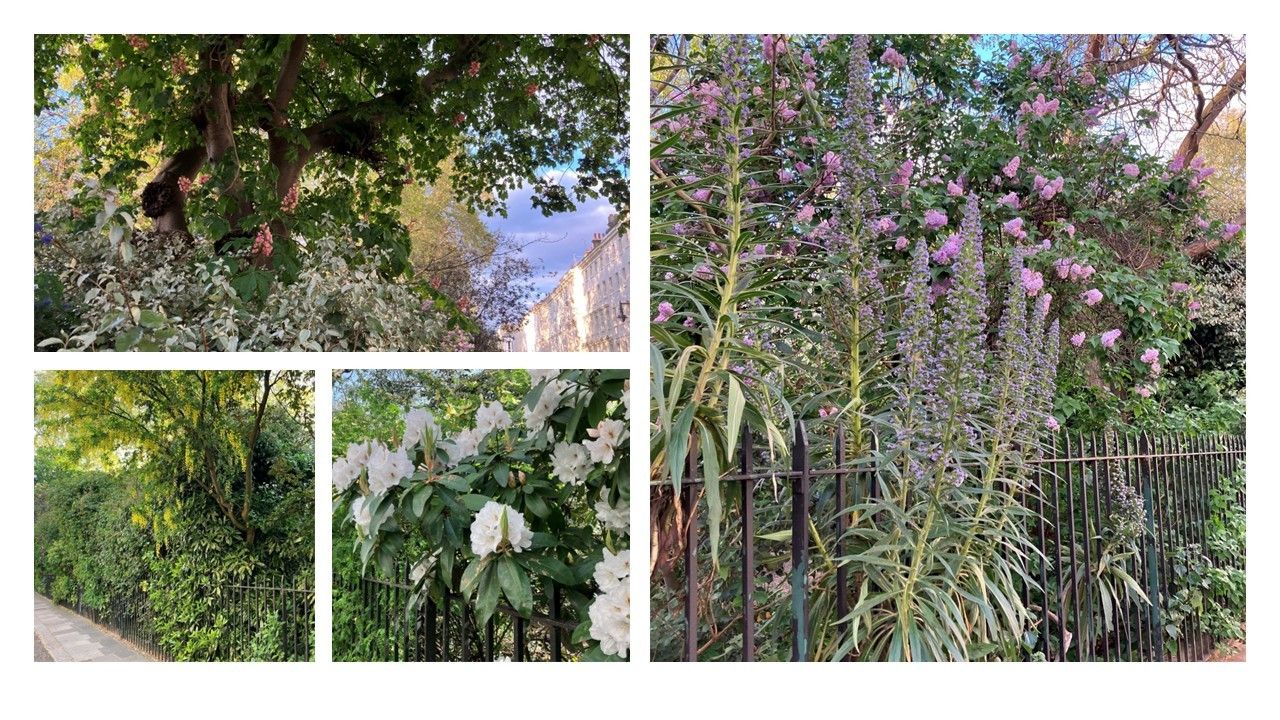
The garden is primarily for the benefit of those who have access, all of us who live around the square and pay an annual subscription. But one of its most engaging characteristics is the way it has been planted with quantities of flowering plants either pushing through or hanging over the surrounding railings for the enjoyment of passers-by. I mentioned the staphylea which is one of these flowering now but perhaps the most delightful is the quantity of lilacs on all sides whose scent pervades the April air to the extent that I have often seen people stop and look around, clearly wondering where the delicious fragrance is coming from.

I am familiar with a good number of London square gardens and I would venture to suggest that few if any offer passers-by such a rich array of spring flowering plants to enjoy as ours does. As well as the lilacs the pavements are overhung in different places by laburnum and Japanese cherries, in one corner by the rose-pink panicles of one of the garden’s most handsome trees, the Red Horse Chestnut Aesculus x carnea, in another corner by the cream-yellow leaves of a real rarity, the Wych Elm Ulmus glabra ‘Lutescens.’ Smaller but equally keen to be admired are plants which have grown through the railings including a handsome white-flowered rhododendron and the single yellow-flowered rose ‘Canary Bird’. Finally for our passing audience, Eccleston Square must be unique in offering them close inspection of echiums whose tall spires of tiny blue bee-friendly flowers are just coming out. A few decades ago echiums would have been considered too tender to grow anywhere in Britain other than south Cornwall and the Scilly Isles; today they have spread through Eccleston Square like a weed!
Roger had certain groups of plants that he loved, none more so than a selection of climbing and rambling roses. Most belong to the group euphemistically described as ‘old’ roses and are varieties of the Tea and China roses which originated from Chinese gardens centuries ago, others are varieties bred in France or England during the 19th century. Whatever their origin, the majority have been in the square garden so long that they have achieved prodigious size and nearly all have begun flowering during the month of April.
I had heard of some well-known favourites such as the ‘Cécile Brünner’ with its small pink noisette flowers or ‘Alister Stella Gray’ with its similarly noisette but white and yellow coloured flowers, and the yellow-flowered ‘Banksian Rose’ which is one of the most spectacular in the garden, completely covering a large wooden frame and the roof of the shed next door.
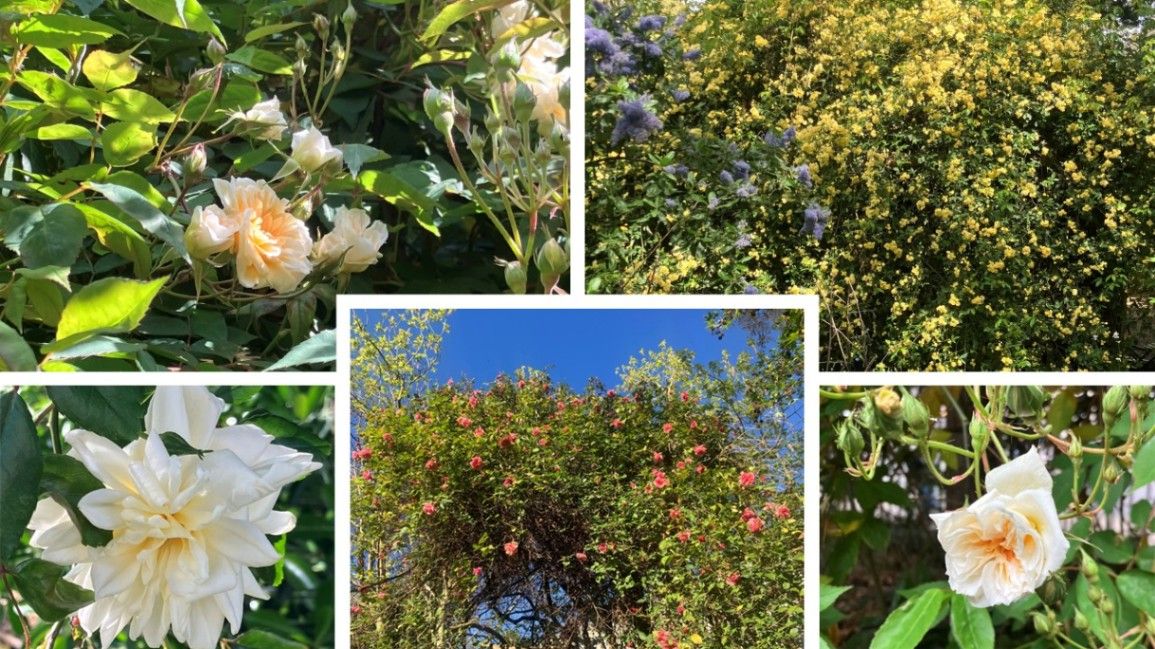
But before my introduction to the Eccleston Square gardenI definitely did not know ‘General Shablakine’ (incidentally named after a Russian Crimean War hero) which has clambered to the top of a tall sugar maple, or the Tea rose ‘Noella Nabonnard’ or the noisette ‘Claire Jacquier’.
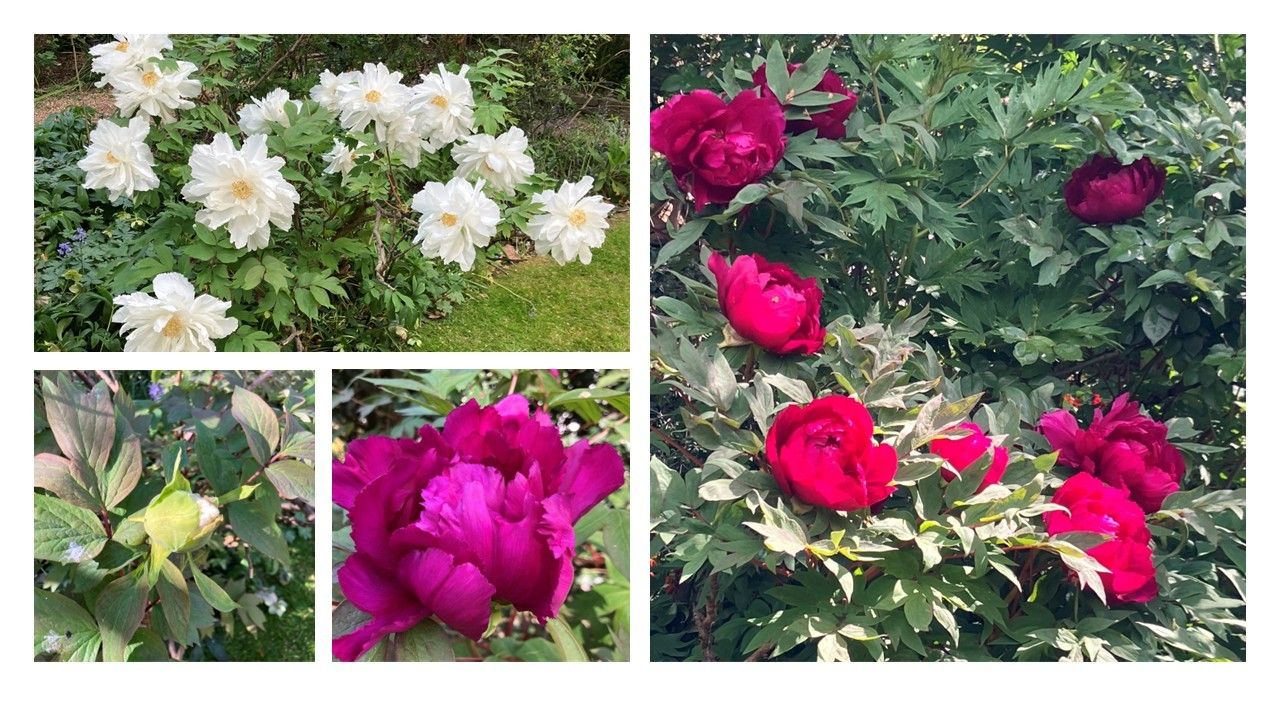
Another favourite group that Roger nurtured were his array of tree peonies which are, if anything, even more show-stopping than the roses. People think that border peonies are voluptuous but they are nothing compared to these treasures that originate from China where they have been revered for centuries. I have always been fascinated by the speed with which the large but tightly closed buds open to a mass of dinner-plate sized flowers in just a few days. Sadly this is matched by their short flowering life; within a few days those petals are carpeting the ground beneath and they are just a vivid memory until next year.
So much to enjoy, but for us no longer. This article is something of a farewell because on 20th April we are leaving Eccleston Square and moving to south Gloucestershire. For 20 years the square garden has been a constant source of education, enjoyment and respite, the last most especially during the long months of the Covid lockdowns. Our small flat is on the second floor of our building with no balcony, a combination that moved my father-in-law to say at one instance during lockdown; ‘‘every time we listen to a news bulletin about poor unfortunates cooped high up in one-bedroom flats we think of you!’ Our daily access to the square garden just across the street became a live-saver and something I will always remember, as I will the joy and privilege of living in and having access to one of London’s real horticultural gems.
That gem is made more widely available once a year, in early-May when the square garden is open in aid of the National Garden Scheme. The three acres can happily accommodate the 300 or so visitors who always attend. This year the open day is this coming Sunday, 10th May 2pm-5pm. At £5 and free for children it is a bargain with delicious tea and the chance to buy plants on offer as well. If you have never been before you will come away amazed, and with a very full notebook.