A Pilgrimage to the Old Wooden Cathedral
This piece reflects on finding inspiration in nature, people, and place - spring walks, bluebell woods, and memories that shaped my Chelsea 2012 garden. Inspired by poet John Clare, it’s a reminder to slow down and let the landscape guide creativity.


Last month I wrote about inspiration and where I have drawn it from, which was very much focused on life and music. On my tour I have also been talking about people and the idea of place; not only in the sense of creating a garden with place at its heart, but also going into the landscape sucking up the inspiration and bringing that home to your own back yard.
Rock and Roll!
April seems just the month to talk about it as everything bursts into life. It is the month of rock and roll, the garden is up and dancing, and for me nothing encapsulates that more than a British woodland. So last week, I made what seems to be my yearly pilgrimage to one of our local beech and bluebell woodlands, to just take in the annual spectacle and as I get older, it seems to get better!
That walk got me thinking about a garden I created at Chelsea back in 2012. Based on six walks, one of which takes you through the very woodland above, fresh beech leaves sitting above carpets of native English bluebells. That early beech growth should be a Farrow and Ball colour! Add some spring light to the mix and you have goosebump material.
One of those walks I was accompanied by Mrs Frost and my youngest daughter. It was a Sunday morning, we were about 50 metres into the woods, all you could hear was happy birdsong when all of a sudden there was a loud crack, just like the snap of a branch that just seemed to echo through the wood. Then everything was still. This may sound a little strange but you could feel the wood. As we looked up to carry on our walk, a doe deer had just frozen with her head just cocked at about 30 degrees. ‘Dad look’ was the whisper, followed by ‘it's beautiful, it's beautiful’. Another breath and the doe just skipped away; it was magical. That moment became a focal point at the end of an avenue of Acer campestre at Chelsea 2012 and since then a cherished memory.

A bit about Clare...
Those six mentioned walks all started from John Clare’s cottage. Clare, known as the peasant poet, was born in 1793, in Helpston, near Peterborough. The son of a labourer, his parents were near illiterate. He would walk a couple of miles to school in the morning to a nearby village. His education ended when he was about 12 years old, after which he worked as a labourer on the land, but that very land just seemed to suck him in and drive a need to put pen to paper.
His eye was incredible; how he described the natural world was just fascinating. It still blows my mind as to why he needed to note his surroundings. This man lived through a huge period of change in towns and in the countryside. The enclosure laws which saw common land taken, driven by the greedy landowners and farmers, (I could be more descriptive but I don't want to offend!)
The agricultural revolution saw a lot of destruction: trees and hedges uprooted, fields ploughed up and land drained. All of this distressed Clare deeply. His poems, journals and letters talk about love, life, the countryside, social change, poverty, corruption. For me, he was an early green campaigner, although he had great early success with his first published poems when he was viewed as a new and original poet. At this point he was outselling John Keats.
Sadly Clare soon fell from fashion, maybe driven by class? After falling into literary obscurity, he had to find ways to supplement his income which saw him work back in the fields. However, poverty and drink took their toll on his health. And in 1837, he was placed in a private asylum in Epping Forest (a place we would go to as kids!). He remained there for four years. Homesick, he got up one day, escaped and walked home which was 80 miles away! He only spent a few months before eventually being admitted to Northampton General Lunatic Asylum where he spent the final 23 years of his life. During which time I think he wrote some of his best poetry. Sadly he died in 1864, not really known.
But over the 20th Century, his reputation was well and truly reinstated, and now regarded as one of the most important poets of the natural world and I love him. You can imagine, this working class hero just sucked me in, but it was those walks that inspired me to create! The cottage sits in a wonderful diverse piece of landscape.

Now come with me...
You’re just leaving Clare’s cottage through the front door, walking east, you are more or less out onto fenland. The first thing that grabs you are the huge skies which can change on a whim. The drained land has created endless runs of what look like oversized rills, that can be mirror-like and make movies of those changing skies; they just seem to run on forever.
Then back at the cottage, if you were to turn north from the house you were on the way to Stamford. Real old England, this limestone town carries huge history and is stacked out with architectural detail. The town is of the ground and the stone can provide a real sense of place to any local garden. Clare writes of time in the town, which so much of you can still see and enjoy. I love that connection to the past. On top of that it's the place I met Mrs Frost.
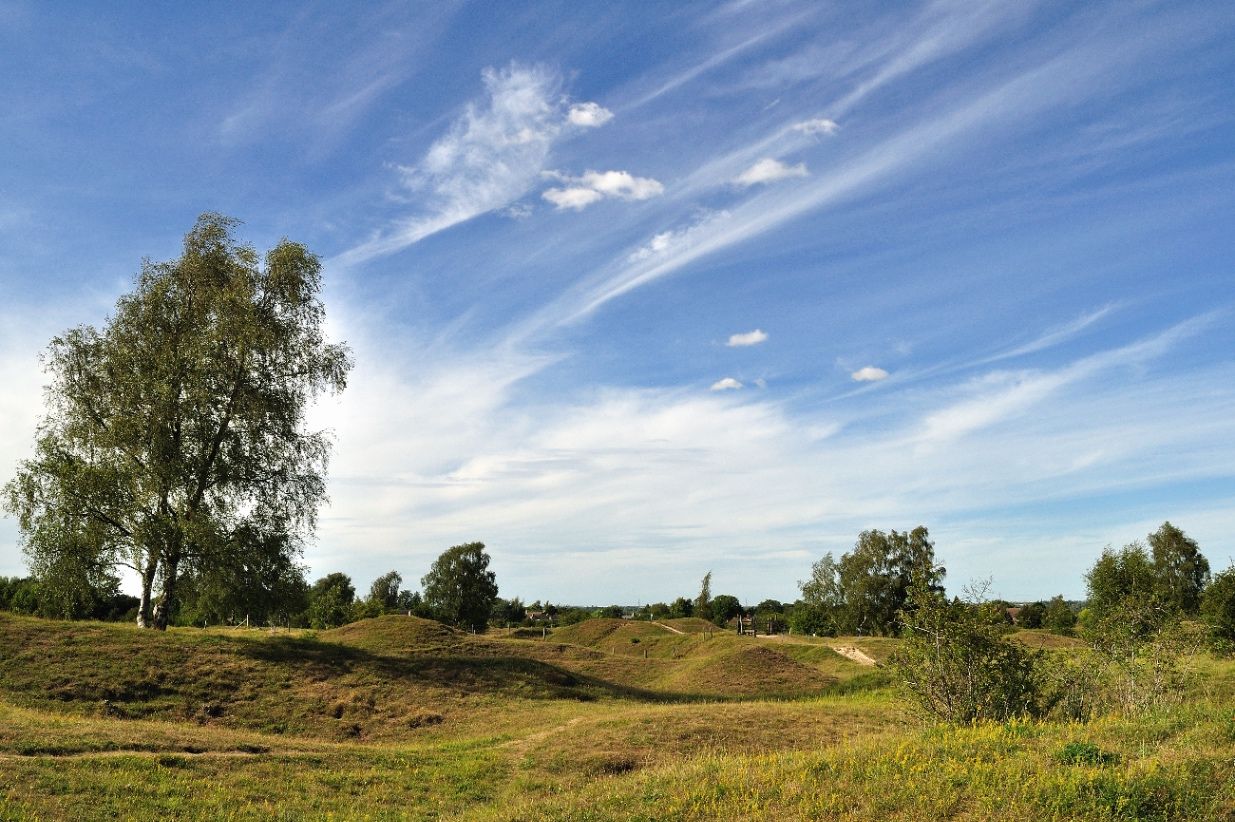
You leave Clare’s back door and you walk the land the Romans worked. During these walks you travel through a mediaeval quarry; Barnack Hills and Holes is one of Britain’s most important wildlife sites. It covers an area of about 50 acres, its grassy slopes are home to a mass of wild flowers, butterflies and more. You may see marbled whites, chalk hill blues and green hairstreaks, to mention just a few. That rich flora supports wildlife, a number of which are becoming nationally scarce. My favourite resident there is the glow-worm, which can be viewed in large numbers on warm summer nights. Flowers include naturalised Pulsatilla, known as the pasqueflower, added to that you have native orchids that pull people from far and wide. This meadow arrived because of quarrying for limestone stone by the Romans over 1500 years ago. It really is a unique piece of landscape. Anyway let's get back to the house…
Finally you’re off south to those very woods, that for me have a cathedral-like quality. Early spring light, the colour of the beech foliage above bluebells is breathtaking and takes me back to that shared moment with my now 20-year-old daughter. That yearly call to fleeting magic is good for the soul: our past can help influence our little spaces. People and landscapes are full of inspiration: sometimes, we just need to slow down and engage.
Spring is here, pub gardens are starting to fill.
P.S. if you are off to the local woods, conservation is the key. If bluebells are damaged it can take years for the plants to recover, so please keep to the paths.
I will leave you with this little beauty ...
All Nature Has A Feeling by John Clare
All nature has a feeling: woods, fields, brooks
Are life eternal; and in silence they
Speak happiness beyond the reach of books;
There's nothing mortal in them; their decay
Is the green life of change; to pass away
And come again in blooms revivified.
Its birth was heaven, eternal is its stay,
And with the sun and moon shall still abide
Beneath their day and night and heaven wide.