Amaryllis for Valentines?
February at Mutton Hill: My latest monthly musing detailing yet another of my gardening rabbit holes.


February at Mutton Hill has continued to fulfil this winter's aspiration to mimic all things Arctic. At this point, if I looked outside and saw a troupe of polar bears marching across the terraces, I would not be surprised. Truth be told however, it is not so much that the winter is unusually cold, but more that I have gone soft and become beguiled by the milder conditions of recent winters. What we have been experiencing this year, is a good old-fashioned winter of the kind that Vermont regularly experienced before the ameliorating effects of climate change. And indeed, even those old-fashioned winters were a good sight warmer than what I regularly experienced growing up on the Dakota prairie.
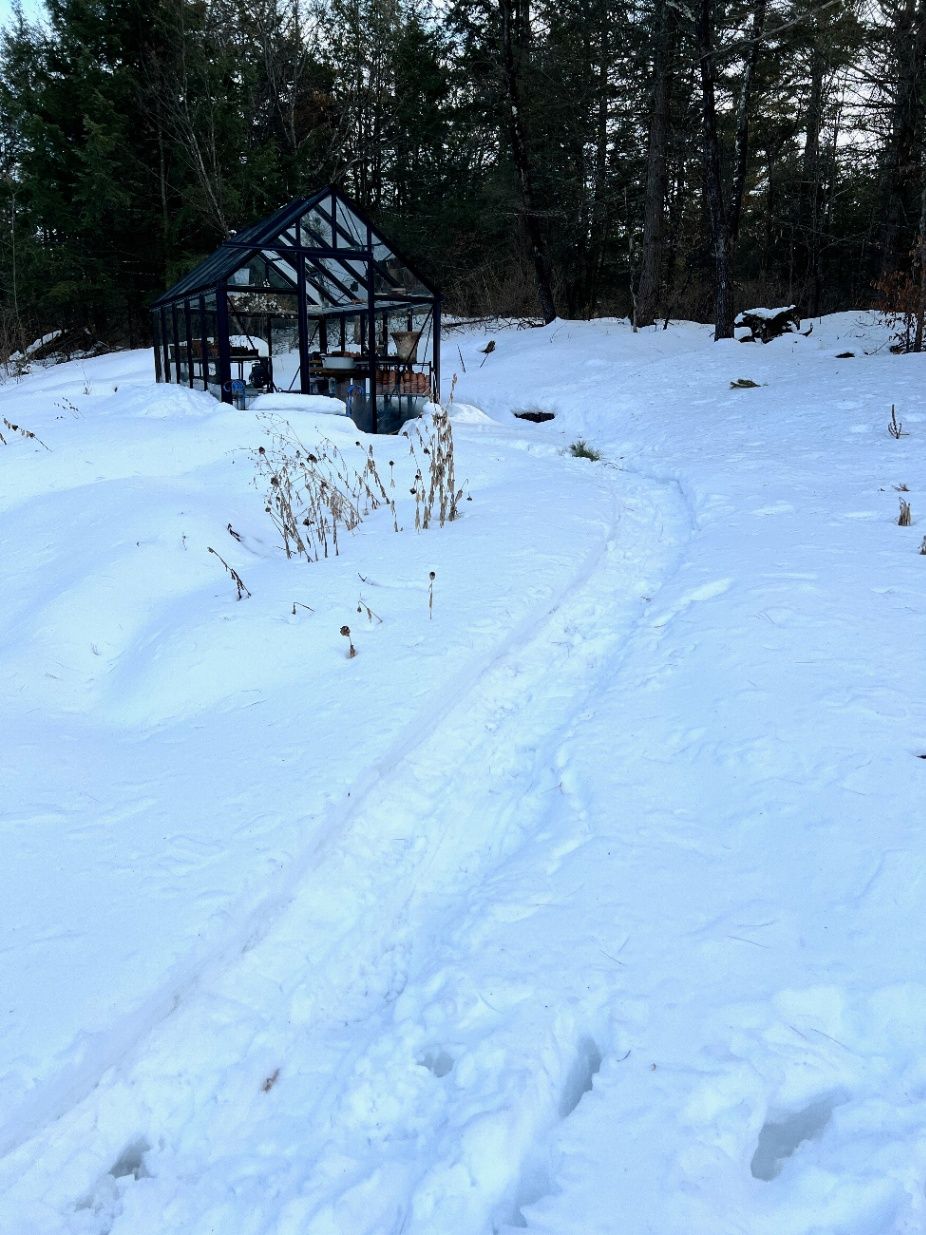
In terms of the gardens, those warmer beguiling winters have led me to push the envelope when it comes to plant hardiness and I have quite a number of zone 6 plants that have thrived the past several years, but I am not sure how they will fare this winter. Realistically, despite the current cold, I won't have to wait that much longer to find out. While it is still tundra-like outside, it won't be long before things finally begin to thaw, and then, the verdict will be out. Fingers crossed that my microclimates help to mitigate disaster.

Currently, however, these tender plants and everything else are still sleeping under a thick blanket of snow and ice. This said blanket is so deep that the gardens are impassable without snowshoes or skis. In the greenhouse, there are just a handful of trays full of vernalising seeds, and in the outbuildings my most tender plants are hibernating in their minimally heated spaces. In terms of gardening, outside there is very little going on, but inside the Amaryllis have been popping.

To clarify, the Amaryllis that I am referring to are the plants commonly marketed as Christmas flowers, and which I believe are more accurately referred to as Hippeastrum. Why am I growing Christmas flowers in February? That is a good question, especially since I spent most of my life being completely uninterested in them. This was due to a couple of reasons. The first, is that I prefer my Christmas decor to centre around evergreens, holly, winterberry, and other plants that naturally occur in cold climates. Tropical plants at the holidays aren't really my thing. Second, and most importantly, I don't particularly like one-and-done plants. And this is what I had been led to believe that these big blowsy flowers were. I had always been told that once they were done blooming the bulb was depleted and that was that. Then, one year, I ran across a post that described how to over-summer your Amaryllis bulbs to get them to bloom the following year. I was mildly intrigued. The next January, I popped into the garden centre to pick up some seed starter and I saw that all of their remaining Amaryllis bulbs were seventy-five percent off. I took notice, as they were still dormant which meant that they had yet to bloom and they were no longer cost prohibitive at such a steep discount. My mild intrigue, combined with a good bargain, and the fact that Christmas was over and they had yet to bloom meant that suddenly, flowers that I had no interest in in December seemed much more tantalising in the bleak flowerless depths of winter. I decided to buy a couple and try my hand at over-summering them after they flowered. When they bloomed that February, I was delighted.
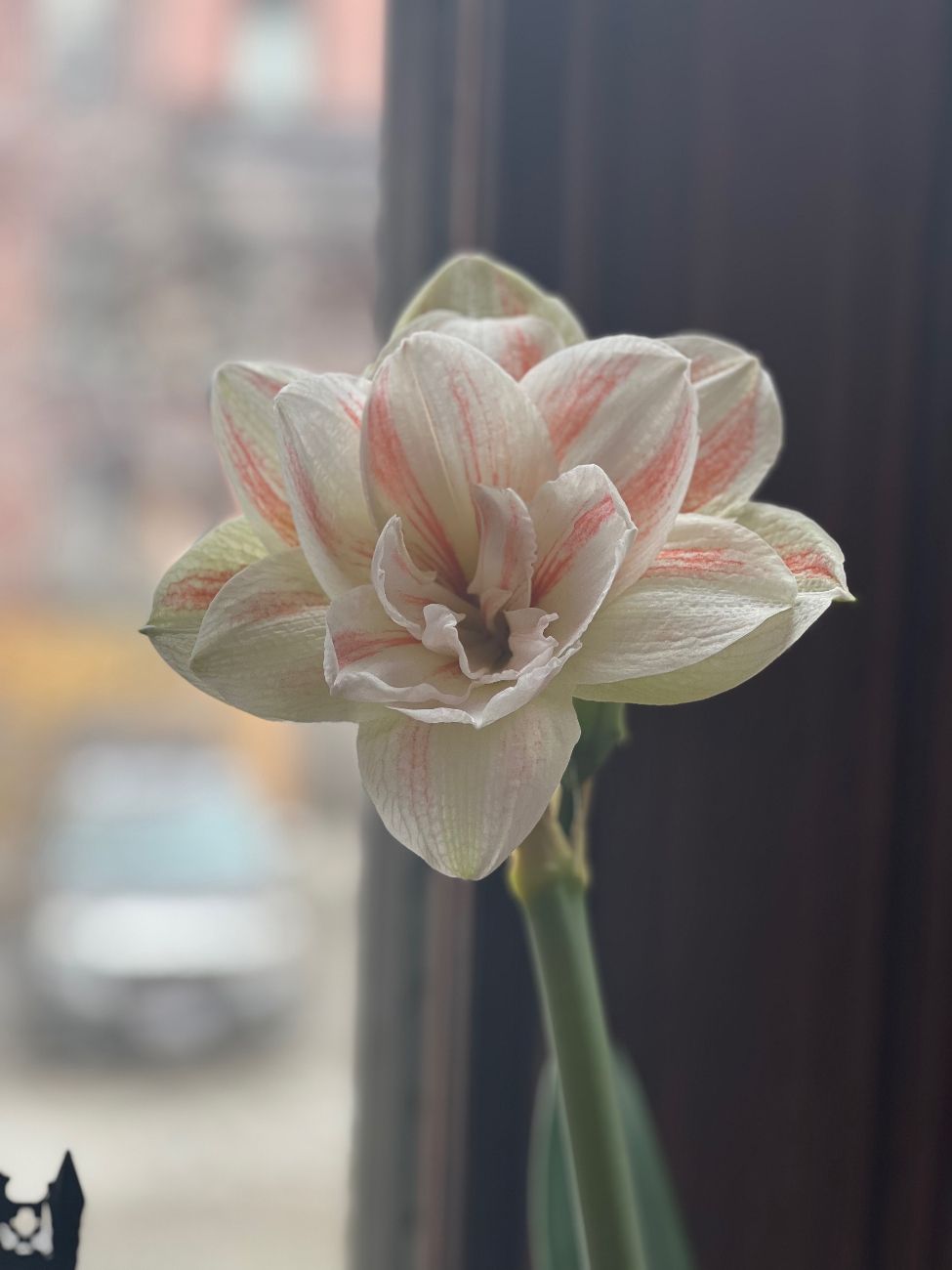
Rather than being lost in a surfeit of holiday decor, they were the stars of the show. In fact, they were the only performers and were most welcome given the frigid temperatures outside. Once they were done flowering, I left them in front of a bright window and watered them sporadically until summer. That summer, I nestled their pots amidst my potted flowers on the patio where they basked in the sun until the fall. Before the frosts hit, I tucked them into our minimally heated outbuilding with my other tender plants and then ignored them until after Christmas. All seemed good until I finally went out to fetch them in the beginning of January, at which point, I was pretty sure that I had killed them. They hadn't been watered since October and they and their pots were quite dry and desiccated.
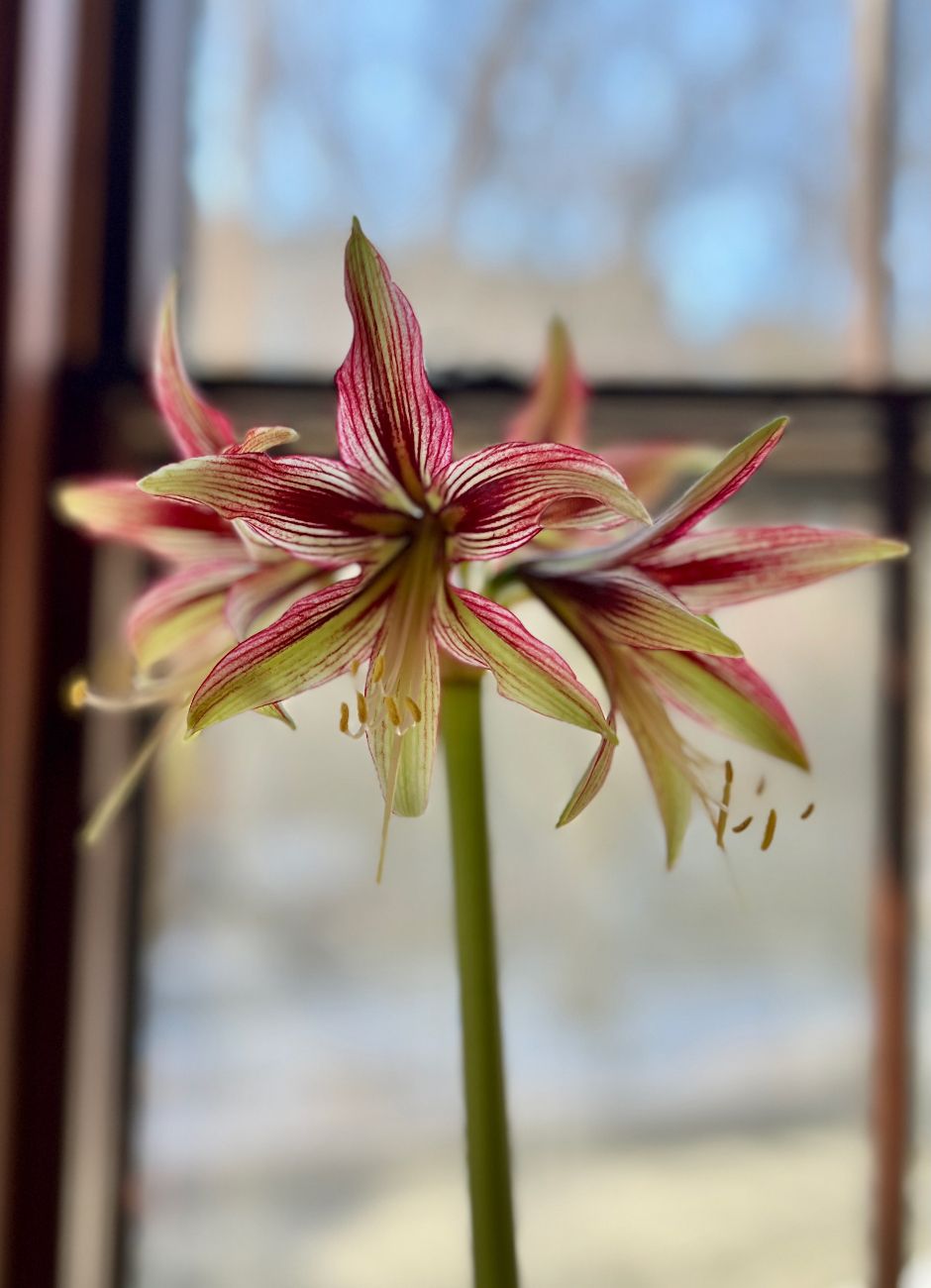
I pressed on however, as there didn't seem to be much to lose, and I cut off their dead foliage, repotted them, gave them a bit of a drink, and put them in front of a sunny window. A week or two later, I could see the tips of new leaves and the beginning of a bud emerging from each bulb. Given how dead they had looked, it almost seemed like a miracle. By the middle of February, I was enjoying the blossoms.

At this point, to be honest, I was mystified that so many people do throw out their bulbs after they bloom every year. Keeping them over the summer and getting them to bloom again was so easy, it almost felt like neglect. And far from being one-and-done plants, there are reports of bulbs living for 50 - 75 years and being passed on as family heirlooms! Needless to say, I was hooked on the idea of February Amaryllis and on Amaryllis in general. That winter, as soon as they were discounted, I bought several more varieties, and again the following year, etc.. I have also discovered that there are so many interesting varieties beyond what I think of as the generic red Christmas Amaryllis. Probably too many interesting varieties as my collection has grown exponentially.
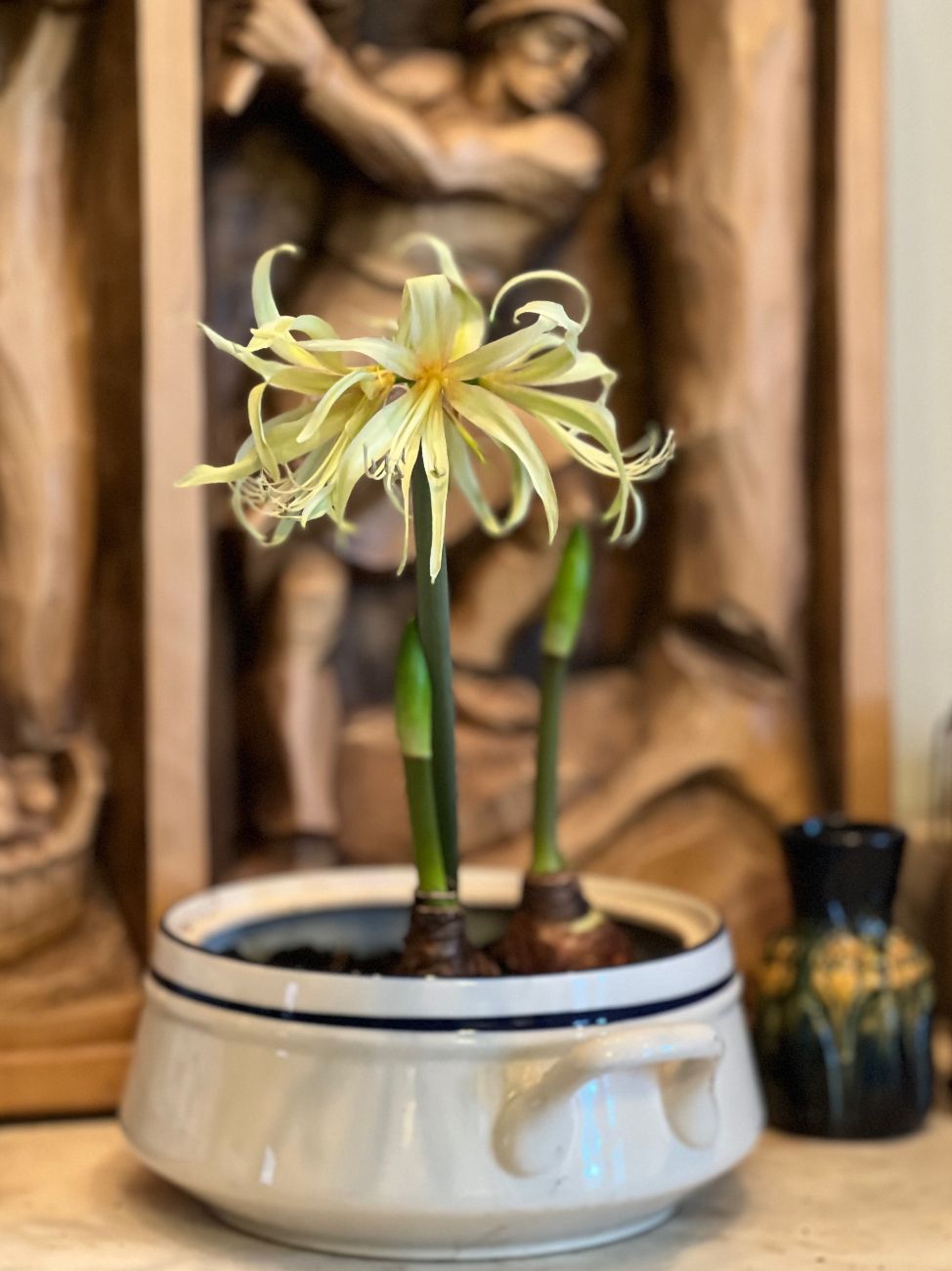
After a couple of years of experimenting with timing around when I repot them and force them to bloom, I have settled into the pattern of bringing them into my outbuilding to dry out and go dormant around the end of August. Then, towards the end of November, right around Thanksgiving time in the U.S., I trim them up, repot them, give them a small drink of water and pop them under bright lights in our minimally heated outbuilding, which, at that time of the year is kept a little above 50F. Over the next 4-6 weeks, new leaves and bud tips will start to emerge, but the cool temps seem to keep them growing very slowly.
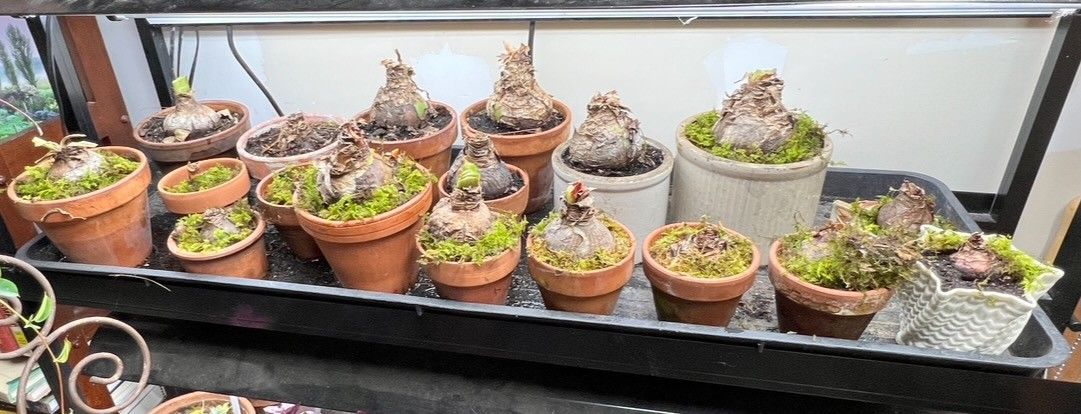
Beginning in January, I start bringing them indoors in succession. Once they warm up a bit more, their growth takes off, and they keep me steadily in flowers from the end of January to the beginning of March and sometimes longer. This system works for me, but honestly, even the minimal fuss that I provide likely isn't all that necessary. One year, I missed two pots tucked in amidst some chrysanthemums in my outbuilding and only noticed them when I started to take cuttings of my mums in March. I didn't even repot them at that point. I just cut off their dead leaves, watered them a bit, and brought them into the house to see if they would survive. I had flowers by Easter. For a plant that so many people throw away, they do seem to be as tough as old boots.
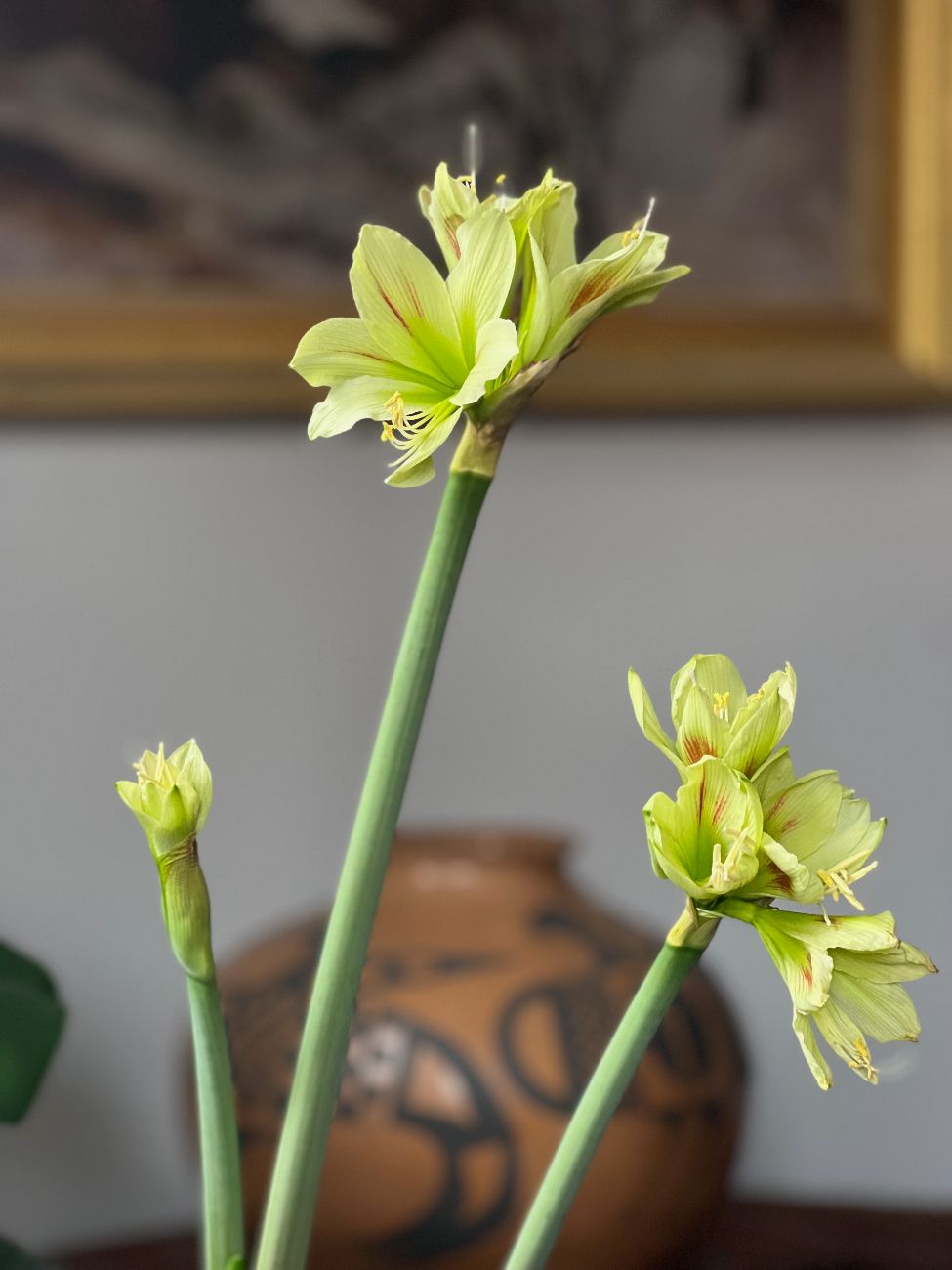
So, if you buy or are gifted an Amaryllis for the holidays, please don't toss it when it is done flowering, as it can give you joy for many years to come. And, if like me, you really don't care for them amidst the holiday holly and ivy, perhaps we can start a new trend of Valentine's Amaryllis? They certainly have to be better than the generic red roses that are often shipped in from overseas and certainly do fit the one-and-done category. Maybe we can develop a new market and make it hip(peastrum) to gift Amaryllis to one's Valentine?