Ancient Rituals in Modern Gardens: The Magic of Wassailing
It is wassailing time in the winter garden and orchard, so mull your cider and pay your respects to the apples in this beautiful echo from times past


The days are still short, the nights long and cold, the sky pewter and the garden entirely uninviting. The old apple tree that looms over my neighbour’s back garden and that I can see from my desk inside in the warm is as deeply asleep as it will ever be, all of the leaves fallen now except the ones at the very tips, which cling on as if to protest that they came along last and would like their allotted time, please. Its bark is grey and its branches knotted like an Arthur Rackham illustration. If he had a face, his eyes would be closed.
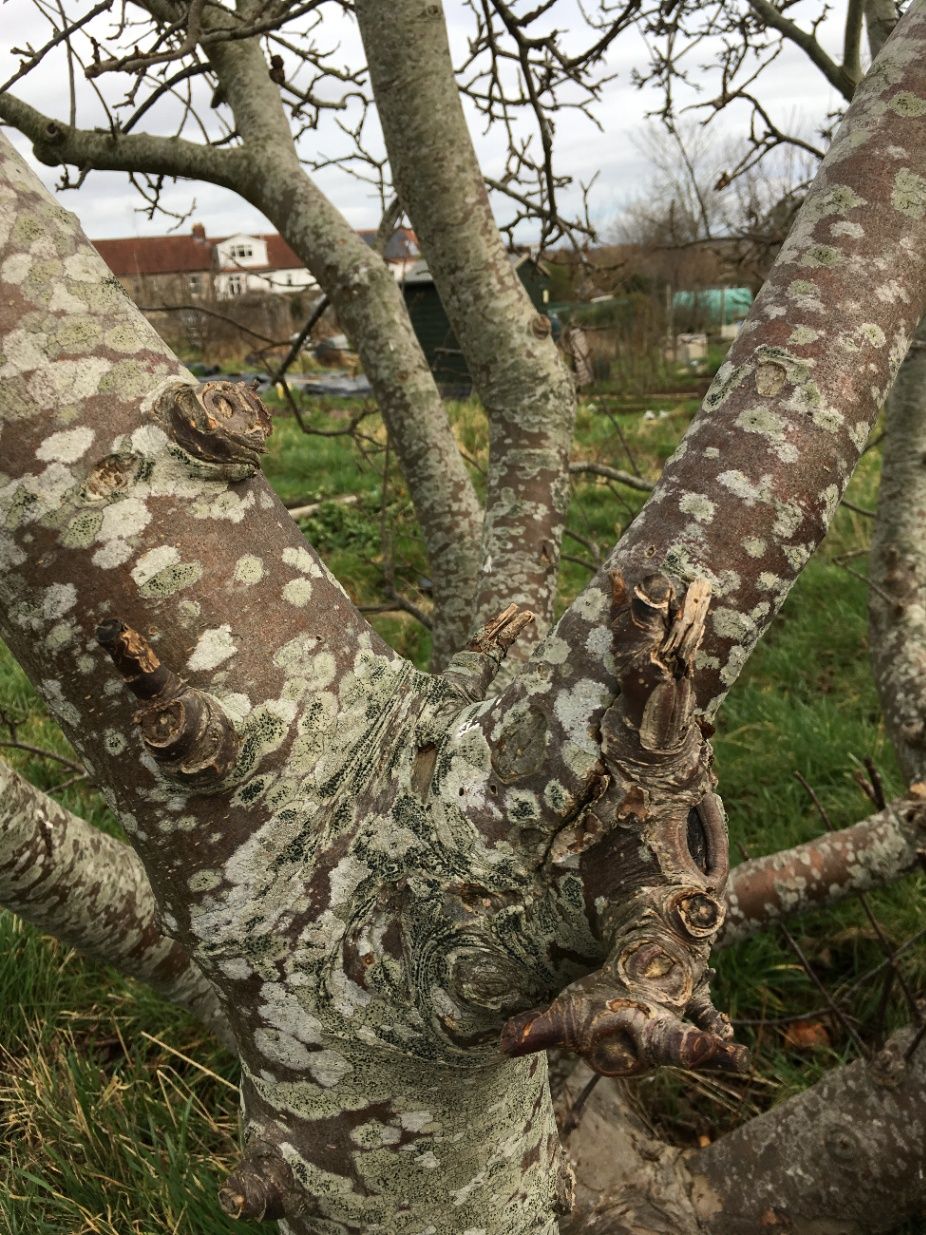
But it is time to wake him, because it is wassail time. Wassailing is an ancient tradition particularly prevalent in the south west, where I live, which is of course cider country and so also orchard country. It involves banging pots and pans, rowdy singing, tying ribbons to the branches and pouring hot spiced cider onto the roots of the trees in the cold winter orchard. It wakes the trees, banishes ill spirits and ensures a good harvest in the year ahead.
An orchard revival
This is one of many old customs that almost died out but that has been revived in recent years, and the combination of older orchards and a proliferation of newer community orchards - plus a certain Bristolian leaning towards such things - means that here in Bristol around mid-January you are never more than a few hundred metres from a gang of Morris dancers and the scent of mulled cider.
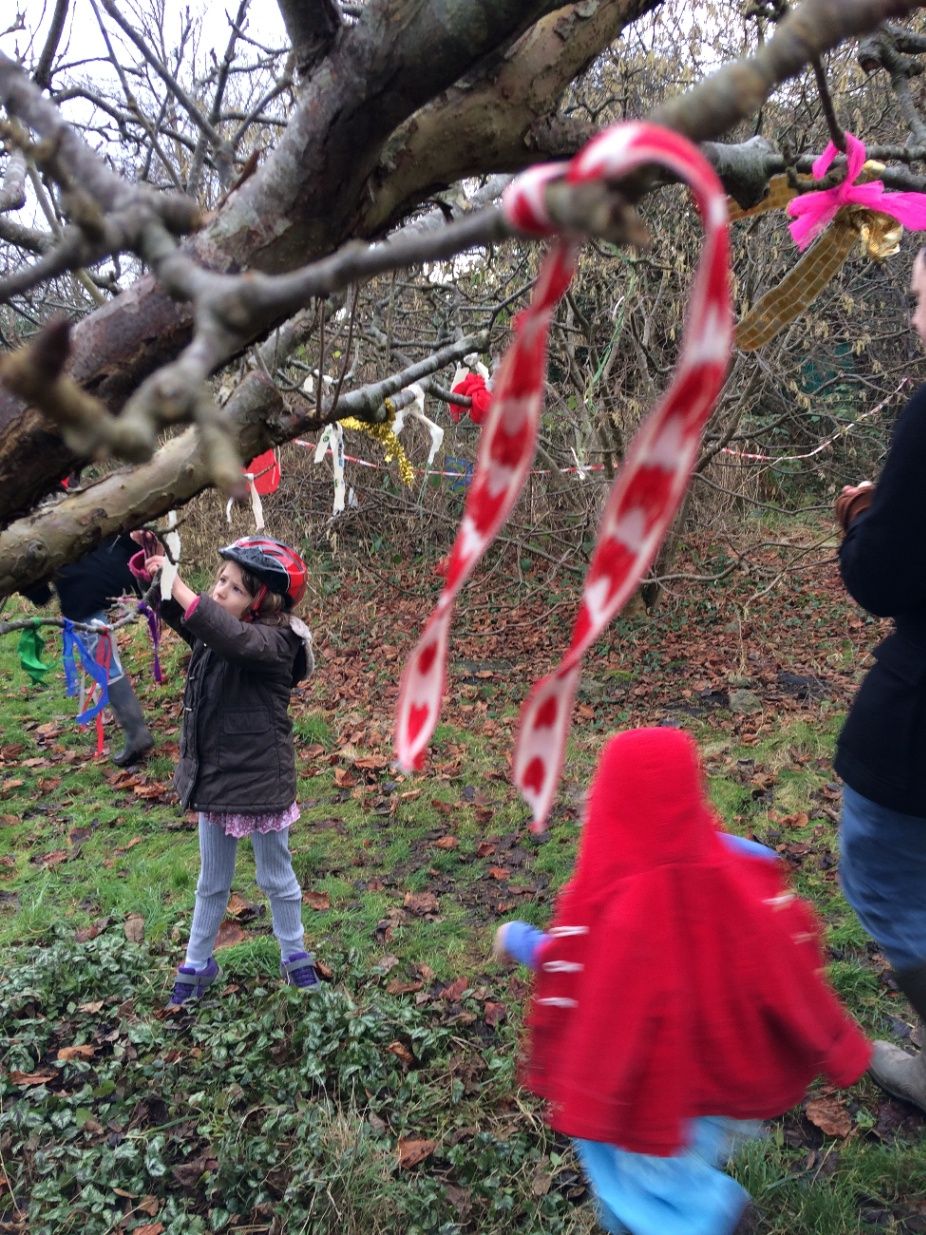
The timing might seem odd at first glance. We are as far in time as we can be from any kind of apple tree action, any pretty flowering or fruitful abundance. But perhaps this is the point. This is the moment in the year when the tree gives us nothing, and it is time for us to give something back.
I think us gardeners understand this reciprocity instinctively, though we wouldn’t think of it in those terms. We do it in very practical ways, with our compost, for instance: we take the offcuts and the prunings and the things our little pieces of land have made, and we turn them into something rich and nourishing, then hand it back. We do it with our time and attention too: the best fertiliser is the gardener’s shadow, and all that. All very logical and sensible and then - every now and then - we step outside and tip warm cider on our tree roots.
There is something particularly poetic about that cider. Like the compost we are not just giving the tree back what it gave us: we have gathered up the tree’s gifts and then used our minds and hands and skills to turn them into something more, and only then have we offered it back to the tree, like a child coming home from school with a painting: ‘Look! Look what I did.’
The art of saying thank you
Robin Wall-Kimmerer in her paean to the natural word, Braiding Sweetgrass, writes of a ritual her father carried out every morning after making the morning coffee. ‘He pours the coffee out on the ground in a thick brown stream. The sunlight catches the flow, striping it amber and brown and black as it falls to the earth and steams in the cool morning air. With his face to the morning sun, he speaks into the stillness “Here’s to the gods of Tahawus.”’
Tahawus is the Algonquin name for Mount Marcy, the highest peak in the Adirondacks, but Wall-Kimmerer’s family were not from the area. They originated in the lands around Lake Michigan but were separated from their ancestral lands and tribe by forced migration, and this was just her father’s approximation of what he imagined their ceremony might be.
When they did regain their tribal connections later in life, they found ceremonies that closely echoed the one they had created with their morning coffee, that expressed gratitude to the world around them in similarly physical ways.
Wall-Kimmerer goes on to write of the coffee ritual: ‘By those words he said ‘Here we are’, and I imagined that the land heard us – murmured to itself, ‘Ohh, here are the ones who know how to say thank you’.’
A truly ancient ritual
Here in the UK most of the folk rituals that we carry out through the year – May queens and midsummer at Stonehenge and trick or treating – are a little like Wall-Kimmerer’s father’s: they have evolved from some grasped kernel into something that feels right but isn’t strictly and historically original. We know so little about our own indigenous pagan past that we often approximate: we essentially make stuff up, repurpose, embellish and approximate, and the keep going until it feels like we’ve been doing it forever.

Unusually though in the case of wassailing there really does seem to be an unbroken line of this ritual stretching back through time, carried out in rural orchards in the depths of winter. This action has a lineage, and how magical that it echoes the coffee ritual, and the rituals of Wall-Kimmerer’s rediscovered people. Maybe this is something that people connected to the land do, all over the world. Yes, even us.
'Stand fast root, bear well top
Pray the God send us a howling good crop
Every twig, apples big
Every bough, apples now'
Wassailing rhyme recorded in Dorset in the 19th century
So please do consider warming up a bit of cider on the 17th, Old Twelfth Night or ‘Old Twelvey Night’. Wassailing connects us to the past and to all those who carried it out before us, but also to the future – to the spring’s blossoms and the autumn’s fruits.
And it is a fine way of letting your tree know that you are one of the ones who knows how to say thank you for all of that.
January's lunar gardening dates
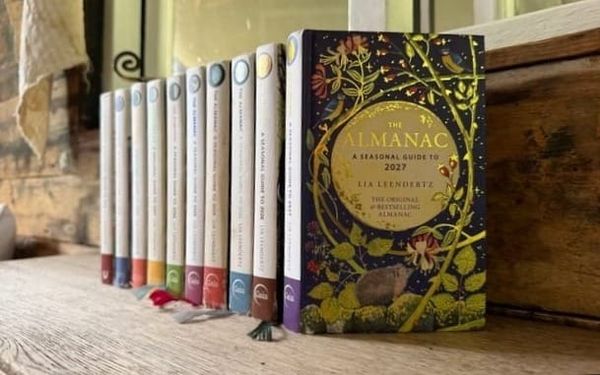
Now, for those of you following my lunar gardening grow along, below are the dates for the month ahead. We’ll be back to talking more lunar gardening soon, but this should keep you busy in the meantime. There is a more detailed guide in my book, The Almanac 2025.
New moon to full moon: 31st December 2024 to 13th January, and 29th January (after 12.35) to the end of the month
The waxing of the moon is associated with rising vitality and upward growth. Towards the end of this phase plant and sow anything that develops crops above ground. This month that might mean sowing chillies and aubergines in a heated propagator or sowing broad beans, peas and sweet peas under cover. You might place forcers over rhubarb plants to exclude light and draw up stems now
Full moon to last quarter: 14th to 21st January
A ‘drawing down’ energy, good for sowing and planting crops that develop below ground: root crops, bulbs and perennials. So this month that might include: Chitting seed potatoes, planting garlic and rhubarb crowns, sowing onions and leeks in seed trays, and planting fruit trees and bushes, hedging and bare-root rose bushes
Last quarter to new moon: 22nd to 29th January (until 12.35)
A dormant period, with low sap and poor growth. This month jobs include: pruning top and soft fruit and wisteria, cleaning and oiling tools and washing out pots, checking soil pH, weeding, liming and mulching.
Main image credit: sasatro on Flickr.