Are you a 'Pelly'?
So ubiquitous we are in danger of taking them for granted, the pelargonium has a long, aristocratic history. George Plumptre explores this posh plant's rise to fame and makes the case for declaring the pelargonium a feminist icon.

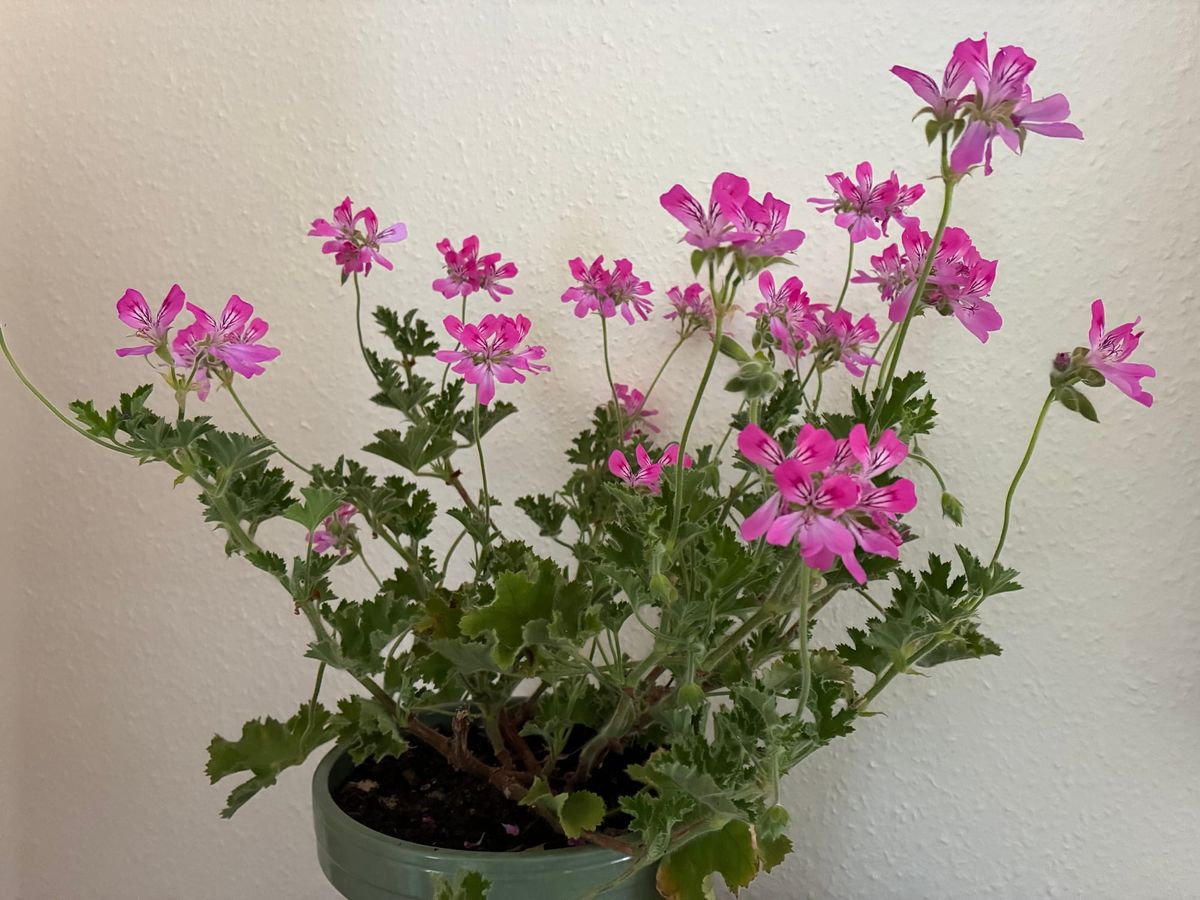
Are you a Pelly? My wife Annabel certainly is; a relatively recent convert but an increasingly devoted one nonetheless. She has joined the ranks of gardeners stretching back to the 17th century who love pelargoniums – or geraniums – and the most devoted refer to themselves as 'Pellys'.
Note from the Editor: This post should come with a warning; I spent a lot of money on pelargoniums after reading George's piece. Hide your credit card before you read on.
Perhaps we should get the name thing out of the way to start with because many people are confused by it. There are two large families of plants which were both given the name geranium: the first are hardy perennials which originate in temperate countries worldwide and are a staple of British borders and flowerbeds. Some of my favourite plants, but not part of this story. Their common name is cranesbill. The second are half-hardy or tender perennials originating mainly from South Africa, almost all of which will not survive frost. When first introduced to Europe they too were called geraniums until in 1789 the French botanist, Charles L’Héritier, separated and classified them as pelargoniums. Their common name is storksbill and being a bird enthusiast, I love the fact that both common names originate from the Greek for long-legged birds; because of the shape of their respective seed pods.
Just to complete the practicalities, pelargoniums divide into a series of horticultural groups of which the best known are: Zonal which have rounded leaves with a distinctive darker zone or ring; Regal which are often shrubby and have large flowers; Ivy-leaved with a trailing habit of which the more vigorous can be trained as climbers; Scented-leaved which might or might not have flowers but all have distinctly scented foliage; Unique which grow into woody shrubs. But these groups are by no means separate and many of the best hybrid plants have been bred from parents from different groups.
I usually avoid introducing social commentary into my writing about plants, but there is little doubt that pelargoniums are posh. With their tender – or half-hardy – characteristics and spectacular array of flowers and foliage they have always qualified as the exotics that noble gardeners have loved to grow and show off in their sheltered conservatories or just as well in their airy drawing rooms.
The late Queen Elizabeth II was a great admirer, as I remember from when I was researching my first book, Royal Gardens. I visited the garden of Balmoral in the summer of 1980 and was instructed to go just before The Queen’s annual visit so I could see the garden at its best. When I arrived the head-gardener said ‘we’ll do what Her Majesty once told me was always one of her favourite moments after her arrival for her summer holiday, walking with her dogs across the main lawn to the decorative glasshouse where she would find the display of pelargoniums on tiered shelves which I prepared for her every year.’
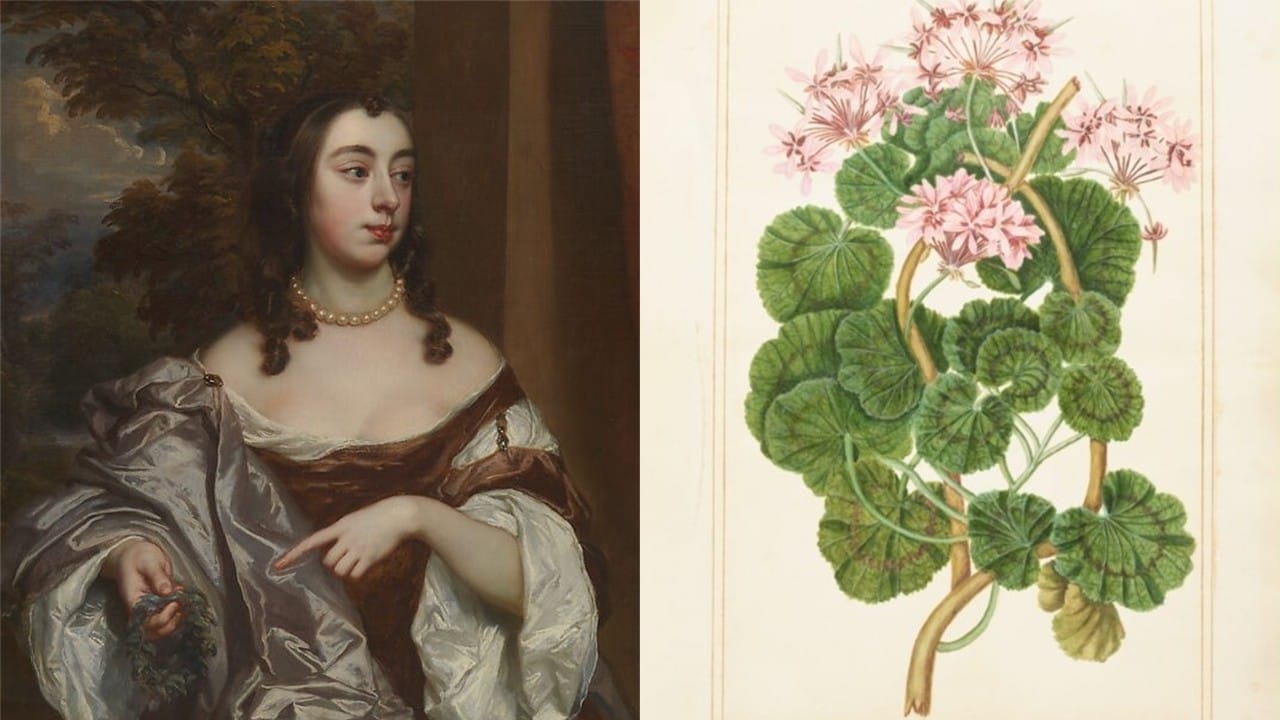
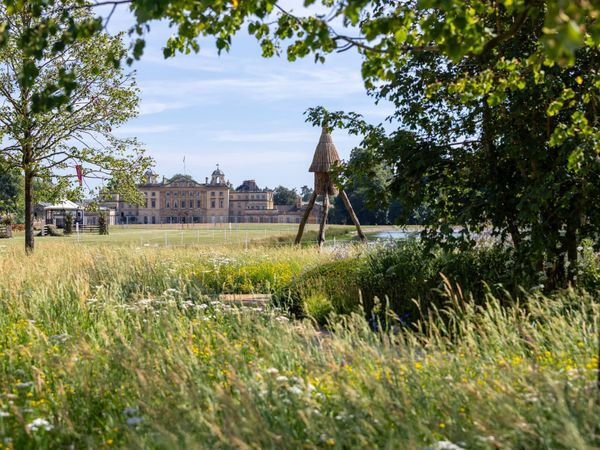
Images courtesy of the Badminton Estate
One of the first and definitely one of the poshest gardeners to champion pelargoniums Mary, Duchess of Beaufort was recently celebrated at the first RHS show at her Gloucestershire home, Badminton House. During the 17th-century she was one of the most significant patrons of the introduction to Britain of new plants from overseas, including an array of pelargoniums. Her plant collection was recorded in one of Britain’s great botanical treasures; The Badminton Florilegium, a two-volume album of 178 botanical paintings commissioned by the duchess in 1703 including watercolours painted from life by the Dutch botanical artist Everard Kik, and by the Duchess’s talented footman-turned-artist, Daniel Frankcom.
At a time not known for equality between the sexes the duchess’s gardening prowess and enthusiasm drew admiring comments from a number of her contemporary male horticulturalists, not least Stephen Switzer, who wrote: ‘It was at Badminton in Gloucestershire that this noble lady used to spend those moments that many other ladies devote to the tiresome pleasures of the town. What a progress she made in exoticks, and how much of her time she virtuously and busily employed in the garden is easily observable from the thousands of those foreign plants there regimented together.’
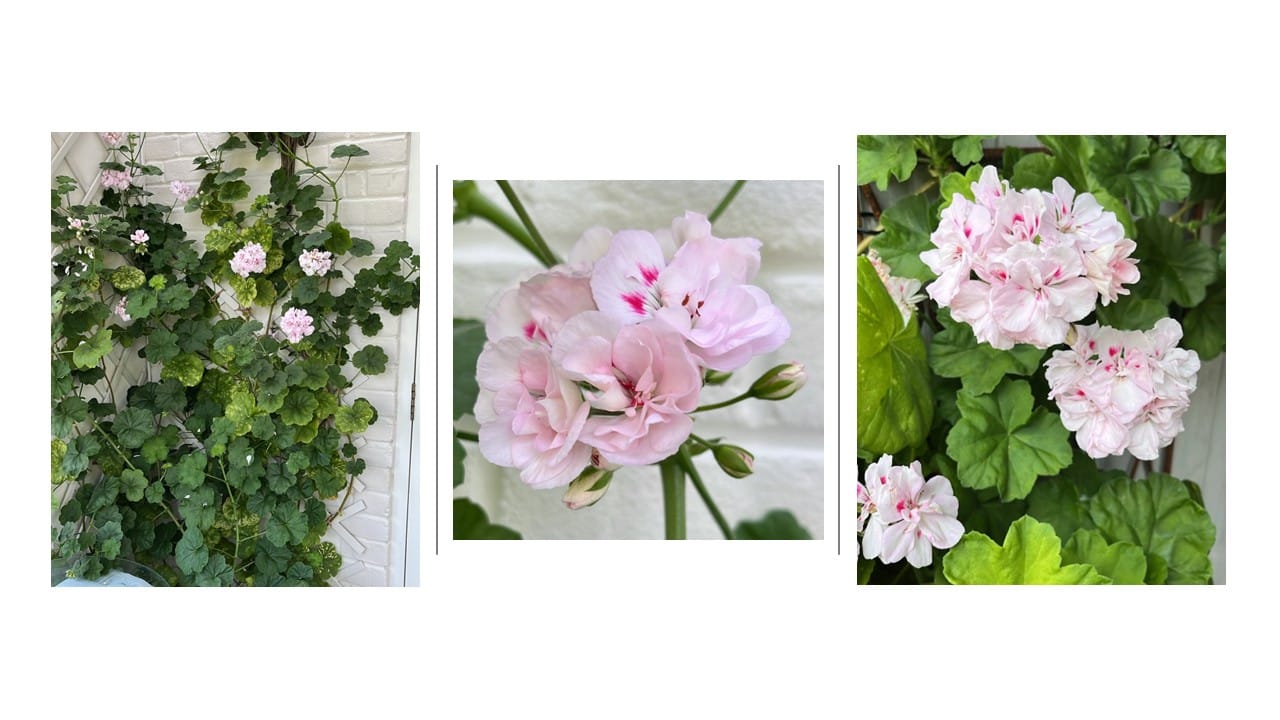
As a footnote to Duchess Mary’s prowess with pelargoniums she would no doubt celebrate the fact that today the most famous gardening highlight at Badminton is the display of gorgeous pink-flowered Pelargonium ‘Millfield Gem’ trained up the walls of the house’s matching 18th-century conservatories. It was introduced in 1894 by the French horticulturalist Victor Lemoine who crossed a zonal and an ivy-leaved pelargonium to produce one of the family’s most spectacular plants.
Duchess Mary’s enthusiasm for pelargoniums was made possible by the opening up of South Africa by the Dutch. In 1652 Jan van Riebeeck established Cape Town as a refreshment station for ships of the Dutch East India Company. In 1679 he was succeeded as Commander of the Cape by a renowned Dutch gardener, Simon van der Stel and, as Brian and Joan Rycroft wrote in The Oxford Companion to Gardens: ‘the great era of botanical exploration had commenced.’
Given their imperial ambitions in the 18th century, it was not long before the British muscled in and their activities abroad coincided with gardening events at home, in particular the establishment of the Royal Botanic Garden at Kew. What would rapidly become horticulture’s greatest institution was born out of two adjacent royal gardens and the leading light was Princess Augusta (mother of King George III) and her adviser John Stuart, Earl of Bute. In 1771 Joseph Banks became the first director of Kew Gardens and a year later the royal garden’s first plant collector, Francis Masson, was sent to South Africa. The most important collection he came back with from that first expedition was pelargoniums.

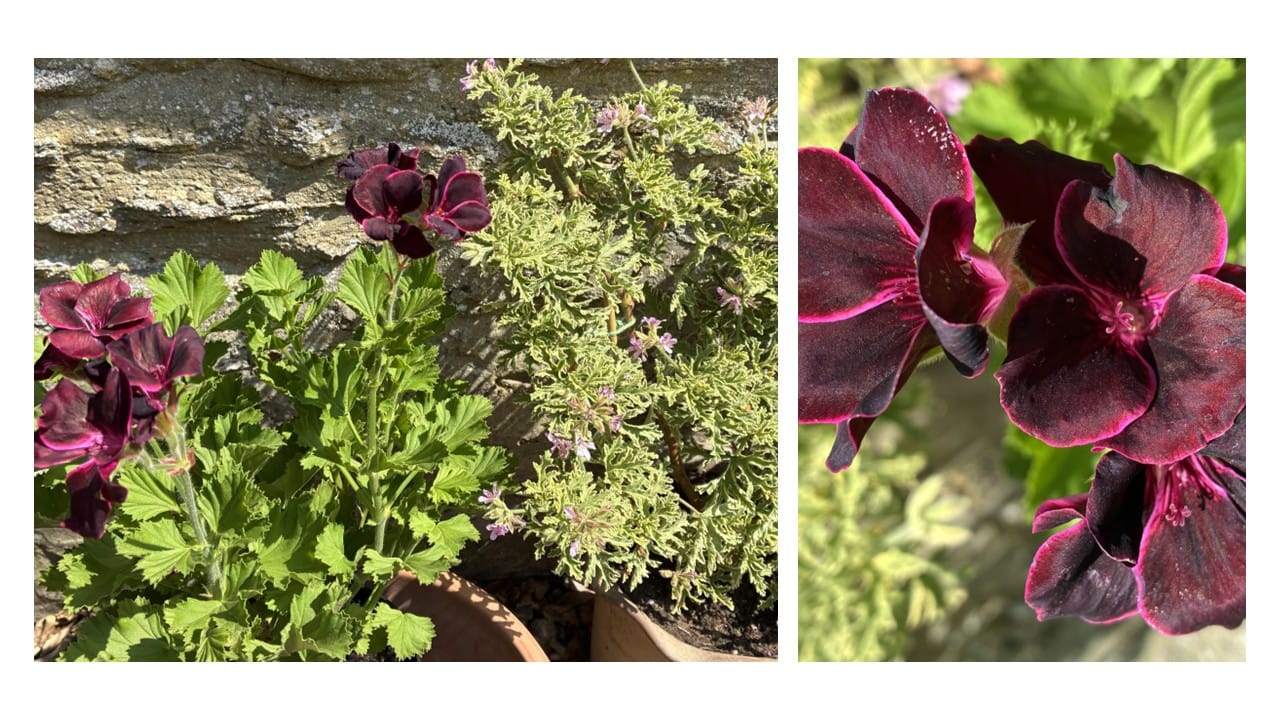
Lord Bute eventually got appropriate recognition more than 100 years later when, in 1910 a new zonal pelargonium was named after him and became one of the most revered, as confirmed in its description by Fibrex, perhaps the most famous British pelargonium nursery: ‘With its sumptuous dark flowers and vivid magenta margins, Lord Bute remains one of the most iconic pelargoniums ever grown.’ Today there is also Lady Bute which was introduced in 2016 as a variety of Lord Bute and has a similarly aristocratic appearance with vivid fuchsia-pink flowers with white edges.
Through the 19th and into the 20th century the ease with which pelargoniums could be interbred to produce new varieties produced an absolute blizzard of plants which were the perfect answer for Victorian and Edwardian gardeners looking for a dazzling display in their gardens and conservatories. Amongst the many names a notable few recognised aristocratic women who were not only enthusiastic and expert gardeners but leading figures of the day, including Lady Plymouth whose pelargonium is a variety of Pelargonium graveolens (known as the ‘rose geranium’ and one of the most important of all scented pelargoniums); Lady Ilchester after whom a pink-flowered zonal is named and Lady Scarborough, remembered with a delightful strawberry-scented leaf variety with small pink flowers. The more demurely-named Miss Burdett-Coutts celebrates perhaps the most distinguished Victorian lady of them all, the famous philanthropist Angela Burdett-Coutts, and has striking green, cream and red foliage and rich vermillion flowers.
Behind the aristocratic and famous people who have given their names to pelargoniums over more than 300 years, the simple reality is that once introduced, they have never lost their popularity with gardeners everywhere. While they continue to fill the spacious greenhouses and conservatories of great estates, they are equally at home in pots in the smallest of plots or on city balconies. While not garden plants in the traditional British sense of being hardy perennials or shrubs that you can plant out in a border and leave to ‘do their thing’ they are easy to look after and equally easy to propagate from cuttings – which you can literally grow on in jars on your kitchen window sill.
There was a time, when summer bedding was a staple of British gardening, that vast quantities of pelargoniums were produced to be a mainstay of these displays, seemingly always in the same shades of harsh brick red, shocking pink or plain white. You can still see them in some of London’s royal parks and other municipal gardens around the country in high summer, but that fashion has waned. And while ivy-leaved trailing varieties continue to be a star feature of hanging baskets, which continue to offer some of the most ingenious of summer concoctions, they too are not as popular as they were a generation or so ago.
Instead it seems that these days the scented-leaved varieties of pelargoniums are most in fashion along with a selection of achingly elegant varieties with tiny but brilliant flowers that grow at the end of long, wispy stems. My wife Annabel is currently swooning over her plants of Pelargonium sidoides which combines tiny magenta flowers with silvery-grey foliage, but most chic of all is scarlet-flowered Pelargonium ‘Ardens’, which has been around since the early-19th century. I find it wholly mesmerising, perhaps because it was once described as: ‘Bright and memorable, combining ornamental appeal with an almost botanical strictness of form.’
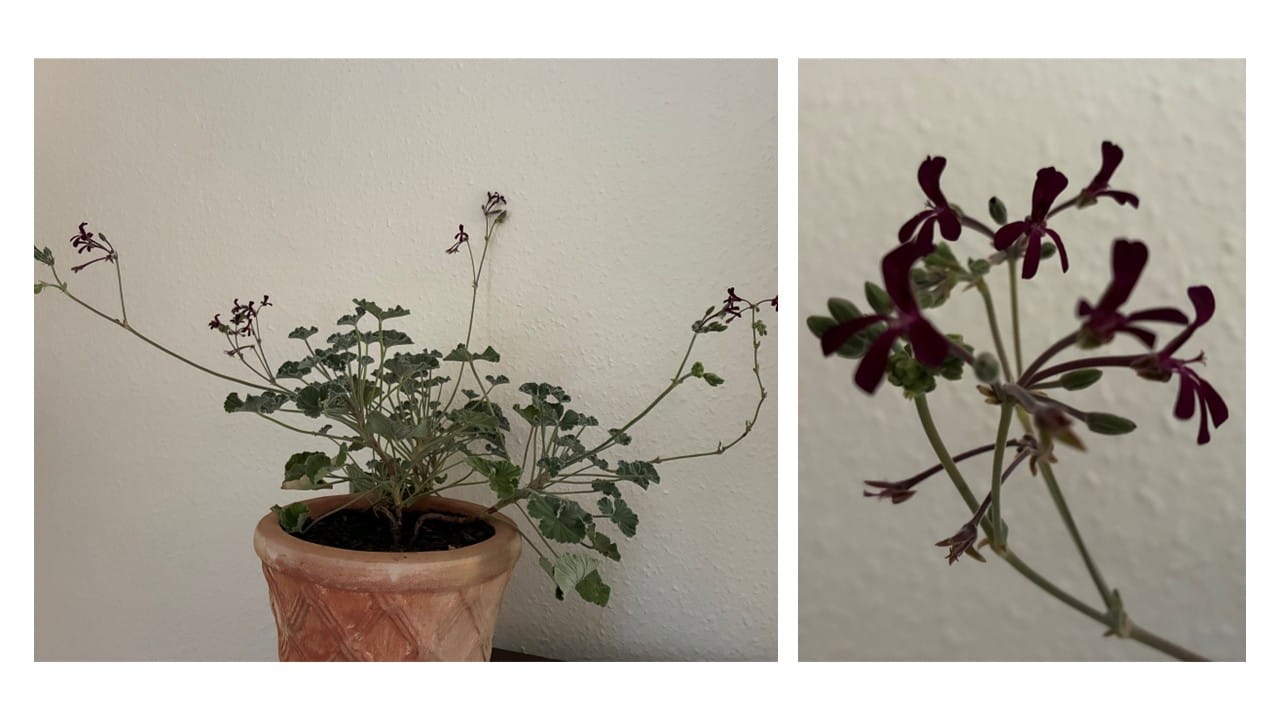
This year Annabel and I have been perfect examples of gardeners for whom pelargoniums offer instant gratification. We have recently moved from central London to the Gloucestershire countryside and the small garden we have taken on needs a lot of clearing and remodelling (to be discussed in future articles). So we have not been able to get on with any new planting in the main area. Instead we have focused our growing and tending sentiments on the steadily increasing family of pelargoniums which are clustered together in clay pots in the sunny gravel area outside our back door, including Lord Bute nestling next to Lady Plymouth.
Many plants have struggled in our gardens during this summer’s extreme temperatures and lack of rain and will continue to do so in the future if the dark warnings of regular summer heatwaves prove to be right. In contrast, for pelargoniums, the summer has offered conditions virtually identical to their country of origin. They have basked in the high temperatures and long hours of sunshine and not required the copious watering that many others have needed to survive. If our changing conditions mean that pelargoniums are a plant for the future I for one would see that as something to be celebrated.
In this article I have only scratched the surface of the riches offered by the wonderful array they offer – and I have not even begun to cover their importance for health products and cosmetics.
To be continued…
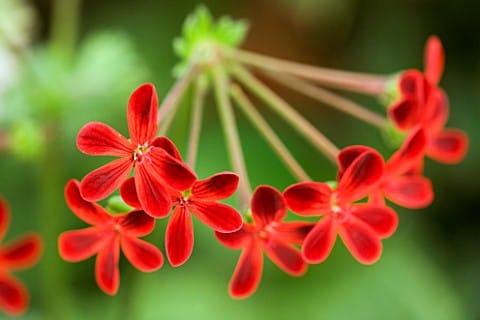
Image courtesy of Clive Nichols