Celebrating Hal Moggridge
Trish Gibson, biographer of pioneering garden and landscape designer Brenda Colvin, goes to a great celebration of the work of Hal Moggridge, Colvin's former business partner, and assesses the impact of Colvin's work on her own approach to gardening.


On 11 September, on the last day of a three-day Tube strike, I had to make my way across London - from Richmond to Regent's Park, usually a 40-minute trip by car. It took two-and-a-half hours, a long, literally jam-packed journey, but it was to turn out to be a day to be remembered. I made it, just in time to register before the 'event' began.

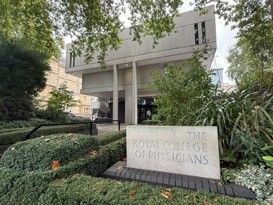
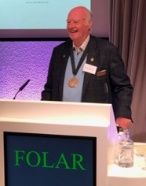
I was going to meet once again the very wonderful Hal Moggridge, but even better this was a very special event to celebrate Hal's huge achievements in landscape design organised by FOLAR, the Friends of the Landscape Archive Reading, and held at the rather wonderful Lasdun-designed Royal College of Physicians. FOLAR is dedicated to raising the profile and use of the Landscape Institute archive and library housed at the Museum of English Rural Life (The MERL) at Reading University.
I was there as one of the speakers. I had been invited by Annabel Downs, FOLAR's chair, to contribute my personal experience of knowing and working with Hal. How did I come to know him? In 2001 I was studying for an MA in Garden History at the University of Bristol and looking for a subject for my dissertation. I wasn't keen on the idea of pursuing some obscure subject such as 'Plants introduced to English gardens in the 1660s' or similar, but I'd very much enjoyed the 20th-century part of the course and, in the world of landscape design at that time, there were the prominent figures of Geoffrey Jellicoe and Sylvia Crowe and another, rather shadowy woman, Brenda Colvin. From the little I'd managed to discover, I suspected that perhaps this woman should have greater prominence.
Searching for Brenda Colvin
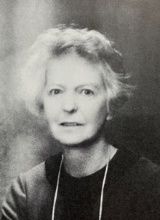
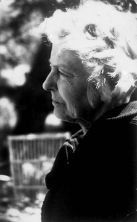
I wanted to find out more about her, and Hal Moggridge was the obvious person to go to - after all, he'd written the chapter on her in Sheila Harvey's Reflections on Landscape. As a young landscape architect Hal knew the Jellicoes and had been a frequent guest at their home. Nevertheless he was, in his words, 'surprised' in late 1968 to find himself at a 'dinner party of older members of the Institute of Landscape Architects, gathered to discuss the foundation of the Institute. Before, during and after dinner I was seated next to Brenda Colvin ... We hit it off excellently.' A few days later Colvin invited him to visit her in Gloucestershire to discuss the possibility of his joining her practice. He found 'much was shared in our approach to the art and science of landscape architecture and a three-month trial period was agreed upon.' Clearly it worked. In 1969 the partnership of Colvin & Moggridge was formed - Hal was 33, Colvin, aged 68, had already been in practice for 47 years.
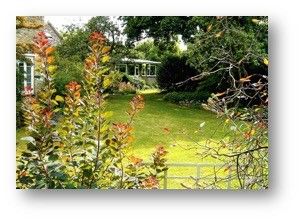
I arranged to go and see Hal and, to be honest, I was a little nervous on my first visit to Little Peacocks in Filkins - I was a mere student of garden history and he was an eminent landscape architect. We met in the 'temporary' office that Colvin had had built but which is still there today (and which, as I learnt at the FOLAR event, is known by staff as the 'wooden shack'). I needn't have worried. Hal talked enthusiastically about some of Colvin's more important large-scale landscape work and her commitment to the Landscape Institute. He mentioned some of her later gardens and her skill with planting. And he talked about her - 'a delightful person but very fierce' - his profound knowledge of her and of her work was obvious.
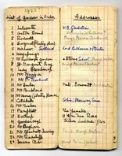
We were still in his office when he suddenly said 'There's a little book of her jobs'. He proceeded to get out a step-stool and brought down from the top of a filing cabinet a black bin liner. Inside it was her gardens notebook. This, as I was to discover, was a researcher's dream, an extraordinary record of her work that she'd begun with Job No 1 in 1922. It has 41 pages of entries, last entry Job No 675 in 1980. Bizarrely the book she'd chosen in 1922 was just full at the time of her death in 1981.
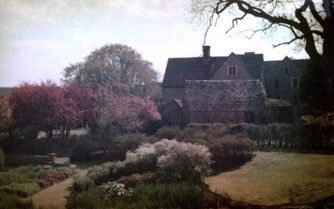
And there were two small albums of contact prints from the later 1930s and post-war - some with her comments on them. In the 30s she was campaigning for better landscape planning as opposed to the current random ribbon development, seen in the first picture below. The country's increasing commercialisation at the time had also led to the uncontrolled proliferation of garages and petrol pumps, advertising hoardings, pylons and broadcasting masts and the like - again, her comment on the second contact print. Her remarks give quite an insight into her beliefs and character, and the causes she was going to campaign for.


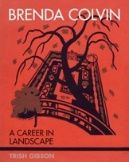
Also in the bin liner and in her desk in the next door office there was more - some of her lecture notes, articles she'd written for the Landscape Institute Journal, more photographs, other notebooks - it was a treasure trove - and I was able to look through it all and take copies away with me. The combination of this wealth of material and Hal's enthusiasm to see her more widely recognised was encouraging, infectious. I left inspired and full of determination to do justice to Brenda Colvin. She became the subject of my dissertation and eventually my biography. Throughout, Hal was encouraging, generous with practical help and supplying me with data. He was, in fact, a biographer's dream. And, after several years of research, the biography was finally published by Frances Lincoln in 2011.
Researching the book
I had never intended to become a biographer but there was great satisfaction in giving Colvin a degree of recognition that had previously been denied her. I found that academic research is a wonderful entrée to worlds that might otherwise be closed. It was a privilege to be the first person to visit, research and photograph some of her gardens still in existence. The very first one I visited must have been an extraordinarily challenging task, a windswept site above Stair Hole in Lulworth Cove in Dorset - her very first commission, Job No 1 in the notebook. What she achieved there is remarkable.


It was a privilege too to meet and interview some of the other people who knew her - John Brookes, Anthony du Gard Pasley, Peter Youngman, her family, garden owners and even a gardener who had worked with her. All of them generous in sharing their knowledge and admiration of her. And there was the added satisfaction too of seeing one of her gardens being given a Grade II listing in part as a result, I am told, of the existence of my book.
Lessons learned
So, as a gardener, what have I learnt from Colvin? Having read many of her articles and other writings, I follow her pioneering advice in many ways. One very valuable lesson has been to lift the crown of trees, clearing the stems of shrubs, a technique very often used now in nurseries. This allows for views through and beyond, and improves the overall shape and character of the plant. She valued the sculptural quality of plants - something that has become commonplace today.


She was a keen advocate of practicality - that much repeated phrase 'the right plant in the right place' was something she was advising in the 1930s - and she promoted the notion of the 'room outside' long before that too became a commonplace notion: 'A garden can be thought of as an extension of the house ... it is a place to live in and should be designed primarily for that purpose'. Natural planting away from the house was another of her trademarks, including long grass areas with wild flowers and bulbs.

I am more aware of the importance of contrasting types of foliage, of creating contrasts of light and shade, and allowing elements of the garden to reveal themselves, not be seen all at once: 'One of the purposes of planting design is to prevent everything from being seen at a glance. Rather to concentrate appreciation on one theme at a time and to refine our delight by timing each view to appear in sequence.'
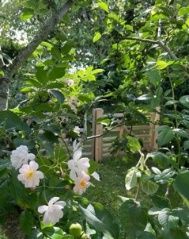
And, as a lasting memory, I grow Rosa 'Brenda Colvin'. This was a rose seedling she discovered that Graham Stuart Thomas considered was probably a hybrid of a 'Kiftsgate' rose in her garden and an 'American Pillar' rose next door. It is a vigorous rambler with wonderful semi-double blush pink flowers. In spite of having moved house twice I've managed to take cuttings and bring one with me each time. (Currently it is available from Peter Beales, though wrongly listed as 'bred by Sunningdale Nursery' although the breeder was correctly listed as 'Colvin 1970' in Peter Beales's Classic Roses; the David Austin website has 'bred by Calvin'!)
The legacy
Brenda Colvin's legacy lives on as Colvin & Moggridge recently celebrated its 100th birthday, and continues to flourish with a very distinct ethos directly derived from her and the practice she founded: 'Landscape design acknowledges the organic unity of life in its environment. The relationship between the use and beauty of land.' It is the longest established landscape architecture practice in the country, and continues to balance large-scale projects with private garden design - as Colvin had done throughout her career.

In the course of the celebration day Hal's extraordinary, ongoing contribution to our landscapes and gardens was confirmed and well illustrated by the various speakers. As George Plumptre said in his article in Country Life (27 August 2025), 'For more than half a century Hal Moggridge has enriched, enhanced and entertained the world of landscape architecture and garden design.' As his daughter Harriet commented to me, it was especially valuable to have such an event when Hal could be there to appreciate it.
Overall I owe a great deal to my acquaintance with Brenda Colvin and so I am grateful to Hal for encouraging me and helping me to investigate her remarkable life and career.
And finally, I just have to include this extraordinarily prescient and eloquent opening paragraph of Brenda Colvin's 1948 book, Land and Landscape:
The control which modern man is able to exert over his environment is so great that we easily overlook the power of the environment over man ... we can ruin our surroundings and make them unsuitable for future generations, just as we can make war and leave unsolved political problems leading to more war.
Further information:
If you want to find out about Brenda Colvin's larger landscape work for the CEGB read George Plumptre's article 'Land and Landscape' here on The Garden Collective.
To hear all the speeches from the FOLAR celebration day, click here (I come in at No 8).
The archives of both Hal Moggridge and Brenda Colvin are at The MERL, fully catalogued and open to all by appointment.