Discover the Enduring Charm of Wood Pigeons
A model of patience.


The soft republic of wood pigeons
A low clatter on the fence post, the kind that sounds more like furniture being rearranged than the soft descent of feathers – and there it is again: Columba palumbus, the wood pigeon, garden resident, and subject of more muttered irritation than any other bird in Beverley’s borders. But it’s time to make their case.
They’re not dainty. There’s no oil-spill iridescence like the starling’s, no high-sprung drama of the blackbird. They come in at a wobble and land like over-ambitious aircraft. But what they bring is a kind of everyday grace. In this corner of the East Riding, where clipped hedges give way to open pastures, the wood pigeon is both town cottager and rural rambler, at ease in either role.
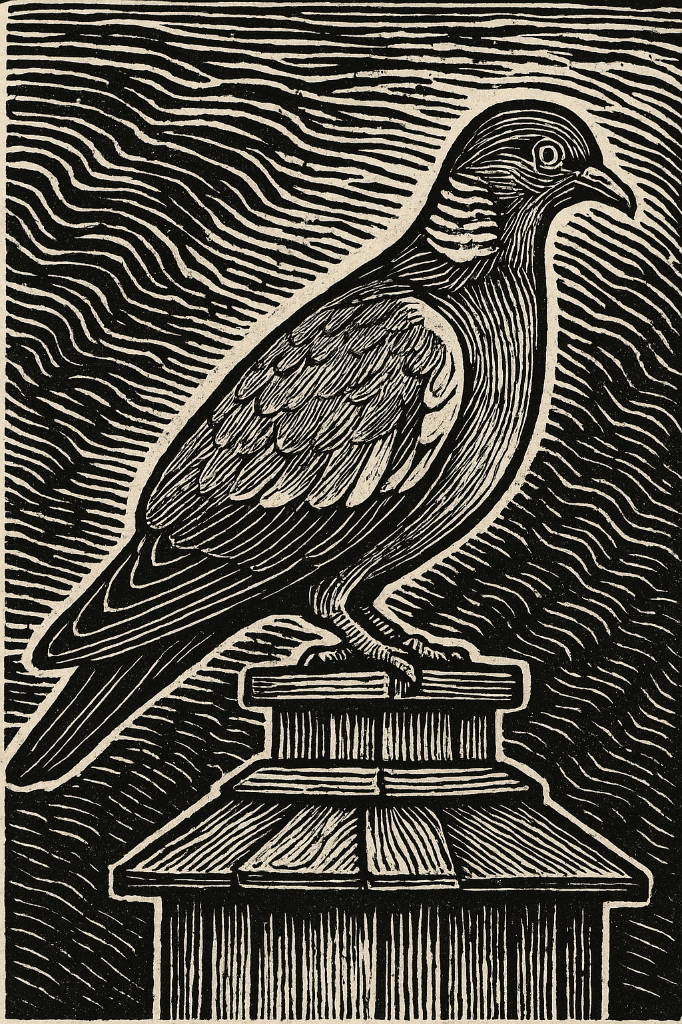
I watch a pair in my garden most mornings – bulky, dependable figures among the spires of foxgloves and the arching sprays of clematis. They plod with the sober pace of parishioners, eyes bright, necks flashing that unexpected green and mauve like a bishop’s mitre catching the light. Their coo – five notes in descending sighs – fills the back lane and mingles with the muted toll of Beverley Minster’s bell.
They are creatures of habit. When the rowan berries redden, they will be there. When the tree leaves crackle underfoot in October, they will be pecking thoughtfully at the edge. You begin to feel they mark the turning of the year more truly than the calendar.
Of course, they’re greedy. Of course, they flatten the foxgloves and hoover up the spilled seed meant for the daintier birds. But in a world becoming dangerously partial to spectacle, the wood pigeon offers something subtler: presence, patience, and perseverance. They do not flee at the whirr of a neighbour’s mower, nor are they perturbed by the yelps of a toddler’s garden party. They remain, unflappable in both senses of the word.
In Beverley, where history leans out of every brick and the wind always seems to carry a note of something older, the wood pigeon belongs. It roosts in lime trees that watched the pilgrims pass and nests in the beech copses where Clare and Cowper would have found quiet company.
So, I leave them the top of the bird table and forgive their trampling of my tender plants. There’s virtue in a creature that asks so little yet gives so much – if not in prettiness, then in peace.
In the rustle, in the warm-scented hush of a summer evening, you might hear them too. That slow, breathy hoo-hoo hoo-hoo-hoo – not a call to arms, but to appreciation. To presence. To patience.
To staying put.