Elegant Ivory Towers: The Beauty of White Lupins
White spires in a young garden.


White spires in a young garden
May has crept in softly this year, with that shy, reluctant warmth that makes you watch the soil more than the sky. And in our four-year-old new-build garden on the edge of Beverley, where houses rise like polite sentinels on a former East Yorkshire field, something quietly splendid has taken hold: white lupins, tall and still, like candle flames that forgot to flicker.
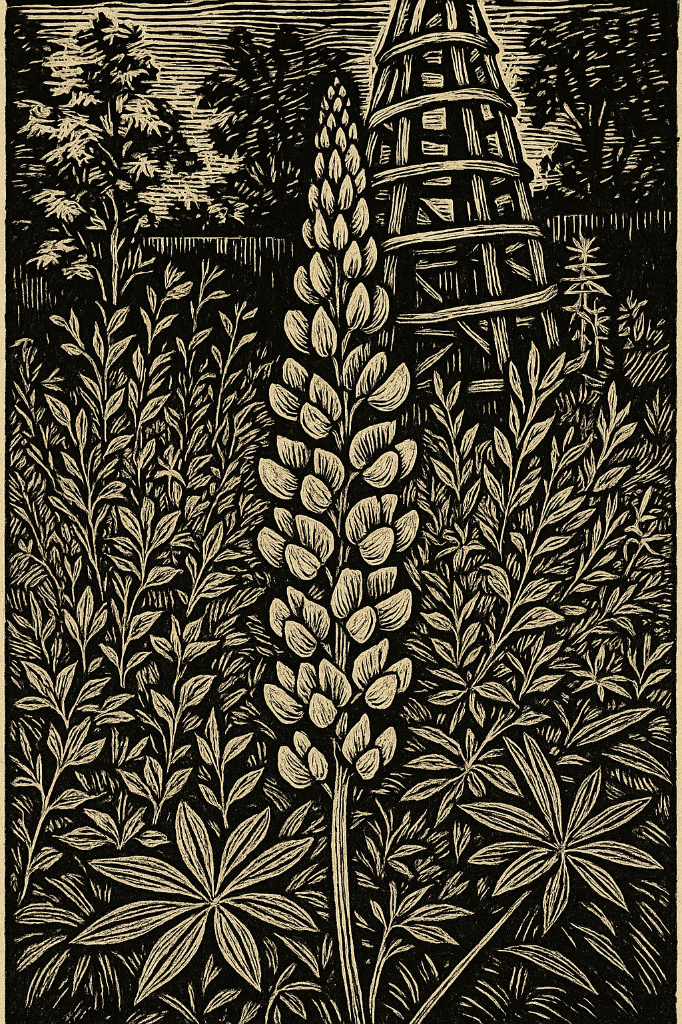
In a space that once bore the neat blankness of turf, these lupins now rise with an unspoken confidence. They are the sort of flowers that speak softly but hold the room — or in this case, the border. It’s a border that began life with that tentative suburban choreography: a few salvias, a clutch of ornamental grasses. But nature, even coaxed, finds its rhythm. Now the garden pulses with bees, and these lupins — ivory towers catching the low light in the early evening.
The soil here is still young in the way newly disturbed ground is — a bit reluctant, clay in the wrong places, a little too sandy in others. But the lupins don’t seem to mind. Perhaps it’s the roughness that pleases them, or perhaps it's the gardener’s trial-and-error composting efforts finally bearing fruit. Their roots — taproots, deep and bold — are already threading a kind of permanence into this plot that once had none.
Lupinus albus, the white lupin, is more commonly cultivated for green manure or animal fodder on larger fields, but the garden varieties — like ‘Noble Maiden’ — bring that agricultural strength on a domestic scale. These are not shrinking violets. They bring a kind of structure to the border, their spires brushing shoulders with foxgloves and the early hints of scabious. There’s something ecclesiastical about them — like floral cloisters — and bees kneel reverently along their whorled racemes, working their slow circles from base to tip.
Some evenings they lean, perhaps from wind, perhaps from the sheer ambition of their own height. There is pleasure in staking them — not the rigid kind, but a loose, gentle encouragement — hazel twigs woven in, a suggestion rather than a constraint.
The white against the wall, with that northern light slanting in, makes a kind of quiet magic. At dusk, they seem to glow. They are not flashy. No hot pink or violet here. Just clean, steady bloom — a gesture of calm amidst the developing roar of summer.
For now, the garden feels older than it is, the hedge thickening, the borders a little unruly. The white lupins stand among it all — not claiming attention, but earning it. A sign, perhaps, that the land is slowly settling into something more than just a plot. Something with memory. Something like home.