Fall is the Best Season for Weeding
I like weeding. When I am confused or tired, I can always go weeding, and come back home with a sense of a mission accomplished. Weeding is undervalued as a garden task and I will try to convince you to do some more weeding this season.


I don't know about you, but I like weeding. Not the type of weeding that one can find with a hashtag, but the old-fashioned practice of grabbing a plant with your hand and yanking it out of the ground.
Someone more enlightened would ask, what is a weed? And yet, we know what it is. It is that plant that we catch with a corner of our eye finding it irritating and impossible to live with.
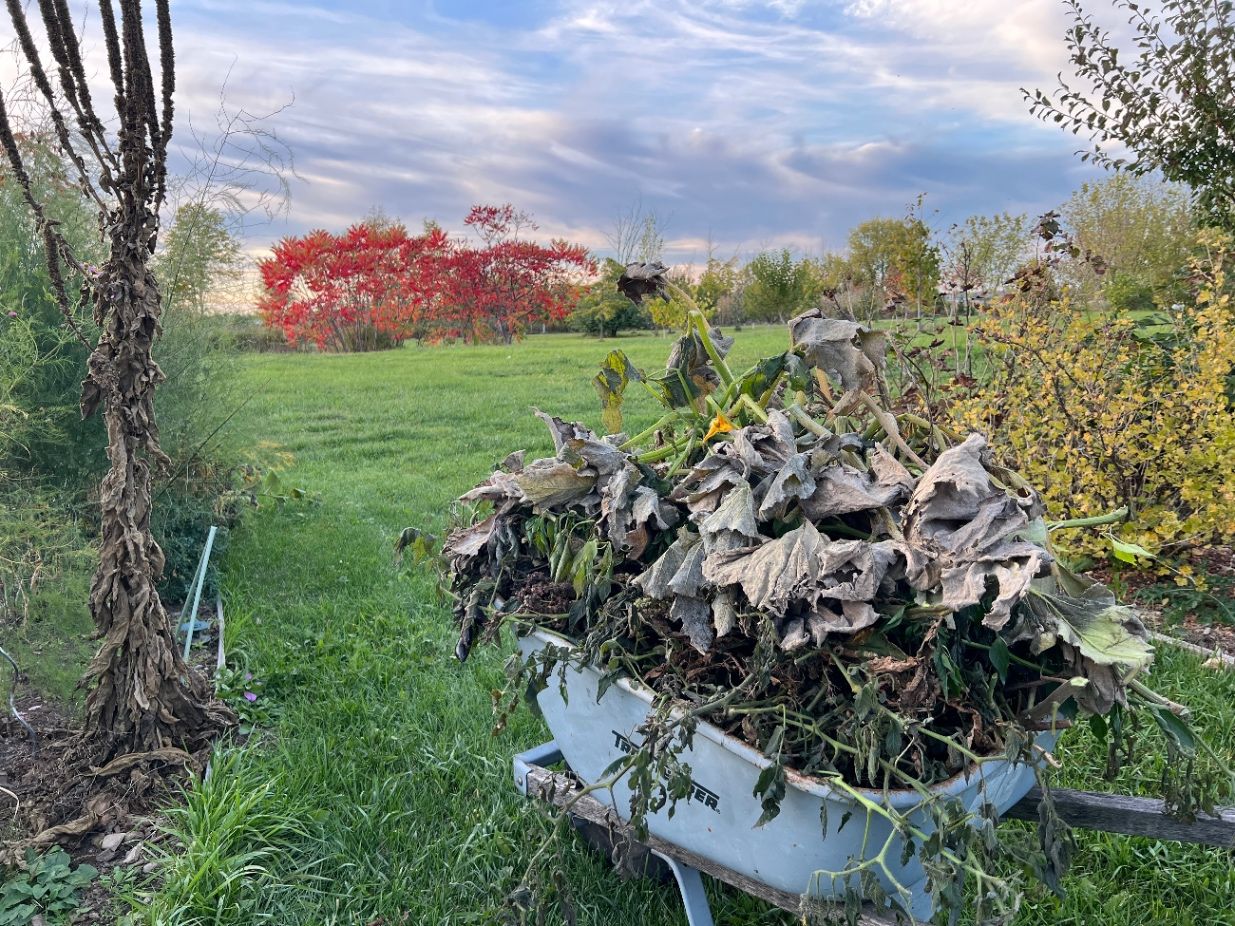
When I have some time to waste, I enjoy reading or watching advice on how to weed: oh, all the ingenious ideas that people have! The plastic, of course, is one but let's not mention it. Similarly, a good gardener leaves herbicides to deal with dangerous plants, like poison ivy, if it grows in the middle of a path frequented by children or naturalistically-challenged adults. I am forever entertained slash scandalised by some ideas, like salt and vinegar and other "normal" chemicals, or the torch! Have you seen a torch in action? Since we own one for another purpose, I tried to see what it can do with weeds growing on gravel. I almost fell asleep waiting for the poor vigorous dandelion to burn. I am going to omit with silence all the smug people who claim weeds don't grow in their gardens because they are so skilful in avoiding them. I am still waiting for a long boring video of someone slowly and systematically weeding for real.

So, left to our own devices, we try our best. It is a bit contradictory to remove lots of healthy and happy plants to replace them with other plants, often less obliging. But we're human, so we do it. Hear me, nature! I am a gardener and I am coming to bring order to your chaos! That's what I giggle to myself. Nature responds with thistles and bindweed with pretty flowers. But really, there is no time for weeding like the fall. So here's the wisdom I live by:
Weeding in fall is destined for success. If you weed in spring, plants will immediately sprout out from their roots, more seeds will germinate and before you know it, your vegetable garden is a jungle. None of that frustration awaits now: when I weed, I have months of satisfaction that nothing will immediately sprout out. (Reminding me that these months are generous in snow is not helpful).
Weeding in fall can keep one warm. In summertime, I do occasionally sit down to enjoy the weather, with no worry except for mosquitoes. In fall, sitting down outdoors results in a chill in my bones that slowly creeps in, but is even slower at leaving me. To stay outdoors, I must move.
Weeding in fall is best to tackle perennial weeds or those with strong roots or rhizomes. In spring, the ground is frozen or sodden, and the tops of the plants are hardly visible. If you try to dig out the roots, they are thinner and break more easily. In fall, one can clearly see the plants one wants to remove, and roots are full of energy stored for the winter months. When I get rid of the main roots, smaller roots have nothing to sustain them through freezing temperatures.
Weeding is also selective in our garden. We simply choose not to weed some plants if they don't compete with what we want to grow, and if they cover the otherwise naked soil nicely. One such plant is Verbascum thapsus that loves to pop in different spots. It is great for bees and birds, so if it happens to grow in a spot where it doesn't interfere with a path or another plant, we let it grow. We have a similar approach to Oenothera biennis, Plantago major or Portulaca oleracea; the latter occasionally makes it into our salads too. In my vegetable garden, Nigella sativa often grows among peppers, blooming beautifully and providing shade to the ground; it does not seem to affect pepper growth negatively. On gravel, Linaria vulgaris makes a wonderful clump, can be easily controlled, reblooms and is a great host for moth caterpillars. We also have plenty of Fragaria virginiana growing everywhere in flower beds and making a nice carpet under taller perennials.
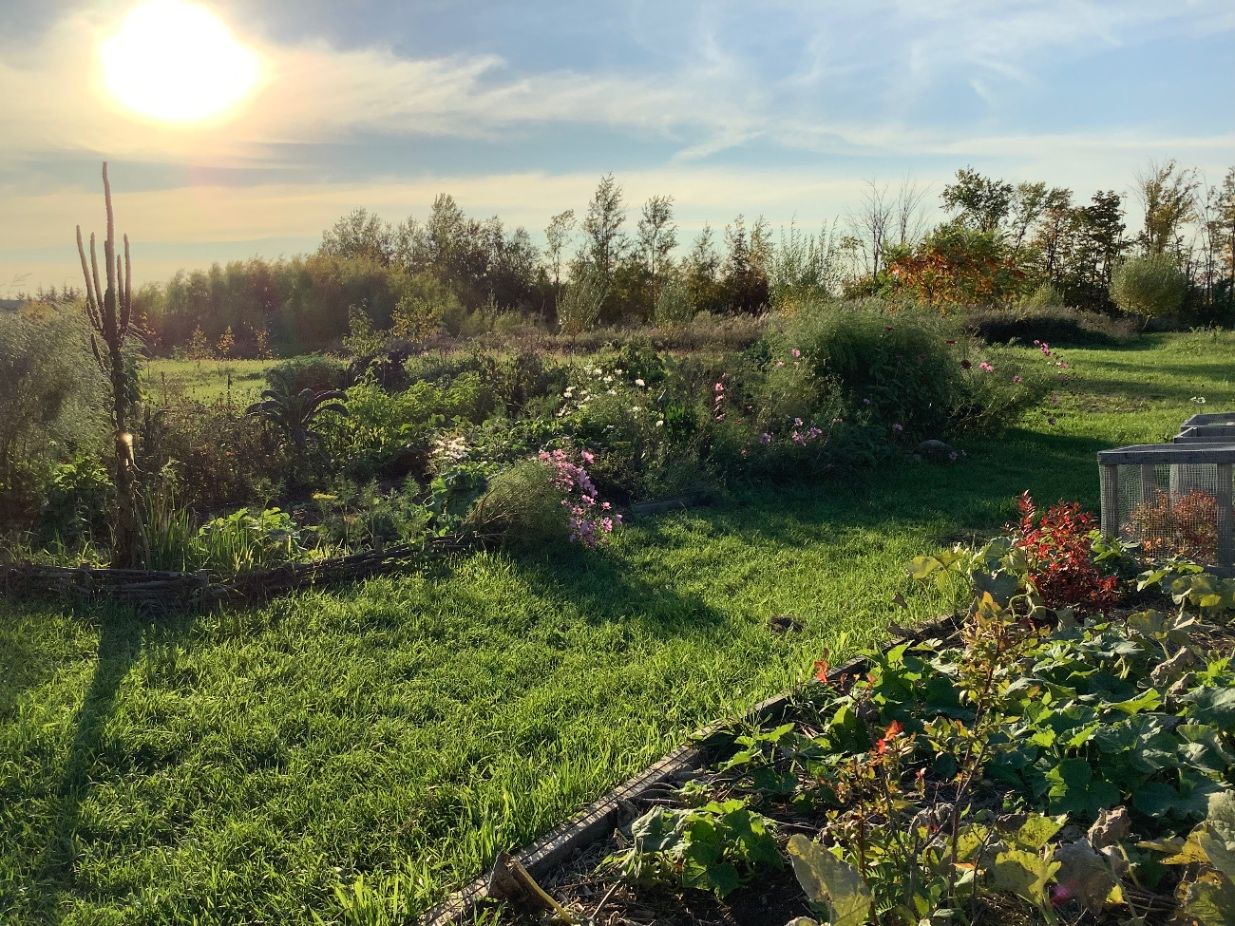
Weeding can be entrusted to others. I am a strange gardener who doesn't like others working in my garden (what if I run out of tasks? I used to when I had a small city garden, so I know the horror!). Each summer, I visit my mother for a few weeks, so I had to resign myself to having my husband weeding as needed. "As needed" is the key to letting go. Instructions must be simple. In perennial borders, he is allowed to weed what gets taller than neighbouring plants (which is very easy for weeds to do in June), ideally before they form seeds. It is a surprisingly effective method and weeds are not that visible once perennials get growing. In the vegetable garden, sowing seeds in clear lines is a good indication of what is a weed and what is not. If I grow single specimens that he might not recognise, I mark each with a stick. Or two and more if I am being very protective. As usual, if he is not sure, he lets it grow until it gets big enough for easy identification. Judging by the results when I come back, he clearly has become proficient at weeding and I suspect that he possibly even enjoys it.
Finally, weeding is done best on a weekend after a week of dealing with particularly contrary people, as people often are in fall. Let's admit it, that hidden need to remove the unwanted elements can be channelled productively. Nothing is as therapeutic as one's imagination at that moment. Your hand acts out your fantasies. You get overcome by a fit of witchy laughter. I will let you, dear reader, imagine the rest.
Finally, our favourite tools. I use a hori hori knife for everything, but especially all long-rooted weeds and in perennial beds where there is no room to work with a hoe. I also like a narrow hand garden weeder on gravel. But my prized possession is an old long-handled hoe I found in the garage when we bought our house. The handle is grey wood, the edge in draw style but slightly slimmer than modern hoes. It is extremely light and can be sharpened to perfection. It's a joy to hold. And that is it in my weeding tool arsenal. I tried using other tools, but I found them disappointing or clunky, or impossible to sharpen. I am keeping an eye on old hoes at garage sales, but so far I haven't found another one.
So until the snow falls, there is still time for some weeding!