Found and Lost
The outsider world of a Greenwich bohemian


It’s one gardener’s delight, another’s horror. For some people the idea of found objects littering a garden is worse even than that other obscenity, the garden gnome.

Yet for those who love the random delight of cluttering - sorry - ‘decorating’ their pride and joy with bizarre oddities, whether curious bits of driftwood, fishing weights and lobster pots in a seaside garden, peculiar, rusty metal lumps, pieces of river-smoothed pottery or freaky dolls’ heads found by mudlarks by an urban river, whether a junkyard of weird Victorian ephemera or ‘vintage’ mid-twentieth-century detritus repurposed into makeshift flower pots, there is a peculiar romance to be found in the found.

I’m not talking about trash here – where non-gardeners just lob old bits of whatever they don’t want into the back yard and allow the weeds to slowly subsume bits of old tumble dryer, the faded remains of a plastic Wendy house or something huge and rusty that may have once been an Austin Allegro. That’s a rubbish tip and to be widely deplored.

No, I’m talking about the kind of weird stuff that certain types of people, with whom I may or may not identify, have deliberately brought into their space because they see it as part of their garden idyll. They care not what others may think of their space. It is theirs, and within it, they find beauty.

Such gardens are everywhere and I’m not going to give you a gazetteer. Instead, I want to share with you a lost garden – a lost house, in fact – which has only recently left us, along with its fabulously eccentric owner, Ann Broadbent, without whom we are very much the poorer.

Ann was ageless but must have been well into her 80s by the time I met her. She lived at 14 Crooms Hill in Greenwich, next door to the Fan Museum (a truly marvellous place if you ever visit that neck of the woods and with a rather lovely fan-shaped garden to boot).
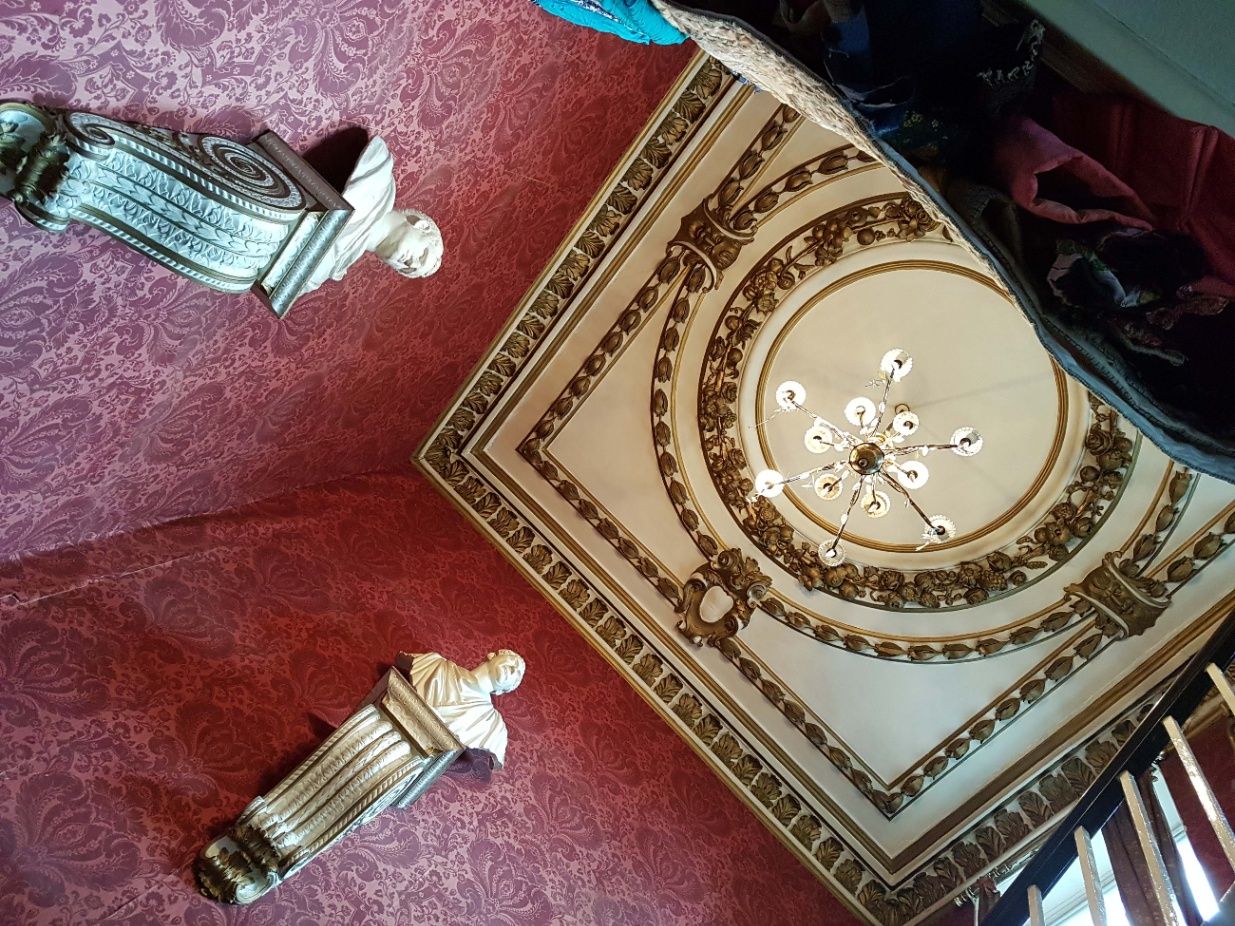
In a hill full of exceptional architecture, you could tell from outside that Ann’s early 18th-century town house was… different. Large, opulent, but with a curiously elegant dishevelment about it. Ann would proudly tell anyone who cared to listen how she had furnished the place from Portobello Road, Bermondsey and other London street markets from the late 1950s and 1960s to – well, pretty much whichever day she was speaking to you on – and the whole place was a glorious mismatch of broken antiquities, utter trash and the truly rare.
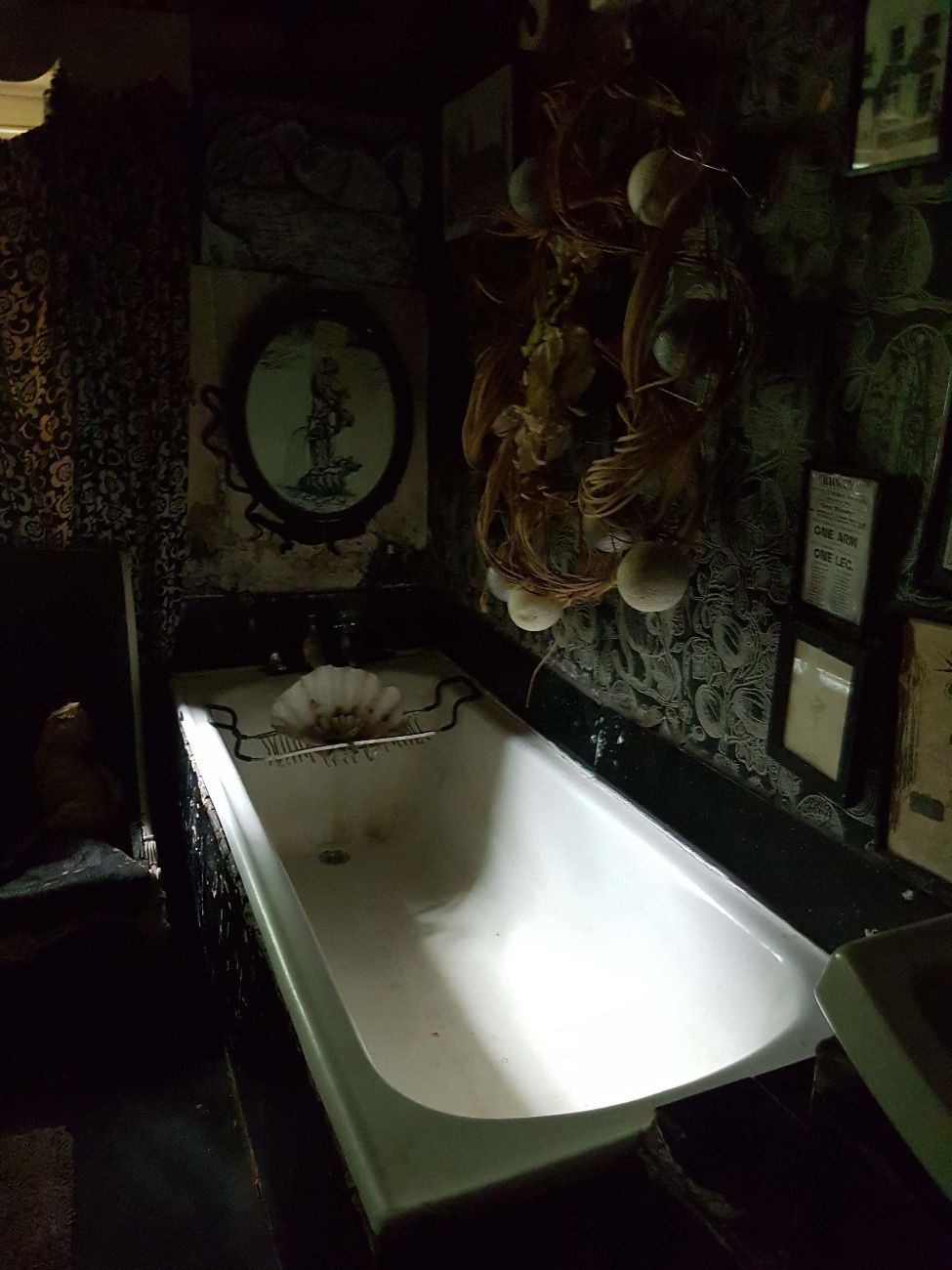
She subscribed to the ‘More is More’ approach; in no part of her house could you sit down, not even the chairs, covered as they were with gee-jaws and satins and furs and sparkles and pearls and feather boas.

I visited as often as I had the opportunity. She officially opened her house and garden to all comers every June in aid of the church restoration fund, but frankly, you could just visit her and she was happy for people to roam freely. Indeed, one day when I’d arranged to meet a friend in the exquisite Orangery café at the Fan Museum which is currently closed, chiz, I waited over an hour as she had accidentally gone to the house next door thinking it was the museum – I guess it was A museum – and been dragged inside by Ann to admire the gorgeous craziness.

Another time Ann pinned my mother to the only vacant seat in the house (a rather splendid Georgian chaise longue) and wasn’t letting her out of her sight until she’d admired all the various ancient seals and documents that had come with the place.

The house was… extraordinary and the garden followed suit. It was huge, for London standards, anyway. I’m not sure exactly how big it was as it ranged and roamed and somehow didn’t have a size, and it’s probably expanded in my memory anyway. It was ethereal, not quite a secret garden, it was too grown up for that, almost a forgotten garden, though clearly tended.

Much of that otherworldly quality was down to mature, overhanging trees, carefully placed shrubs and Ann’s use of found objects. Her ability to mingle cheap and quirky cast-offs with real antiques prevented the garden from messiness, even though some things appeared merely to have been dumped, they somehow had structure.
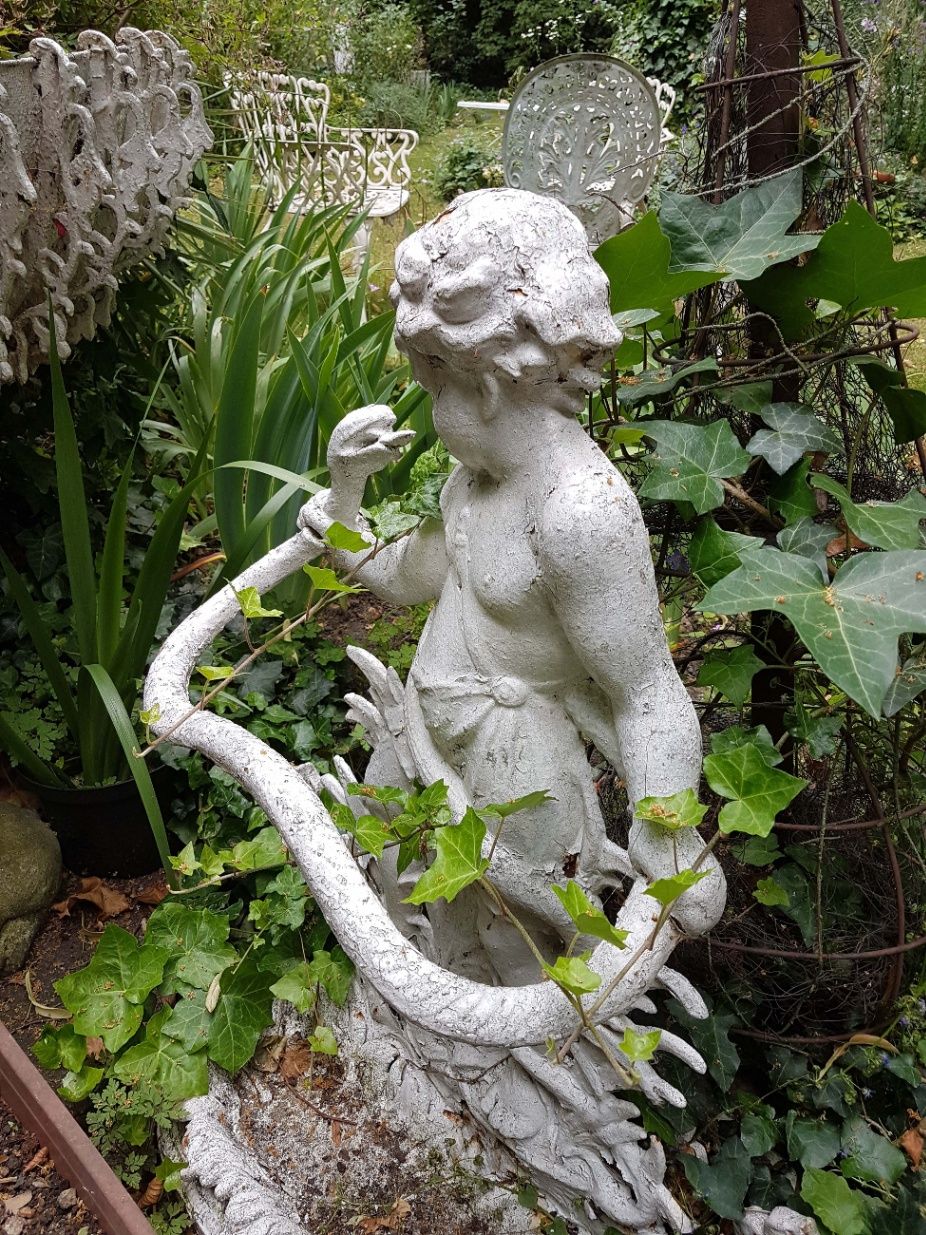
The garden had a vaguely white theme. Most of the found objects there were white, or had been painted white, and any flowers were usually white, too, such as a hedge of blousy white roses, spangled with the odd pale coral dahlia or pink geranium as haphazard accents.

Very occasionally you might catch a flash of red pelargonium or orange crocosmia used very deliberately to draw the eye to some oddity. Ann was an artist, rather than a plantswoman; she was more interested in colour and texture than unusual varieties or rare specimens. If she could get the effect with a supermarket geranium, that was fine with her.
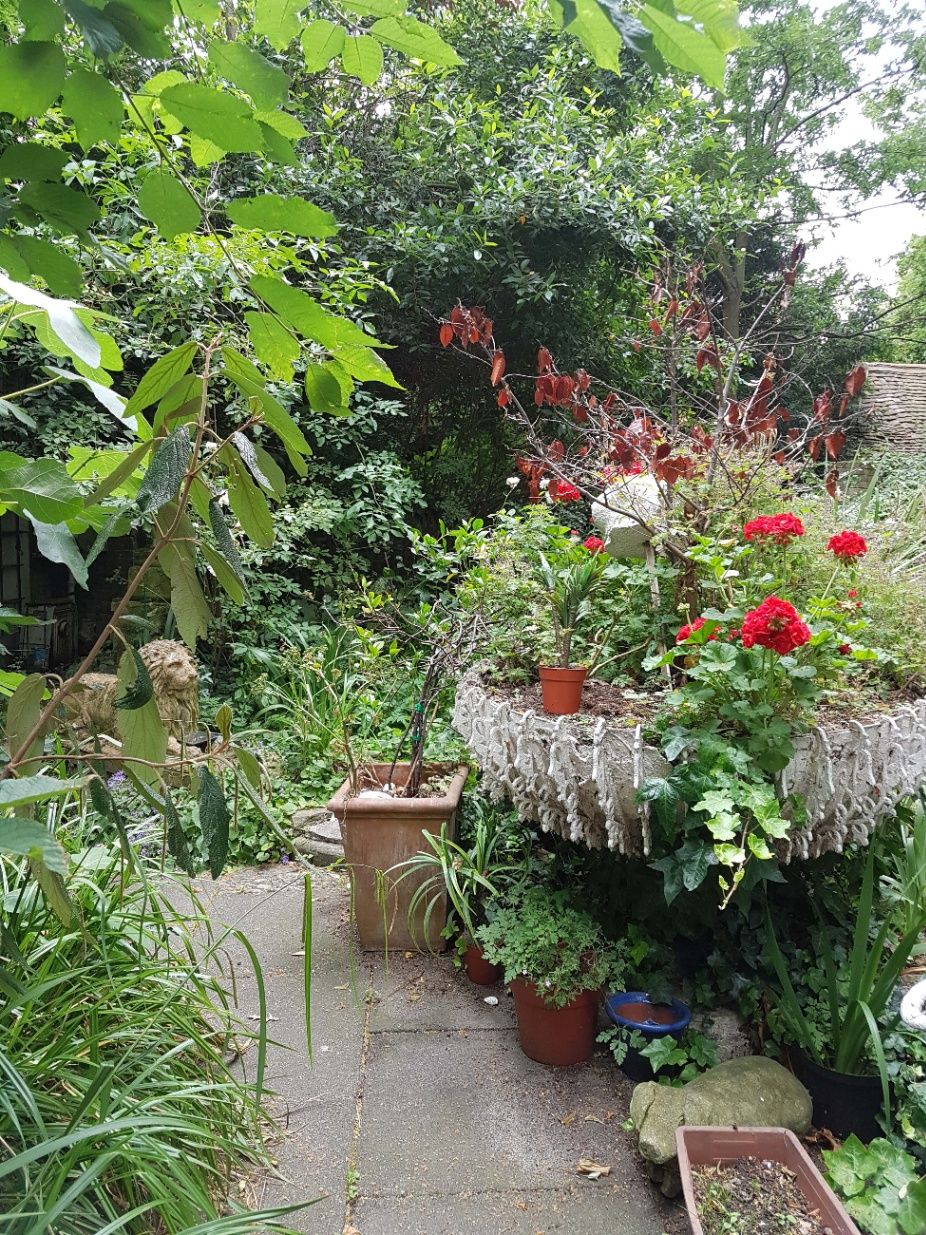
Containers might be pound-shop plastic pots or Victorian showpieces, each was given equal status. Ivy was allowed to wander freely, perhaps through a statue of a cherub fighting a snake, or round a wistful female head – though, crucially, not enough to smother them.

High yew hedges feathered their way onto crumbling balustrades, and into a rickety raised pond, accented with a small, rusting bird bath, a stone peasant girl or solemn, armless Edwardian lady in her underwear, slightly the worse for algae.

The grass between rambling herbaceous islands was kept clipped, allowing the garden a modicum of order, while always threatening to descend into the chaos I can’t help feeling Ann rather enjoyed.

Elsewhere she dangled old CDs in bunting through the trees, like birds trying to escape the multiple white-painted birdcages that also hung there. A gigantic Kiftsgate rose scrambled across the tiled roof of an old garden room, which can never have seen any sun, even in its youth.

Kitsch stone pigs and geese wandered through the grass, equally valued alongside true antiques.

Closer to the house the heady perfume of jasmine pervaded the air, even as the remains of an elderly mangle slowly descended into the ivy.

If this all sounds rather melancholy it really wasn’t, though I feel a little bit sad looking at the images from my last visit in 2022. Ann was a force of nature, whose strange, chaotic, beautiful house and garden was part of Old Greenwich, a once-saucy sailor-town filled with bohemians and curious characters, a jumble of junk shops and crumbling warehouses, musty second-hand book emporia and alleyways revealing glimpses of gardens secret to all save their owners. It is a world that has almost completely disappeared now. House prices have gone through the roof and with them the town’s character.

Ann passed away in February 2023. Her house and garden have been emptied and the valuable items sold by auction. I can’t help wishing I’d remembered to haunt the skips that must have sat around outside, they would have yielded all sorts of treasure.

Don’t get me wrong. There are still lovely gardens to be enjoyed in Greenwich – word to the wise, there is a specifically local open garden festival held in Greenwich, Charlton, Bexley and Blackheath every June in aid of the local hospice which genuinely should not be missed. Some of those gardens are exquisite. But I can’t help thinking that the days are numbered for characterful gardens of the kind of damaged opulence that 14, Crooms Hill once boasted.