From Empty Halls to Vibrant Gatherings: Reimagining Local Summer Shows
The old local gardening shows are not engaging people so much, so what can we do to save what should be a great community event?


I was watching the delightful sitcom ‘Detectorists’ with my teenage son, the episode where the group of metal detector enthusiasts held the annual show of their findings in the village hall. When the camera panned across the hall, empty of people apart from Lance sitting disconsolately behind his table with the label ‘Ring Pulls through the Ages’ we burst out laughing. ‘I have BEEN to local shows like that!’ I exclaimed. ‘So have I!’ agreed my son ‘and most of them organised by YOU!’
Oh dear, perhaps I had dragged my family along to help with my boring charity and community efforts a bit too often. There was the big flower show where I did a stand for Butterfly Conservation, showing my array of wild caterpillar food plants. It was so crowded that people kept moving straight past without so much as a glance at the labels. There were the local garden shows where I helped out in the Wildlife Trust tent with lots of free leaflets. But people did not come in because the other helpers stood outside in the sun, hiding the entrance while chatting to each other. There was the time I had driven for five hours down to RHS Wisley Spring Show, to give a talk on gardening for butterflies and bees, when only three people were in the audience in the plant centre - and two of those were only there because they had seen the empty chairs and fancied a rest.
What is wrong with the way we run these events?
Of course we need to make a distinction between the specialist plant societies' annual shows, where people who have spent many years cultivating and breeding the most special specimens of orchids, or dahlias, sweet peas or vegetables for our delight and benefit - between that kind of show and the annual local village fete or city flower show. It is the latter that is dying a slow death and not being the best community event.
How can we do better? Well, first of all, who are our audience likely to be? A lot of parents of young children are looking for something free, fun and easy to engage children of different ages and abilities. Colouring sheets of butterflies with accurate wing markings are a good way for kids over 10 to learn how to identify them. But completely uninteresting for toddlers, so that many a family will just move past. So I got some sponge printing blocks of butterfly, caterpillar, flower and sun. Individual plastic trays with sponge dishcloths cut to fit and washable paints in each of 3 colours in them. A sheet of paper or card provided for little ones to print a picture or a card to take home for grandma. Gets the parents to sit beside them and chat to us about our charity or local gardening clubs. And we can give them free leaflets about what we do, for them to read later.

Advertising in the right places
Getting the notices about the show, out in advance ( but not too far in advance) in lots of critical places where the target audience will see them is a must. That was the problem with the RHS show I was invited to speak at and sell my book. Nowadays social-media on several platforms is of prime importance. Delegate some young, social-media savvy people to do this for the event, even if they are not on the committee; that will get them involved with their age group and the show. Any other ideas?

Tea and cake is always useful!
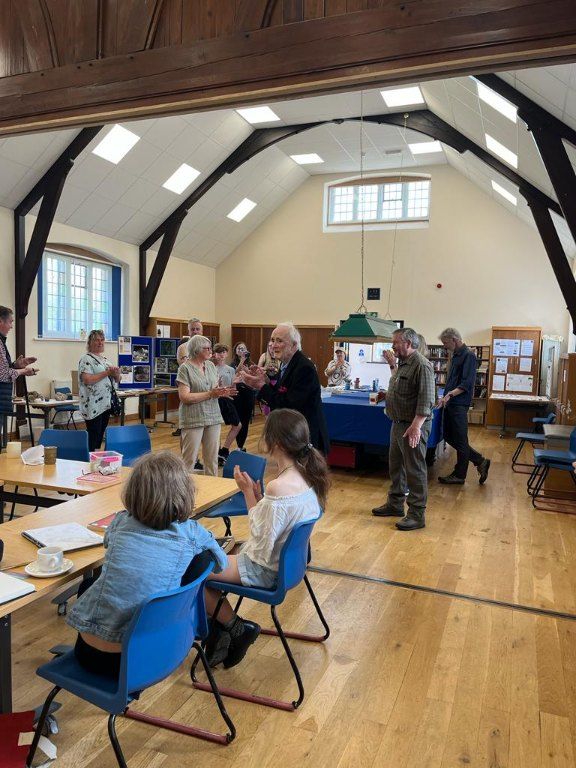
Another way to get the adults sitting down and chatting, whether old and needing a rest, or with babes in arms, is to have a table in the middle of the hall (not round the edges) where tea and cakes can be taken from the kitchen. The older children can play and learn safely at adult-led activities, at stalls around the room, like going on a bug hunt, making paper mobiles of the life cycle of a butterfly, a treasure hunt of pictures of different creatures or flowers hidden amongst the displays, or playing a wildflower or fungi card-matching game. We can also make a small amount of money to pay for the hall hire from selling the refreshments.
The old flower shows are just a bit out of date
The old gardening shows look rather old fashioned now; where the judges use measuring rings for the size of dahlia heads, and all the old boys regularly win the cups, a huge table full of shiny cups was at one I went to judge at! But there were only enough entries to make a first and second in some of the many categories listed in a thick schedule booklet. Some had just one entry! I had to judge which photos showed the best butterfly gardens. I used the criteria of which plants they contained, but the marshal who accompanied me was surprised I didn’t choose the excellent close-up of a Red Admiral butterfly, missing the point entirely about the award being for gardening (i.e. the planting) to help the insects. And some younger entrants who had put in a lot of effort were disappointed they didn’t win anything. This is not the way to get community participation. Do we still need a competitive element, or does that just exclude the majority? What do we need instead? Displays of photos of our gardening projects? Scrapbooks of our gardening year? Creative art inspiration?
Can you help with some ideas?
We need interesting displays that invite visitors to do a simple activity or join a discussion, rather than just look and be pressed to spend.
We need guided walks to see and learn about plants and how they are all related to insects, birds, ponds, habitats, rocks, soils, whether in local gardens or in the countryside. How do we make free activities that are fun for all ages in the gardening shows of today? Come on people, let’s share some ideas! Please add your suggestions in the comments.
Scribehound Gardening members can submit their own articles on any gardening-themed topic and they are published in addition to the daily reads from our hand-picked team of contributors. You can find them all here. When there is a month with 31 days, we pick one of our favourites to feature as the daily read on the 31st of that month. Find out more here.