From Seed to Soil: A Gardener's Evolution
A reflection, with a few digressions, on my journey as a gardener.


How did I come to be a gardener? The simple and most truthful answer is that I don't actually know. I think that I somehow just always was. I cannot remember a time when I didn't garden in some way or form. I have long felt compelled to grow things. In fact, I have been gardening (or at least playing in the dirt) for as long as I can remember.
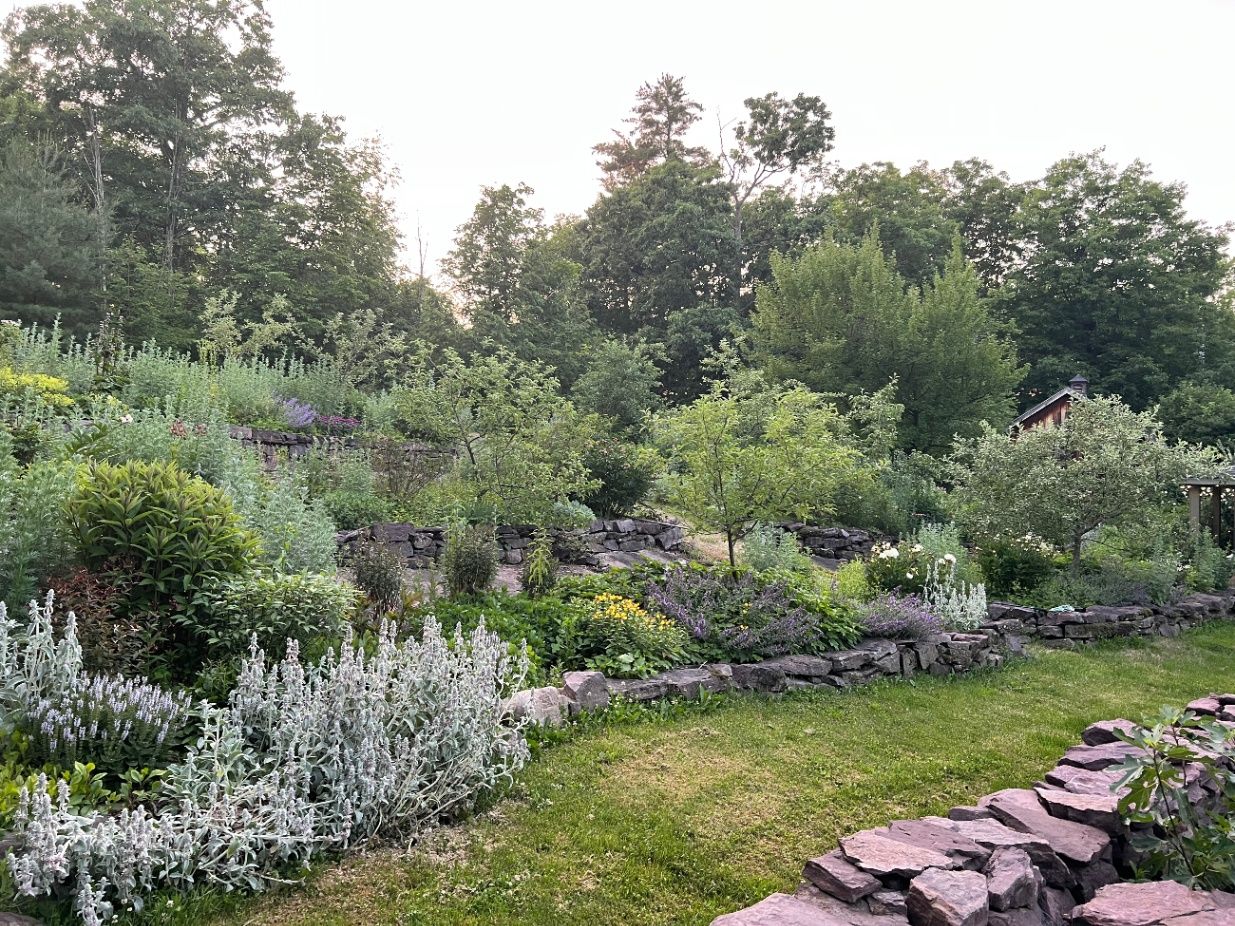
My first efforts were in North Dakota in my mother's garden and then alongside my grandmother as she potted petunias and geraniums in her garden. Now I garden in the comparatively temperate state of Vermont. Gardeners in Vermont often lament the harsh climate, but to me, the zone 5b of the Champlain Valley is bucolic bliss compared to the 3b to 4a that I grew up with.
The standard flowers of the Dakotas were much like the people who lived there: hardy, stalwart, and no-nonsense. There were lilacs aplenty, many stands of Harrison roses, white daisies, a hardy purple campanula that was as much weed as bedding flower, peonies, columbine, hollyhocks, standard tulips and daffs, and then a long series of annual bedding plants - your standard geraniums, petunias, snaps, begonias, etc. Landscape gardens and fancy mixed perennial borders were things we only saw on PBS when they toured English gardens. Of course, PBS was a constant in our house and I saw many a fancy mixed border. This exposure, as much as growing up playing in the garden, clearly laid much of the groundwork for my current gardening notions.
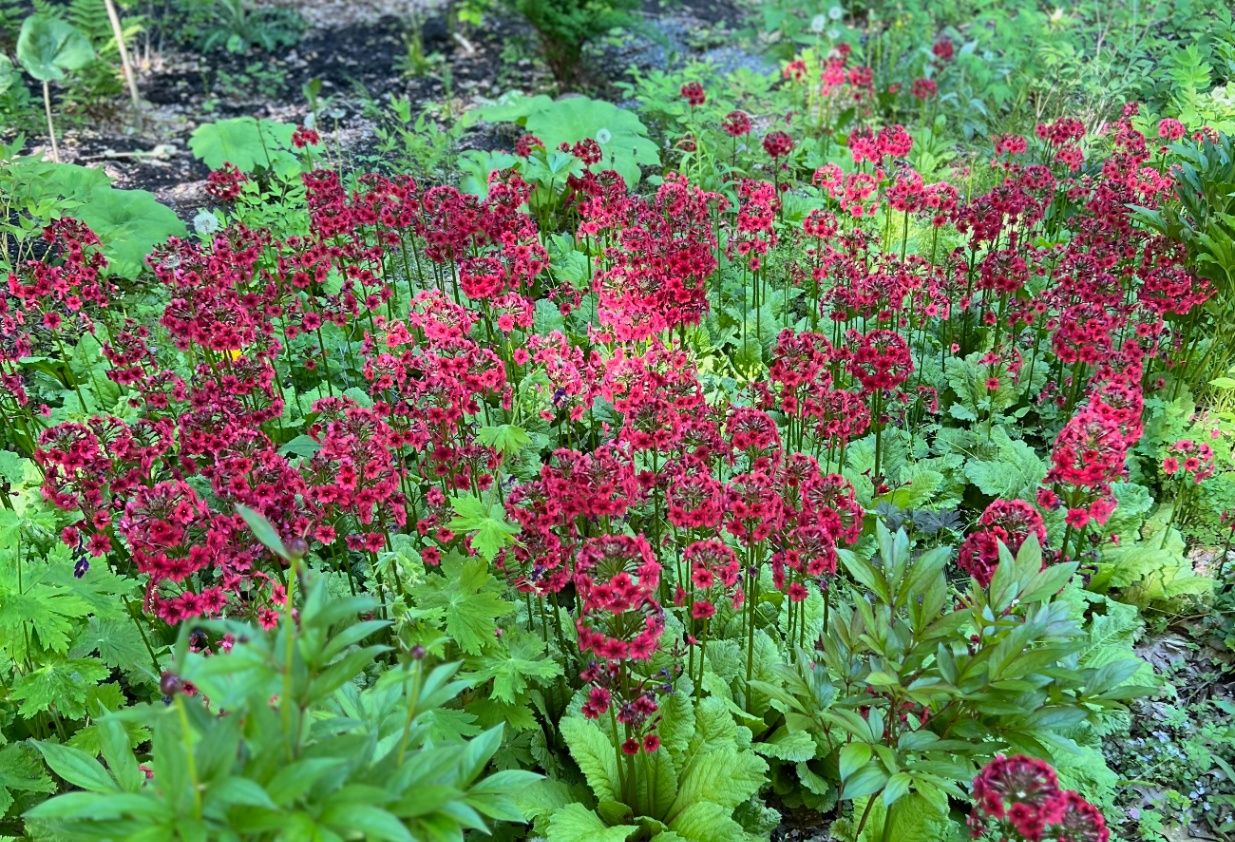
Luckily, my parents were willing to encourage my gardening interests as they developed. When I was in middle school, a Bluestone Perennials catalogue somehow made its way to our house. Between the mixed borders I saw on gardening shows on PBS and tempting illustrations in the catalogue, I was entranced. I wanted a mixed border and must have been fairly persistent as my parents relented and let me take on a flower bed all on my own. I was given a set amount of money and I ordered a mix of perennials. This was a new experience for all of us and I wasn't the only one disappointed by the puny bedraggled little plants that I unboxed. I also had no idea what I was doing. I knew enough to make sure that they were hardy to my zone, but I had paid little attention to their other requirements. Let's just say, the primroses didn't make it long in the arid high plains in a border where the only moisture came from the garden hose.
I watered and weeded diligently for about a month, at which point the death of multiple plants, combined with the fact that at that age, I didn't really like the work of gardening, meant that I jumped ship. The thing is, is that while I have been gardening as long as I can remember, I haven't always been good at it. From childhood through my teen years, I much more enjoyed filching raspberries and strawberries from the garden and shucking peas straight into my mouth than I did watering and weeding. In terms of this mixed border, my parents stepped in to save me from myself (or to save their investment in said flowers) and some did survive and thrive. The sad little delphiniums that started off as particularly shrivelled specimens did splendidly for quite a number of years and held their heads up high, despite the ignominy of having to eventually share their space with the standard bedding plants that filled the holes left by their deceased brethren. As the delphs thrived, I grew up and grew to at least tolerate weeding. I had to, as there was no longer anyone else who would pick up my slack, and my compulsion to plant only grew.
The gardener grows up
I have gardened at every place I have ever lived, whether doing so was sensible or not. At one of our first apartments, I planted an entire garden in pots over the asphalt driveway. At the first home that we owned, I put in a picket fence, covered it in sweet peas, and dug up a portion of the lawn to put in a small veg plot. I also planted a mixed border in a bed along the back of the house complete with a wisteria vine to climb up and cover the second-floor balcony. (When we sold the house, I told the new owners that they needed to make sure that they aggressively pruned the wisteria each year so that it didn't pull off the balcony railing. Several years later, we drove by to discover that it had pulled off the railing.)
When we lived in England for a couple of years, I ploughed under part of a paddock and convinced my husband to fence in a large plot so that I could grow vegetables and flowers. Two houses later, back in the States, I put in a comprehensive cottage garden complete with espaliered apple trees bisecting the formal garden from the vegetable plot. The garden was extensive enough that many potential buyers balked at the thought of maintaining it, and the folks we sold that house to hired a gardener to take care of it as they couldn't manage. It was the first time that I realised that not everyone saw a garden as an asset. This was antithetical to how I was raised. Though my parents were educators, and their parents were also professionals, everyone before that for time immemorial worked the land. And that had trickled into the professionals. We were also surrounded by people who still tilled the land for a living. To have land and to tend it was/is security.
Of course, to my ancestors, spending so much time on flowers would be perplexing, to say the least, but I have always, until recently, grown as much food as I have flowers. In my primordial peasant brain, that is the sign of making it - to be able to grow beauty as well as sustenance. This seems to just be a me affliction, however. My grandparents, as they aged, abandoned growing food. My parents also did so for the most part when I left home. As it is with most people, when they were able to make do without the supplement of home-grown veggies to their grocery bill, they were more than happy to forgo the vegetable garden. For me, the thought of not having a vegetable garden instils panic. The questions I don't think about rationally but are swimming about in my subconscious: What if something happens? What if you NEED that food?
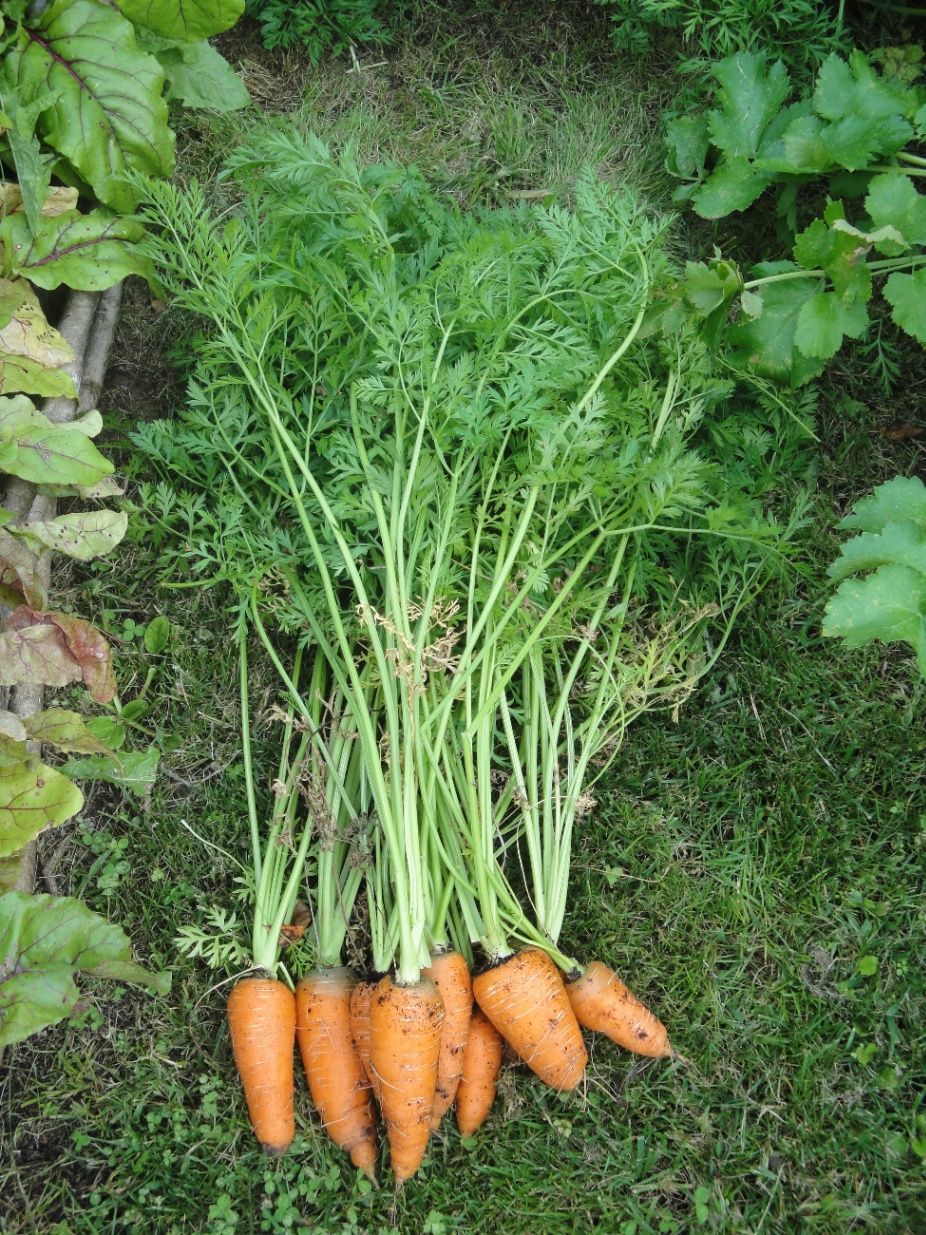
This certainly came to the fore for me during the heart of the pandemic. In the face of supply chain hiccups, food shortages, and other issues my reaction was "I got this" and I merely expanded production. My way of dealing with the uncertainty of the pandemic was to make sure we had enough food to last us the duration. If worst came to worst, potatoes, kraut, and swedes would carry us through the dark times. Of course, it never came to that, but I was prepared!
In addition to these compulsions, another thing that keeps me growing vegetables is that I like food. Farmers markets are expensive, and most of the veggies in the grocery store are tasteless compared to what I can grow myself. I have never understood how willing people are to outsource their food production in ways that trade taste for convenience. I know that many people don't have the space, and many others don't have the time, but most of those who have both time and space do not have the inclination. As for me, I have inclination in spades, which leads me back to the beginning, to my opening question. Where did this inclination come from? I still do not know, but it is evident to me that it has grown organically from a seed planted early, as I played in the dirt in my mother's garden, and it has rooted within me a connection to the soil that seems likely to last until I am returned there, blanketed by the soil that nurtures me and my gardens.