Garden Therapy: Prospect and Refuge
Why does your favourite space feel just right for you? I might just have the answer for why the secret to a garden feeling perfect is in your mind.

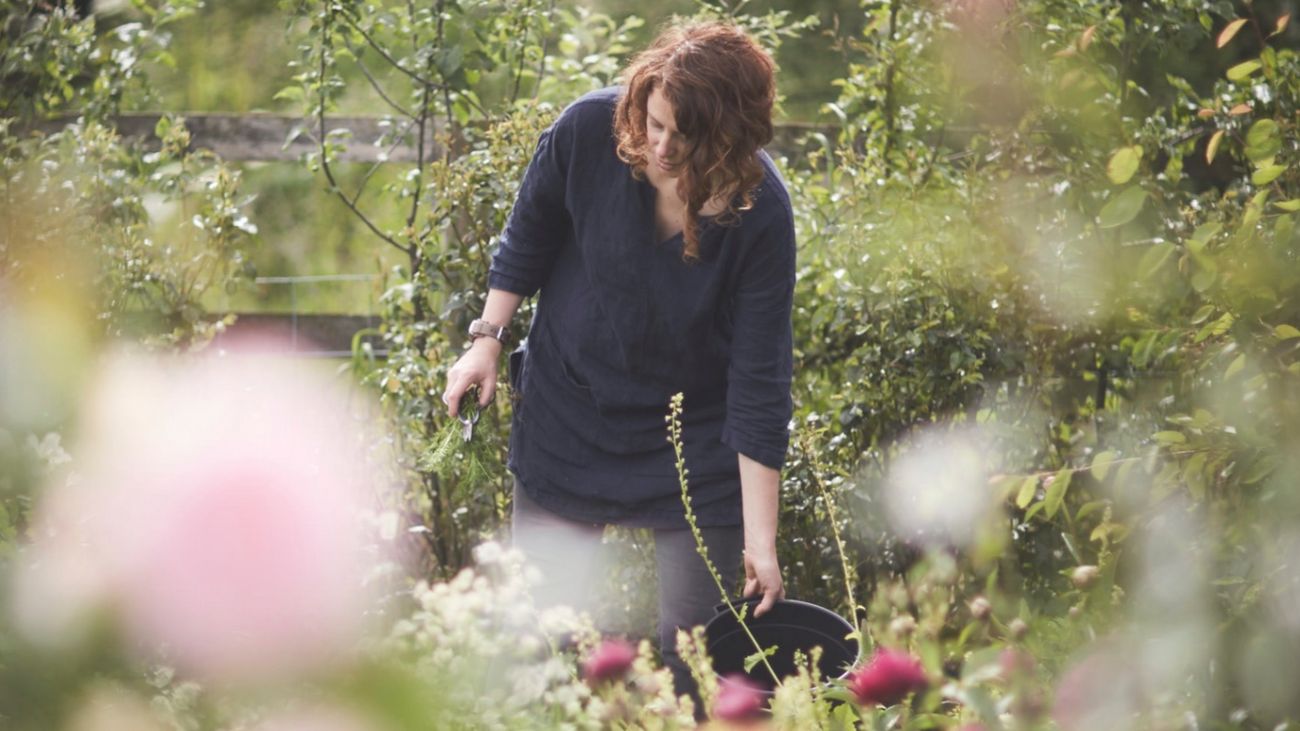
Welcome to my new series, Garden Therapy. My name is Dr Grace Alexander. I am a Consultant Clinical Psychologist and an organic gardener. Through Garden Therapy, I unpack our relationship with gardens and gardening.
This is the second of three articles in this series in which we will explore some of the foundations of how psychological ideas can change how we think and feel about plants and growing, beauty and horticultural happiness.
Last month, I shared my own emotional relationship with gardening. Now, I’m going to broaden it all the way out to humanity’s place in the wider landscape, and how where we are in the outdoors affects us in terms of safety, wellbeing, and how we live our lives.
I want to start with a connection I made some time ago, which Dan Pearson rather beautifully reminded me of recently. Dan was being interviewed by Matt Gibberd on his podcast Homing, and he mentioned something called Prospect Refuge theory. This is the idea that people feel safe and calm when they can see out, but not so much that they feel exposed.
What's most important here is the recognition of two opposing qualities that, when balanced, create psychological safety.
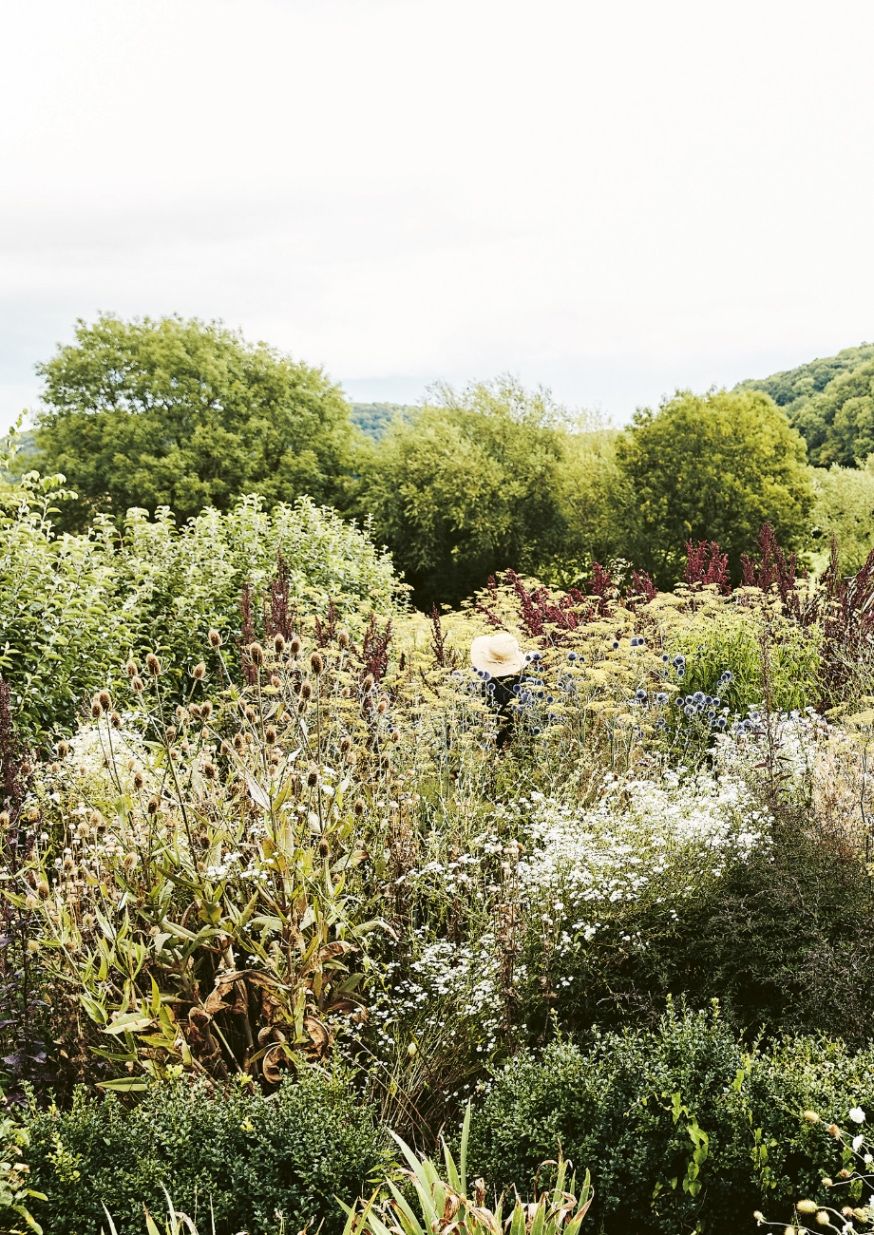
The Psychology of Safety
I work primarily with babies and their parents, and there's evidence that a huge amount of brain development occurs before the age of twelve weeks. One of the things that promotes that development is a complex mix of co-regulation and psychological safety, which creates what we call secure attachment, a deep trust in the caregiver that promotes and enables all the other development that comes after.
A safe haven
At the moment when a baby is learning that they are a separate person from their parent, their development is oriented around two quite complex systems that all human beings have. The first drive is the drive to connect, to seek comfort, and to have one's equilibrium restored by proximity to a loved one or a source of warmth.
In working with parents, we call this 'coming in'. For children, when this works well, the parent becomes what we call a safe haven; someone to return to, someone who makes you feel better.
In landscapes, we call this refuge.
This is when you close yourself in, when you have walls around you, when you wrap yourself in a blanket or in the arms of a place or a person. In a garden, an arbour, a walk, a garden room with a bench, or perhaps a little table and a chair, hidden from the world. A place to pause and to be restored and comforted.
But there's a saying: a ship is safest in harbour, but that's not what ships are for.
Secure base
Human beings are not built for staying in refuge. We have an equally powerful drive to move into open spaces, to explore, to grow, to create, to learn, to examine. At its very worst, this is the drive to colonise and to conquer. At its best, it is the drive to see what's out there, to discover what's around the corner, over the hill. We need to see our hunting grounds and to look out over our corner of the world.
For children, this is called ‘going out’. In landscapes, this is prospect.
When you see children learning about the world at its most magical, you can almost see neurons connecting. If you've ever been through the process of raising a child, watching them drop something from their high chair tray again and again and again, you pick it up, and they drop it again, that's them literally working out that gravity is immutable and applies universally. You have to test something many times to work out that it never changes. The drive to learn is also almost universal in human beings.
Now think of a child learning to ride a bike. What they need is a parent who can put their hand on the saddle, run alongside, shout encouragement, delight in the process of learning. That's being a secure base, the foundation from which a child can safely explore the world.
Two sides of the same coin
Good parents are both a secure base and a safe haven. Not only that, but they need to have the wisdom to know which their child needs them to be and when. This is easier said than done, because every single person, because of their upbringing, their innate character, and their personality, will have a slightly different balance between their drives to come in to seek comfort and go out to explore the world.
Prospect refuge theory states that humans are instinctively drawn to environments that offer both:
Prospect = the ability to see without being seen (open views, vantage points, visibility)
Refuge = the ability to hide and feel protected (shelter, enclosure, cover)
This preference is evolutionary; our ancestors survived by being able to spot threats and opportunities (prospect) while having safe places to retreat to (refuge).
I want to add that this is a perfect reflection of an emotional relationship that we all have with love and care, and by knowing this, we can understand our gardening selves just a little bit more.
Landscape and the Self
So what understanding have I reached about how I relate to landscapes and, more importantly, to gardens, because gardens are the landscapes we choose.
I have a very strong emotional relationship to the softer areas of the Welsh borders: Shropshire, Herefordshire, Monmouthshire. That landscape feels like home to me, although it never has been. I was born in Tooting in South London and raised in a variety of rural areas without a huge amount to recommend them. But I think it's so much more than geography. It's about how a landscape interacts with our sense of balance between exposure and restriction, between prospect and refuge.
I do not like the sea. I do not like being made to feel that small. You could not pay me enough to live anywhere near a coastline. Similarly, I don't really like mountains. I find them too much prospect, too much to see. I feel uncomfortable in them, almost unmoored.
Fenlands too. Cambridgeshire, Norfolk, the Somerset Levels. Once I'm on them, I can't wait to get off. I feel too exposed, too vulnerable.
Refuge for me is soft rolls in the land. Being able to see just far enough, but not too far.
Of course, at the other end of the spectrum are spaces that feel claustrophobic, too small, too cramped, making you feel slightly unnerved because you can't see what's coming around the corner.
I may have spent my twenties living in a fourth-floor flat on Tower Bridge Road, but I couldn’t do it now. On my annual visit to Stourhead, I came across someone getting married in the grotto. We both got something of a surprise because I was almost running to get through and out of it; it is essentially a very wet cave, and I was not hanging around. Too much refuge and it becomes a trap. There’s a reason why being lost in a forest is the stuff of horror movies.
But a little refuge is a wonderful thing and balances the prospect. A lot of garden designers use this very intentionally through the creation of rooms and hidden vistas. You shouldn't be able to see the whole garden at once. It should reveal itself as you move through it, tapping into that human quality of wanting to discover what's around the corner.

My Own Garden: My Own Refuge
How have I used this in my own garden?
I have a rather lovely but very small thatched cottage, which is absolutely my refuge. You need a crowbar to get me out of it. I don't tend to go on holiday much because I love it so much. I'm a snail and it is my shell. I am a crab and it is my carapace.
I know they are terribly unfashionable these days, but this is why cottage gardens feel so satisfying. They typically have:
Some Prospect: paths with sightlines, openings that reveal views, elevated positions·
Lots of Refuge: arbours, dense planting along boundaries, garden rooms, seating alcoves surrounded by plants
This balance suits me, because psychologically and in life, I have a lot going on with the other drive. I am always on the go, all striving and high-achieving, and going for the next big goal. In my relationships with people, I'm quite avoidant. I don't seek refuge in people; I don't admit to vulnerability easily, I don't ask for help, I'm hyper-independent. I've learnt to mute that drive to connect in relationships.
What I do instead is use place. I use my home and my sense of safety within the building and within the ground. I connect to the landscape.
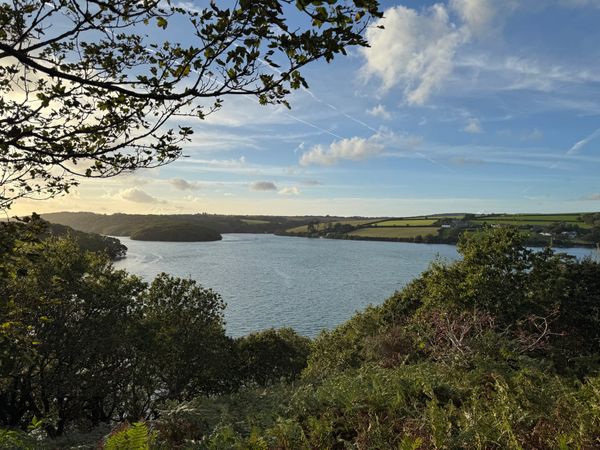
There's a beautiful prospect from my cottage, just enough of a view. One hill, very manageable, not too far away. It gives a hint of landscape without revealing too much. Some days when the clouds come down, you can see the clefts in the hill and realise it isn't one hill but multiple hills layered together. It’s a comfortable sort of domestic hill. Its edges are soft. It has a sense of something grander than it first appears, but it's just enough prospect.
I don't use lots of rooms in my garden, but I do have strong boundaries. We're in beech country here in Somerset, and I've planted a strong, quite square beech hedge at the boundary where my garden meets the field. Dan Pearson talks about gardens bleeding into the landscape, that idea of getting wilder and less intensively gardened as you move away from the house. But I don't have that. There's a field with brambles and nettles coming under the fence, but we're still very much in a village setting. This means I know exactly where my edges are. This side of the hedge is mine. The other side of the hedge could be anyone’s.
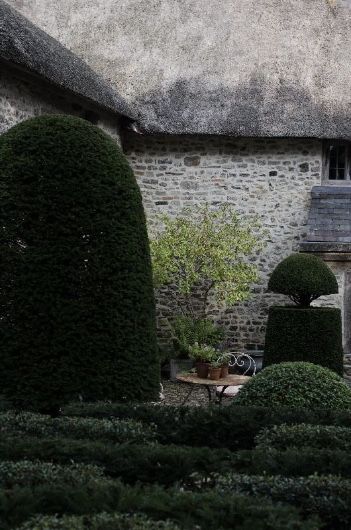
I also think a lot about scale. Scale is one of the key ways you can balance prospect and refuge. My space is very cottagey, and while I have some strong topiary pieces, their scale is proportionate to the house. I've kept everything to what I would call domestic in scale. Even a sycamore that arrived as a weed still feels like it's within a managed, personal space. Pieces that are too large can shatter the peace of a place by appearing menacing or by looming. Everything being too small or too samey can feel unbearably twee and dull (too much refuge) and make one want to escape to somewhere more elevating (as in, anywhere with a bit more prospect).
The Meaning of Gardening
As a child psychologist who works with attachment theory, which helps us understand how human beings work not just in childhood but throughout the lifespan, I think we need to understand how these drives affect how we garden.
Because truly, this is the meaning of gardening: how a person and their character, their drives, their history, really affects the choices they make in shaping a landscape into something touched by the human hand. I would love to hear whether you are a refuge or a prospect person. Even more exciting if you can say why…
Can you tell me your favourite garden, and see whether it fits with my theory?
Thank you for reading this episode of Garden Therapy.
Next month, my focus will turn from children to parents, and explore how understanding boundaries and warmth, structure and softness, can lead us to discover the specific recipe for our own perfect garden. We’ll be digging a little deeper into another of the fundamental human paradoxes, structure and chaos, and seeing how it is expressed in one of my favourite gardens, Hidcote Manor.
And from May, I'll be talking to different people about how their own relationships with people and places really affect the choices they make in their gardens and in designing gardens for others.