Gardening's First Couple
John and Jane Loudon revolutionised gardening in Britain in the 19th century

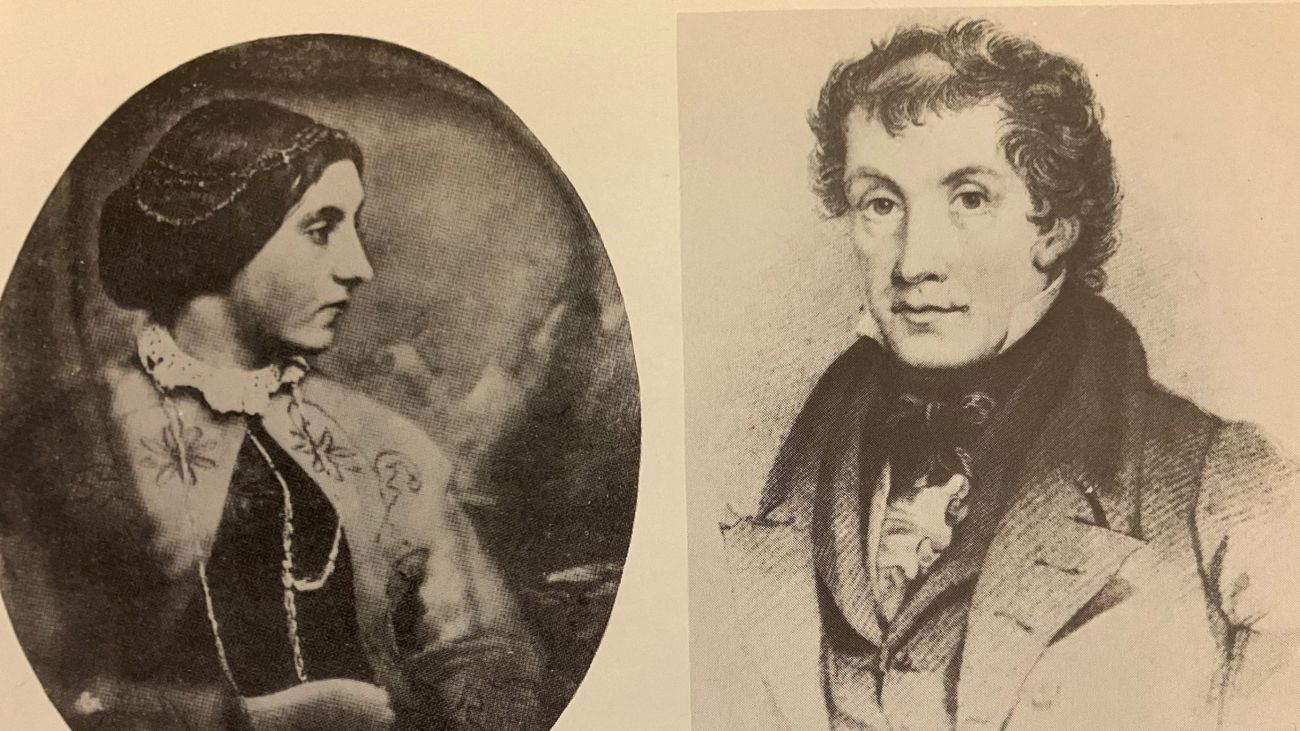
Probably no one has done more to popularise and democratise gardening than John and Jane Loudon, a remarkable couple whose story bears familiar hallmarks of early-Victorian England, including entrepreneurship and prodigious hard work dogged by financial challenges and ill health; and marital devotion. In their lifetime they were widely known and counted respected luminaries such as Charles Dickens, William Makepiece Thackeray and Jeremy Bentham amongst their acquaintances. Today they are little-known outside a small circle of garden historians.
The background to their achievements was the growing social revolution brought about by the Industrial Revolution of the 18th century and its continuation into the 19th, a revolution that was brought to life in a ground-breaking book published in 1982; The Birth of a Consumer Society: The Commercialisation of Eighteenth-century England. The three authors were the most distinguished historians of 18th century Britain; Neil McKendrick, J.H. Plumb and John Brewer. I was lucky enough to be taught by the first, Neil McKendrick, when I read history at Cambridge in the 1970s, tuition which gave me a lifelong fascination with the Industrial Revolution and the men and women involved.
As the book’s title suggests, its central premise is that the Industrial Revolution produced a consumer society to which the British economy would, through the 19th century, adapt and expand in spectacular fashion. The book’s contents range widely but, as an intriguing footnote that could not be more apposite to this article, Neil McKendrick produced a small pamphlet (of which I have a prized copy) of a talk he gave to the Il Tempo Libero Economic Society in Cambridge in 1995, entitled The Commercialisation of Leisure: Botany, Gardening and the Birth of a Consumer Society. Demonstrating how the new middle class had increasing disposable income to spend on leisure activities, Dr McKendrick describes how, by the end of the 18th century, this found a particular focus in gardening, in frantic fashions for new flowers and plants (many introduced from overseas) which in turn drove a new boom in plant nurseries and suppliers.
In one passage he writes; “By the end of the 18th century the evidence that in gardening the commercializing process was well under way is undeniable. A horticulture of aristocratic ostentation had developed to such an extent that it now encompassed the leisure time of the middle classes and the hobbies of working men and women. Gardening had been democratized as well as commercialized.”
This was the background which, as Georgian evolved into Victorian, the energetic, entrepreneurial Scotsman, John Loudon and his equally entrepreneurial and capable wife Jane would develop in spectacular fashion in a range of gardening publications written specifically for the ‘mass market’ rather than knowledgeable specialists. Through a period of some three decades their output was prodigious, before their respective deaths – both at relatively young ages – in 1843 and 1858.
John Loudon was born in 1783, the son of a Lanarkshire farmer. The thirst for knowledge which he demonstrated at an early age led to him being sent to live with an uncle in Edinburgh to benefit from the education available in the city. After leaving school he worked at a well-known plant nursery but also found time to teach himself both French (in which language he always wrote up his daily journal) and Italian. In 1803, aged 20, he moved south to London with the intention of setting up as a landscape gardener, but initially working as a freelance journalist, producing a few months after his arrival his first publication, ‘Hints for Laying out the Ground in Public Squares.’ More publications followed in successive years, as well as work as a landscape designer, establishing a sufficient reputation for Loudon to be made a member of the distinguished Linnaen Society aged just 23.
In the same year, probably because, as suggested in British Gardeners, A Biographical Dictionary, ‘his untiring industry had undoubtedly affected even his unusually sturdy constitution’, he suffered a debilitating bout of rheumatic fever which left him with a permanent limp and a shortened arm after a botched operation. He decided a change of livelihood was necessary and turned to farming, persuading his father to come south and join him in a venture in Oxfordshire so successful that when the farm lease was sold in 1811, John was able to invest £15,000 profit. He set out to travel through northern Europe, visiting well-known gardens on his way, with Moscow his final destination. Only just recovering from Napoleon’s disastrous 1812 campaign, the largely-ruined Moscow was not a welcoming place and Loudon headed home -only to discover that he had suffered his first major financial disaster as the investments into which he placed the farm profits had all failed.
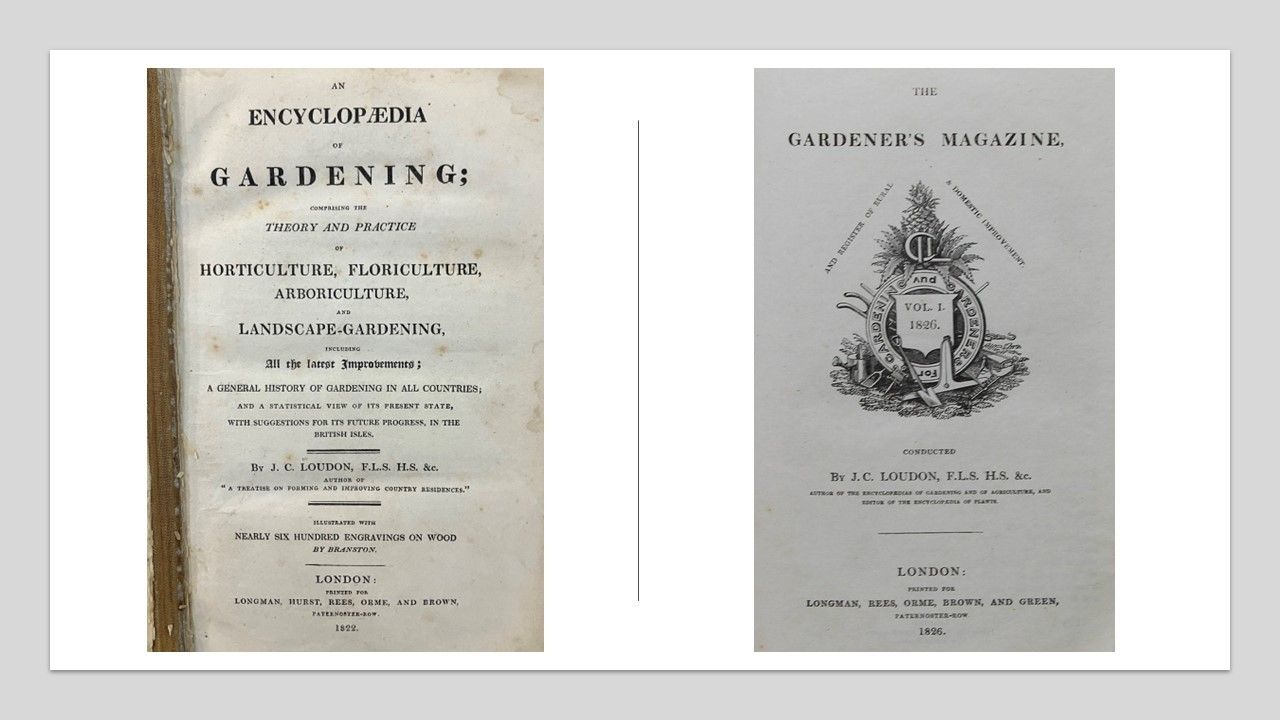
Demonstrating the resolution he would show throughout his life, he returned to writing and producing gardening publications, with his enormous Encyclopaedia of Gardening being published in 1822, followed by the launch of The Gardener’s Magazine in 1826. Both were formidable publications; the sheer size of the Encyclopaedia of Gardening is confirmed by the fact that the list of its contents ran to eight pages and the author made clear his intentions in the start of his Preface: ‘The term Encyclopaedia, applied to a single art, is meant to convey the idea of as complete a treatise on that art as can be composed at the time of publication.’ British Gardeners, a Biographical Dictionary confirms the book was ‘directed towards the rapidly expanding middle-classes needing guidance in the cultivation of the gardens of their new villas’.
The Encyclopaedia had already run into a number of editions by the time John launched The Gardener’s Magazine, the first cheap illustrated gardening journal published for the general public rather than a more élite audience. He organised a team of contributors and the magazine’s contents regularly discussed the new gardening inventions of the day, from the use of cast iron, heating, or narrow glazing bars in greenhouses to the qualities of the new mowing machine invented by Edwin Budding. The magazine’s gardening content was tempered by book reviews, one of which was to bring about the single most important development in John’s life, his marriage.
Jane Loudon was born Jane Webb in 1807, the daughter of a wealthy Birmingham businessman. Her mother died when she was only twelve. Her father ensured she had a good education but in the years before his death in 1824, suffered severe business losses so that Jane found herself aged 17 a penniless orphan. In response to the challenge she embarked on a career as an author of fiction and, aged 20, published The Mummy! Or a Tale of the Twenty-Second Century.
Credited with being a pioneering work of science fiction, it gained widespread popularity and was reviewed by John Loudon in The Gardener’s Magazine. Apparently he was particularly intrigued by the book’s description of a steam-powered plough and he requested a meeting with the author, who he was clearly not expecting to be a woman, as Jane later described; ‘It may easily be supposed that he was surprised to find the author of the book a woman…I believe from that evening he formed an attachment to me, and, in fact, we were married on the 14th of the following September.’
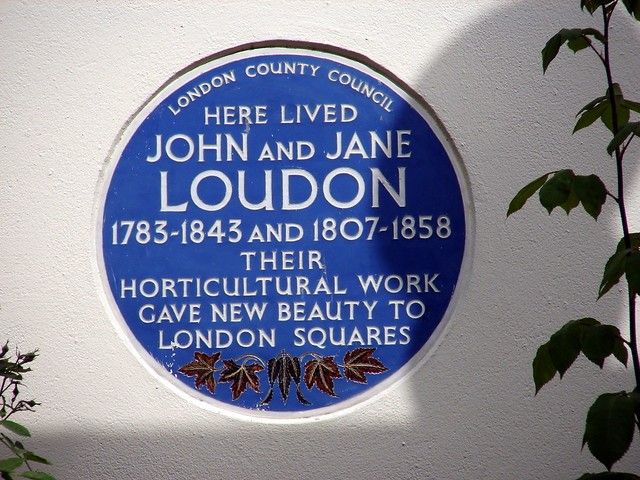
So began this remarkable gardening partnership. From their home in Porchester Terrace in London’s Bayswater, where they had a large garden of their own, John and Jane each wrote and produced a constant flow of gardening publications, information for which was often gathered on a series of journeys around Britain when Jane acted as her husband’s secretary. This was a time of flux in gardening styles when the old norms of gardens being either formal or natural were being challenged by new influences – and the fact that gardening was becoming popular and needed to be suitable for people who did not have rolling acres around their stately homes.
John Loudon first used the term ‘gardenesque’ in The Gardener’s Magazine and it came to suggest the combination of flowing lines and varied planting which is associated with early-Victorian gardens. Of all John Loudon’s books the most aptly named was The Suburban Gardener and Villa Companion, published in 1838, which set out its subject in the first sentence; ‘The enjoyments to be derived from a suburban residence depend principally on a knowledge of the resources which a garden, however small, is capable of affording.’

The liberal social beliefs which both he and Jane shared led them to be early advocates of public parks in the rapidly growing cities of 19th-century England. In The Gardener’s Magazine John set out a plan for the Victorian equivalent of a ‘green belt’ system for London, with a network of parks providing green ‘breathing spaces’ and in 1839 he provided the plan for Derby Arboretum which survives as Britain’s oldest urban public park.
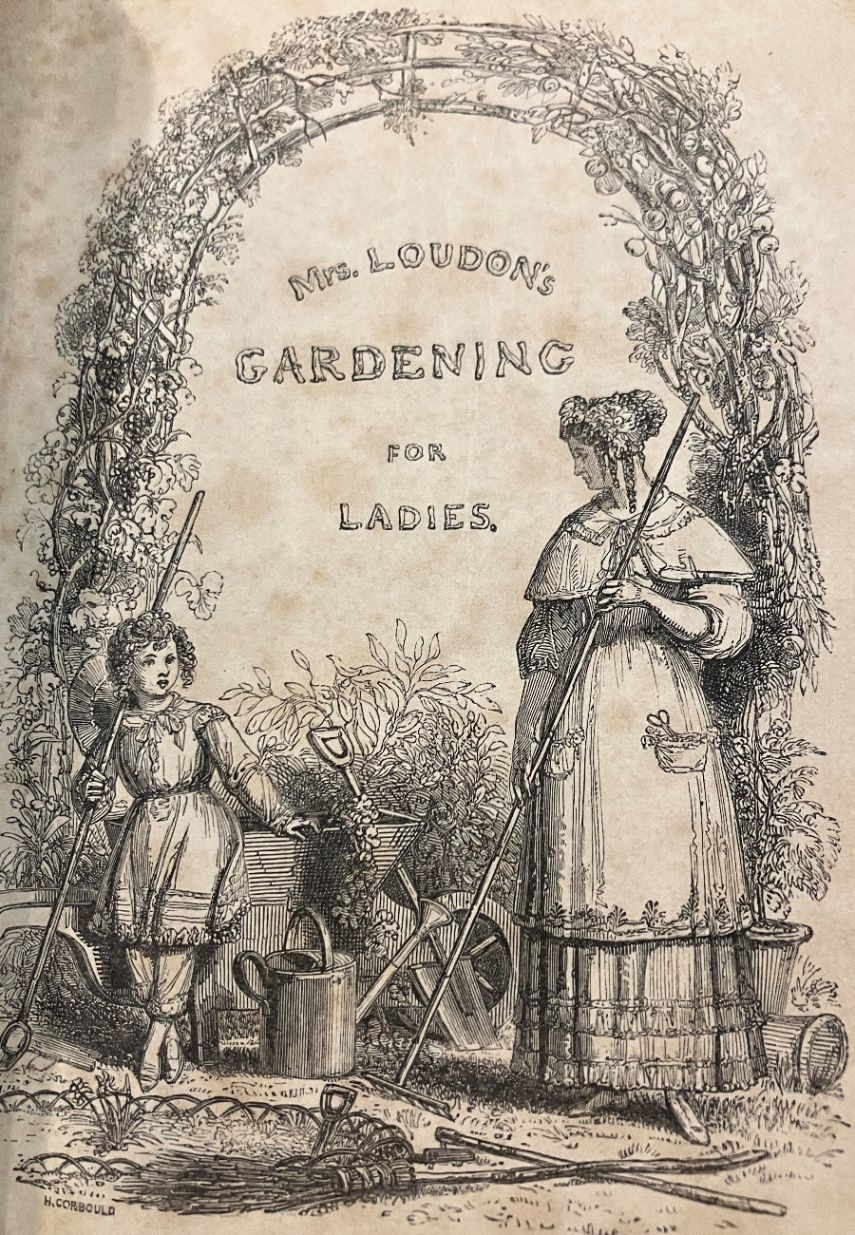
John Loudon’s output was notable for its sheer range and size and was aimed at as wide an audience as possible. Jane Loudon, however, had one particular audience in mind, women or lady gardeners, as confirmed in the titles of her own succession of publications. In the first, Gardening for Ladies, published in 1840, she started by setting out her debt to her husband; ‘When I married Mr Loudon, it is scarcely possible to imagine any person more completely ignorant than I was, of every thing relating to plants and gardening.’ Indeed she cleverly suggests further on in her Introduction that her ignorance qualifies her for the task of writing the book and that, ‘I think books intended for professional gardeners are hardly suitable to the wants of amateurs.’ She quickly realised that illustrations were as important as text for her audience and so early in her writing career, with characteristic ingenuity and application she taught herself to become an accomplished illustrator.
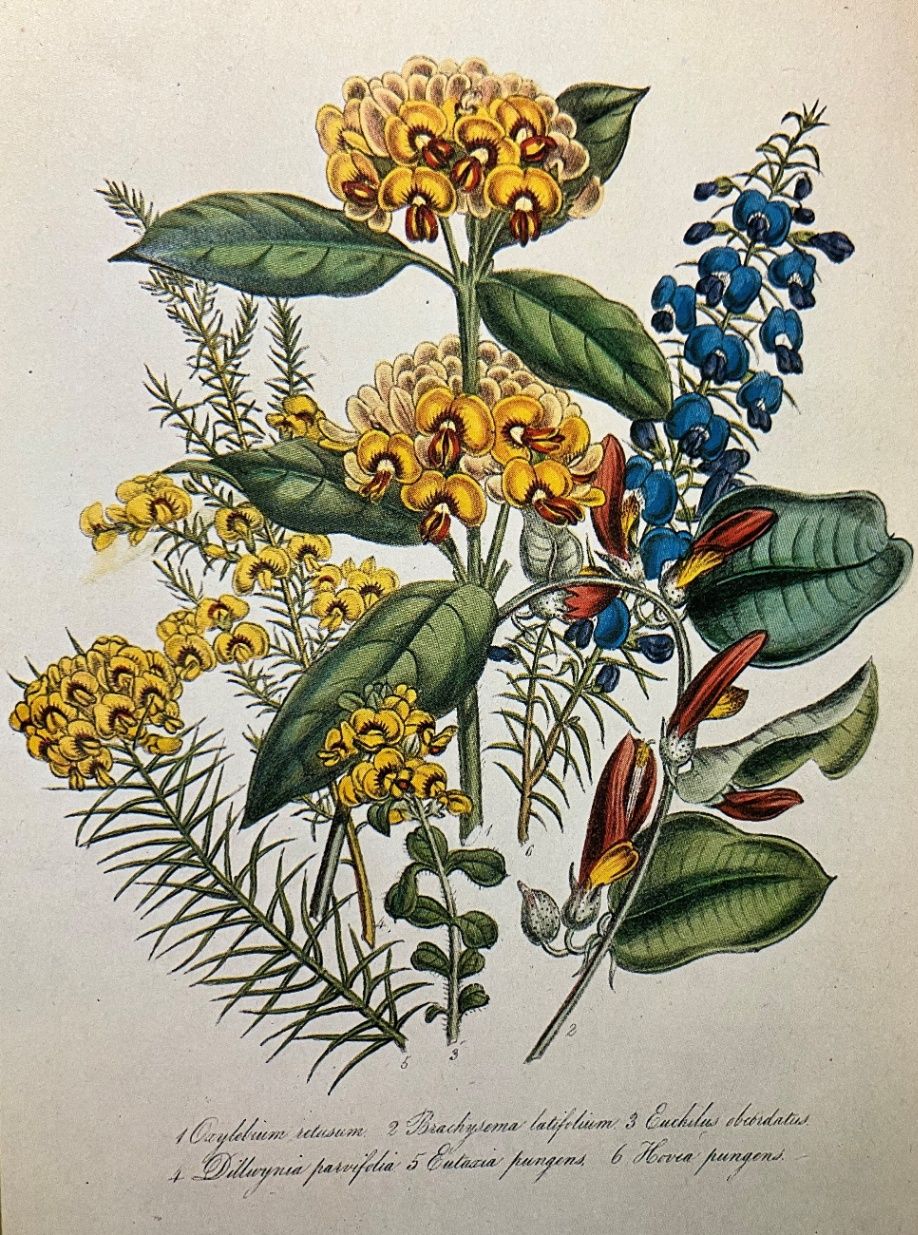
Within the various chapters of the book she regularly emphasises the audience which she is writing for, as in the start to the chapter on ‘The Flower Garden and the Cultivation of Flowers’; ‘Whatever doubts may be entertained as to the practicality of a lady attending to the culture of culinary vegetables and fruit-trees, none can exist respecting her management of the flower-garden as that is pre-eminently a woman’s department.’ Chapter IX deals with the management of the lawn where, with great tact, she suggests that mowing ‘is an operation which a lady cannot very well perform for herself: unless, indeed, she have strength enough to use one of Budding’s mowing machines.’
One of Jane’s other most successful books was The Ladies Companion to the Flower Garden. First published in 1841 it ran to a succession of editions, of which the 1844 edition contained the following entry by the author: ‘The present edition was prepared for the press, and the above paragraph written, the first week in last December; and on the 14th of that month I had the irremediable misfortune to lose my beloved husband. As this was the only one of my works in which he gave me assistance, it has afforded me some consolation to collect in the frontispiece to this edition all the plants that have been named in honour of him.’
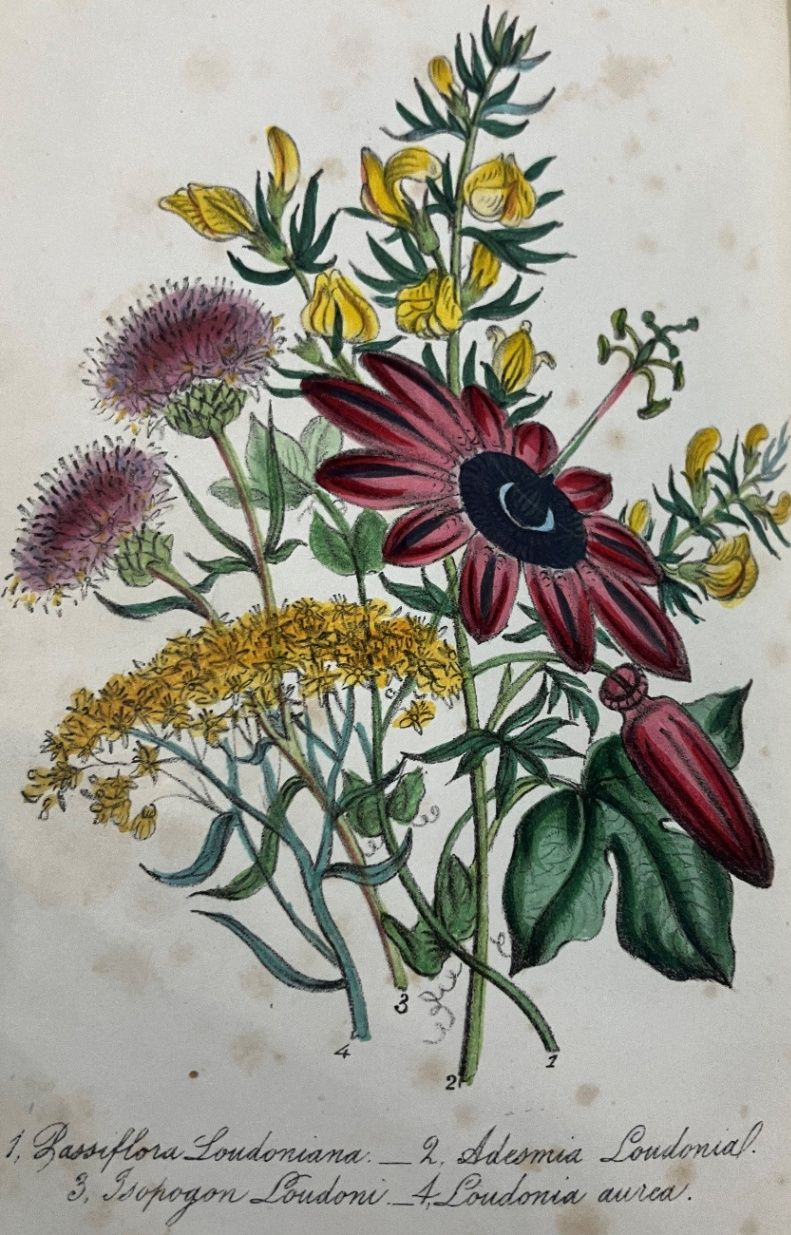
The plants she lovingly illustrated were Passiflora loudoniana, Adesmia loudonia, Sopogon loudoni, and Loudonia aurea.
The ill health which started with John Loudon’s rheumatic fever in 1803 never really left him. Additionally, the last years of his life were dogged by financial problems. Many of his publications were costly to produce, in particular the largest, an eight-volume study entitled The Arboretum et Fruticetum Britannicum or The Trees and Shrubs of Britain, Native and Foreign. It ran to 3,000 pages with thousands of illustrations. One review described it as ‘an unsurpassed and precise study’, but it left Loudon with serious debts exacerbated by a severe depression in the book trade in the early-1840s. Weighed down by these troubles, but indomitable as ever, it is entirely in character that he was dictating to Jane at midnight when he collapsed and died.
After her husband’s death Jane continued her output of gardening publications, not least in an attempt to repay the debts with which she had been left. She continued The Ladies Flower-Garden, an illustrated series of monthly parts which she had started in 1839 and which ran to 1848. The following year she became the first editor of a new periodical, The Ladies Companion. Perhaps her most successful book of this later period was The Amateur Gardener’s Calendar, first published in 1847, of which William Robinson would produce a new edition in 1870, years after Jane’s death.
She died in July 1858 aged only 50 with no financial evidence of the extraordinary hard work and pioneering successes which both she and her husband had demonstrated. Some years ago, the catalogue of a small show at the Victoria & Albert Museum ‘Mrs Loudon and the Victorian Garden’ contained this assessment of Jane: ‘she was to Victorian gardening what Mrs Beeton was to cookery…Women all over the country were enthused enough by [her books] to take up gardening as a hobby.’ As for her husband, to whom she devoted so much of her life, his American contemporary A. J. Downing described him as ‘the most distinguished gardening author of the age.’
But his vast contribution to Victorian gardening literature and the influence he had on who gardened in Victorian England and how they gardened faded steadily after his death. It is a sad oddity that two such engaging and likeable people, whose story as a married couple is a rarity in the history of gardening and horticulture, have been confined to obscurity – not least because the causes they championed: social fairness; the democratisation of gardening and, in Jane’s case, the rights of women, strike such strong chords today. Perhaps it is time for them to be properly championed as pioneers of the modern age.