How Green is My Garden?
The plastic underbelly of gardening, my method for seedstarting (mostly) plastic free, and the importance of annoying questions.


Every winter, as the snow thaws, I look forward to smelling the warming earth and seeing the garden spring to life. I crave the feeling of my fingers in the soil and am eager to witness the eternal magic of seeds sprouting and growing into entire gardens. That gardening is good for the soul and the body is evident to those of us who practise the craft and who can feel our mood lift and our bodies limber (and yes, often ache, but in a good way - the gardener's version of feel the burn) when we potter in the garden. This is not just anecdotal, it is also backed up by research indicating that certain soil bacteria have an antidepressant effect. There are also the more easily measurable physical benefits of the manual labour inherent to gardening, and if you grow veg, gardening also has the benefit of providing you with tasty nutrient-rich food. What is there not to love about gardening? Well, as with most things, it seems that there is always a fly or two in the ointment, and for me the first and foremost proverbial fly in the gardening ointment is that so much of it comes plastic wrapped.
For a practice that seems like it should be unquestionably environmentally friendly, one does not have to look far below the surface to become well aware of the massive amount of plastic inherent to modern gardening, not to mention the petroleum-based fertilisers that fuel so much of the industry. These comprise the dark underbelly of gardening life; the less seemly, non-Instagram friendly mountain of rubbish and residues that often get sent to our landfills and waterways. If one is so minded, it is not too hard to avoid petroleum-based fertilisers, at least once a plant has come home to live with you, but avoiding plastic, particularly plastic pots, is another matter altogether. Barring growing everything in your garden from seed, it is almost impossible to avoid bringing home pots with each plant that you purchase. They are ubiquitous. I have a few nurseries near me that will at least take them back and reuse them, but they otherwise seem impossible to avoid. Ditto all of the plastic packaging that accompanies almost every new garden purchase.

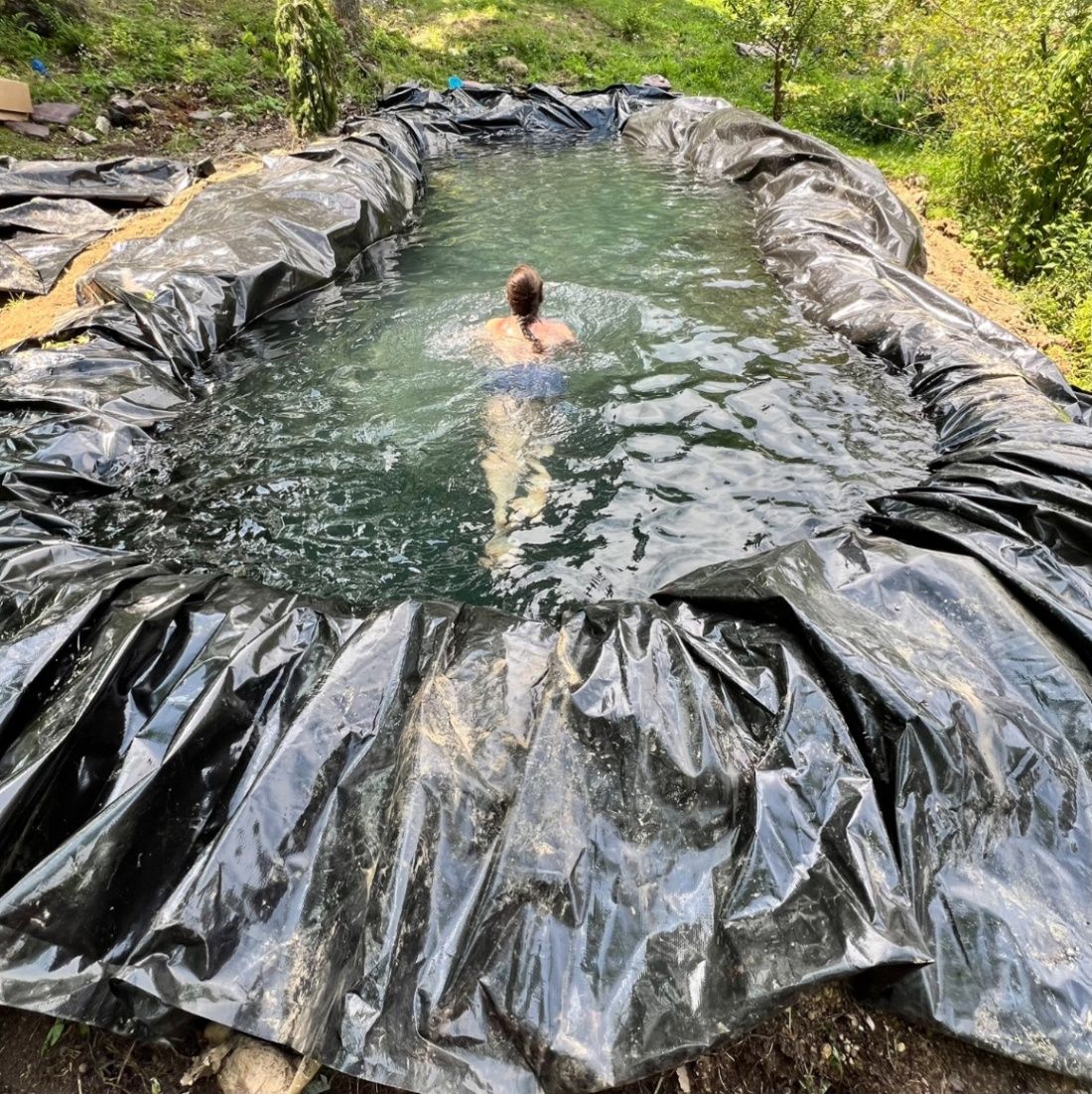
A few years ago, I began the process of trying to transition away from plastic anything in my gardens. That being said, I am a bit pragmatic about the process. If I already own something and it is still useful, it seems more practical and environmentally friendly to continue to use it than to throw it out and replace it. I am also not willing to replace anything that works well with something that doesn't. For instance, I am very fond of my Fiskars loppers and pruning shears with their PowerGear, even though they have a number of plastic components. I know that there are better all-metal brands of loppers and shears out there, but I have joint issues and arthritis and have yet to find ones that work as well for me. On a positive note, I have had my current loppers for twenty years and my oldest pair of shears for fifteen years and, other than replacing the blades on the loppers once, neither has shown any sign of breaking down. I have however replaced all of my watering cans with metal ones as the plastic ones broke down, and my other gardening tools when possible have all been upgraded to ones with wooden or metal handles. But, despite my best efforts, there is still far more plastic than I would like in my garden. In fact, the most successful element of my plastic reduction process has generally been the level to which it has raised my awareness of how, despite my best efforts, plastic seems to continue to be everywhere and is in some cases the only practical option. For instance, when I installed a koi pond last year, cement was not in the budget and it was not a situation where puddled clay would work, so I had to install a plastic liner.
Several years ago, when we began upgrading our gas-powered garden tools to electric, all of the new eco-friendly equipment involved a lot of plastic. I would love to have the time and stamina to scythe, hand trim, chop and saw everything with hand tools, but such is not my life and as with everything, trade-offs are made. Ironically, like with the electric power tools, the things that feel like the most environmentally friendly options always seem to come with another of those proverbial flies. Each year, when I order new seeds, the paper packets often contain tiny plastic bags or containers full of seeds inside of them. I eschew petrochemical-based fertilisers in my gardens in favour of fish fertiliser, but it comes in plastic bottles. I can get aged compost by the truckload from a local farm, but my potting soil and seed starter come in plastic bags. I have yet to figure out a plastic-free replacement for any of the above. And indeed, there are unlikely to be any unless we see an industry-wide change. That being said, the industry will not change unless there is enough consumer demand for alternatives or laws are put in place to require them, so individuals do still have a role to play. If this is an issue that is important to you, and it is to me, we as gardeners need to squeak. We need to keep looking for better options, asking for better options, and supporting those that are trying to provide them. Every season, I ask all of the nurseries I frequent that don't take back pots for reuse, if they are planning on doing so in the future. I also ask if they have considered using alternative types of pots. I try not to be too annoying, but I know I am not the only one asking, and two of our local nurseries have started a programme to take back and reuse pots. These sorts of changes are incremental, but they will not happen if no one asks for them. When ordering online, I have settled on, whenever possible, ordering plants bare root, and if I am purchasing a potted plant mail order, I prioritise ordering from nurseries that avoid plastic pots. Of course, the bare root plants often arrive with a plastic bag around their roots, etc., (again those pesky flies), but the hope is that if enough of us who are able to, support companies that offer alternatives, then these practices will spread. Baby steps.

All of this being said, despite the fact that I continue to feel like my garden is drowning in plastic, I have had some success. Seed starting in particular, is one of the areas where I have made the most headway. And pleasantly, not only have I found things that work as well for me as the plastic trays I used to use exclusively, in many cases I find that they work better. So much better, in fact, that I wanted to share the two things that I have found to be the most useful tools for me to start seeds (mostly) plastic free.
1: Enamelware basins and metal rubbish bins
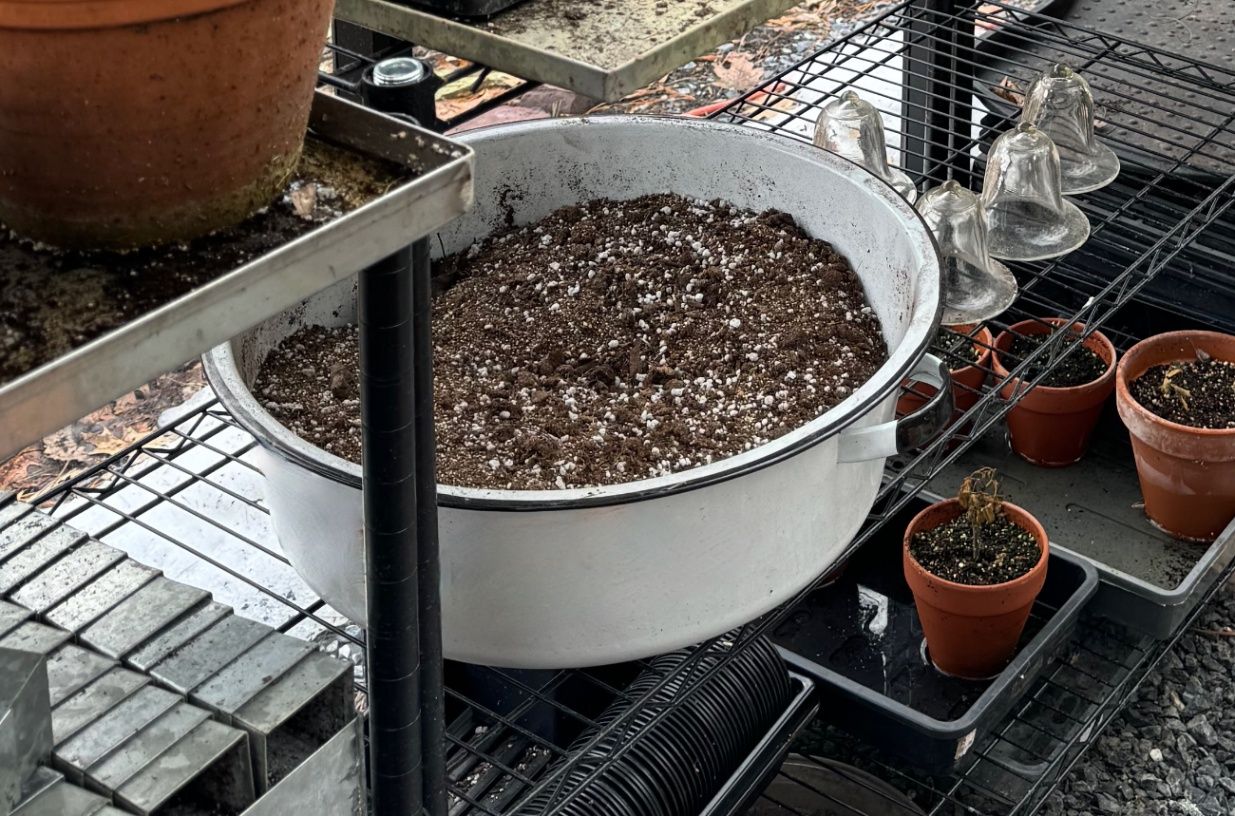
I use these to hold my seed starting and potting mixes. I do buy these mixes in plastic bags, but I empty the seed starting mixes into basins and the potting mix into a large metal rubbish bin. This makes them easy for me to work with on my potting table as I use little scoops to fill my seed trays and pots. I used to use plastic trugs, which were light and versatile, but over time and successive winters, they became brittle and the handles broke. The basins and bins, however, are quite light as well, they are easy to move around, they stack well, and they are virtually indestructible.
2: Mini terra cotta pots and metal trays:
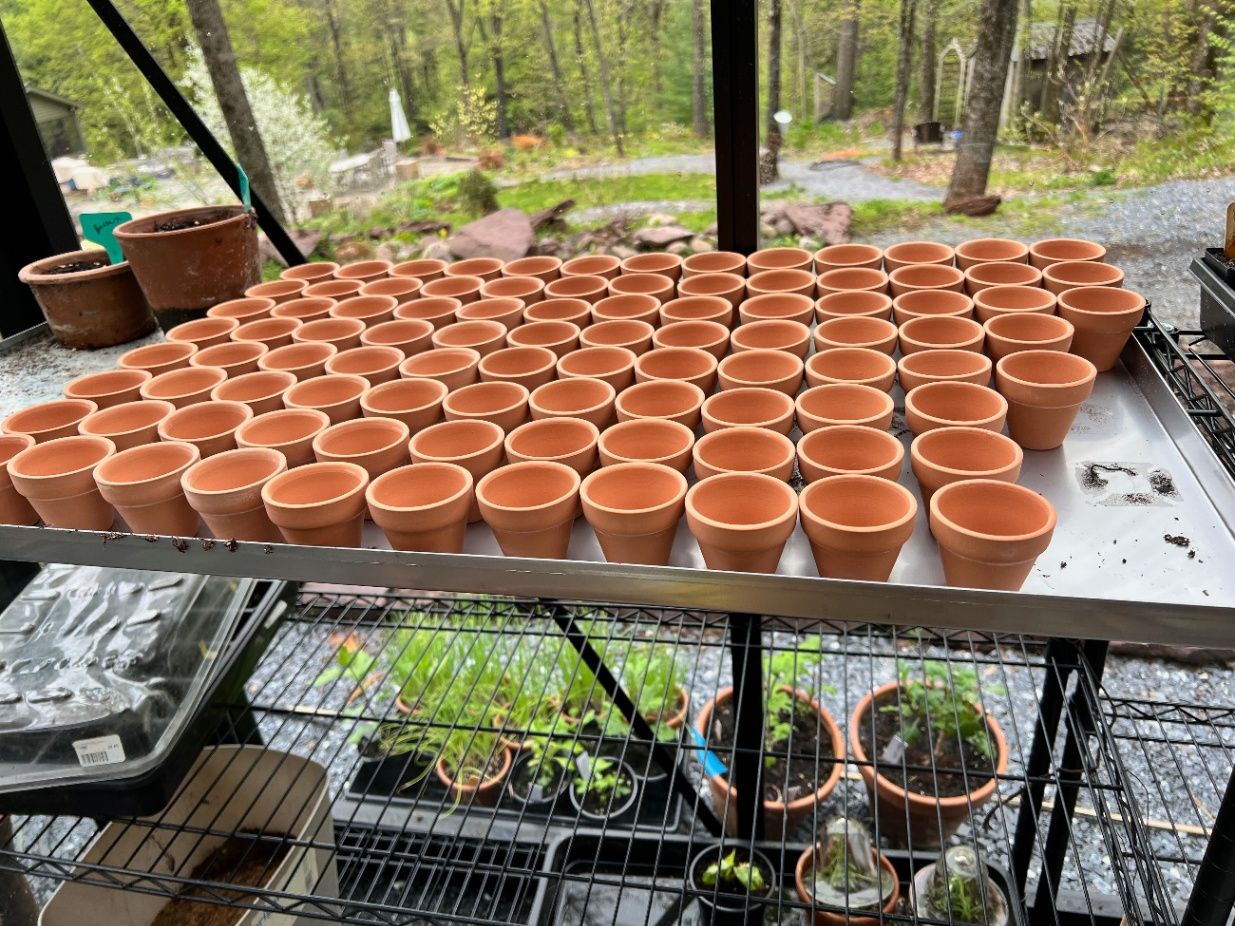
This is the combination that has been most revelatory for me. I use tiny (2 inch/5.5 cm) terra cotta pots set in shallow metal trays that I water from below to start my seeds and/or to grow them on. Larger seeds are started directly in the pots, which I fill half with potting soil on the bottom and seed starter on top. Smaller seeds I start in metal trays and then pot them on into the little pots once they have sprouted. I have run several trials sowing seeds in these pots, in metal trays with individual metal cells, and in plastic trays with individual cells. Each time, the seedlings grown in terra cotta were stronger and bigger.

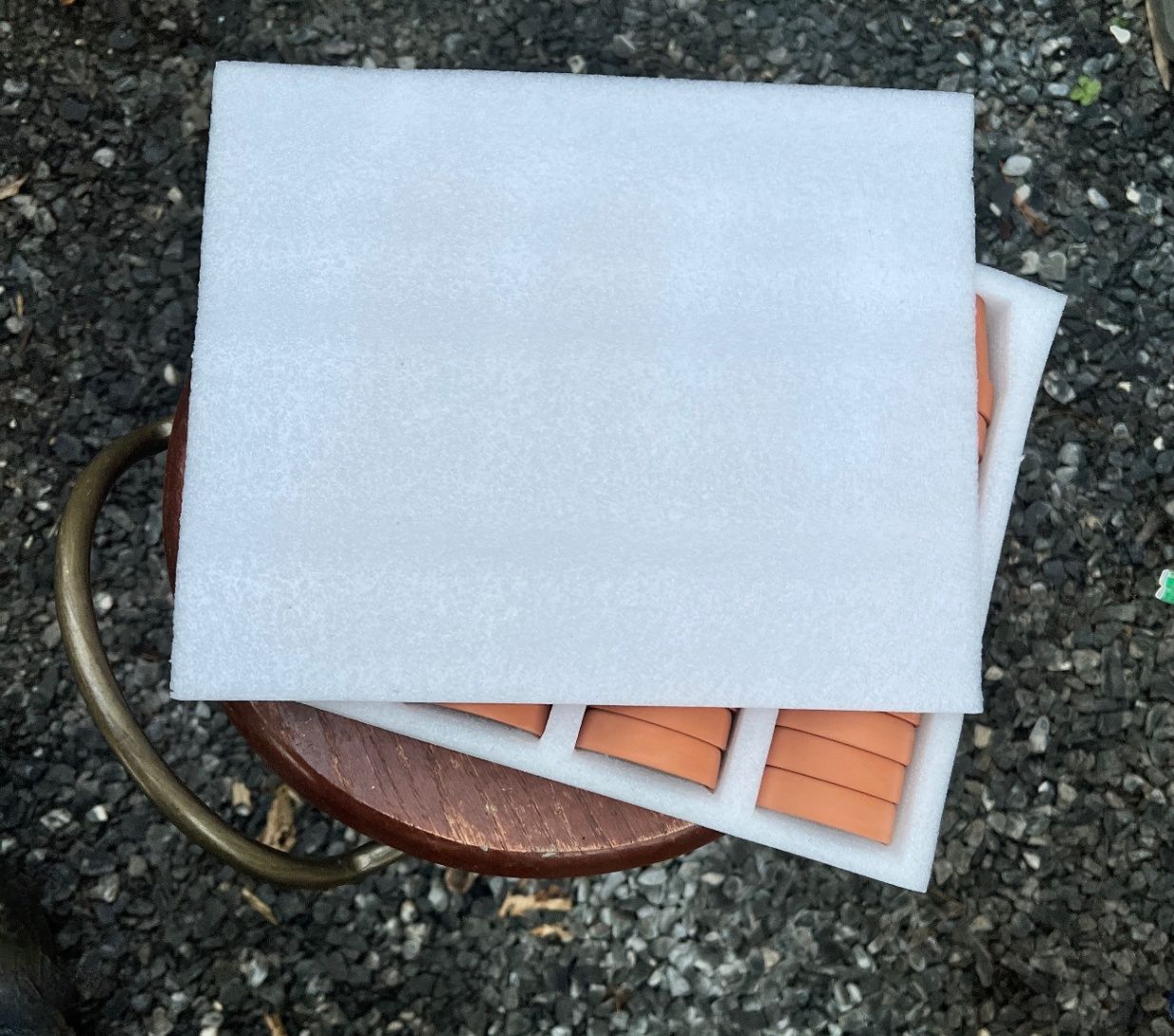
These tiny pots are relatively inexpensive and incredibly hardy. I have dropped more than one onto my stone patio and it came out unscathed. They are not difficult to clean and easily wash up in a warm basin of water. I have even sent a handful that I wanted to make sure were completely sterilised through the dishwasher successfully. Baking them works well too. The slightly larger 3 and 4 inch pots are also fairly economical, and I use them to pot the plants on as they grow. Once my plants outgrow the 4 inch pots, the majority of them are ready to be planted out. Spoiler alert, while these pots are generally cheap when ordered online, one of the downsides is the packaging that they come in. It is hard to feel good about one's plastic-free choices when one is unpacking them from plastic foam, but such is the world we live in.
The trays that I use to set the pots in are stainless steel trays that are made to line pet cages. You can order them in custom sizes, which I find works exceptionally well to size them to my greenhouse shelving. Setting the little pots in the metal trays also makes it very easy to control the moisture and to water and fertilise your seedlings. While I love my new system, I still use many of my plastic trays and will until they are no longer functional, but every time a tray breaks down, I replace it with more little pots. This has definitely been a game-changer for me when it comes to seed starting.
It is necessary to acknowledge that all of these methods require more of an investment than basic plastic seed starting equipment, though they are on par with many of the more expensive heavy-duty plastic sets. I also do not want to pretend that any of these solutions are perfect environmentally, particularly the terra cotta pots which are manufactured in China and shipped here wrapped in plastic foam, but then the plastic seed trays and trugs that I used to use were made in and shipped from China as well. However, these replacements for plastic items are still relatively inexpensive (particularly when the cost is divided by time of use) and very sturdy. I doubt I will ever need to replace the basins, bins, or trays and rarely the pots, which, on the occasion when they break, work well as drainage crocks in my larger terra cotta pots. Meanwhile, the super sturdy seed trays that I splurged on ten years ago have already begun to break down and every year I end up throwing another couple out. Given how much better the little terra cotta pots work for starting seeds for me, this is a change I would make even if I weren't trying to eliminate as much plastic as possible from my gardens.

Conclusion of Sorts
If, like me, you are trying to reduce the amount of plastic in your garden, you have my sympathy. It is a Sisyphean task, but, despite its impossibility, I do believe it is a worthy one. In the 1950s we sprayed poison on our gardens and ourselves regularly in the name of eliminating pests and no one thought anything of it. Indeed, when they began thinking about it, the initial general consensus was that the crunchy back-to-the-land-hippies who were bringing it to their attention with their strange ideas about organic agriculture were hairy, smelly, and annoying. And, in some ways, they could be annoying, but about pesticides, they were right. Sometimes we need to be willing to be a little annoying, even if we know it won't fix the problem, as long as we think there is a possibility of making it a little bit better. I know I will never eliminate all of the plastic from my garden or from yours. But if we keep asking questions, and make everyone else as conscious of the vast amount of plastic that undergirds our gardens as we are, people will eventually start finding alternative answers that result in real solutions. And, before you might accuse me of being too pie in the sky, I am fully aware that every new solution will come with a fly. Until then, I am going to fill some more of my tiny terra cotta pots, with seed starter that came in a plastic bag, and sow some more seeds that were likely sent to me sealed in a tiny plastic bag, because, such is my plastic-tinged life.