If This is Paradise
When it comes to ecological disasters, it is clear that only gardeners see themselves as stewards of the land; other people are simply property owners.

The day has come for the swearing-in of the American president—nearly new and, in some quarters, pre-loved. For those of us already suffering from chronic eco-anxiety, the wildfires in Los Angeles have made our condition more acute, aggravated by inauguration anxiety. For balance, I should mention that disasters do not affect everyone in the same way. From personal experience (and news reports) it is clear that for some property owners, a destroyed plot is a rebuilding opportunity: with no time wasted, a replica of the old house will go up, or something bigger. Would it be so out of the question to ‘build back better’ with a smaller house, and a bigger garden?
This might be a more normal proposition, if we could get away from the idea of gardening as a lifestyle choice. If we could accept, as fact, that we are stewards of the land that our buildings stand on, and that our responsibility is to bring this priceless resource to optimal health, allowing it to fulfil its ecological function. I am aware that Scribehound readers are already land stewards, but gardeners don’t always see that most people are non-gardeners, and don’t have a clear idea of what a garden is for—even in the traditional sense.
Once, when people knew how to garden (and cook) they learned from their elders, who saw these things as an inherent duty. Before Marks and Spencer brought glamour to fast food, you wouldn’t choose to live without ever cooking. Similarly, you wouldn’t acquire land and not look after it. But now it’s commonplace to do both of these things because they require less effort. People prefer to buy stuff to put in their gardens, and pay others to keep them neat, rather than get down on their hands and knees and look at what is really going on.
This sense that our recent past is already ancient history extends beyond our gardening grandparents, to pre-war (i.e., Second World War) land practices, including the use of hand- or horse-powered tools. The voices of Indigenous people are almost beyond reach, at least in the United States, having been systematically snuffed out. Again, not so long ago.
How quickly this rejection of collective knowledge has come back to haunt us. Across the continent of North America, fire is essential to many native plants of the prairie, scrub and forest. A controlled fire removes plant litter, creating conditions that the seeds of locally indigenous plants need for germination. It allows habitat for animals too; it clears the way for ground-nesting birds. Native plants are long adapted to drought and flood, their richly varied root profiles anchoring the ground against erosion. With the new pattern of occasional, massive deluge followed by long periods of drought, introduced plants that have become invasive weeds grow luxuriantly, before crisping up into flammable brush. Since these weeds are a problem all across the continent, the landscape is highly susceptible to the slightest spark. Controlled fire helps to prevent wildfire.
Smoke and Mirrors
News reports typically focus on disaster response. A few days into the LA fires, the New York Times noted, “the causes of the fire remain under investigation.” Why do they even say that? Ecological gardeners in Los Angeles are the Cassandras of our times, reminding people that the cycle of wildfires in recent years is, yes, due to climate change but also—to fire suppression. During my odyssey around North America 18 months ago, several gardeners I talked to were very keen on fire. They held a licence for controlled burns which they performed in urban or rural backyards, and within feet of their own houses. They do this because they are in the business of restoring prairie grasslands, even in cities, to areas that originally supported them. Fire and water ecology go hand in hand: these ecological restoration gardeners were just as excited about berms and swales, bumpy topography and ephemeral pools.
There is a shift happening, but it’s slow. Landscape designers and biologists need to be part of the conversation in rebuilding Los Angeles, but time is always in short supply. Money remains a great motivator, and in a world where the bottom line matters most, a better approach to land management doesn’t have to be especially nuanced. The outgoing administration quietly pushed through the biggest piece of green legislation—anywhere, ever—in 2022. Hidden behind a misleading name, the Inflation Reduction Act, billions of dollars are slowly but surely being poured into ‘clean’ energy technologies, not least through tax incentives. It is a programme that will be difficult to entirely reverse in the next four years.
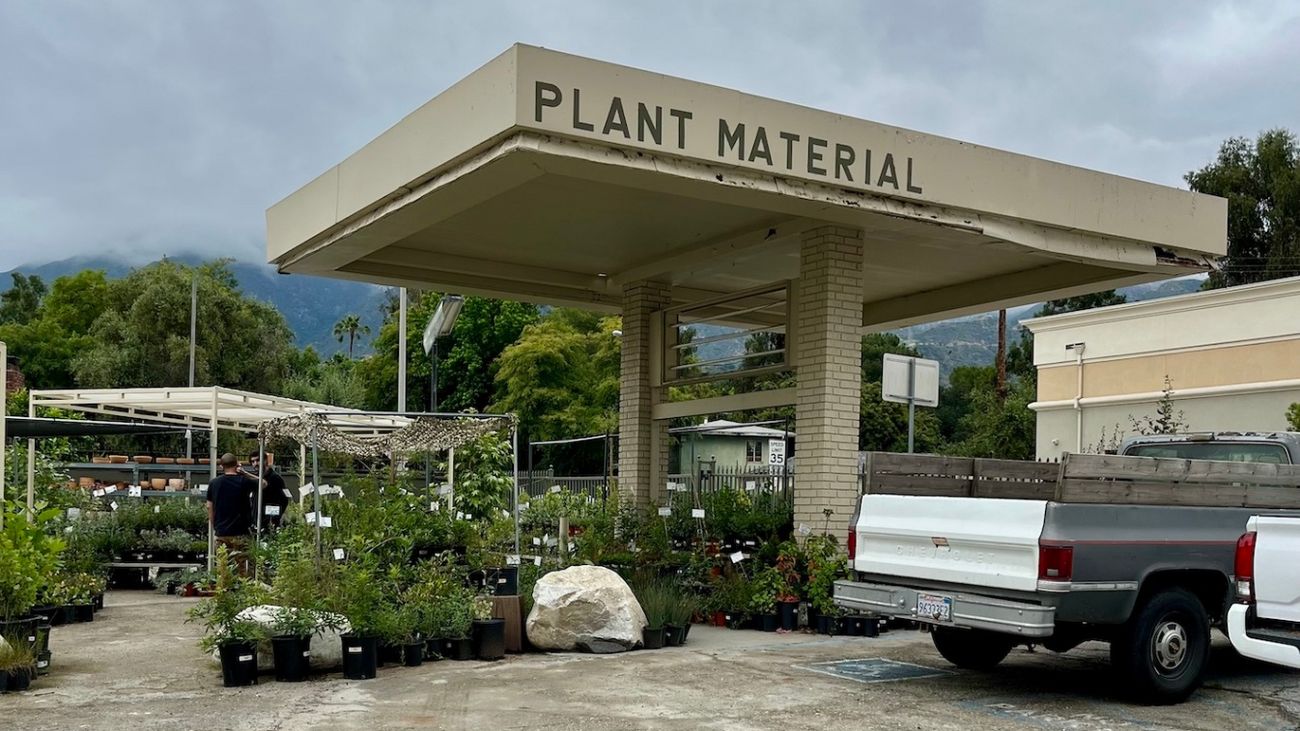
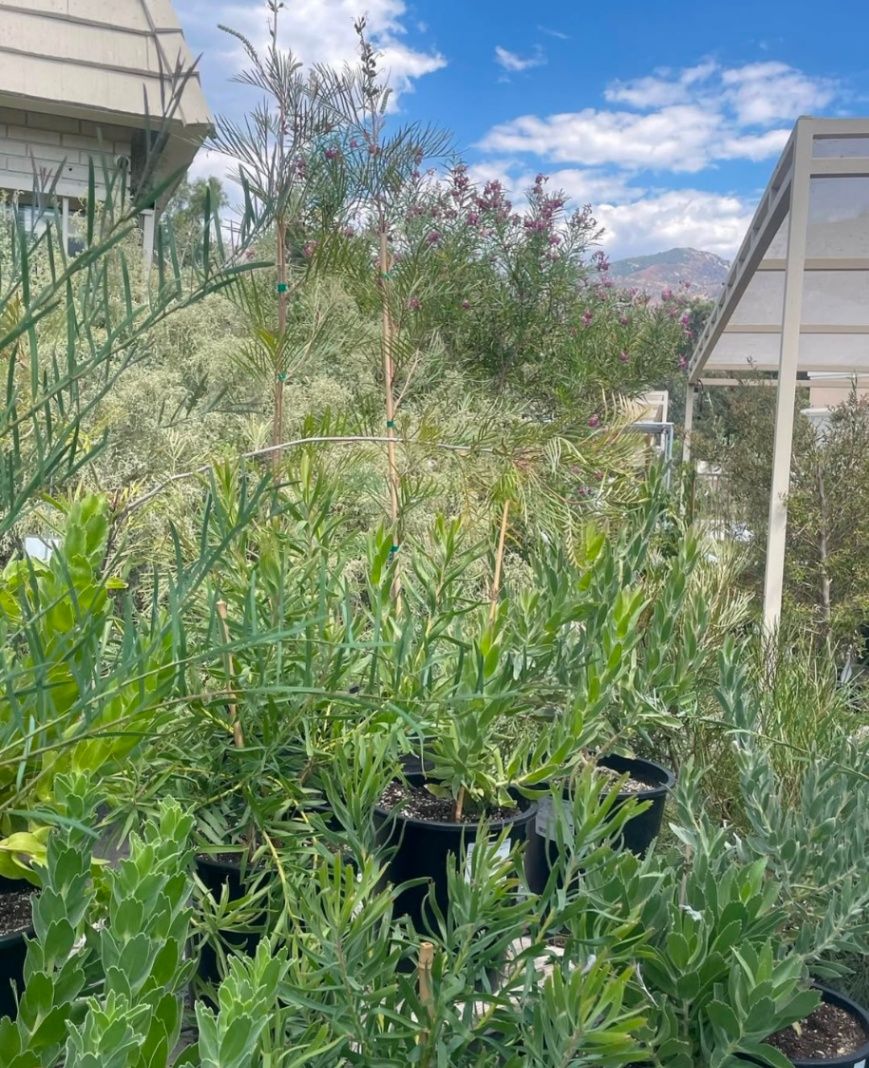
As I say, money talks. Water districts in Southern California began to offer rebates a couple of years ago to encourage residents to remove their thirsty lawns in exchange for—free—drought-tolerant, mainly native plants. The landscape design studio, Terremoto, helped to set up Plant Material, a small group of native plant nurseries in Los Angeles. Matt Burrows, the owner of Plant Material in Altadena told me in 2023 that the programme 'was huge for us; people came in ready to spend $1,000 because they were getting it right back. They were excited to just go with a full native palette and do it all at once.' For non-gardeners who had previously fallen into line with the lawn-car-house look, without really knowing why, this was an introduction to an exciting new world, with long-term savings in the longevity of native plants and their self-sufficient nature.
Plant Material in Altadena is scenically situated in a disused gas station. The layered, memento mori atmosphere is classic LA. Matt’s perspective again: 'It's kind of post-apocalyptic, in a sense. It feels like we're recapturing a time when cars are no longer around, and we’re not using gas.' Spring forward to January 2025, during what should be the rainy season in Southern California. Plant Material is bowed but not broken. Still standing, it’s surrounded by the remains of a vibrant and diverse neighbourhood that has gone up in smoke.