Is Garden Style Dead? The Rise of Outdoor Sameness
The Tyranny of Taste: Why so much garden design looks the same


It’s hard to escape the feeling, as you walk through a modern housing development or leaf through a glossy design magazine, that gardens are beginning to look suspiciously alike. Pale stone paving. A neat rectangle of grass. Slatted fencing in muted greys. A pair of rattan chairs huddled around a gas fire pit. Even the pots are the same — tall, matt black cylinders holding a pair of bay lollipops or an olive that will never quite thrive. These are gardens perfectly composed for the camera lens, for the brief, flattering light of a spring morning. And yet, for all their polish, they are strangely lifeless.
The problem is not one of bad taste, but of sameness — of a narrowing vision that treats the garden as an accessory rather than a living space. It is the consequence of design culture at large, of a restless hunger for newness that paradoxically breeds uniformity. The more we look at images of gardens online, the more our sense of what a garden should be becomes flattened and conventional.
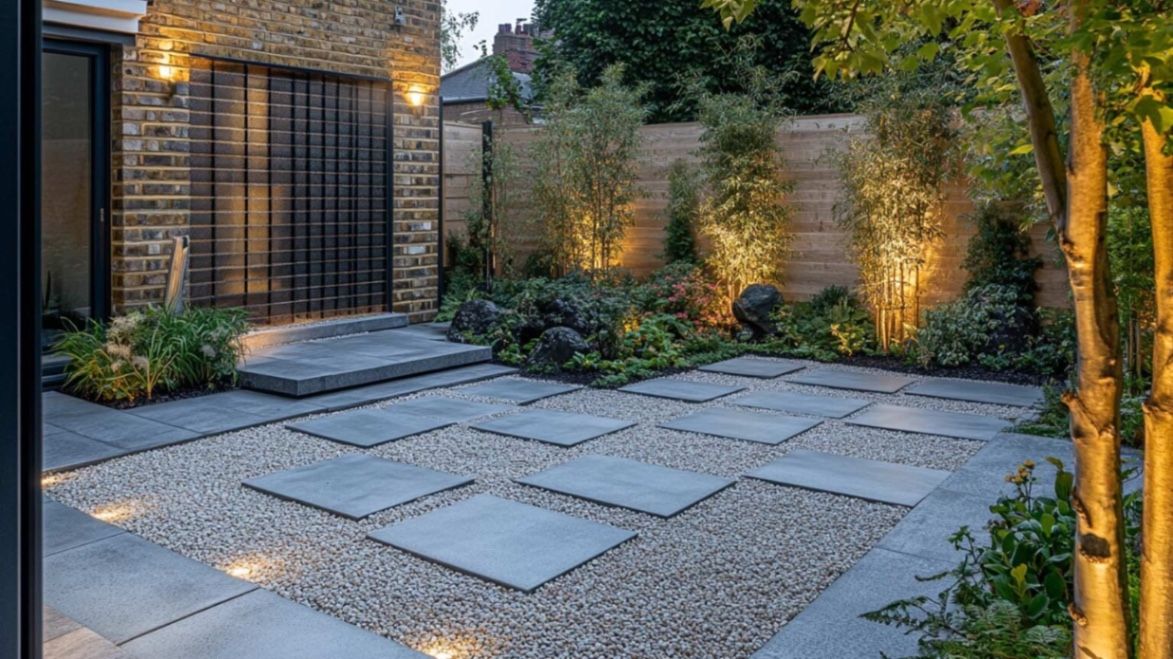
Every age has its style, of course. The clipped parterres of the seventeenth century were as much a fashion as the herbaceous borders of Edwardian England. But what is distinctive — and troubling — about our own time is the collapse of diversity in garden expression. Whether you are in Kent, Cheshire, or the Cotswolds, the designs repeat themselves. It is as if every outdoor space must now conform to an aesthetic that whispers “calm,” “clean,” and “contemporary.”
The Instagram Garden
This homogenisation has many fathers, but one of the most potent is the rise of social media. The photograph has replaced the plant as the unit of garden currency. Design, which once evolved through the seasons and through the slow learning of soil and weather, is now performed in a moment — framed, filtered, and posted. The garden becomes a set piece, something to be consumed visually rather than lived in.
The trouble with this is not merely superficial. It reshapes how we think about what gardens are for. The Instagram garden, with its symmetrical loungers and colour-coordinated cushions, is built for performance, not for growth. It mistakes stillness for serenity. It confuses tidiness with harmony. It is, in the end, an aesthetic of control.
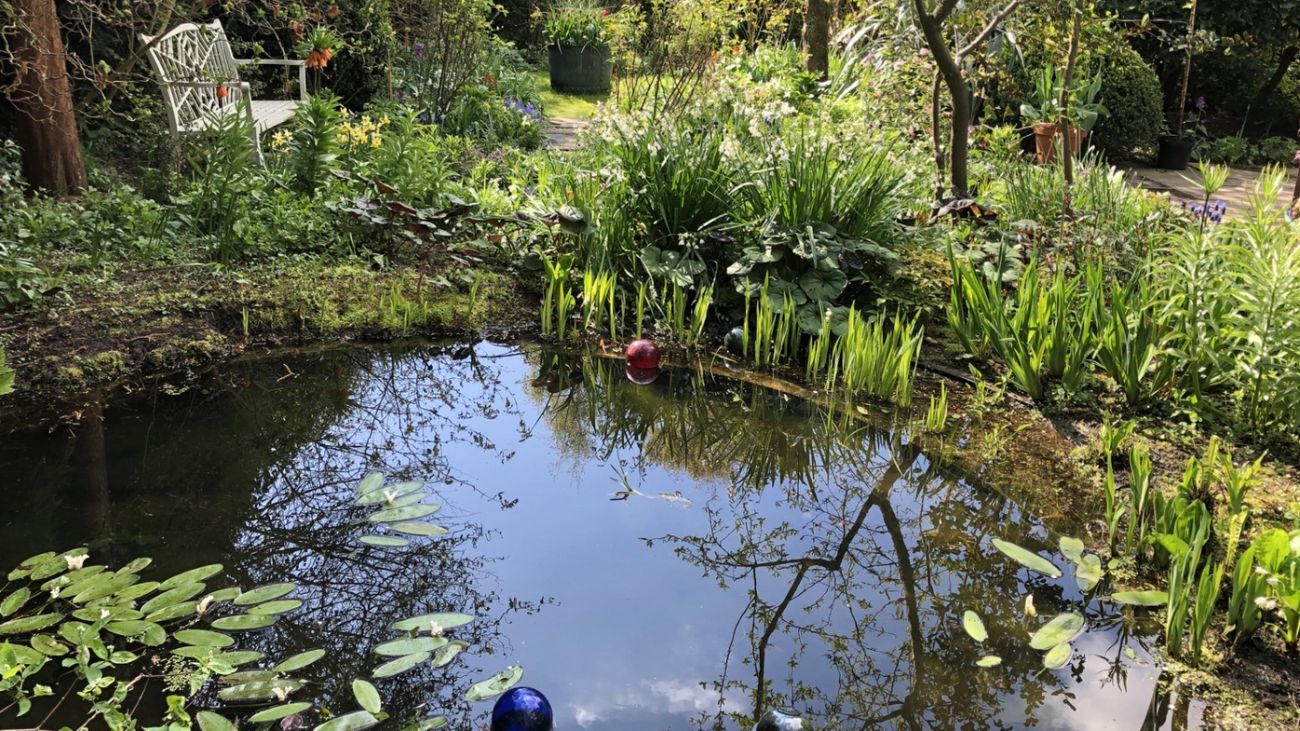
Real gardens are the opposite of this. They are not perfect; they are alive. They breathe, decay, and regenerate. They host chaos as well as order. The soil shifts, the plants move, light changes — and it is precisely in this flux that beauty resides. The attempt to freeze a garden into a photograph is a denial of its living essence.
The Cult of Continuity
Much of modern design rhetoric speaks of “bringing the inside out” — of extending the house into the garden so that the two form a seamless continuum. The language is seductive: flow, harmony, continuity. But what it often produces is a kind of conceptual monoculture, where the garden is forced to imitate the logic of interior design.
Indoors, the aim is comfort, control, and exclusion of the elements. We want our homes to protect us from weather, dirt, and decay. The walls are clean, the materials stable, the temperature regulated. But outdoors, those same instincts are misplaced. The garden should not be an annex of the living room. It should be an antidote to it — a place where the human desire for neatness meets the wild, ungovernable life of the natural world.
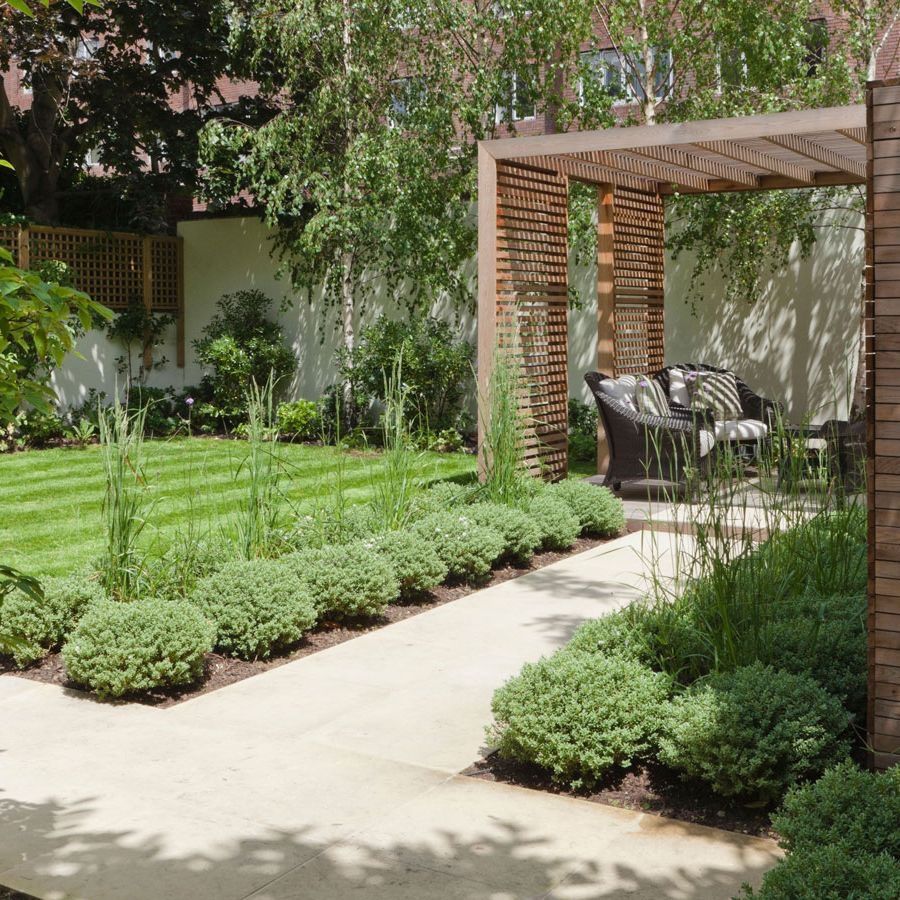
The moment you start furnishing a garden like a lounge, you subtly change its meaning. The focus shifts from growth to display, from ecology to décor. Plants become props, their value measured by how well they match the palette of the cushions. Water features bubble discreetly in the background, more white noise than living system. The whole scene becomes a stage set for lifestyle rather than life.
It is not that comfort is wrong, or that design cannot coexist with nature. It is that when design becomes dominant — when the designer’s hand insists on order, control, and perfection — the garden loses its capacity to surprise. It ceases to teach.
The Garden as Teacher
Because that, at heart, is what gardens do. They teach us patience, humility, and care. They remind us that beauty is not a static quality but a process of becoming. The most moving gardens I know are not those that make an immediate visual statement, but those that tell a story of time. Moss on stone, a self-sown fern in a wall, a rose that has found its own way through the hedge — these things speak of partnership between people and place.
Homogenised design, by contrast, tends to erase time. The garden is delivered, fully formed, as a product. The planting is specified by spreadsheet, the soil trucked in, the paving machine-laid in a day. There is no room for accident, or for the slow shaping that comes from years of tending. Yet it is precisely through that long attention that gardens acquire their soul.
In the greatest gardens, design is not imposed but revealed. It grows out of the site — its soil, light, and mood. The designer’s role is not to decorate, but to listen. Every place has its own character, its own grain. To garden well is to enter into dialogue with that character, to work with it rather than against it.
The Comfort of Conformity
So why do so many designers — intelligent, creative people — settle for the safe and predictable? Partly, I suspect, it is because sameness sells. Developers, homeowners, and even many clients crave reassurance. The “modern garden” has become a shorthand for taste: clean lines, neutral tones, ornamental grasses. It looks expensive without being challenging. It flatters the house, flatters the viewer, and offends no one.
We live, too, in a culture that fears failure. Naturalistic planting, with its shifting composition and seasonal ebb and flow, demands a tolerance for imperfection. It asks the gardener to accept that not every plant will thrive, that there will be moments of awkwardness and decline. The styled garden, by contrast, offers a false promise of permanence — a controlled aesthetic where nothing changes unless the designer decrees it.
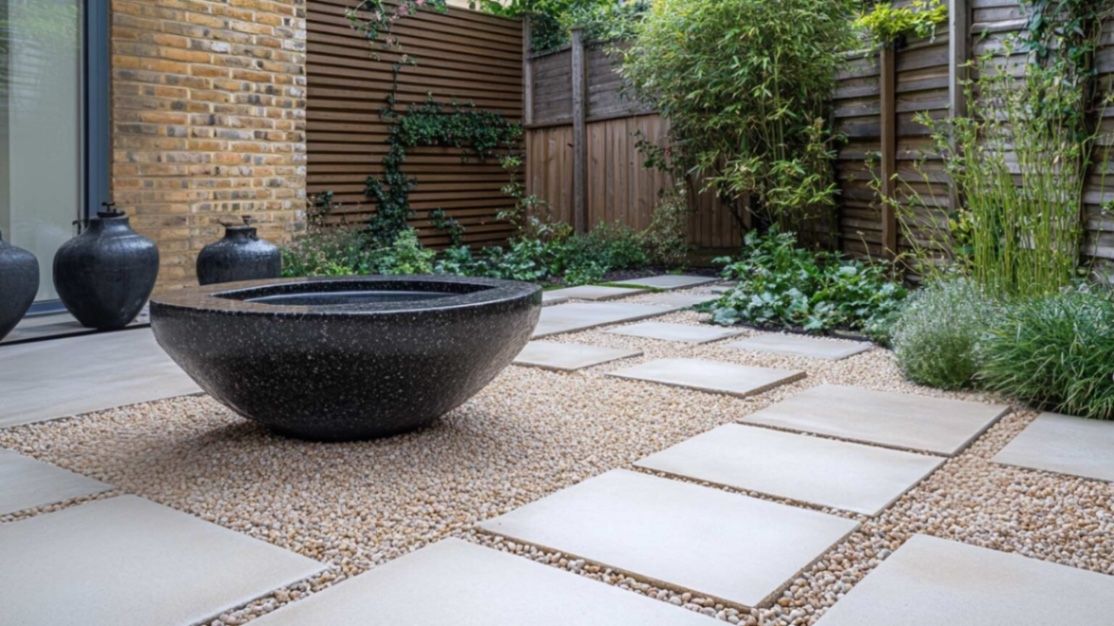
There is a psychological comfort in this, especially in a world that feels increasingly uncertain. But the price is high: the garden becomes sterile.
The Loss of Locality
Another casualty of sameness is the sense of place. A garden in Cornwall should not look like one in Norfolk, and neither should resemble a courtyard in Dubai. Yet the global reach of design imagery has blurred these distinctions. Timber screens, porcelain tiles, and Mediterranean pots appear in climates where they make no ecological or cultural sense. The universal style is placeless — a bland Esperanto of garden design.
This erasure of local character matters, because gardens are one of the few arts rooted in geography. The soil beneath our feet is not generic; it has a history, a texture, a language of its own. To garden without regard to that is to cut ourselves off from our environment. A garden that could be anywhere ultimately belongs nowhere.
Contrast that with a garden that grows from its landscape: stone paths made from local quarry, hedges of native hawthorn, a palette of plants that respond to the wind and light of their place. Such gardens have depth. They belong. They speak quietly but with conviction.
The Lure of Perfection
Perfection is the enemy of joy in gardening. The neat terrace, the manicured border, the immaculately “curated” space all betray a fear of disorder. But nature does not do perfect. It does abundance, exuberance, and sometimes, collapse. The art of gardening lies in learning to work with those forces rather than against them.
When I see a garden that is too tidy, too polished, I feel a kind of melancholy. It is like meeting someone who cannot bear to let their hair down. There is no laughter in it. And yet the laughter of a garden — the unplanned flower, the bee drunk on nectar, the child’s muddy footprint — is what makes it human.
The older I get, the more I find myself drawn to gardens that bear the marks of care rather than design. A worn gate latch, a tangle of old clematis stems, a patch of nettles left for butterflies — these things tell me that someone has lived here, tended here, loved here. That, to me, is beauty.
Beyond Fashion
Perhaps the deepest reason for the sameness of so much design is that we have lost faith in our own instincts. We look to experts, magazines, and influencers to tell us what is good, rather than listening to the quiet voice of the place itself. But the garden does not need to be fashionable to be right. It needs only to be truthful.
The most radical act a designer can perform today is not to innovate, but to observe. To ask: what does this patch of ground want to be? What life does it already hold? What rhythms of wind, light, and water shape it? From those questions, a garden can emerge that is both personal and universal — not because it follows a trend, but because it honours the reality of its place.
Reclaiming the Garden
In the end, the garden is not a reflection of design culture but of our relationship with nature. When we impose sameness, we flatten that relationship into consumption. When we allow variety, imperfection, and locality to return, we rediscover what gardens have always offered: a way of being human in the midst of the living world.
The best gardens — the ones that linger in the memory — are not designed to impress. They are made to sustain. They offer shade, scent, and solace. They change, and in changing, they teach us how to live with change ourselves.
So let others make their outdoor lounges and perfect terraces. Let them chase the illusion of the eternal weekend. Meanwhile, there are gardens still that breathe, that sing with bees and wind, that wear their seasons openly. They may not photograph well, but they endure — because they are alive.