Judging a Book By Its Owners
From Tennyson to Bobby Shafto – the thrill of discovering who owned your old gardening books.

It was like that scene on the Antiques Roadshow, where the punter puts on the table something commonplace and beams at the expert with anticipation, hoping to be told they need to up their house insurance cover dramatically.
You watch the expert give a wincing, polite smile and nod. They try to break the news as gently as possible. “There are a lot of these about; it’s chipped and worthless. But I’m sure it’s priceless to you because of the memories.” That sort of guff.
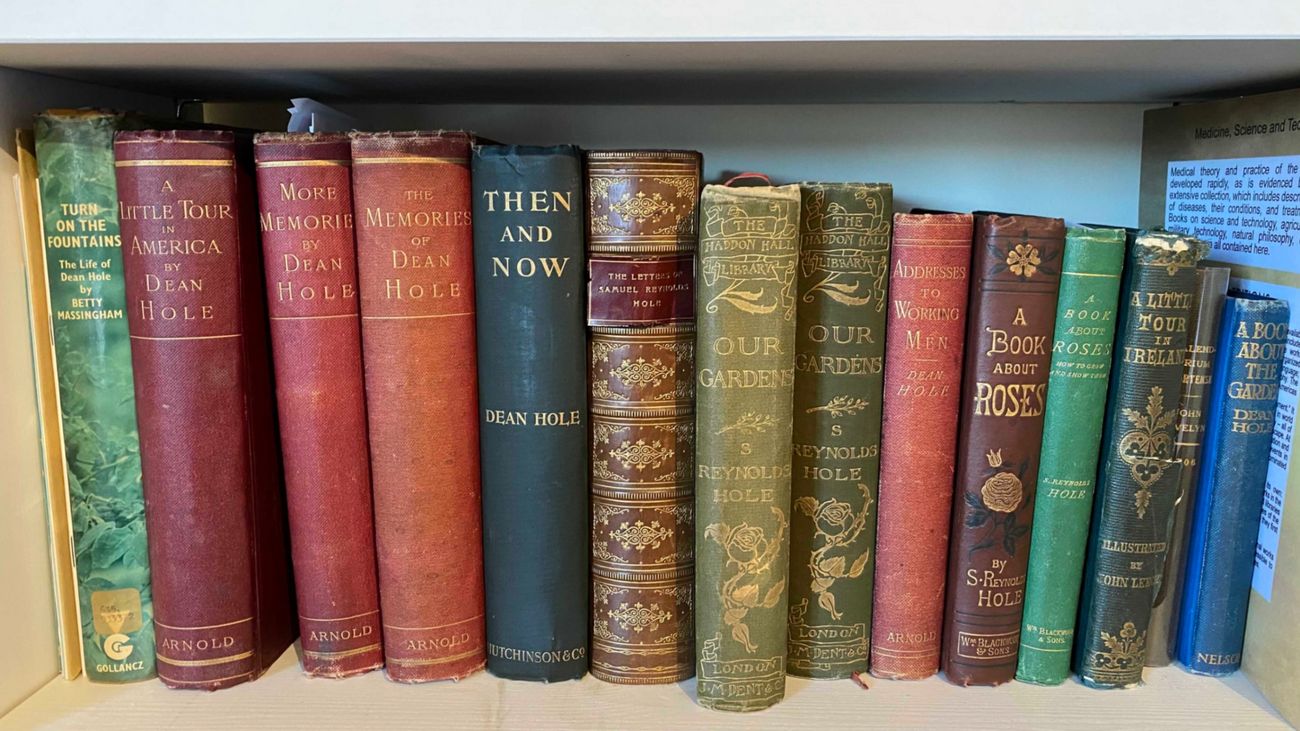
I was at an event to celebrate the life of Samuel Reynolds Hole – the one-time Dean of Rochester who played a huge part in making roses popular in Victorian Britain. The current Dean, Dr Philip Hesketh, was there and I placed in front of him a copy of Hole’s popular A Book About Roses.
He did that polite strained smile and nodding business. Then I turned the cover to the inside first page and showed him the inscription: “To Alfred Tennyson, A Book About Roses is offered with the writer’s great respect and love. Nov. 1870.”
He stopped suddenly, adjusted his glasses and stared. Tennyson had christened Hole “The Rose King” and here was Tennyson’s own copy of Hole’s book. I’d bought it online from a New York bookseller a few months earlier. Let’s move quickly on from how much I paid. Phil and I are both massive fans of his predecessor and as they say: “It was the start of a beautiful friendship.”

Book owners
It’s one of the thrills of collecting second-hand gardening books – discovering who’s owned them previously. I recently bought a copy of New Improvements of Planting and Gardening from 1739. The inside cover has a family crest and the name “Robert Shafto of Benwell Esq”.
It was only a couple of days later that I thought: “Robert Shafto… Bobby Shafto?” Singing “Bobby Shafto’s gone to sea” I jumped on to Google to start searching. It’s the right era. And the right part of the world. The song was used by the supporters of Robert Shafto (1732-1797) – a North-East MP in his election campaign. I think my Robert Shafto is probably a neighbouring cousin.

Other treasures
The older the book, the richer the owner. My copy of Withering’s Botany (with paper that has a gorgeous, almost cloth-like feel to it), published in 1787, has the crest and name of Marmaduke John Teesdale. He’s possibly one-time Assistant Solicitor to the Treasury.

Returning to Hole, I have a copy of his guide to freshers at Oxford University. This pamphlet belonged to book collector Robert Washington Oates (1874-1958). His cousin, Lawrence Oates, died with Captain Scott in the Antarctic, uttering the famous last words: “I am just going outside and may be some time”.

Robert Washington Oates helped save the Gilbert White house and gardens, which houses an exhibition celebrating the life of his famous explorer cousin.
I also have a copy of Hole’s Our Gardens. It’s inscribed by him to the MP Joseph Chamberlain. Chamberlain was the man who negotiated the end of the Boer War. Hole’s son (and Lawrence Oates, incidentally) had served in it.
The handwriting is shaky. The date is July 26, 1904. It took me some time to join the dots. A month later, Hole – by then 85 – died. Chamberlain was one of his last visitors, and this may be the last book he ever signed.

Mystery owners
Of course, most names in books are untraceable. We can only guess who they were. Perhaps my favourite is a pretty, little (4"x3") red publication with gold leaf edging to the pages – Emblems and Poetry of Flowers. It was published in Edinburgh in 1845 and is full of odes with titles like: “To a favourite polyanthus”, “A song of the rose” or “Polly’s flower”. You really don’t want me to read any of these to you.
But I will share the inscription penned in the front. It reads: “Lieut J I Marten to his belov’d child – Julia Marten Oct 1845.” Holding this small sentimental book in your hand, you can almost feel the love in that gift. What happened to Lieutenant Marten? Did he get to spend much time with his daughter or was he off in his red coat fighting colonial wars? Did she keep it all her life and think of him?

To the future
All this brings me to my dilemma. I’m hoping you can help! I’ve never written my name in a book. I feel like I’d devalue it. But does that matter? To me these books are fabulous research tools, not investments.
The best antidote to collectors’ disease is to visit an auction preview. When you die the regional auction house is where your collection is most likely to go. Your loved ones don’t want these “treasures”. They’re thrown in cardboard boxes on trestle tables, or piled together as job lots on bookshelves, and usually sold for a fraction of what they cost.
I have friends older than me with great book collections who don’t know what to do with them. One friend in Australia is giving her books away one by one to people she knows will appreciate and keep them. The postage on the two she’s sent me would make you wince. But I will treasure these books and that gives us both pleasure.
When I go, I’m leaving a list for my family of all my rosy friends with instructions to invite them over to take their pick. In which case, perhaps I should write my name in them? Maybe I’ll get one of those stamps that leave an impression on the page. It could have my garden blog logo on.
It’s nice to think of these books still giving pleasure to someone, somewhere, somehow. And maybe one or two wondering who this previous owner was. As for Tennyson’s copy of A Book About Roses, I’ve promised Phil that will go to the library at Rochester Cathedral. But not for a while yet, I hope.