Light, My Light: Connecting the Sky and the Land
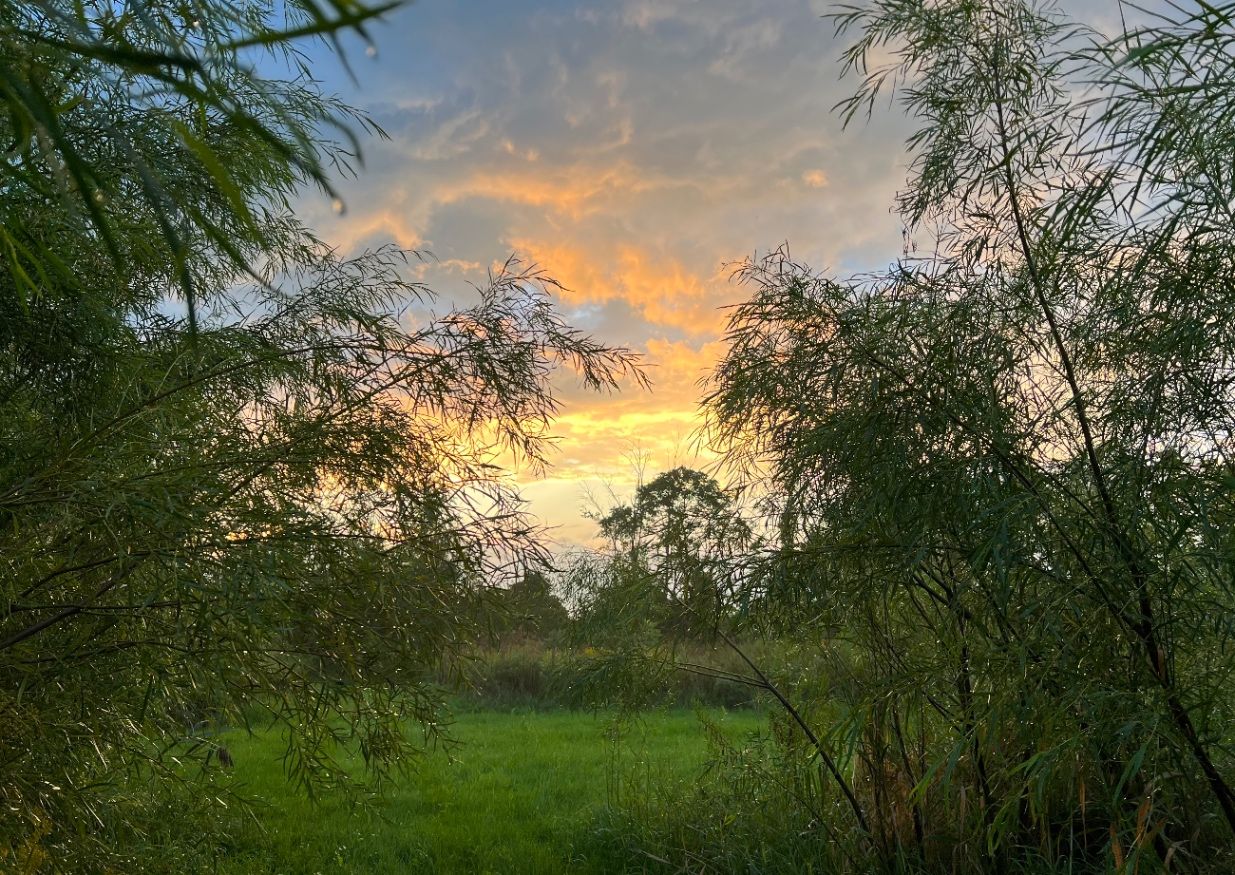
We created our garden around golden light. We structured it not so much along geometric lines, not along the contours of the land, not imagining the style we wanted, but to keep the light flowing and connecting the sky to the land.


Recently, I was asked by a nice person who is starting a garden what was the most important element of my garden. Immediately, I thought “the sky and the light,” but I kept that thought to myself. I started with the next most important element, the trees.
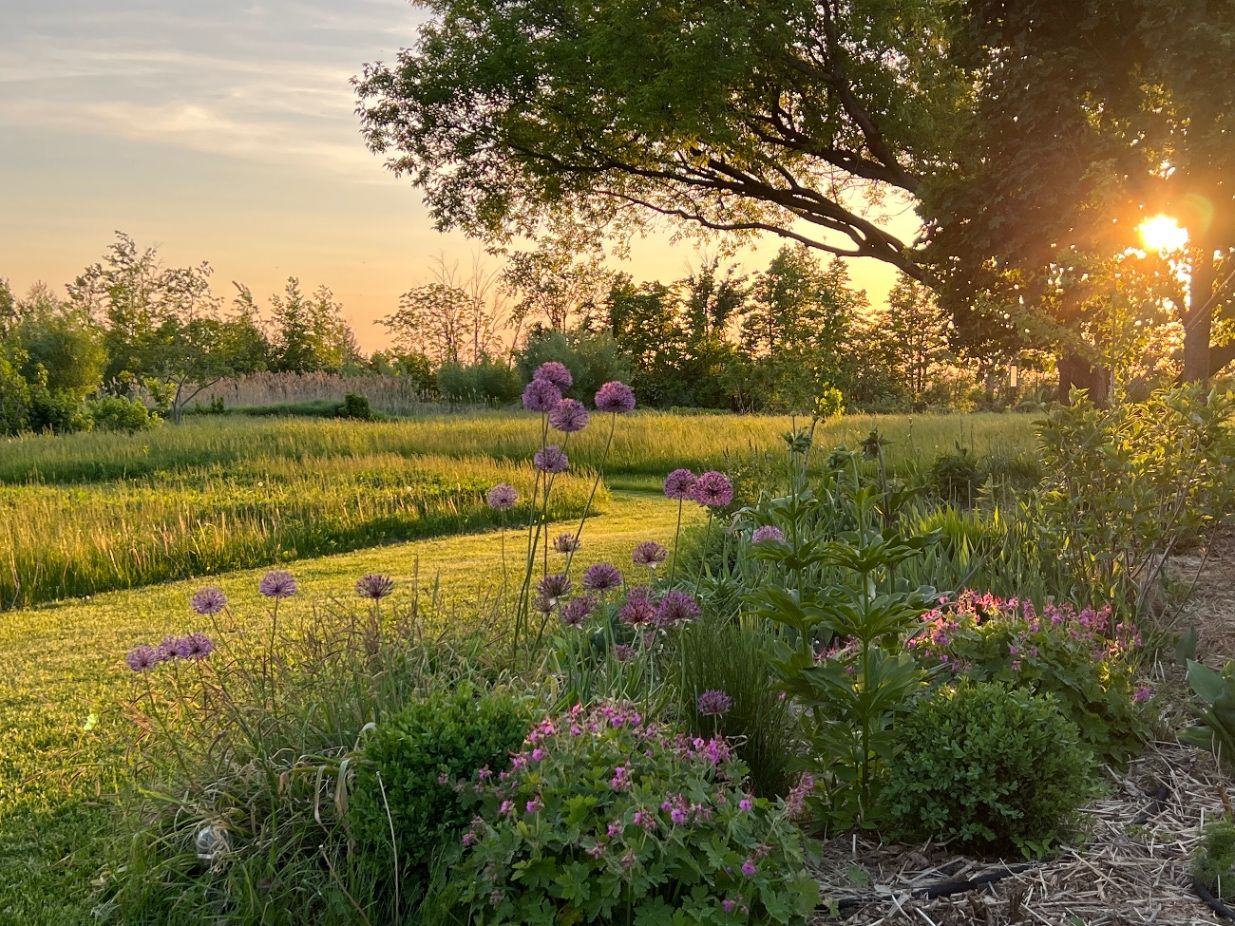
My first city garden was small, so I created a very strong structure, softened with plants I loved. It was a nice garden, varied and surprising, but I was bored because there wasn’t enough for me to do. What’s more, in that lovely space, my normally patient husband was complaining that there wasn’t enough sky. I couldn’t quite get it – I was too focused on the ground. Eventually, we went in search of a new place – for me, to have more ground, for him, to have more sky. When we finally found one – an almost empty, charmless five acres – we both knew that was it: it had so much sky. The view from the back of the house towards a struggling line of trees was lined with golden light. We created our garden around that light: not so much along the geometric lines or the contours of the land, but to keep the light flowing and connecting the sky to the land. (Well, that’s true about the back garden, at least.)
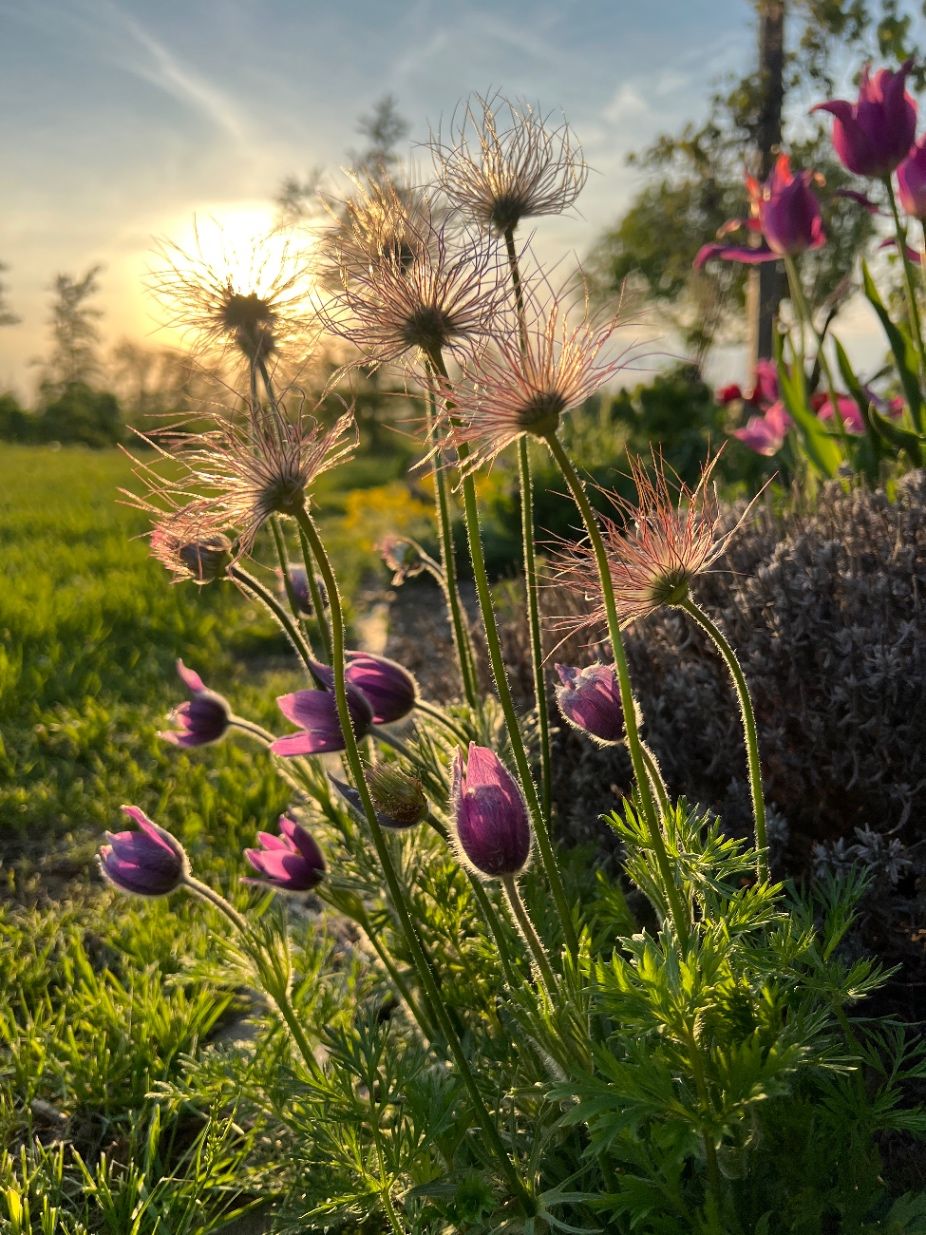
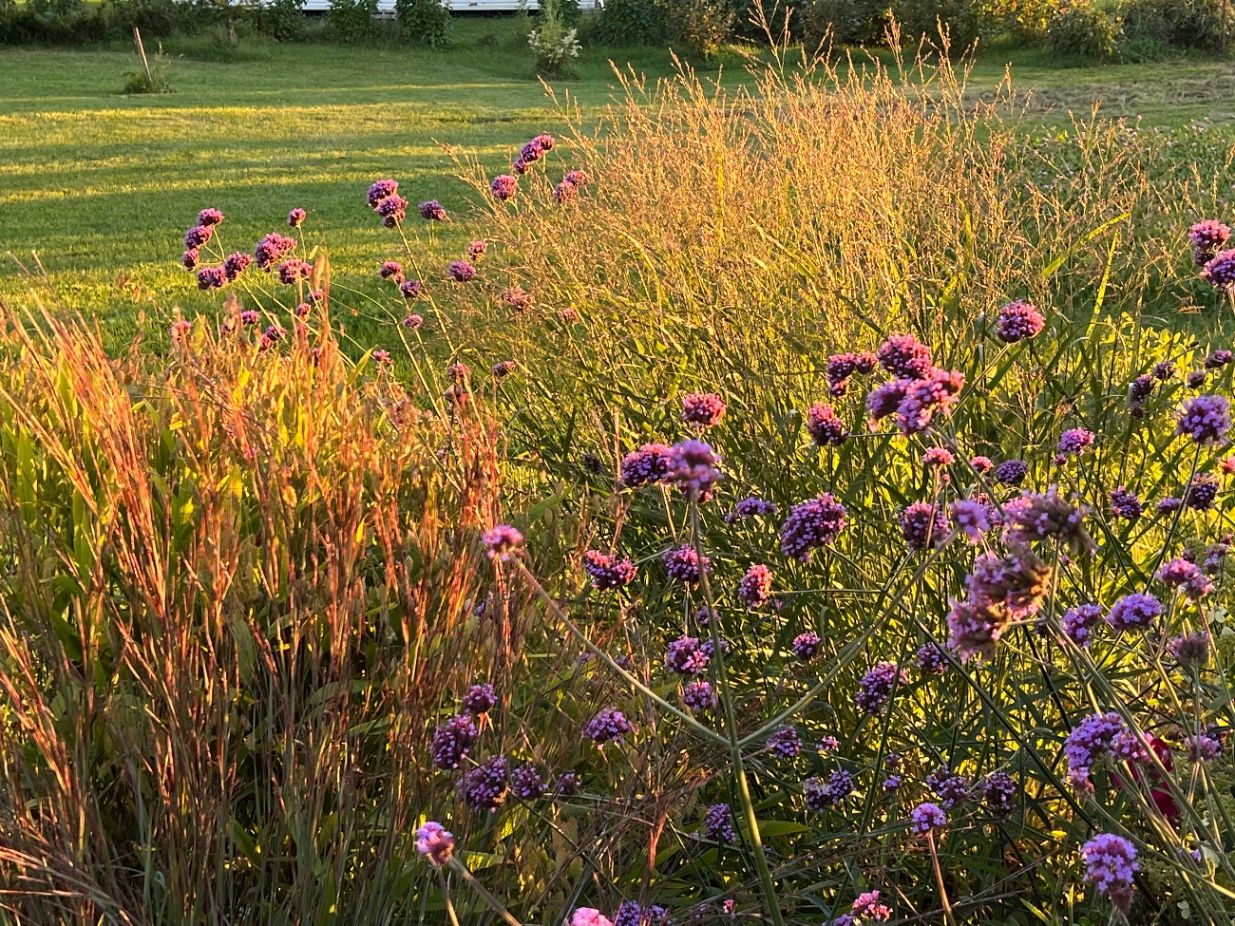
At first, that work was almost instinctive. We’d take a break in the golden light, sitting down, with cats coming to share the moment, staring at the setting sun. That’s how our focal points were born: to give space to the light. The trees were planted so that we could still have a long broad view, filled with light. Then came the meadows, filling themselves with native New England asters and goldenrods, and with red dogwood for winter. Golden willows to catch the sun. Grasses to play in the wind. Flower colours chosen to look their best at a certain time of day, considering if they are seen receiving the light or backlit by it. It took us a year to realise that we were chasing the light. Sometimes, we drop everything to just be there. It seems like nature comes together at that moment, with birds slowing down their daily hustle, bees stumbling tired and finding sleeping spots in flowers. I put down my hoe, leave the wheelbarrow on the spot, and go for a walk.
There is, however, one obvious challenge when the main structure of the garden is the sky and the light. The sky gets grey, the light comes and goes. But then, grey light is still light, and it highlights other colours. Grey light, surprisingly, works beautifully on textures of the plants and highlights more subtle hues. When it’s grey, the wind often provides drama too.
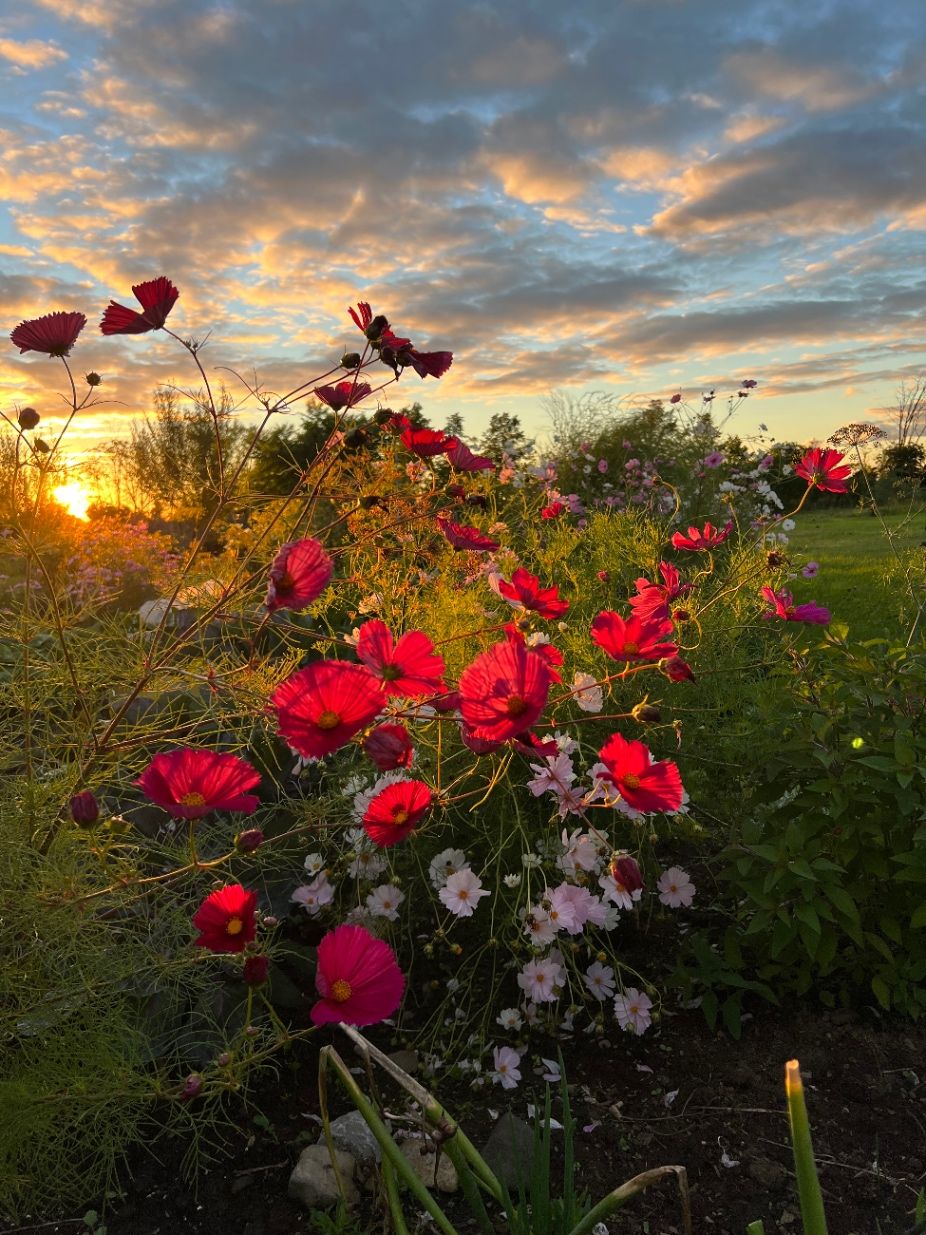
The one challenge I am not sure how to meet is the strongest light around noon. I am hardly ever in the garden at that time, being more of a crepuscular creature. It’s hard to improve the garden without observing it in that light, and I must admit, I have no interest in observing it at noon. There is a hint there, however, in old stories: apparently, my farming family used to take a break at noon to rest in the orchard, under the apple trees. I think I will need to take a hint and create a resting space under fruit trees. It seems to me like a good way of spending that wretched time of the day. But if you have advice on dealing with that unforgiving noon light, please, enlighten me.
Can light be a guiding structural element of the garden? I am used to considering light as a requirement for plant growth and as a highlight for other garden features. In other words, in the past it used to be a tool for me. But now, I think of light as if it was a living thing: predictable but temperamental, sometimes brooding, sometimes joyful, and oftentimes domineering. More fundamental to the garden experience than paths, and walls, and even – maybe – the plants. Can the sky be so important, too? Canadian geese passing twice a year, calling from above, make me take my gaze away from the ground up toward the sky. There is no fall nor spring clearing of the garden without them passing above. They are a part of the garden, too. Northern lights, if we are lucky, can be seen because of the wide and somewhat dark horizon. We need to preserve these views as part of the garden experience.
I admit that I can't stand artificial lighting in the garden, so even after dark, I prefer to go out in the darkness (if one can call it darkness because of the light pollution). When confronted with spotlights and floodlights and all that artificial lightening paraphernalia, I must say my reaction is like to a squeaky chalk on a blackboard. The farmers and people around us in the countryside love using blinding lights at night all around their properties. They call it “safety” lights, but I think they must bring on insanity. They flood the countryside with a ghostly glow. Forgive me, but to all those “decorative” or “safety” lights I want to say, like my students, "how rude!". Our dark garden lights up in early summer with fireflies – something others will not experience because fireflies require darkness. And to protect ourselves, we planted trees to block the view of that horrid white glow. Even that light dictates the bones of the garden.
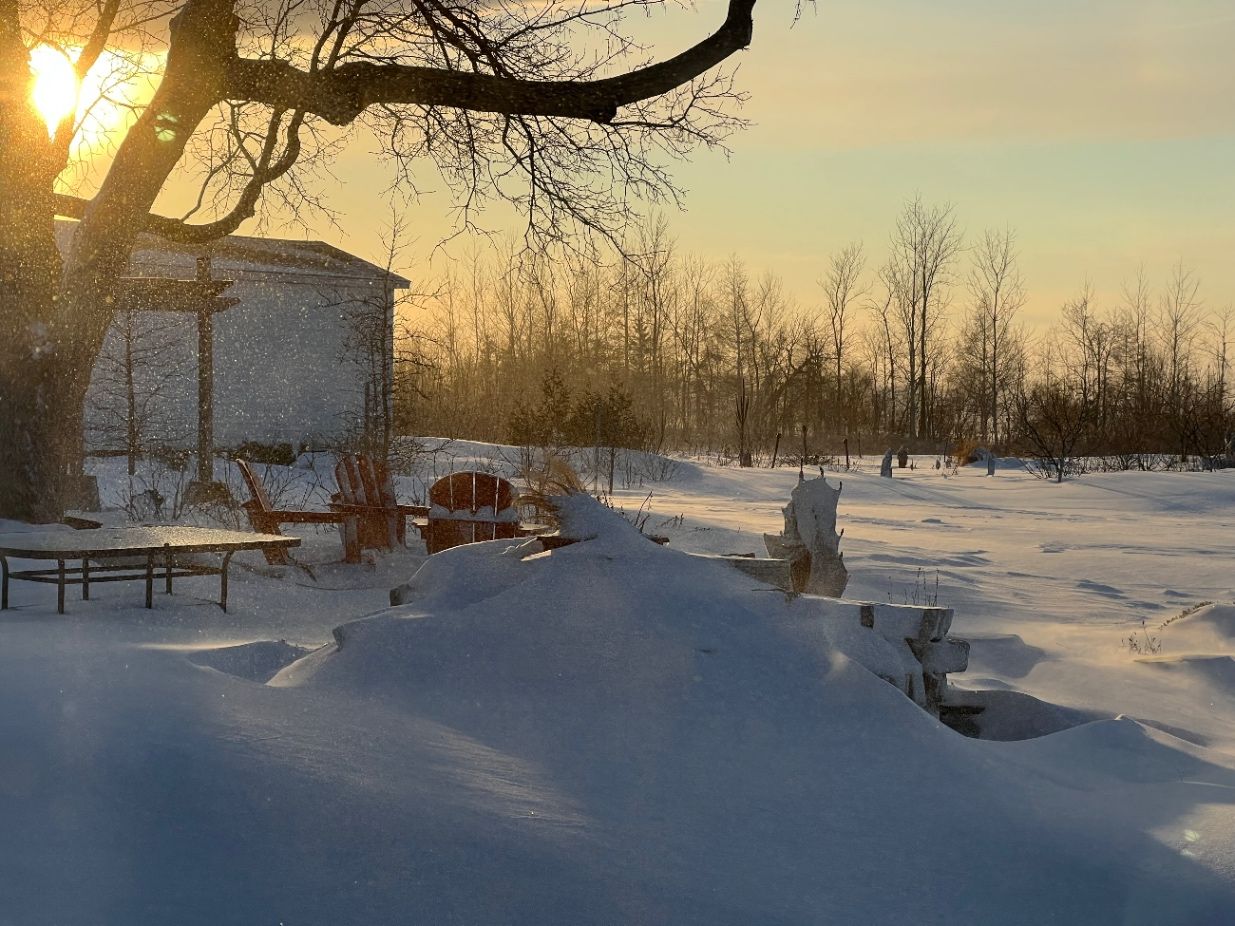
In winters (how they always creep into my writing!), the icy blue skies bring the nicest light in the evenings after snowstorms. It feels cold and mocking, but it’s hopeful. We know spring will come, however late it chooses to show up, and that snowdrops and snow crocus will brave the weather as soon as they catch enough light in mid-March, almost always in the same week. If plants know the importance of the growing daylight, spring must come. If light is so important to plants, to fireflies, or even to our cats, it must be important to us too – more than just a background.
So at the end, here is my favourite poem by Rabindranath Tagore for your enjoyment. I couldn’t present it earlier because you’d have no reason to read my own writing after reading this:
“Light, my light, the world-filling light, the eye-kissing light,heart-sweetening light!
Ah, the light dances, my darling, at the centre of my life; the light strikes, my darling, the chords of my love; the sky opens, the wind runs wild, laughter passes over the earth.
The butterflies spread their sails on the sea of light. Lilies and jasmines surge up on the crest of the waves of light.
The light is shattered into gold on every cloud, my darling, and it scatters gems in profusion.
Mirth spreads from leaf to leaf, my darling, and gladness without measure. The heaven’s river has drowned its banks and the flood of joy is abroad."