Mud and Maple, the March Garden in Vermont
This month's installment of Musings from Mutton Hill. A snippet of what is going on here in the gardens with minor digressions.

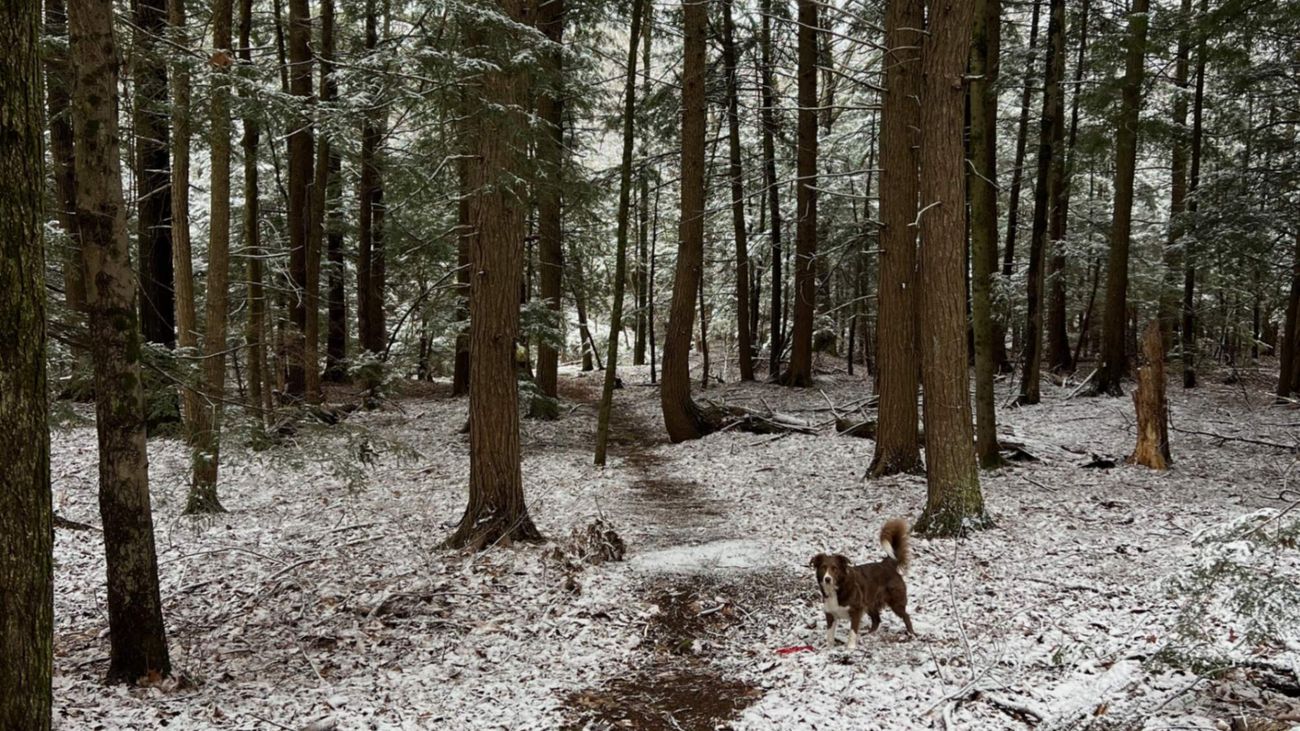
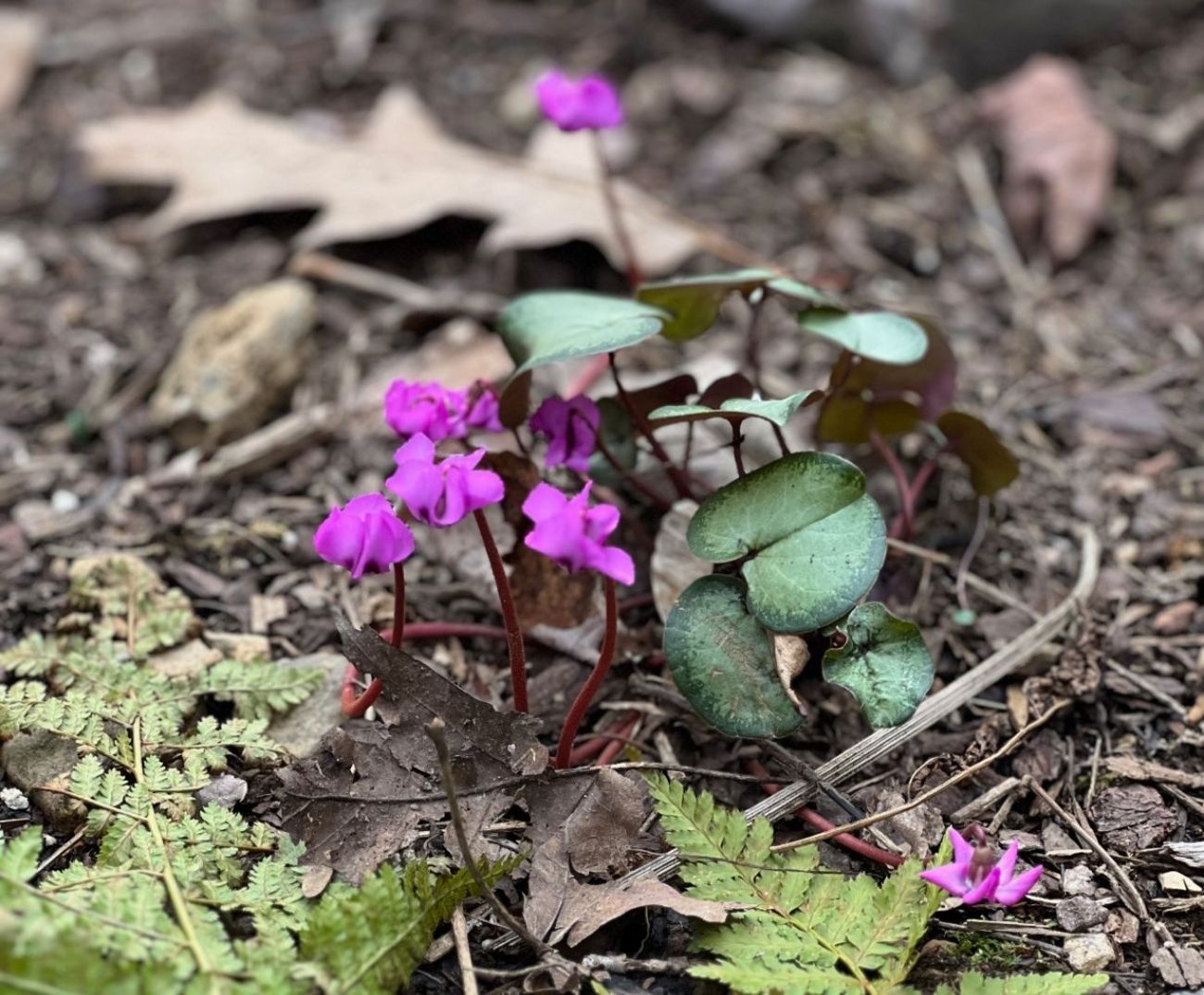
March is always a bit of a mixed bag here at Mutton Hill. Each year as the snowpack recedes, I experience a whirlwind of emotions as I survey the gardens to see what made it and what didn't. This year, voles girdled two apple trees and several rose bushes. I am not sure that the girdling completely cut through the cambium on the apple trees, so the jury is still out on whether or not they will survive. On a positive note, a couple of plants that are borderline hardy here seem to have pulled through, but we aren't quite out of the woods yet. Additionally, the cyclamen I planted last year seem to like their new home, and the snowdrops I planted a couple of years ago are doing their thing and slowly multiplying.
One of the more difficult things in our erratically warming climate is to understand when spring is actually here and when it is safe to remove winter protections. For instance, I put open boxes around my roses each autumn and cover them with branches cut from our Christmas tree each January.
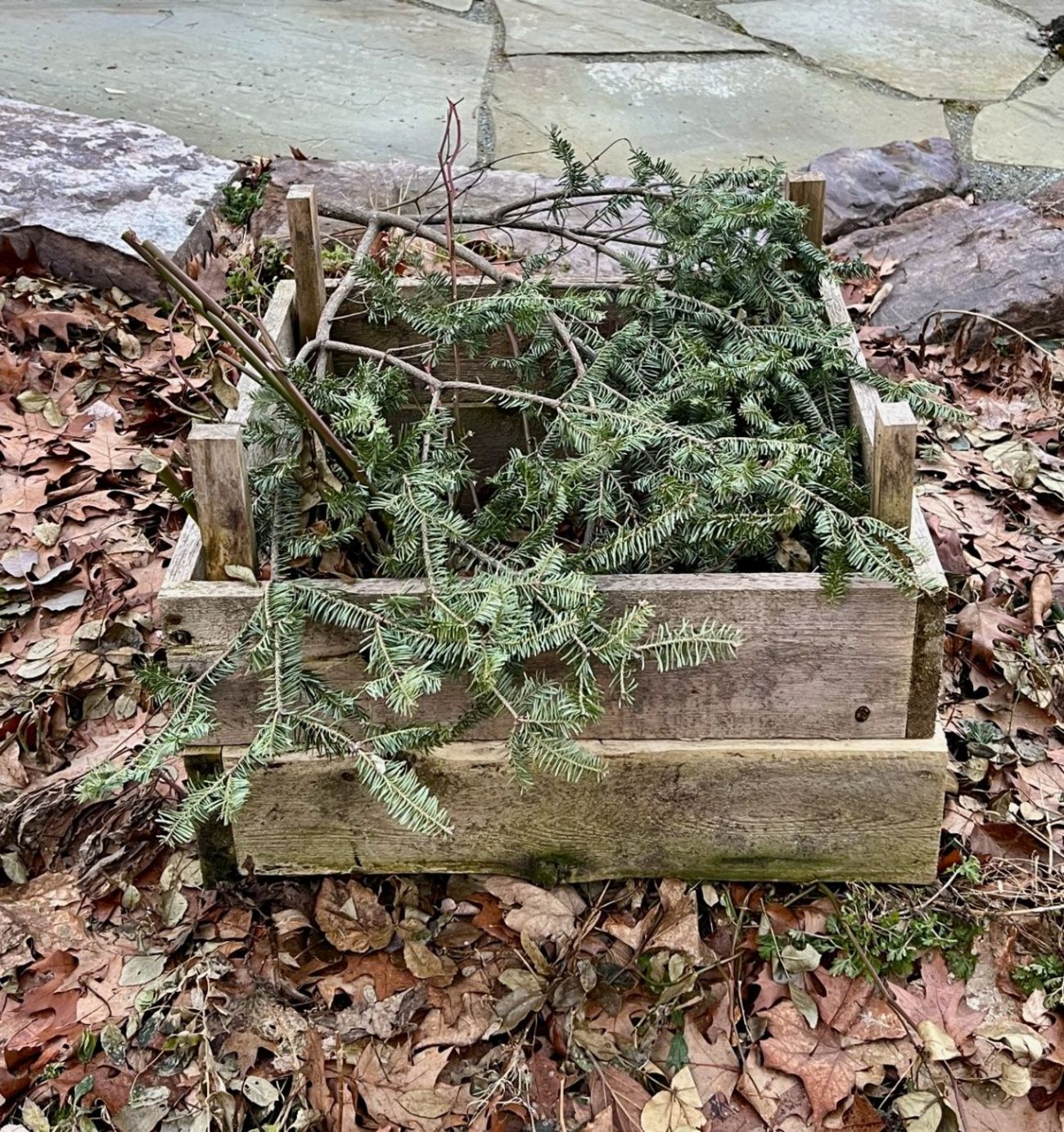
This seems to carry them through winters just fine, but knowing when to remove them is a bit of an art and, honestly, mostly guesswork. For instance, the temperatures through these first few weeks of March have been very mild, quite warm even for Vermont. This means that everything is popping into growth; however, it would not be unheard of to get a couple of feet of snow in April or an inch of ice followed by raging winds. At the same time, plants growing under winter protection when the temps are in the 60s and 70s (Fahrenheit) are bad too. What to do? What to do? I know that T. S. Eliot said that April is the cruellest month, but in Vermont, I really think that it is March that is the cruellest, a month with one foot still in winter, the other in spring, and both knee-deep in mud. And we have a lot of mud.
Vermont weather
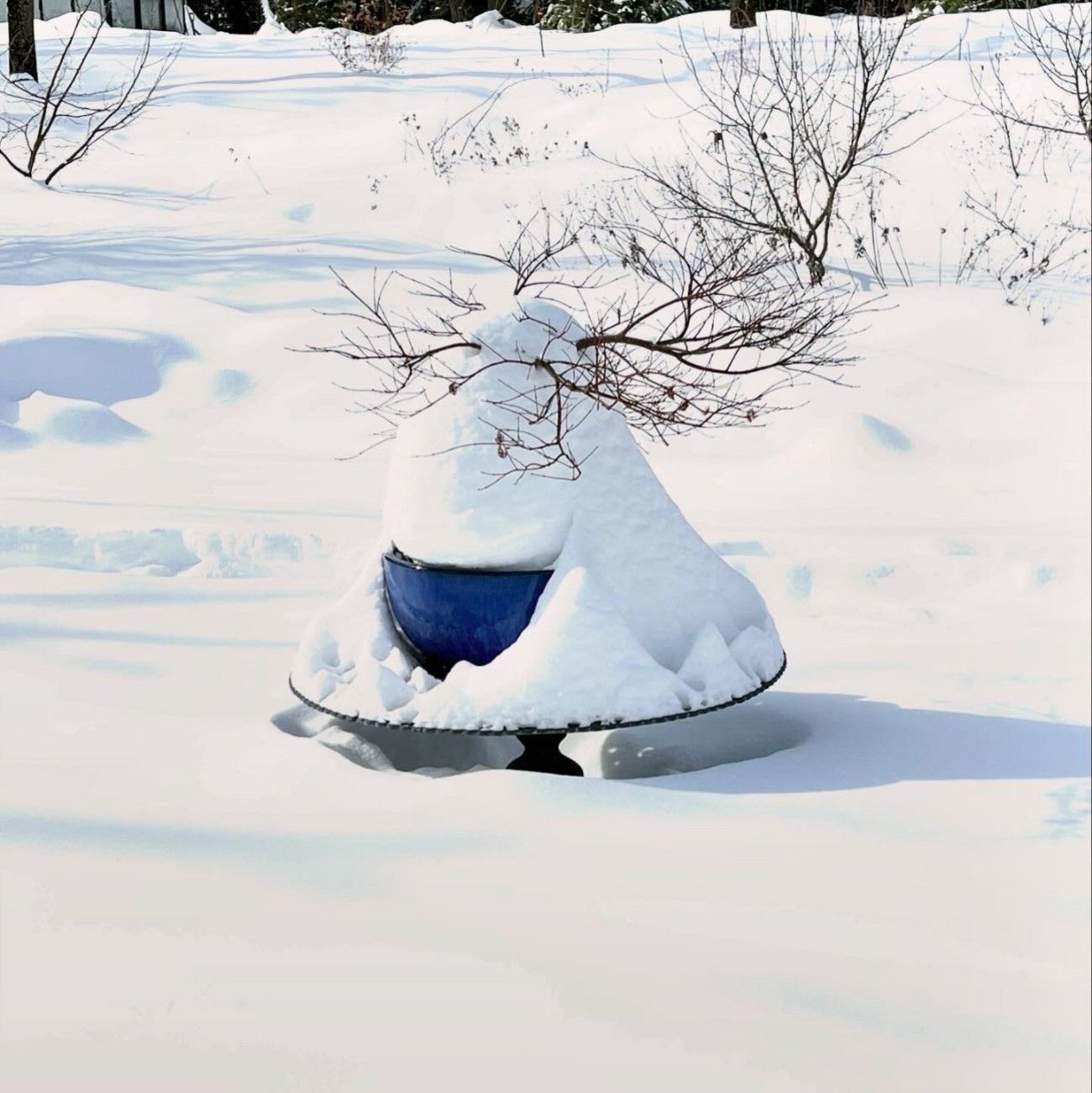
For those of you unfamiliar with the vagaries of Vermont weather, something important to know is that while Vermont is special in many ways, it is particularly so when it comes to its seasons. Unlike most temperate zones around the globe which experience four seasons, Vermont actually has six seasons: mud season, spring, summer, autumn, stick season, and winter. I will address stick season later in the year, but March is smack dab in the middle of mud season. In general, I love all of the seasons in Vermont, but if I had to pick my least favourite, it would definitely be mud season. To misquote one of our original Americans: mud season is a time "to try men's souls". Mud season arises when the winter's snowpack rapidly melts each year and saturates every cubic inch of soil.
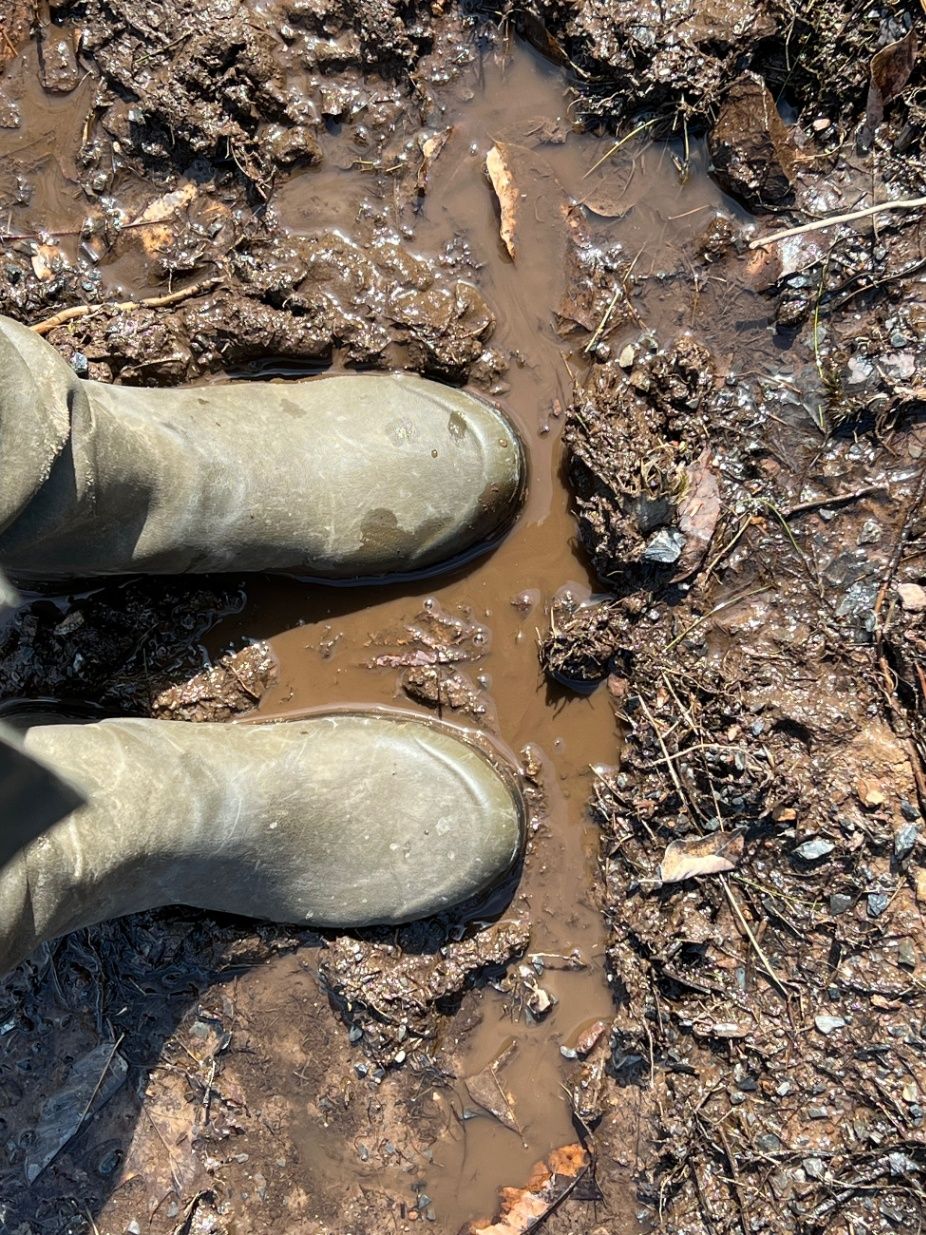
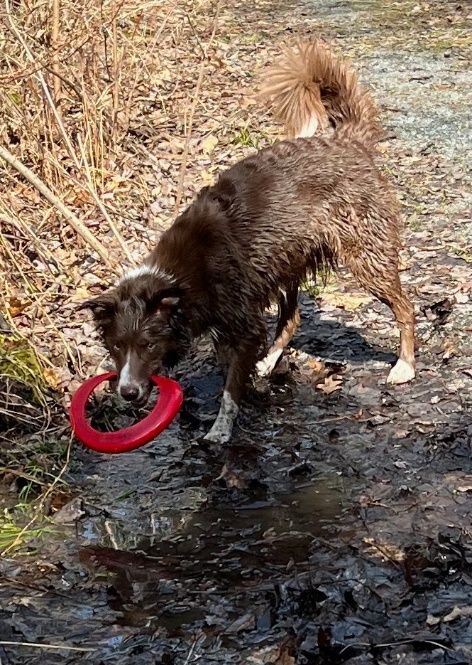
During this time, Vermont rapidly devolves from a winter playground where one can ice skate, ski, sled, make snowmen, etc. to a mud-caked hellscape that must dry out before one can enjoy tulips, daff's, and all of the other glories of spring. It is generally too wet to garden much for fear of compacting the soil and when one does venture out, knee-high wellies are really the most practical footwear. One of my least favourite parts of mud season (the list is long) is the disaster that is mud season and dogs. One of the great joys of being out in the gardens and tramping around the woods for me each spring is romping around with my dogs and basking in the warming air. However, while I am inhaling that beautiful clean spring air, they are investigating every new scent unveiled by the melting snow and, whenever my eyes are averted, they will roll in each new fragrance and eagerly and ecstatically coat themselves in mud and other unmentionable muddy substances. This is particularly special when they uncover the rotting carcass of some poor creature that met its end during the past winter. The more rank and rotten, the better. The best part of all of this is when it is time to hose them off with ice-cold water from the garden hose before they are allowed to re-enter the house. This inevitably means that I also get soaked and become coated with whatever grossness splashes off of them as I hose them down, which means that while they are drying off in front of the lovely warm fire, I am scrubbing off the ephemera that they gifted me in the shower before I can return to my normal day.
The silver lining
As gruesome as this all is, I cannot deny that even in the depths of mud season there is actually much to delight the soul in the gardens. For instance, mud season coincides with sugaring season, the time of the year when the sap starts rising and the majority of maple trees in Vermont are tapped to harvest and boil this ephemeral liquid into maple syrup. I don't know that everyone counts this as gardening, but I do. We have around eight acres of trees which we grow, look after, and cherish. We are continually planting more each year, as well as harvesting some for firewood, and tapping others for sap in the spring, and these activities fit neatly into the rest of our gardening year.
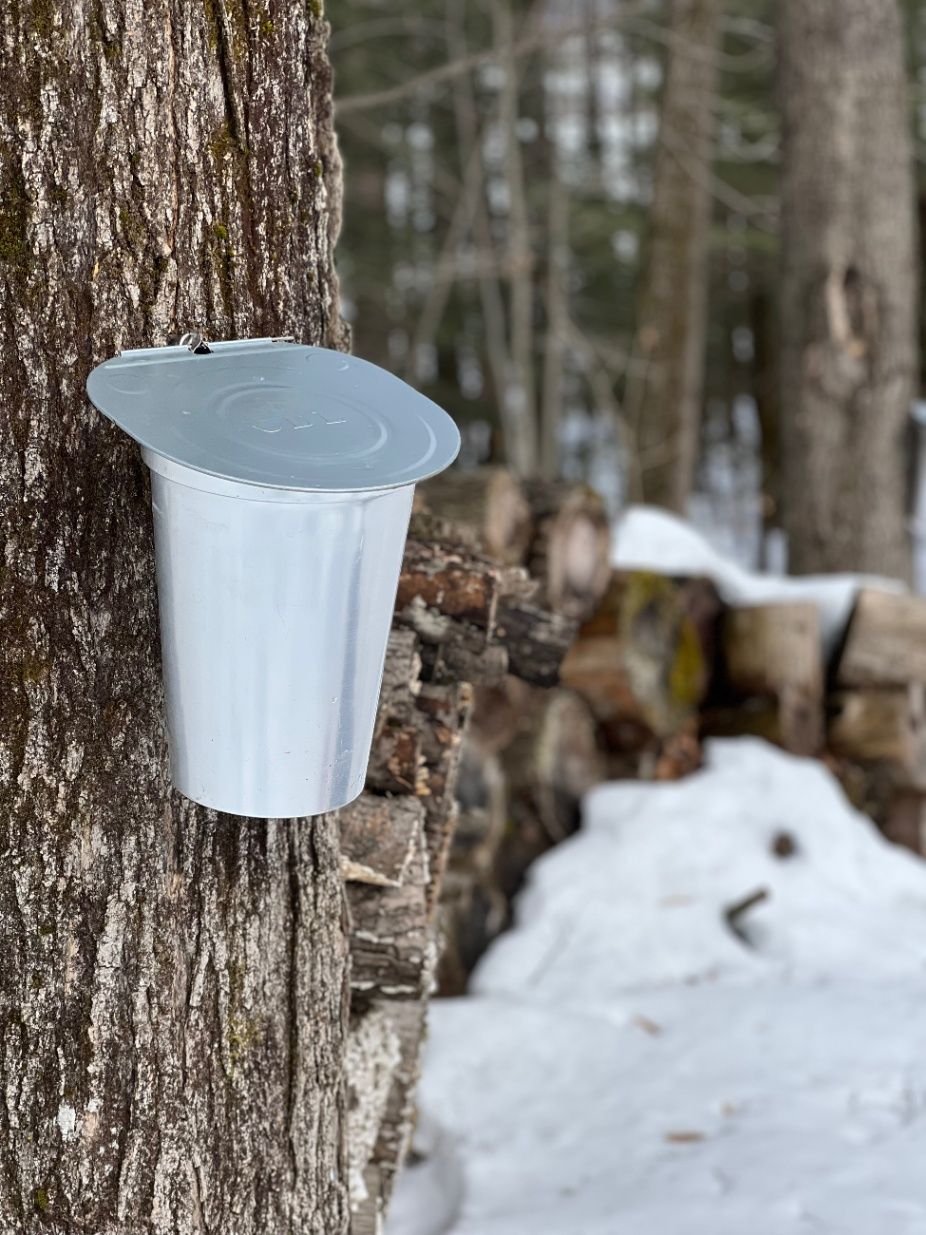
Maple syrup is big business in New England and in Canada, and 'sugar bushes' (the local name for stands of maple trees tapped to make syrup) are crisscrossed across the region with plastic tubing connected to large containers that collect the sap which is then boiled on an industrial scale. Our syrup-making practices, however, are on a more modest and homely scale. We tapped 11 trees (it would have been 12, but I accidentally misplaced one sap bucket - more on that later), which involves drilling a hole in a tree and inserting a spile that directs the running sap into a bucket that you hang below it. We collect the sap by emptying the buckets into a large pot and then generally freeze it for the first week or so.

Once we have enough sap, we start boiling it down. We do this in what I call our woodfired redneck evaporator, which is basically a large steel drum that has been converted into a maple syrup-making machine. A number of folks around here make these and sell them for spare cash, which is how we acquired ours. Despite its questionable aesthetics, which is more backwoods than trendsetter, it is actually quite functional and a good example of Yankee ingenuity. It takes around 40 gallons of sap to make a gallon of maple syrup, and this evaporator boils it down quite efficiently. It is also quite pleasant to sit next to on a cold crisp day watching the sap boil while basking in the sweet steam evaporating off of the liquid.
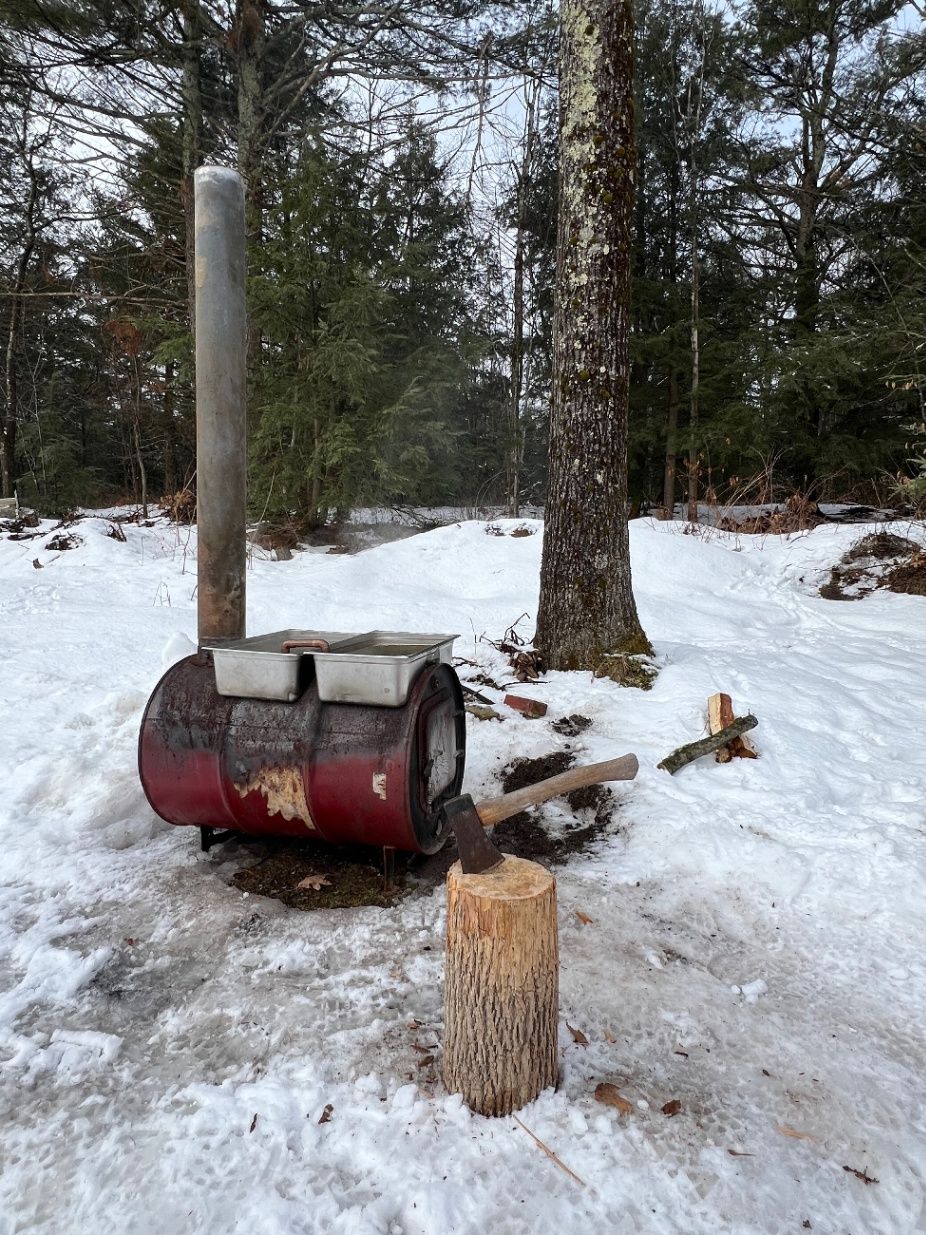
This is also particularly good for relaxing all of the tight muscles that are a result of carrying gallons of sap around the woods and bringing them up to the evaporator. This gets to one of the additional joys of 'sugar season' - learning how out of shape you have become after a long winter. In many ways, it is like gardening boot camp, a couple of intensive weeks of carrying sloshing buckets of sap around the gardens does a good job of preparing one for the digging, planting, and weeding soon to come.
More traditional garden tasks
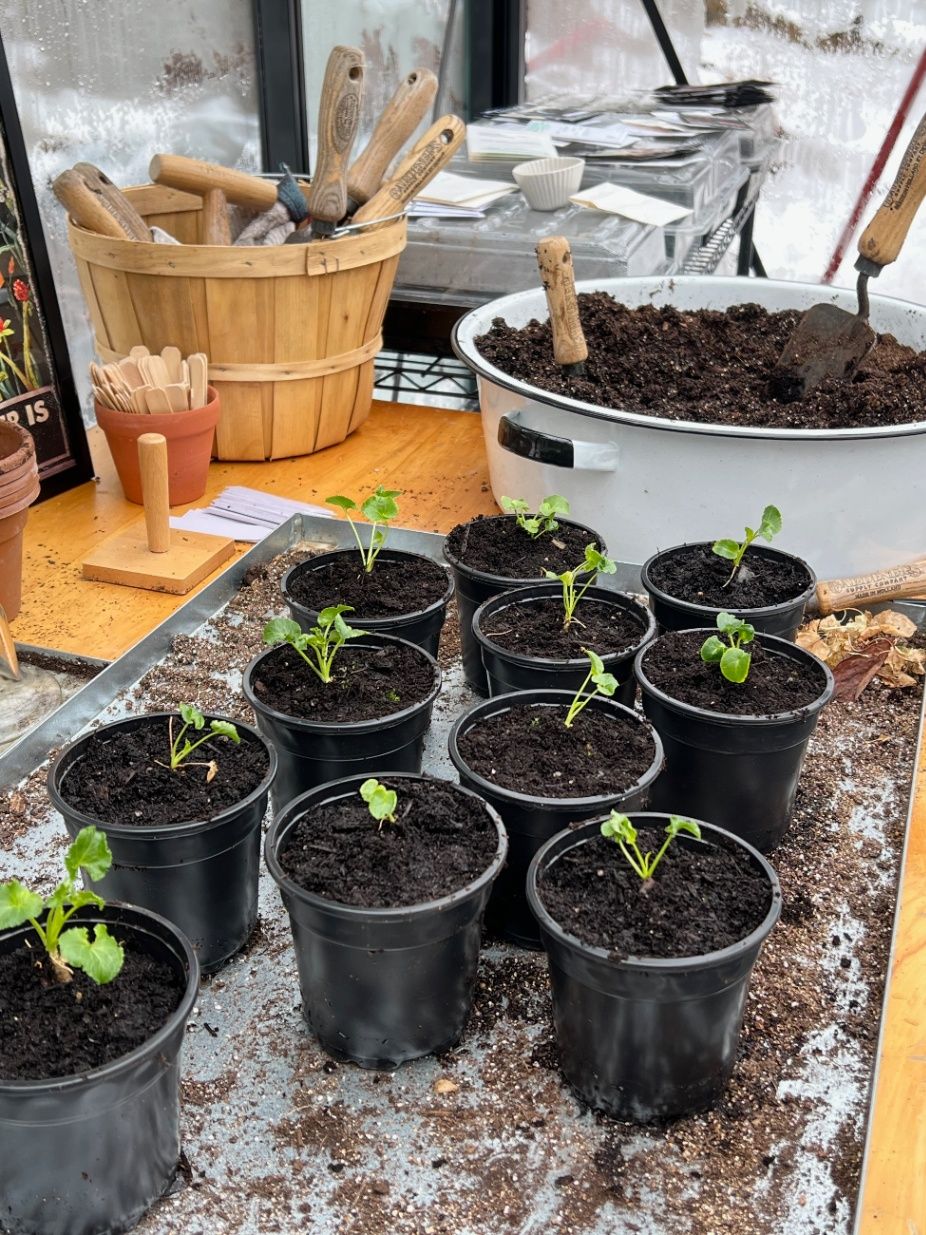
March has been more than just mud and maple, however. In addition to sugaring, this has also been a month of sowing and propagating. In fact, the evaporator was placed a short distance from my greenhouse so that I could monitor the syrup-making in between sowing flats of seeds and taking cuttings of my chrysanthemums, lavender, and rosemary to root. Lots to keep me occupied as I wait for the mud to dry out.
The errant bucket
Last but not least, getting back to that missing sap bucket. When we were tapping trees, my husband kept telling me that we were missing a bucket and I steadfastly insisted that we couldn't be and that we had only ever had 11 buckets. I kept them all together in one spot and there were only 11 buckets there, so there could not have been 12. This argument went on for a few weeks and I was certain that I was right until our son found an extra spile, which begged the question of why we would have 12 spiles if we only had 11 buckets. My husband went back to his refrain of 'we had 12 buckets and are missing one,' and I determined that we must have just bought an extra spile 'just in case.' In case of what, I have no idea, but it sounded reasonable. At least it sounded reasonable until it was time for my annual ritual of harvesting the endive that I force every year in our outbuilding. Every summer I grow several rows of witloof chicory and then each autumn I dig them up, trim the roots, wrap them up, and vernalise them in a refrigerator. Then in January, I pot them up in a tall narrow container and stow them in a dark place for forcing.
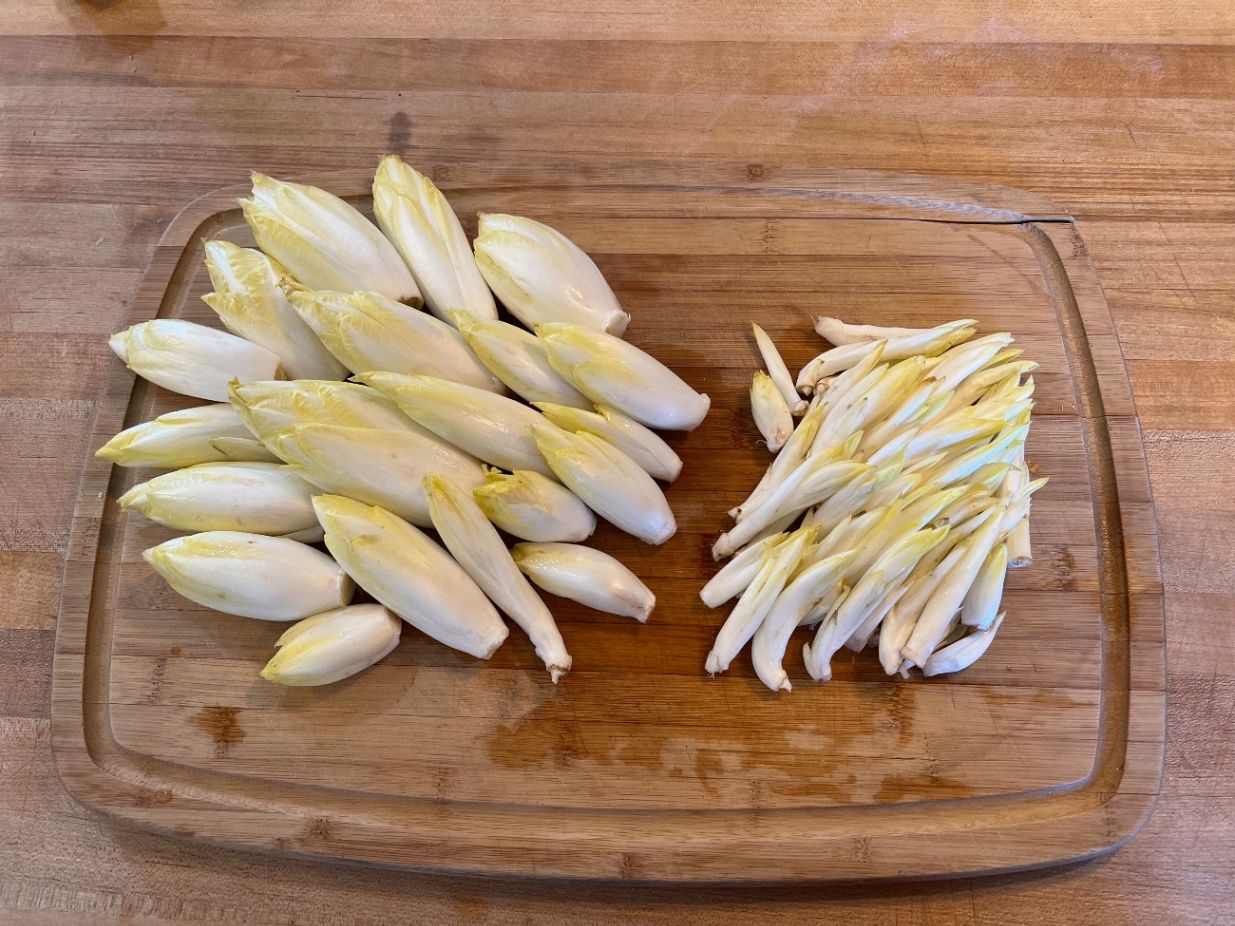
When I pulled out the container this past month to see if they were ready to harvest, I suddenly remembered how when it came time to pot them, I couldn't find the container I normally use and decided that the next best thing would be a sap bucket, which I then obviously forgot all about until the evidence was right in front of me. Let me just say, that it gave my husband a well-earned opportunity to crow, and I have been eating crow ever since. On the other hand, endive dressed with a maple vinaigrette is quite a lovely thing, so I have decided that forcing endive in a sap bucket has a certain poetic flair to it.