Of Christmas Cactuses and Kings, and some other things...
A tale of plant abuse and redemption, or alternatively, the inspiring story of a resilient family/heirloom Christmas cactus and how it overcame my ineptitude.


Spoiler alert: There will be no kings, but plenty of cacti and other things in the article...
I have in my possession a Christmas cactus that has been passed down through my husband's family for, at the very least, the past 100 years. Rumour has it that it came from Scotland when his ancestors immigrated to Canada eons ago. Since it has been with us, it has spent the last 30-plus years of our marriage largely thriving on neglect. Given how much I like plants, this might seem strange, but the truth is that while I have been an avid gardener all of my life, I was late to come to houseplants. Give me a cutting of a perennial barely hardy to my zone, and I will likely make it thrive. However, until a few years ago, if you gave me a potted houseplant, you were sending it to its death. For some reason, they just never held my interest and could not survive my benign neglect. I never tried to kill them. I would just forget about them.
I have killed many, many houseplants, including a small spiky cactus that purportedly rarely needed water. This particular cactus held its colour nicely after it died, and I suspect that it had been dead for months before I noticed. The family Christmas cactus, however, didn't seem to mind my sporadic inattention. I could ignore it for months before something would draw my attention to it, and then I would guiltily soak it in water and drench it trying to make up for the slight. In response, its slightly shrunken branches would plump out nicely, and I would breathe a sigh of relief that this family heirloom lived on. This went on for years. It rarely flowered but would periodically send out a blossom or two sometime in March or April. Given the level of neglect that I inflicted upon it, barely flowering made sense to me. As for its flawed timing, I always figured it was either a defective Christmas Cactus or that my negligence had messed up its internal clock.

I began to come around to houseplants a few years ago, but it would take until this year before I gave the Christmas cactus its due. Shortly after the pandemic, we had to move due to a job change. This move initially saw us on the other side of the country. We kept our place in Vermont, but I was only in my gardens full-time in the summers and found myself otherwise bereft of plants. Suddenly, houseplants were much more interesting to me than they had ever been before. And shockingly, I discovered that if you paid attention to them, they would thrive. Who knew?
Getting back to the Christmas cactus, it didn't move with us. I figured it had done fine only having my attention every few months, so each time I was home, I just followed the same soak and drench routine that had worked well enough through the past few decades. I did, however, decide to bring some cuttings back with me across the country to establish a new plant. After Christmas one year, I wrapped the bases of some cuttings in a damp paper towel and placed them in a plastic bag for the journey. We were driving, so I kept the bag in a pocket in my parka.
It is quite cold across the United States in winter, and I didn't want them to be left in the car overnight and freeze. Each day that we drove, I would take the bag out and keep it on the dashboard so the cuttings would get some light. Every evening, I would tuck it into my coat and bring it into the hotel with me. Throughout this process, I couldn't help but think back to my husband's ancestors who had supposedly transported cuttings across the ocean. All went well until we reached our destination, only to discover that our heat was out and that a pipe had burst.
In the kerfuffle that followed as we dealt with that crisis, I forgot all about the cuttings in my parka. I forgot about them for three weeks. One day, while on a walk, I unzipped the inside pocket of my parka to stash some mints. To my dismay, I was suddenly reminded of the cuttings' existence by the bag of green slimy mush that I discovered. The cuttings had all rotted, except for two tiny leaves or cladodes, which otherwise looked like they were on death's doorstep. Figuring that there was nothing to lose, I put these two sad cladodes in a damp-cutting mix and set them on the windowsill. Miracle of all miracles, after sulking for a few months they began to grow, and have since grown into a small but respectable plant.
Meanwhile, fast-forwarding to Easter of that year, we arrived home in Vermont to discover that the Christmas cactus I had left behind to fend for itself in an empty house was covered in blossoms, more than I had ever seen on it before. Its timing was still off, but it apparently didn't mind our absence. Since then, we have moved closer to home for work and are only a few hours from our house and gardens in Vermont, and I have begun trying to make up to this plant for decades of neglect. Initially, this didn't include looking up information about Christmas cactus care but simply meant that I watered it more regularly. But, things would soon change.
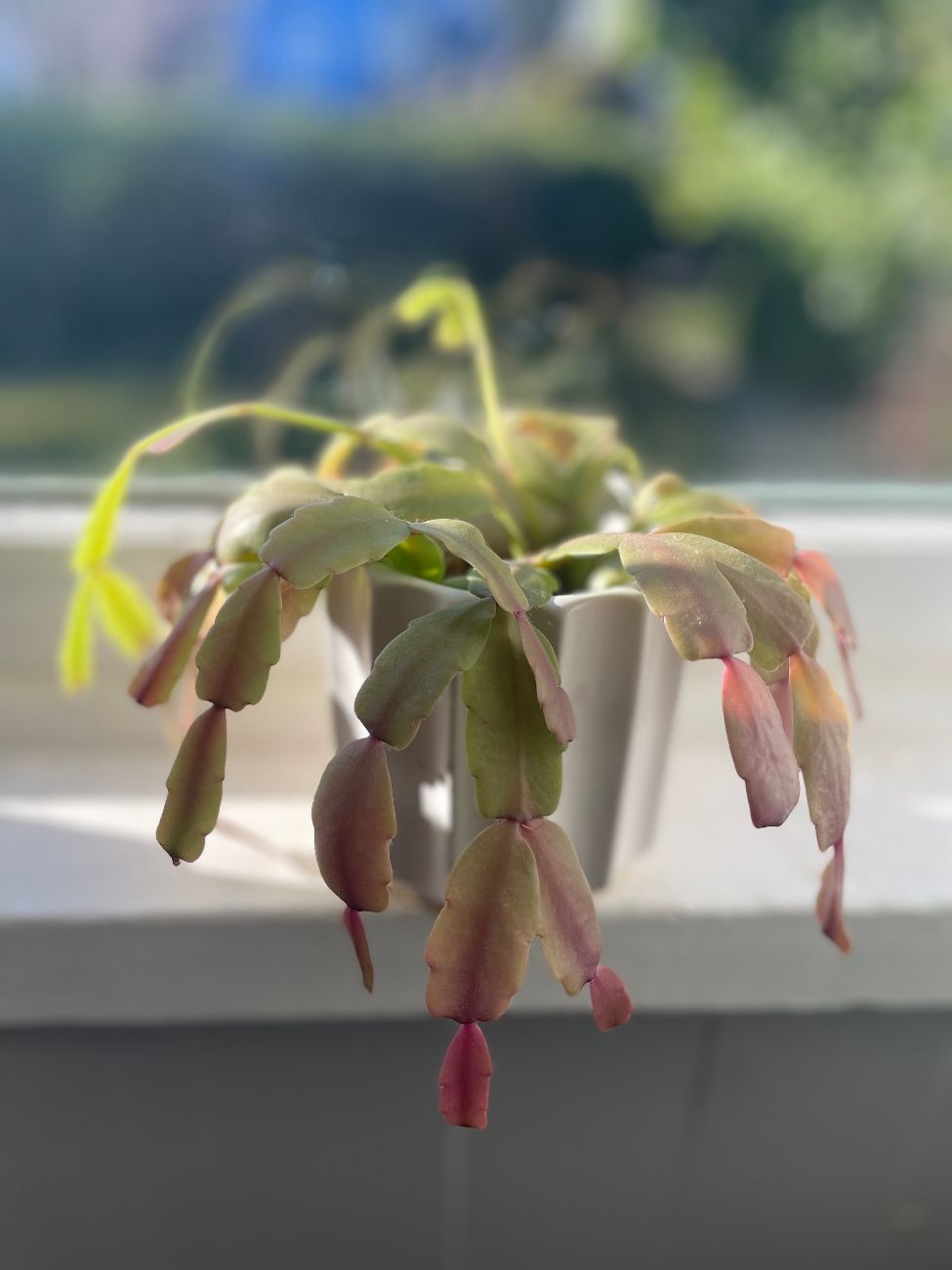
When we moved into our new home away from home in Boston for work, our landlords left a Christmas cactus for us on the kitchen table. This was this past August. I added it to my plant collection, kept it watered, and otherwise didn't think much of it. Our cat, however, paid it ample attention by munching on the ends of all of its leaves. I grumbled at the cat, cleaned the cactus up, and moved it out of its reach, writing off the thought of any blooms for the year.
Four months later the cactus was covered with buds. When it started to bloom, I really paid attention to it for the first time and noticed that the flowers looked markedly different from the one we had at home in Vermont, as did the leaves. This prompted me, after 30-odd years of owning our original family heirloom Christmas cactus, to actually try to learn more about it. There is an added layer of irony here, in that I am an academic. Knowing things about things and research are what I do. Finding out more is generally how I approach any area of interest in my life, yet I had had for over 30 years, a Christmas cactus-sized blind spot. Only it wasn't a Christmas cactus-sized blind spot, it was actually an Easter cactus-sized blind spot. Turns out the family heirloom cactus wasn't a Christmas cactus after all.
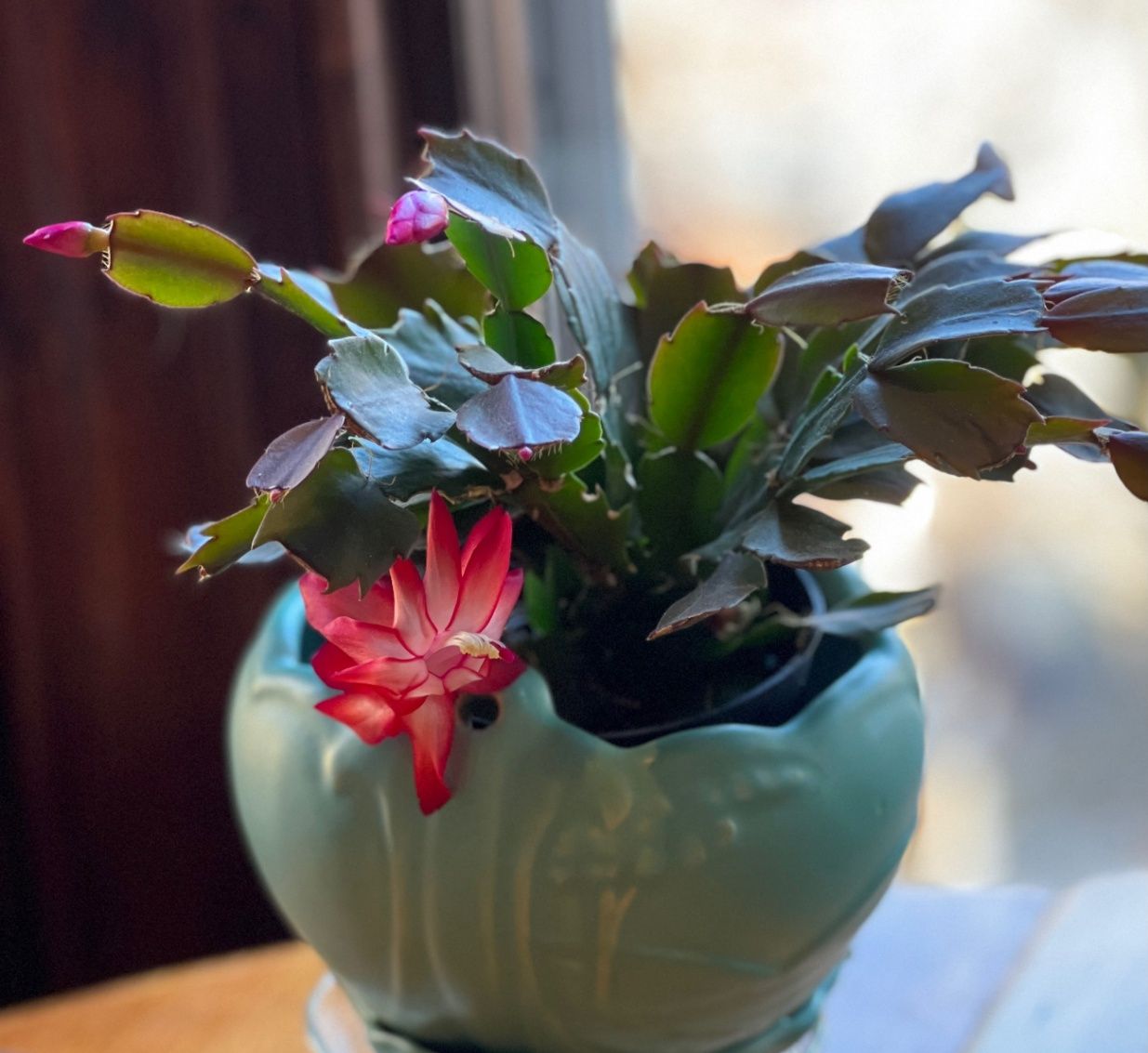
The taxonomy gets a bit complicated and I don't want to get too deep into the weeds here, but at a basic level, all Christmas cacti are members of the genus Schlumbergera. The family cactus is a variety of Schlumbergera russelliana which typically blooms between February and April. It was first discovered by European plant hunters in Brazil in 1837. (However, I am sure that native Brazilians had been well aware of it long before then). Another variety, Schlumbergera truncata had been discovered in 1819 and flowers between October and November. It would eventually be known as a Thanksgiving Cactus in the United States.
The Thanksgiving cactus and the Easter cactus would eventually be bred around 1850 to develop a plant that flowers around Christmas, the Schlumbergera x buckleyi, which is known as the Christmas cactus. It turns out that the family Christmas cactus wasn't defective, it just wasn't ever meant to bloom at Christmas time. As for being a cactus, none of the plants in the genus Schlumbergera are the 'love to live in dry arid environments' type of cactus, but rather are epiphytic which means that they are the type of plants that like to live on other plants in the rainforest. Because of this, they were originally referred to as Epiphyllum truncata and Epiphyllum russelliana but were eventually reclassified into the genus Schlumbergera.

According to the sources I consulted, these plants prefer a moist but well-draining succulent-type mix, which means I need to right another wrong I have subjected the family cactus to. It has been in the same pot in a fairly heavy generic potting mix for at least 20 years.
As for the mystery of the family cactus's amazing floral display after being left alone at home for months. It isn't mysterious at all. The plants are stimulated to bloom by cool temperatures and short days. As we were not at home that winter, the house was cool and the cactus was not exposed to artificial light. This means that it was in the ideal environment to stimulate abundant flowers. It also turns out that our family cat was doing a bit of plant care when it chewed off the tips of the leaves of our new cactus this summer as well. This can apparently stimulate the plant into forming more blossoms (though she was cutting it close as this isn't recommended past late spring). So now that I know all of this, I can hopefully have a happier, more regularly blooming cactus, but it also makes me even more impressed by how resilient these plants are. I basically spent over 30 years doing everything wrong, and yet our family cactus remained sturdy and robust.
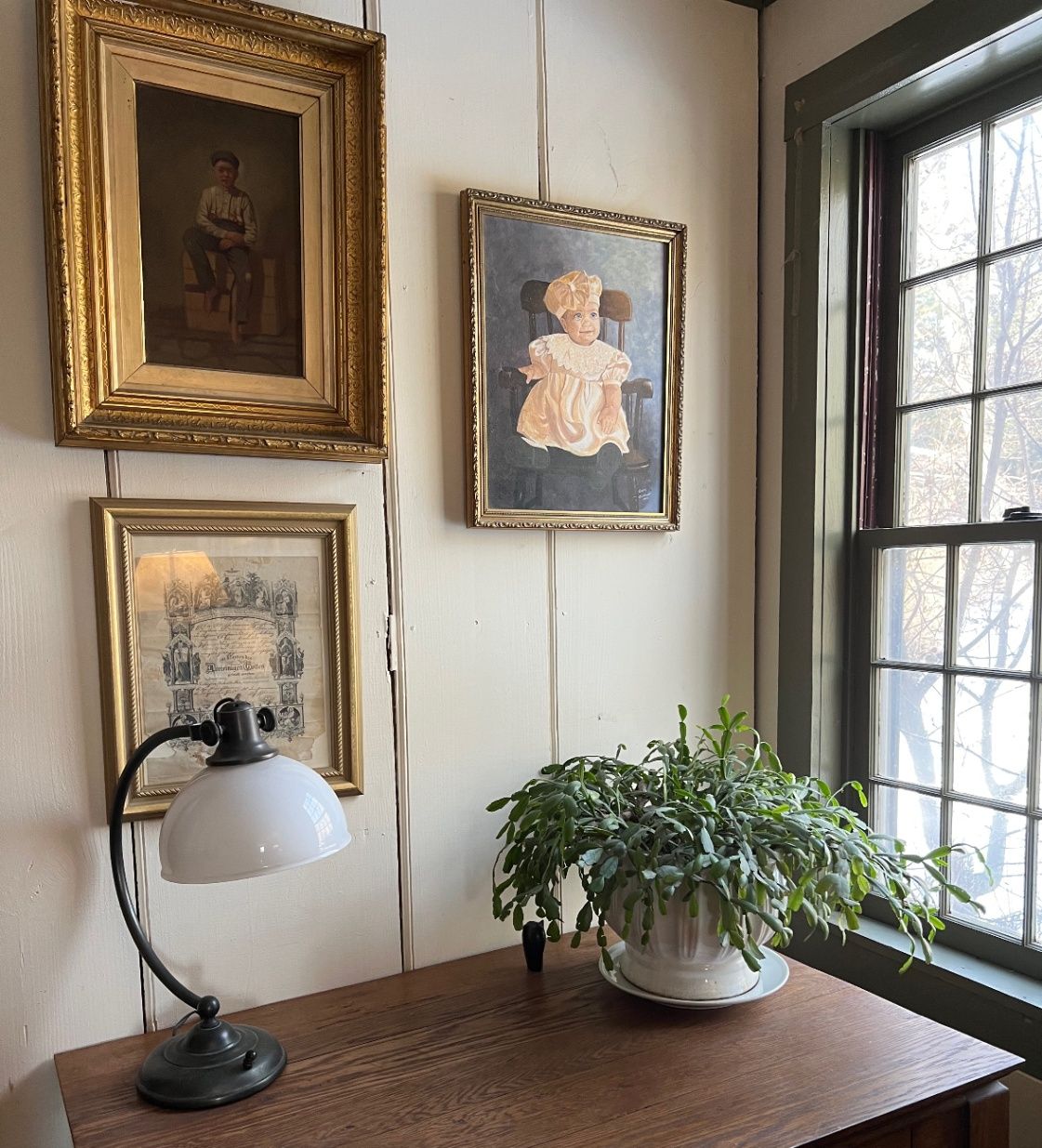
As far as the family plant's history, I have always doubted that story about the Scottish immigrants bringing cuttings with them from the "old world". It just seemed too far-fetched, not only because of the time period but also because they were forcibly evicted and sent to Canada in the late 1840s. Given their circumstances, I still think it unlikely that they would have had in their care a plant that had only been known to Europeans for about a decade at that point. What I will say, however, is that given what I have experienced in terms of this plant's resilience, IF, somehow they did have cuttings, I do think they would easily have survived a trip across the ocean in the steerage compartment of a transatlantic ship. They probably would have been more comfortable than their descendant cuttings which were smothered in my parka pocket for nearly a month. At this point, if someone told me that they had floated it across the Atlantic on an iceberg, I wouldn't completely discount it. Mostly, but not completely:)