Porcupines and Curses - The November Changeover
The shorter days and cooler temperatures of Autumn heralds the annual Migration of Exotics


November is always a palaver. So many tender plants needing frost-free accommodation, and never enough space. In the days before dessicating central heating, it wasn’t unusual for gardeners to store their dahlias under the bed, and now I’ve got the thermostat turned down it may come to that here. In one cottage garden I visited an old chap told me he stacked his tubers in racks behind an armchair, and shared their company all winter.
He didn’t wrap them or use any compost: “Just turn them upside down in November, and remember to turn them the right way up in April before you plant them out,” was his advice. That’s been my simple routine ever since, except that my dahlias currently go into a corner of the cellar, together with the cannas and the red-leaved bananas – the bananas hung bat-like from ceiling hooks for a while to drain them of water, which can startle me if I wander down there absent-mindedly on the hunt for another bottle of wine.
My old lean-to greenhouse is small and shady, but perfect for overwintering plants that like to be cool and airy, and don’t mind a degree or two of frost. The access, however, is tight, and there is much cursing from Aaron, my right hand man, and myself as we squeeze Rhododendron ‘Fragrantissimum’ and a dozen other half-hardy scented rhododendrons through the door, one gangly 5ft shrub after another.
A Wonder of Nature

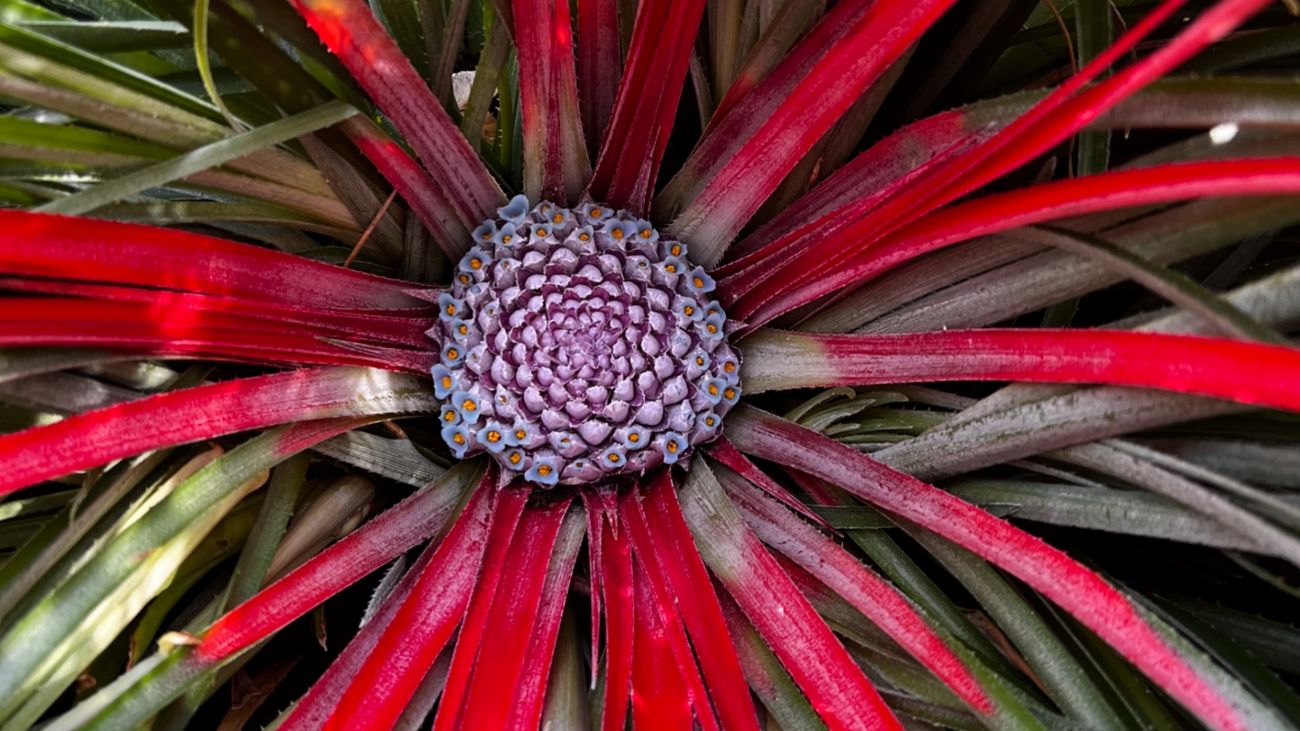
The worst job is getting the old Fascicularia bicolor inside. A botanical impression of an angry porcupine, 3ft high and 4ft across, it is extremely heavy and very prickly. For October and November, this bromeliad is just about the most sensational plant you can grow in a small garden, its toothed rosettes turning a glistening scarlet and its flowers opening cobalt blue and lemon yellow.
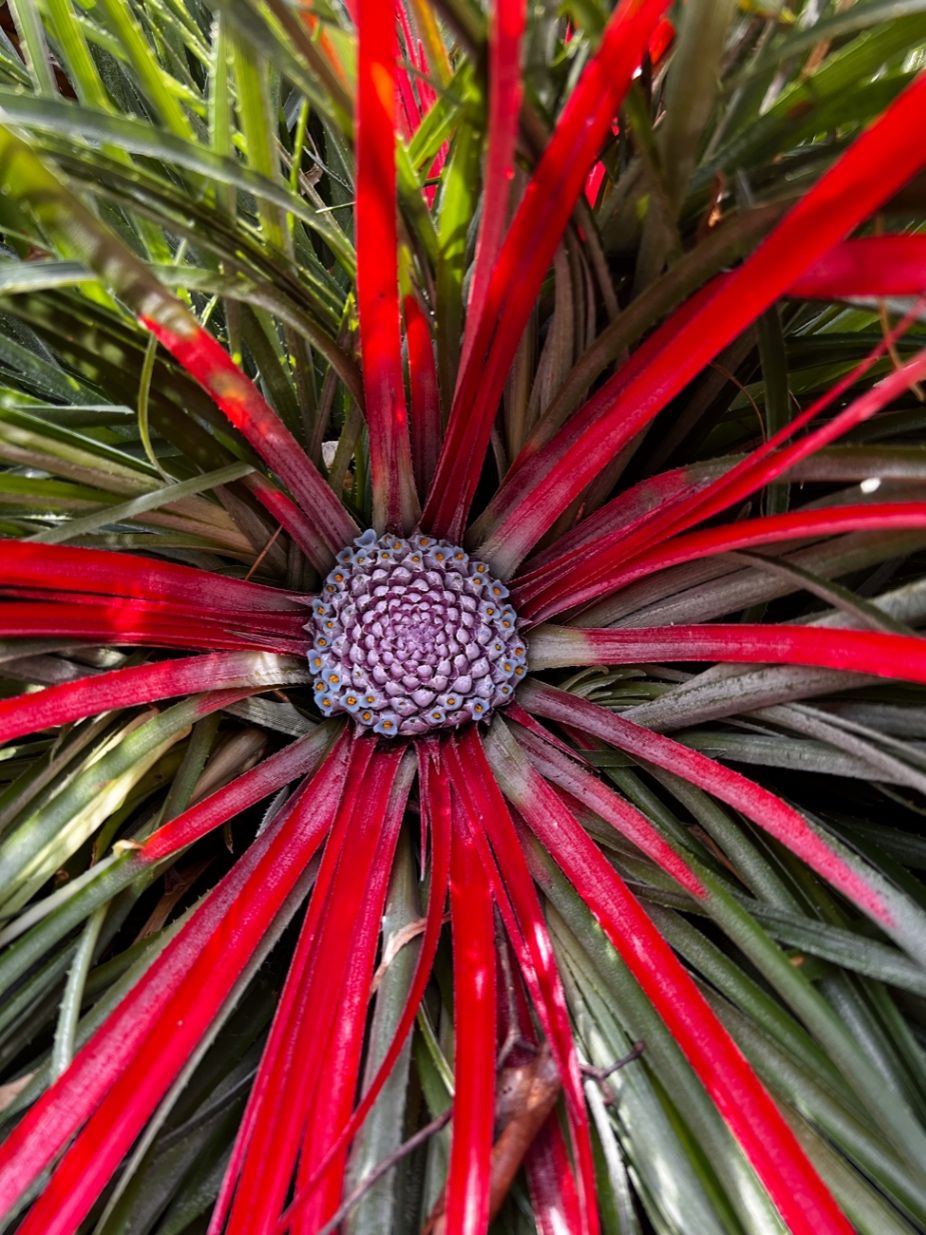
To add to this unlikely spectacle, in its native Chile it is pollinated by hummingbirds. When you witness nature delivering an overload of beauty like that, there are no words: earlier this year I was watching hummingbirds dart among puyas against a backdrop of snow-capped volcanos.
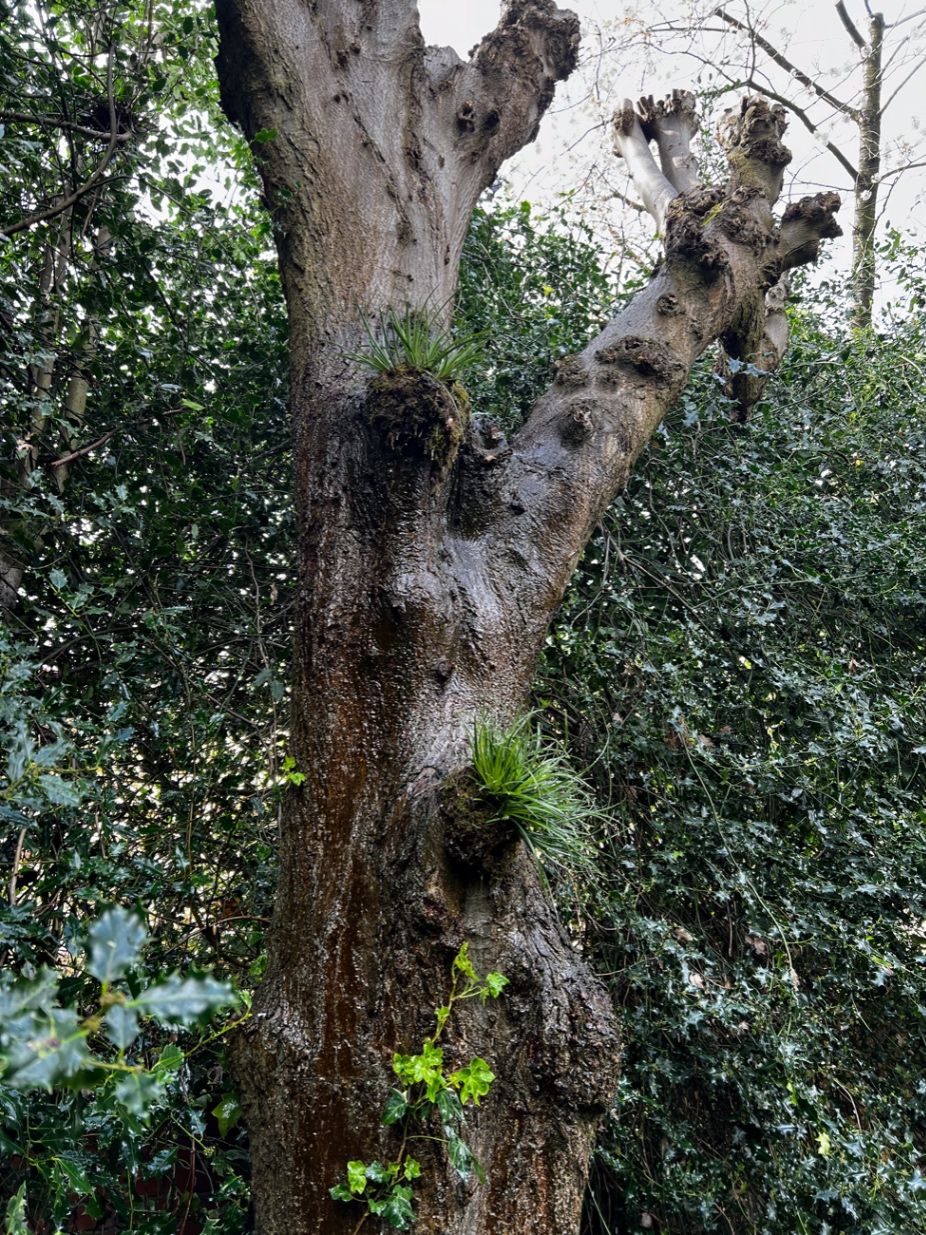
Outside the milder regions of the UK, fascicularia is at its most reliable and fabulous in a pot, but since it hails from high altitudes you can have a go at planting it outside permanently. In fact, last year Aaron took a ladder into the lime tree and inserted three small plants in cavities up the trunk – using his grandmother’s old tights, tacked to the rim of the holes and covered in moss, to help wedge them in securely. Being a terrestrial bromeliad, it is happy in the ground too, but we fancied a rainforest effect. It will be interesting to see if they colour up in future years.
Savouring the Contrasts
Exotic-looking plants, colours and scents have attracted me ever since I first started gardening. It is more fashionable nowadays to be naturalistic and fill your garden with swaying grasses, but there is none of that here. In any case, my walled acre is on the edge of a scruffy Welsh border town. Arriving home I want the sense of stepping through a portal. I think that is one of the joys of garden-making - creating your own world.
On a larger scale, the town makes its own abrupt contrasts. To the east, you are immediately in the rolling fields and low wooded hills of Cheshire and Shropshire. We lived on that edge of town when I was very small, with the Georgian landscape of Erddig as our adjacent playground. Now smart in National Trust ownership, Erddig was then derelict: “We call this the State Bedroom,” the last squire would say as he conducted visitors around the house, “Because it is in such a state.”
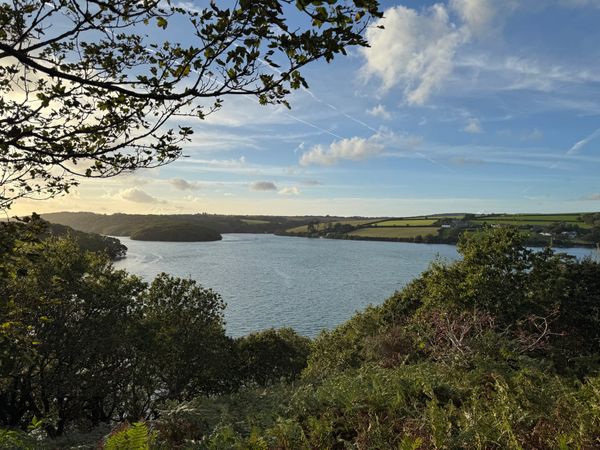
Forty-five years ago, we moved to the western side, where the town suddenly transmogrifies into empty moorland and the roads run on through 50 miles of wild mountain scenery to the sea. Even the wildlife abruptly changes, the high ground home to peregrines, black grouse and adders, while down here, a stone’s throw away, it’s robins and blue tits.
Cranking up the Workload
I started blowing up the garden and adding exciting plants the minute my parents moved in, but although I have continued to garden this plot ever since, once I drifted off to work and live in London, the more labour-intensive exotics had to be gradually abandoned. Now, with my mother and father long departed, I am back here full-time, finally selling up in London last year.
Aaron, who studied at Kew and Edinburgh Botanics, started gardening with me 3 years ago, a day or two a week, and being young and full of energy has been fuelling the expansion back into high-maintenance gardening – bringing bootloads of plants from his own garden, propagating non-stop, and forever exascerbating my November problems.
Once again there are trays of seeds and cuttings all over the place - ‘Matucana’ sweet peas, ‘Cinnabar’ marigolds, annual hibiscus (H. trionum)… - and I am getting re-acquainted with the plants that fired me up as a teenager like ‘Jamaica Primrose’ marguerite and sticky orange Mimulus aurantiacus.
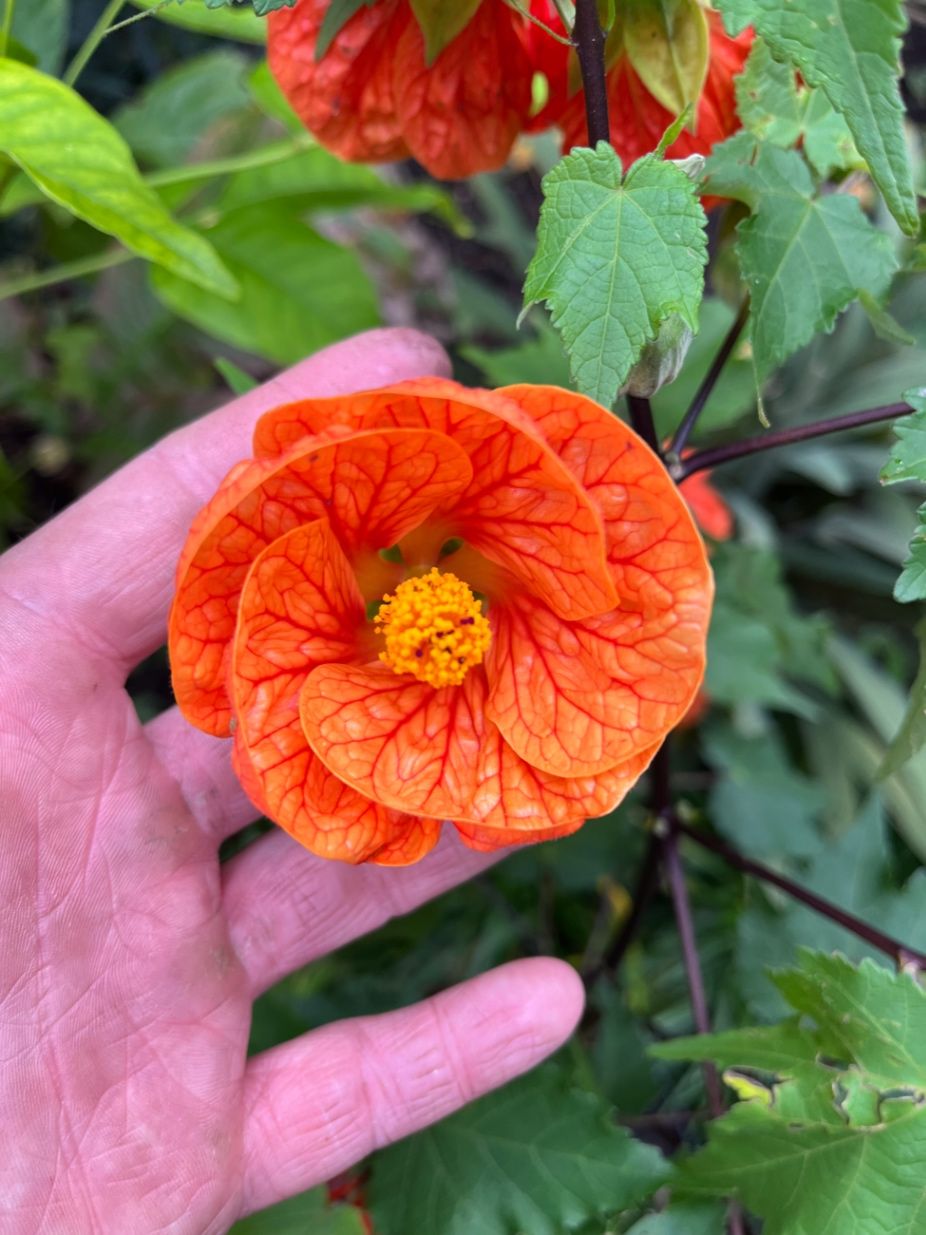
Bell-flowered abutilons, another hummingbird plant, are back with a vengeance. A holiday job at Chester Zoo gave me my original plants – they came as cuttings from the Temperate House, together with a highly invasive bamboo that I didn’t realise needed the continuous gnawing of the accompanying parrots to be kept in check: it took years to be rid of it. Now abutilons are here again in an array of red, orange and yellow varieties, of which the most arresting has to be ‘Red Tiger’.
The Seasonal Rewards
All will require winter accommodation in the porch or by a window, together with the pelargoniums, streptocarpus, fuchsias etc. etc., and the plants that are already resident such as clivias and jasmine.
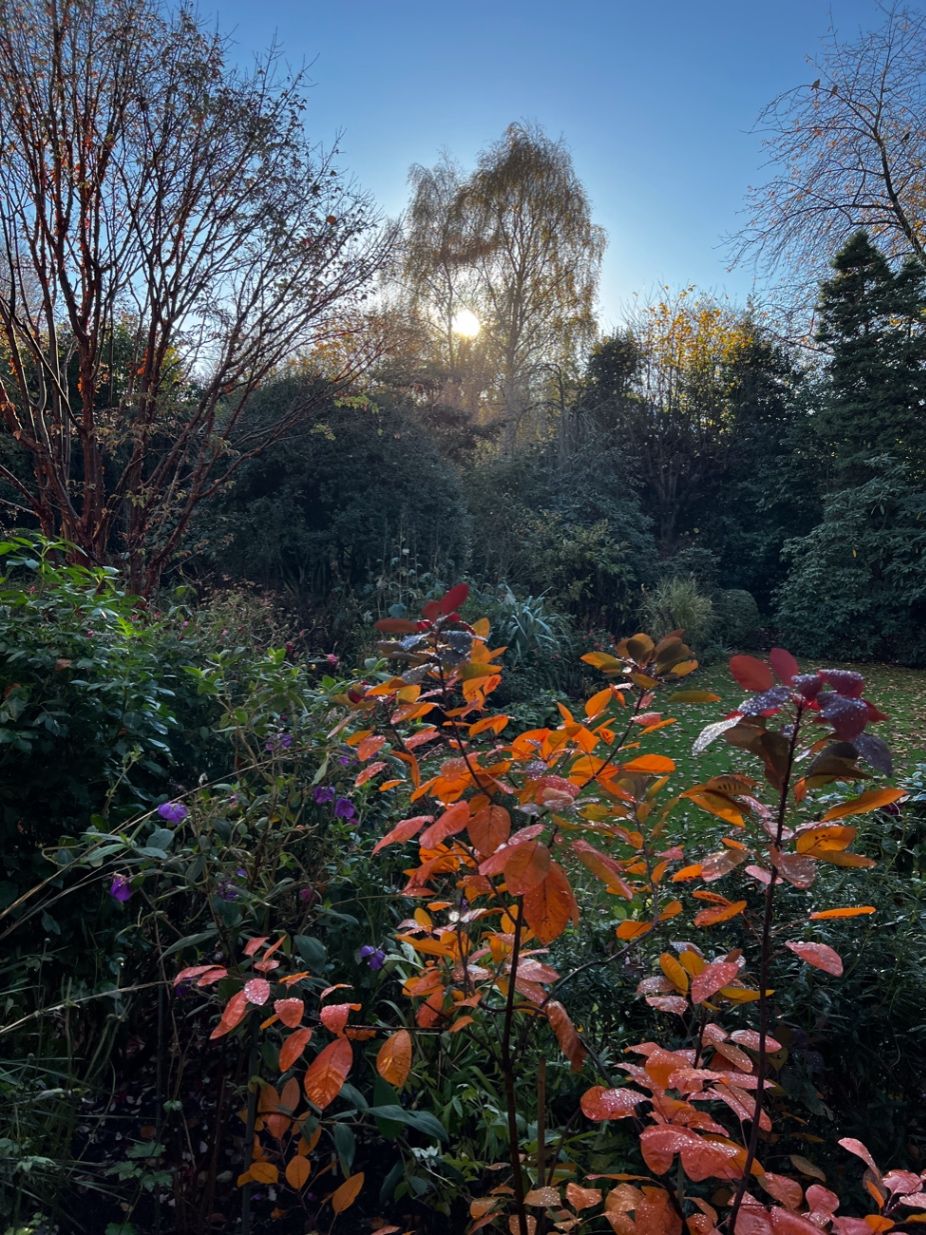
As the leaves drop, the border plants retreat, and the garden turns monochrome, November can feel as if someone has just turned the lights off. Tender plants, with and without their flowers, help keep the mood lush and cheery, and give you lots of little indoor jobs and excuses not to go out and get wet and cold. And, of course, all this work is repaid so many times over by the tropical punch they deliver in the garden through summer and autumn. It’s a palaver, but no complaints.