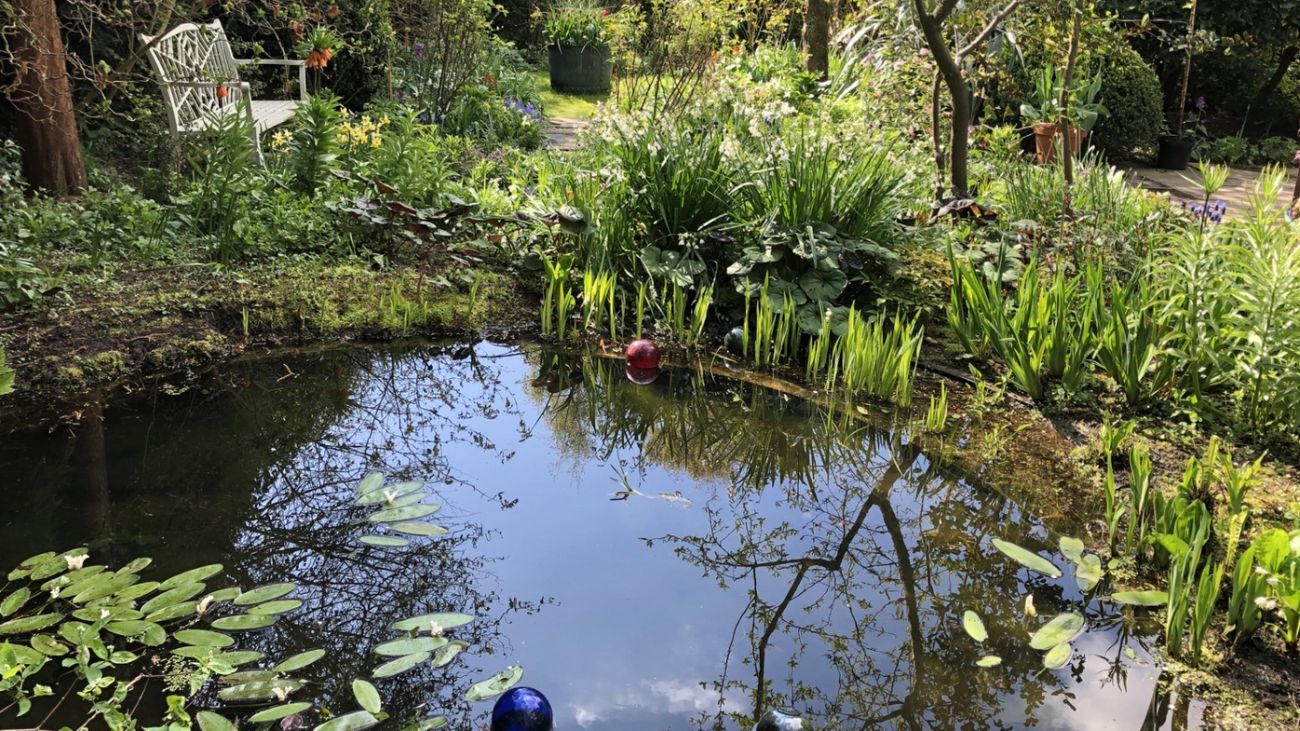
Raindrops Keep Falling on my Head.
May's musings: weather travails, peonies, and more...


This past month at Mutton Hill has been meteorologically challenging, to say the least. First, there have been the temperature fluctuations, which have bounced between highs in the 40s F (5-9° C) to highs in the 80s F (26-30° C), and back and forth, making the month's temperature graph resemble a peripatetic zigzag. Then there was the rain, which, as of this writing, is up to 7 inches in the gardens for the month. Last, but not least, there was the hail. Have you ever been in a glass greenhouse during a hailstorm? It is a thrilling experience, to say the least, and one that I won't soon forget. On the specific day in question, I had been happily sowing perennial seeds in flats in the greenhouse, on what I thought would be a warm, rainy day with intermittent thunderstorms; you know, some thunder and lightning with a bit of heavy rain here and there. I certainly did not expect hail or the subsequent flooding.
Then the skies opened up
When the hail started, the little ice pellets were small, and I stood looking out in awe at the sudden shift in the weather. However, they continued to grow larger. When they grew larger than an inch, I decided it might be best to crouch under my potting table just in case. This is when I first noticed that I was standing in several inches of water (I was wearing wellies).

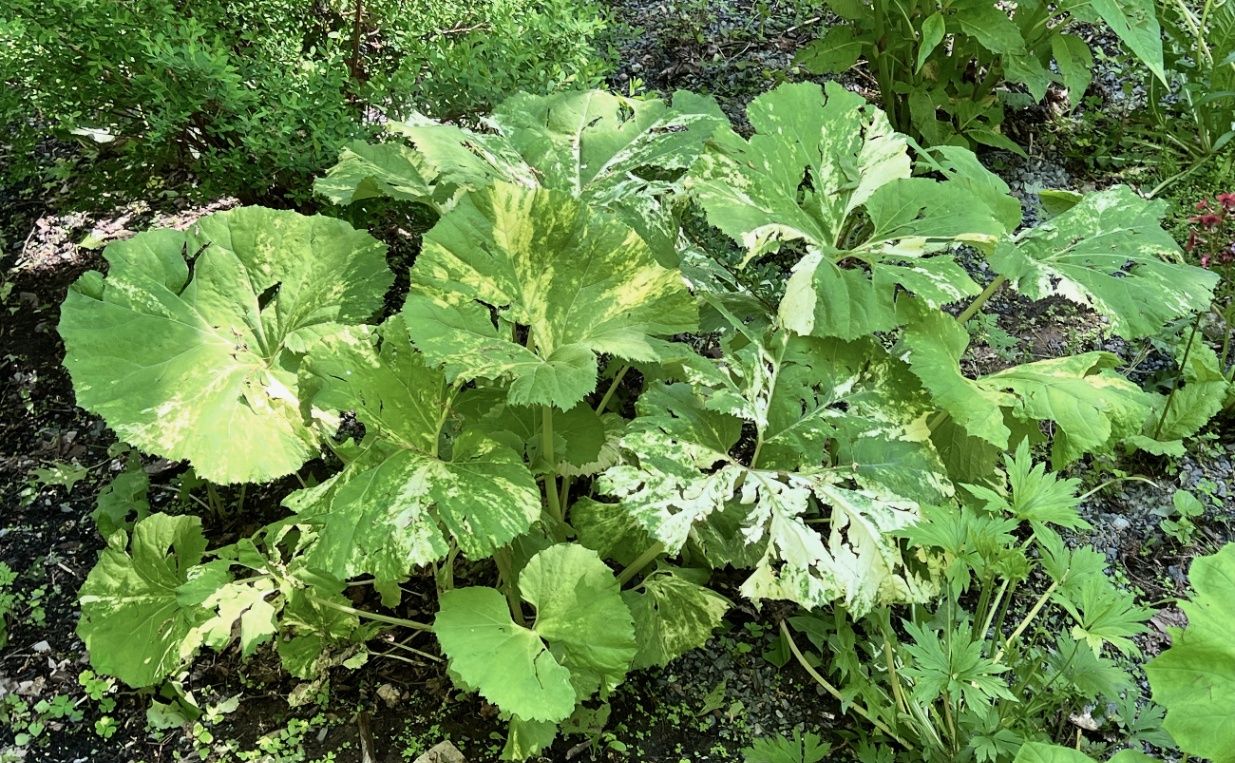
It turns out that three inches of rain in under an hour is enough to create a torrential stream behind the greenhouse, which will then inundate the three-foot gravel base underneath the greenhouse with so much water that it begins to rise from the ground. Hence, I found myself in a unique situation; water falling from the sky and rising from the depths. What more could one ask for? Thankfully, the hail did not get much bigger, nor did the water get much deeper, though, in the end, it did reach up to my ankles. Otherwise, the greenhouse and I escaped unscathed. I cannot say the same about my plants. Leaves and branches were torn from the trees. Any plants with large leaves were shredded, and newly planted seedlings were pulverised, including my beautiful tomatoes, which I had just set out to harden off in the gentle rain showers. They went from stout and lush to looking like they had just been through a massacre. Who doesn't love spring gardening?
This is not normal weather here, but what is normal anymore when it comes to the weather? In fact, in many ways, not normal has become the norm. Climate change, climate weirding, or whatever you prefer to call it, is here for the long haul. So, we keep on keeping on, and try to develop ways to disaster-proof the gardens as much as possible. Our biggest challenge in this regard has been trying to figure out how to protect our gravel paths during torrential downpours. We have two large gravel paths, one on either side of the main series of gardens, that connect the house and terraces to the woodland paths at the bottom of the hill. These are the paths we use to get our tractor up and down the hill, which is critical for garden maintenance. They are also used by visitors who find navigating the stone steps that connect the gardens to be too difficult.
For the first seven years after we installed them, the paths worked perfectly, and were both aesthetically pleasing and functional. Then came the rains. Beginning the summer of 2023, the gardens were subjected to several storms that featured upwards of three inches of rain in under an hour. Last year was more of the same, and if this month's storm is any indication, it looks like we can expect this trend to continue. Unfortunately, that amount of water in such a short time wreaks havoc on our paths, and is a testament to the power of nature. In 30-40 minutes, the water can flood down the paths and create canyons 12-18 inches deep and then dump gravel in deep piles at the bottom of the hill.

The silver lining, I guess, is that nature is slowly building us a nice gravel path along the base of the gardens. This, however, does not change the fact that we need to figure out how to keep enough gravel on the upper paths to keep them navigable. The first summer of torrential rain, we chalked up the weather pattern as a rare fluke and simply repaired the paths. By the second washout last summer, we began to seriously think about how we could re-engineer things going forward. This spring was a reminder of the urgency of this task. We are currently looking at trialling a grid that you sink in the gravel to prevent erosion, bases of larger stone, and/or possibly creating serpentine paths that crisscross along the hillside to create less of a runway for water. I have a feeling that there will be a lot of trial and error before we find a good solution. The whole situation is quite frustrating, but having lived through a severe drought in the Dakotas as a child and experienced the smoke from the interminable wildfires in the western states, if the choice is between too much rain or too little, I definitely prefer too much. Though in the end, this feels like nothing more than a game of pick your poison, as neither is ideal.
The clouds eventually parted
On a more positive note, the rains and the final cold spell did finally subside this last week of May, and the gardens are slowly but surely coming fully awake. While there is much to please the eye in the gardens at this time of the year, during the last week of May and the first couple of weeks of June, my focus is definitely on my peonies. I grow them from seed, and every year, I have a couple of dozen that are coming into bloom for the first time. Each new blossom is met with great excitement and fanfare on my part, even though most are pretty enough, but not necessarily something to write home about. Garden obsessions can certainly be peculiar, but given the level of uncertainty and angst in the world, there are worse things than the daily distraction of seeing what the first flower on a peony you have been nurturing for the past five to seven years looks like. Sometimes it is the small things that keep us sane.

I have also been very focused on creating new terraces in our vegetable garden. Until 2021, we had a kitchen garden immediately behind our house, but we installed a stone patio over it for our daughter's wedding in 2022. For some reason, despite being a garden wedding, dancing amongst the tomatoes didn't fit the theme. As we said goodbye to our kitchen garden, we installed a smaller veg garden down the hill, off to the side from the main gardens. It, as almost everything here, is on a slope, and after first planting into the slope, and then trialling raised beds, we have decided to expand and terrace the entire garden to maximise growing space. It has definitely been labour-intensive, but I think the end result will be well worth it.
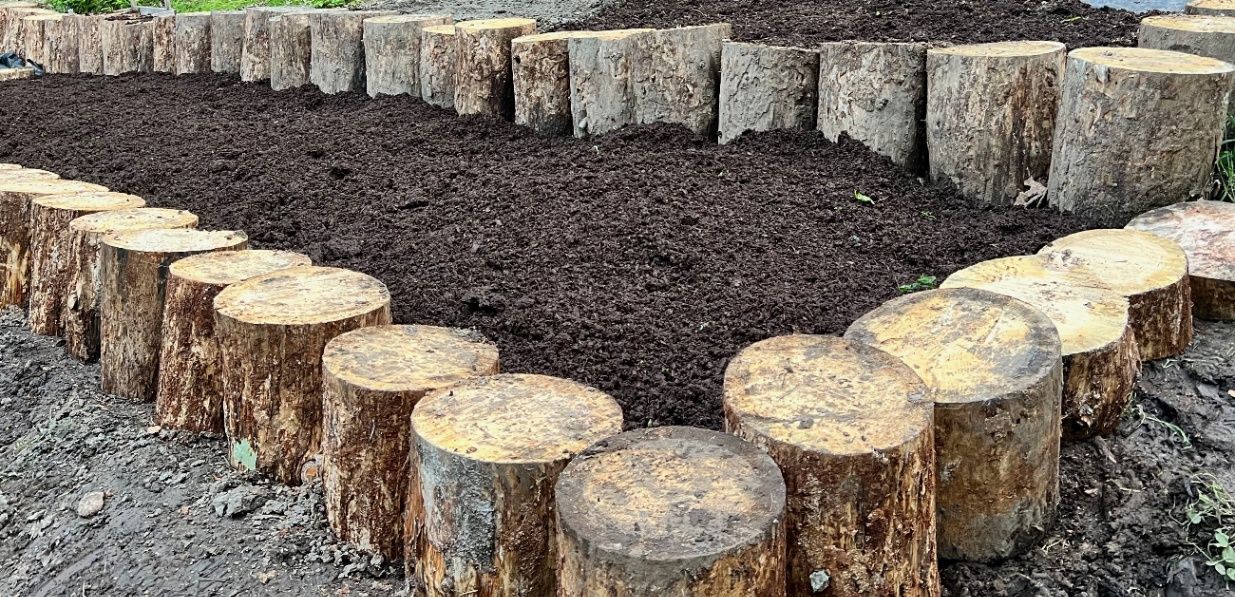
Of course, we are behind the eight ball in terms of creating the beds, and I currently have dozens of tomatoes and peppers impatiently waiting for me to fill their new homes with a compost mix and to plant them. We hope to finish and plant three terraces in the next couple of weeks. We will then finish the rest of the terraces over the summer to have them ready for planting next spring. At least that is the goal. Our gardens have been ever-expanding since the day that we moved here. And, I always have goals, and generally, they are unmet. Annoyingly, sometimes work gets in the way, other times health issues rear their ugly head, and more often than not, this past decade, weather extremes dominate the realities of the garden and my ambitions. I find climate weirding to be the most accurate term for this, as there seems to be no rhyme or reason to what I witness daily in the gardens. I lost several plants last year for reasons that I do not comprehend, yet several plants that are annuals in my growing zone, but were left out for the winter, not only survived but are thriving. It feels like there is so much to be frustrated and/or confused about, yet there are also the little things: a potted Japanese maple that I thought gave up the ghost this past winter has suddenly been putting forth leaves, similarly, several pots of overwintered annuals that I had kept protected inside but thought I lost, suddenly sprang to life.

And, tonight, while sitting on the patio, I counted upwards of twenty bats circling in the night sky; more than I have ever seen in one sitting before. Life and gardening are certainly unpredictable, but a balmy early summer's evening when it is just dark enough that you can't see the weeds makes it feel like it is all worth it.