Rediscover Wonder in Your Garden With John Clare’s Wisdom
The Quiet Radical: John Clare’s influence in gardens and nature


There are certain voices in the long conversation between people and the land that speak more softly than others, yet carry further. They don’t shout, they don’t demand your attention, and yet you find yourself returning to them, as you might to a favourite footpath or a half-forgotten gateway that leads unexpectedly into a meadow. John Clare is such a voice. The “Northamptonshire Peasant Poet,” as he was called by the literary establishment of his day, wrote not about grand things, but about small things that mattered—because they were the very fabric of life: birds nesting on a gatepost, a molehill softening the line of a field, or the gnarled roots of an old elm holding the memory of generations.
For gardeners, nature lovers, and anyone who feels the tug of land beneath their feet, Clare offers something rare: not instruction, not theory, not even advice, but a way of seeing. A way of being present. A way of paying attention so closely that the familiar world becomes illuminated, vibrant, and infinitely precious.
And in a time when our gardens are increasingly pressured—by the climate, by development, by the speed of life—it is Clare’s gentle, insistent attention that we need more than ever.
A Voice From the Edge of the Field
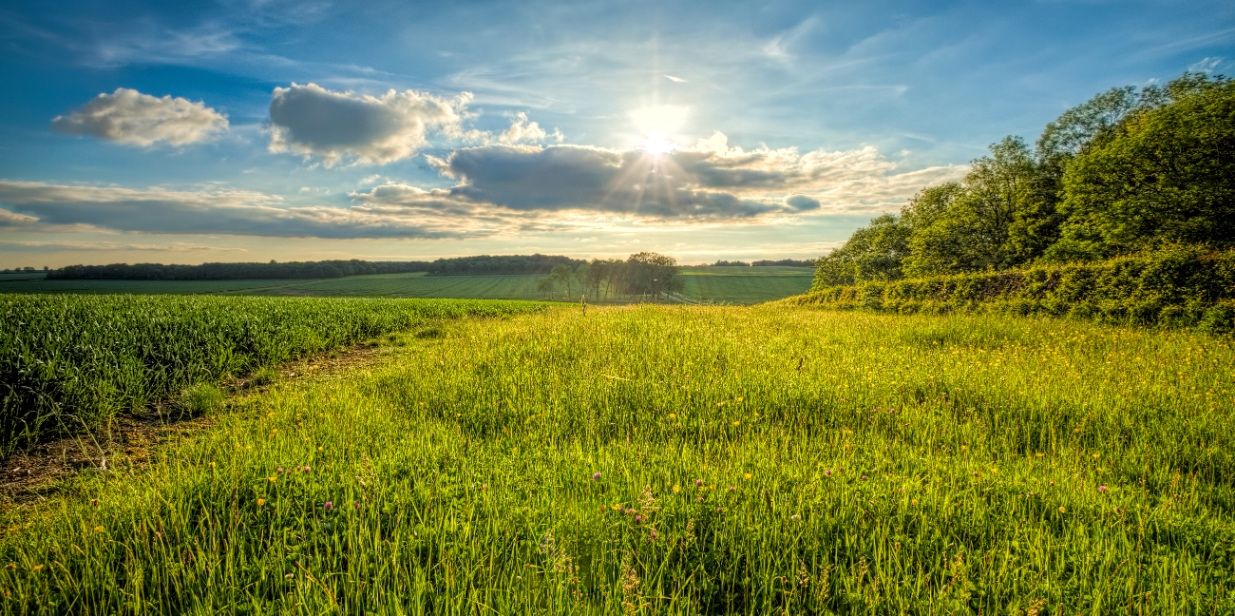
John Clare was born in 1793 in the village of Helpston, on the edge of the fens. The landscape of his childhood—its marshy meadows, rough pastures, tangled hedgerows, and common land—formed him utterly. To read Clare is to walk with him along a muddy path, boots heavy with clay, listening to the chiffchaff echo across a field or watching the white tail of a hare flicker through the corn.
Clare never wrote as an outsider looking in. He wrote from within nature, of it, as a participant rather than an observer. This is a transformative stance. Most gardening writing—even the best of it—comes from the perspective of the gardener shaping nature. Clare offers something much more equal. He accepts the world as it is: messy, changeable, overflowing. He does not try to contain or refine it. He simply celebrates it.
That humility is profoundly modern. It resonates with today’s search for wilder, richer gardens—gardens where nature is allowed not only to survive, but to lead.

Seeing the Small, Loving the Ordinary
Clare’s greatest gift—one that Monty Don himself has often praised in both gardening and living—is the devotion to the ordinary. In Clare’s world there are no “weeds,” nor “waste,” nor “insignificant” moments. Everything is worthy of attention. Everything belongs.
He writes of “the little trodden ways” worn by habitual walkers; of “the brook’s loud rattle on the stony sill”; of “the whitethroat’s song on the dusky eve.” Each detail is heartbreakingly specific. Clare names things that most of us would miss, not because we do not care, but because our lives have become too crowded with noise.
To garden like Clare is to resist that noise.
It is to crouch down and find beauty in a self-sown foxglove that has pushed its way between paving stones. It is to welcome the dandelion’s bright flare in March, or the evening primrose that opens just as the light slips away. It is to notice the spider tugging at its web in the early dew, or the blackbird inspecting the mulch under a berry bush.
Gardening that listens to Clare becomes less about what we impose on the land and more about how we inhabit it. We become caretakers rather than architects; companions rather than controllers.
The Loss of the Commons—and the Garden as Sanctuary
Clare’s life was marked—tragically and devastatingly—by enclosure. The commons around Helpston, where generations had grazed animals, gathered firewood, and walked freely, were carved up into private fields. Hedges were ripped out, ancient paths erased, wetlands drained. The bustling, intricate world of the commons became a grid of fenced-off fields, efficient but ecologically impoverished.
Clare wrote of this destruction with grief sharp enough to cut.
“Enclosure came and trampled on the graveOf labour’s rights…”
He saw that the loss of shared land meant the loss of shared life: not just for people, but for birds, for animals, for plants. Biodiversity collapsed. What had been a mosaic became a monoculture.
We might imagine enclosure as a distant historical tragedy, but its effects echo today in every housing estate, in every tidied field bereft of hedgerows, in every “maintenance-free” garden stripped of soil and laid with plastic grass. We are still enclosers, still simplifying, still shrinking the wild.
And this is where the modern garden, inspired by Clare’s vision, becomes a kind of sanctuary. A counter-enclosure. A small act of resistance.
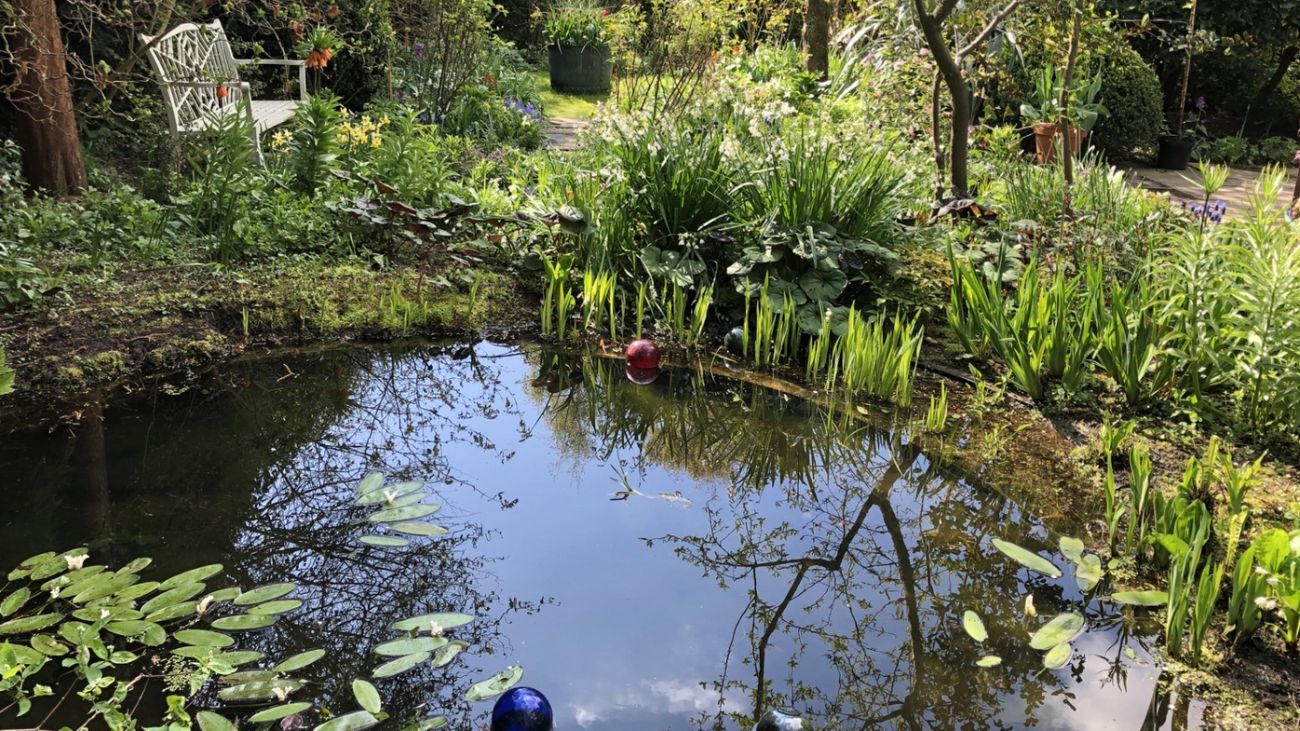
Every time we plant a native hedge, leave a corner unmown, dig a pond, sow a meadow patch, or simply allow life to return on its own, we restore something of what Clare mourned. In a thousand suburban gardens, we can rebuild a common land of sorts—rich, connected, and shared by nature.
The garden becomes not just our space, but a corridor, a refuge, a promise.

The Garden as Biography
I often say that a garden is not a hobby, but a form of autobiography. It reveals who we are, how we live, what we value. John Clare understood this deeply, though he would never have phrased it that way.
For Clare, the land carried memory: personal, communal, ecological. A stile worn smooth by hands; a hawthorn that had shaded a footpath for generations; a pond where cattle and children alike drank; a meadow whose orchids returned every June with the reliability of clockwork.
In our own gardens, we too accumulate these quiet biographies. A border planted when a child was born. A tree grown in the place of a lost pet. A bench built by a parent, or a rose that came from a grandmother’s garden.
Clare reminds us that these stories matter. That gardens are repositories of meaning, not simply collections of plants. And the more we allow the natural world to write its part in our story, the richer that story becomes.
Listening to the Seasons
Clare’s poetry is restless with movement. The seasons tumble into one another—storm, thaw, birdsong, frost, blossom, rain. Nature is not something fixed, but perpetually alive, shifting and shimmering.
He writes:
“The spring comes in with all her hues and smells,In freshness breathing over hills and dells…”
And of summer:
“Where the hot hedge stands thick with primrosesAnd every path is knee-deep with wild thyme…”
And autumn:
“Now mellow autumn, at her bounteous door,Led by her fruits, shall stand with all her store…”
To read these lines is to feel the turning of a wheel. Gardening in Clare’s spirit means tuning ourselves to that wheel, not working against it. Rather than forcing our gardens into premature neatness, we allow them their seasonal character. We let winter lie quiet. We let autumn grasses stand long and pale in the low sun. We let the first nettles be the earliest food for caterpillars.
A Clare-inspired garden is not timeless. It is timeful. It breathes with the year.
The Patchwork of Life
One of Clare’s quiet revolutions is the way he elevates the edges of things: hedgerows, ditches, field margins, scruffy patches “behind the rick-yard.” Places that farming and gardening alike often overlook.
These are exactly the spaces modern ecologists tell us are richest in life. Margins, mosaics, edges—where one habitat meets another—are biodiversity hotspots. Clare knew this instinctively. His poems swarm with life: voles rustling under grass, butterflies rising from thistles, beetles shining like drops of oil.
If we want wildlife-rich gardens, we must create these edges.
A border that blurs into long grass; a hedge that spills into a wild corner; a pond with soft, muddy margins rather than steep plastic edges; a compost heap where warmth fosters slow alchemy—these are Clare’s spaces.
Gardens that are too tidy, too symmetrical, too controlled are gardens that exclude. Clare gives us permission to relinquish some control, to let nature express itself.
Because the truth is this: the most beautiful gardens are never perfect. They are alive.
Walking as Gardening
Clare was above all a walker. He walked constantly. Several of his poems map footpaths so accurately that scholars can retrace his routes today. This embodied knowledge of the land is what made his writing so rooted—literally and figuratively.
Gardeners, too, must walk. Not just to inspect or to plan, but to experience.
There are few greater pleasures than strolling through the garden at first light, before the world has quite woken. Dew on the hostas. The faint smell of earth. A blackbird shouting from a fence. Or walking at dusk, when the colours deepen and the garden seems to hum with a secret life.
Walking makes us present. It allows us to meet our gardens not as projects, but as places.
Clare never walked to “improve” the land. He walked to belong to it. If we walk our gardens that way—slowly, with attention—our gardening will naturally shift toward something gentler, more attuned, more alive.
A Radical Kindness
Ultimately, John Clare’s influence on nature and gardening is an influence of kindness.
Not sentimentality; Clare is never sweet. But a fierce, attentive kindness rooted in justice. He believed that the land should belong to those who live in relationship with it. He believed that wild creatures have an equal claim to the fields and hedges. He believed that beauty is found in the overlooked and the ordinary.
Gardeners wield enormous power. With a spade, a mower, a hoe, or even a packet of seeds we can shape a tiny world. Clare teaches us to wield that power lightly. To cultivate relationship rather than dominance. To listen more than we impose.
In doing so, our gardens become not just spaces of personal pleasure, but acts of ecological hope.
Clare’s Legacy in Today’s Gardens
In the resurgence of wildlife gardening, rewilding, no-dig methods, meadow lawns, hedge restoration, peat-free growing, and naturalistic planting, Clare’s fingerprints are everywhere. He would undoubtedly have thrilled at the sight of gardeners sowing native wildflower patches, installing log piles for beetles, or refusing to cut down seed heads for the sake of over-wintering birds.
Modern gardeners are, often without knowing it, rediscovering Clare’s values: intimacy, attention, humility, and love for the small.
The influence may be quiet, but it is wide-reaching.
Conclusion: Gardening With Clare’s Eyes
If I were to offer a single piece of advice drawn from John Clare, it would not be a method or a technique, but an attitude:
Look closely. Love what is before you. Let your garden lead you.
Gardening is not an escape from the world, but a practice of belonging to it. And John Clare—gentle, troubled, profoundly connected to nature—shows us how to belong: not by owning the land, but by noticing it; not by shaping it alone, but by walking alongside it.
To garden with Clare’s eyes is to garden with tenderness. With curiosity. With devotion to the overlooked.
And perhaps, most importantly, with hope.
For in every self-seeded primrose and every clump of long grass at the back of the border, there is the promise of a world that still lives, still breathes, still waits for us to pay attention.