The Invisible Gardener
Sylvia Crowe was a 20th century British landscape architect, with an international outlook and a low profile.

I have found in my brief experience of Scribehound Gardening that it’s a good place to discover books. I’ve just ordered The Oxford Book of Gardens, edited in part by Geoffrey Jellicoe, after reading George Plumptre’s recollections of him. I myself am at the final round of edits for a book that has taken an inordinately long time, with some rigorous production going on in New York. On asking various gardeners what to put in the Resources pages, my friend James McGrath in Connecticut suggested a book by a British gardener who was an exact contemporary of Sir Geoffrey Jellicoe (their lives spanned most of the 20th century), Dame Sylvia Crowe. The book’s title, like her writing, couldn’t be more concise: it’s called Garden Design. The book’s interior is not seductive; the jolliest visual in the 1959 ‘Hearthside Edition’ is the publisher’s logo. This is part of its appeal. In James’s words: “No colour photos! A triumph!”
James buys old copies of Sylvia Crowe's book to give to friends; he enjoys her writing but hasn’t seen any of her actual gardens (although it’s possible that he has, without realising it). I had come across her name when I was training as an under gardener at Cottesbrooke Hall in Northamptonshire, about 15 years ago. 'This is the Pool Garden, designed by Sylvia Crowe,' said the head gardener, as he showed me round, on our way to the Dutch Garden by Angel Collins and the Terrace Border by James Alexander-Sinclair. For some reason I never bothered to find out who Sylvia Crowe was, even though her patch was where I most liked to spend time (after the horror of being asked to mow stripes in it on my first day).
Besides being an occasional designer of private gardens, Sylvia Crowe was a prolific author, and the titles of her books are a résumé of the work she was most focused on: Tomorrow’s Landscape, The Landscape of Roads, Forestry in the Landscape, and an early one, The Landscape of Power (which is literally about designing gardens for power stations). They all point to her civic work in re-building post-war Britain, and her determination to maintain high design principles in areas where it would be more expedient to ignore them. Crowe was the first landscape architect to be appointed by the Forestry Commission, and her obituary in its journal gives an insight into her personality: 'Sylvia had even the ‘hoariest’ of foresters eating out of her hand.'
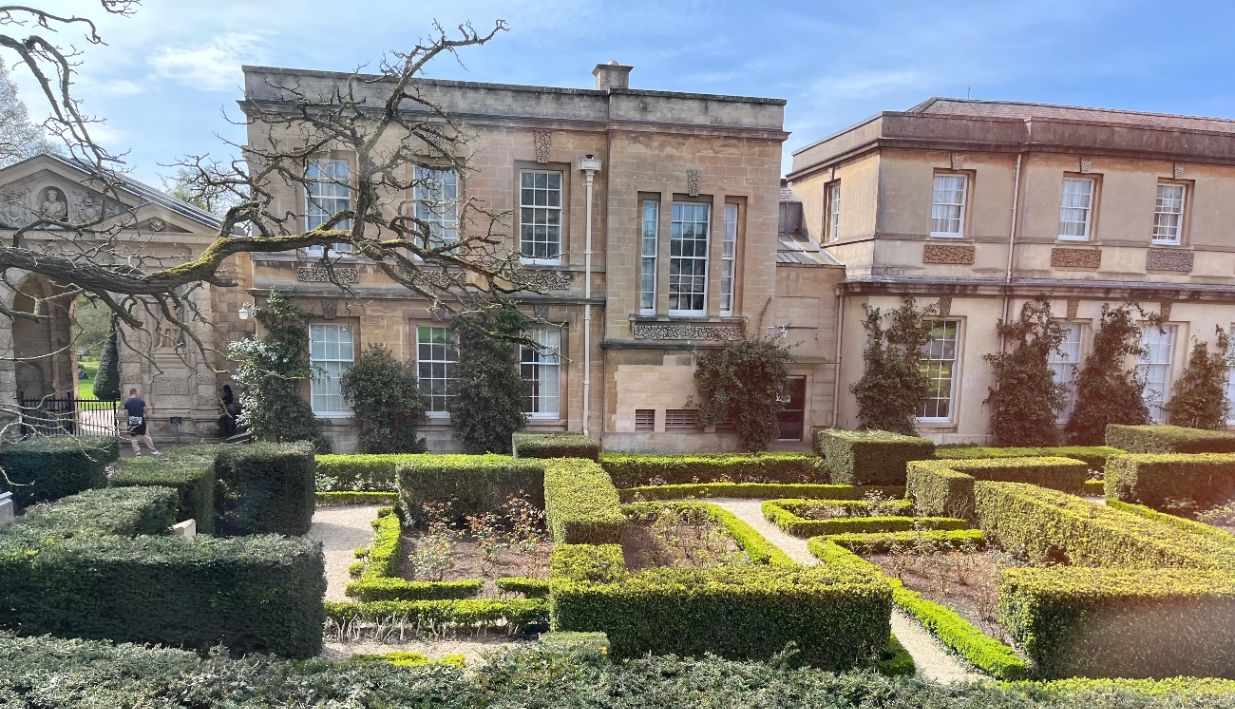
Crowe wanted to prove that landscapes could succeed with people in them. She developed New Towns and modernist spaces such as the late, lamented, entrance garden at the Commonwealth Institute on Kensington High Street. She designed reservoirs, landscaping Rutland Water in such a way that people didn’t realise it had been landscaped but were subconsciously gratified that parking was hidden from the shoreline (behind landforms and trees). She admired the English Landscape Movement and applied its principles to her subliminal designs, in what must have seemed a more democratic society. She designed a rose garden for Magdalen College which is visible to all, in front of the Oxford Botanic Garden. Its hedging compartments of different heights complement their antique surroundings, with a certain modernity, and without pastiche.
Crowe found time to apply her extensive knowledge of garden history to smaller, private commissions. After the Second World War, she made the garden at Cottesbrooke Hall. It was a time when other large houses were being demolished, but Catherine Macdonald-Buchanan, who had already commissioned Geoffrey Jellicoe in the 1930s to build a terrace for Cottesbrooke, wanted to renovate an Arts and Crafts rose garden, which had been an old laundry yard before that. It was surrounded on three sides by high, 18th century walls, the fourth made up of the back of the laundry building, with a classic Arts and Crafts pergola framing a paved garden behind.
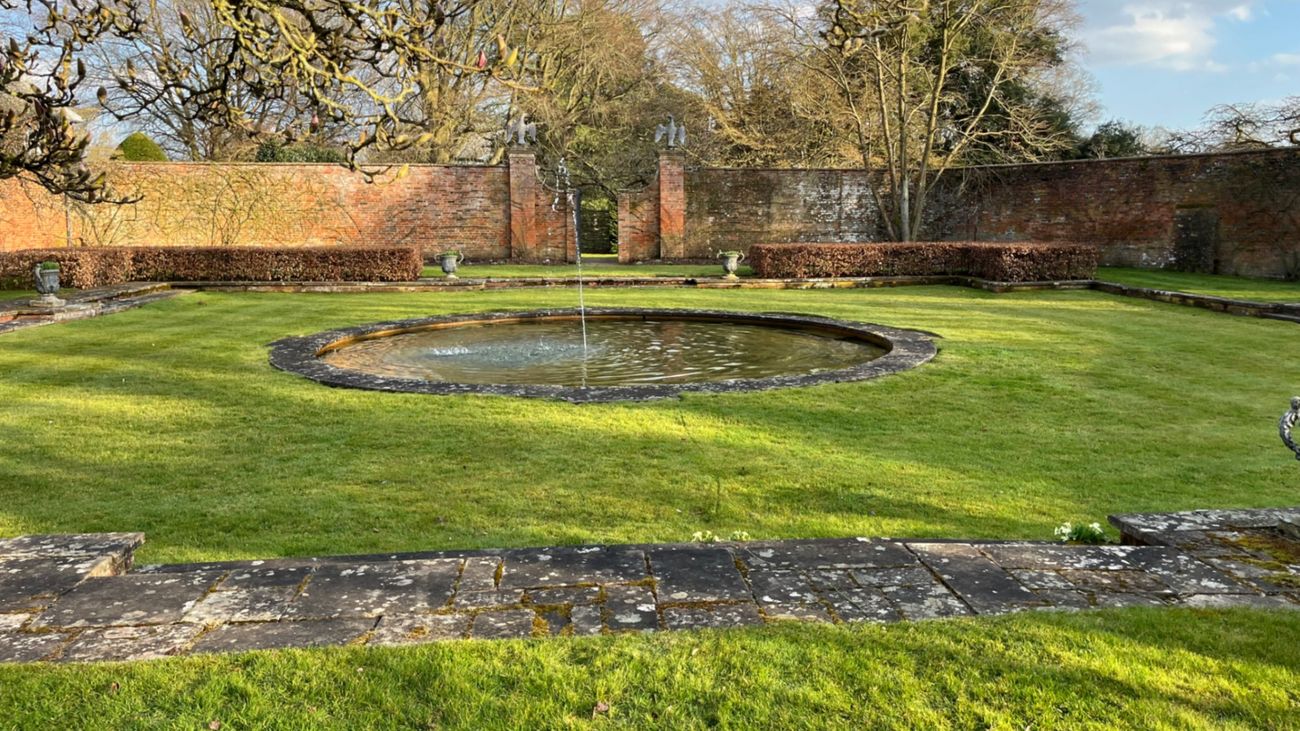
During the year that I was there, this garden within a garden was cleared of shrubs, better revealing the serenity of Sylvia Crowe’s design. The ground plane had been lowered in the middle, making a contrast between a circular pool in grass, and a squared outline of shallow steps around it, which takes the lawn on to two levels. A couple of old magnolias still occupy the south- and west-facing sides, with a sheltered katsura tree in another corner. More recent arrivals have been platforms of clipped beech, care of Arne Maynard, to bracket the pool area, distracting from the irregularity of the garden’s shape. Walls of ageing red brick (draped with roses that have been expertly twirled by Jenny Barnes) outline specimen trees on the other side, like the weeping beech which is kinetic as the light changes during the day, and through the seasons. Inside, the fountain is never turned off. In his book The Education of a Gardener, Russell Page, (another Crowe contemporary) wrote, 'In a small pool a single vertical jet will usually be the most effective,' and so it is here.
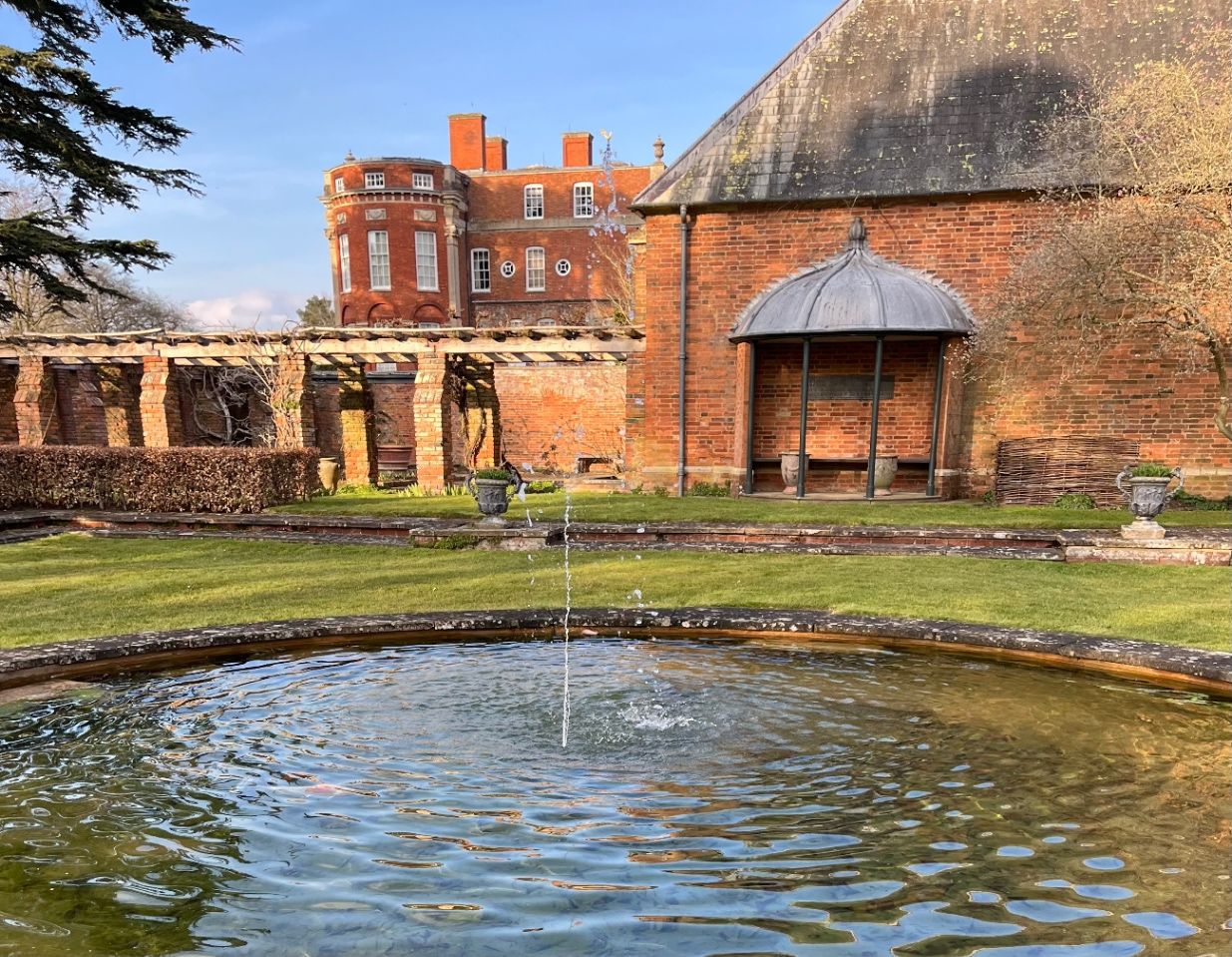
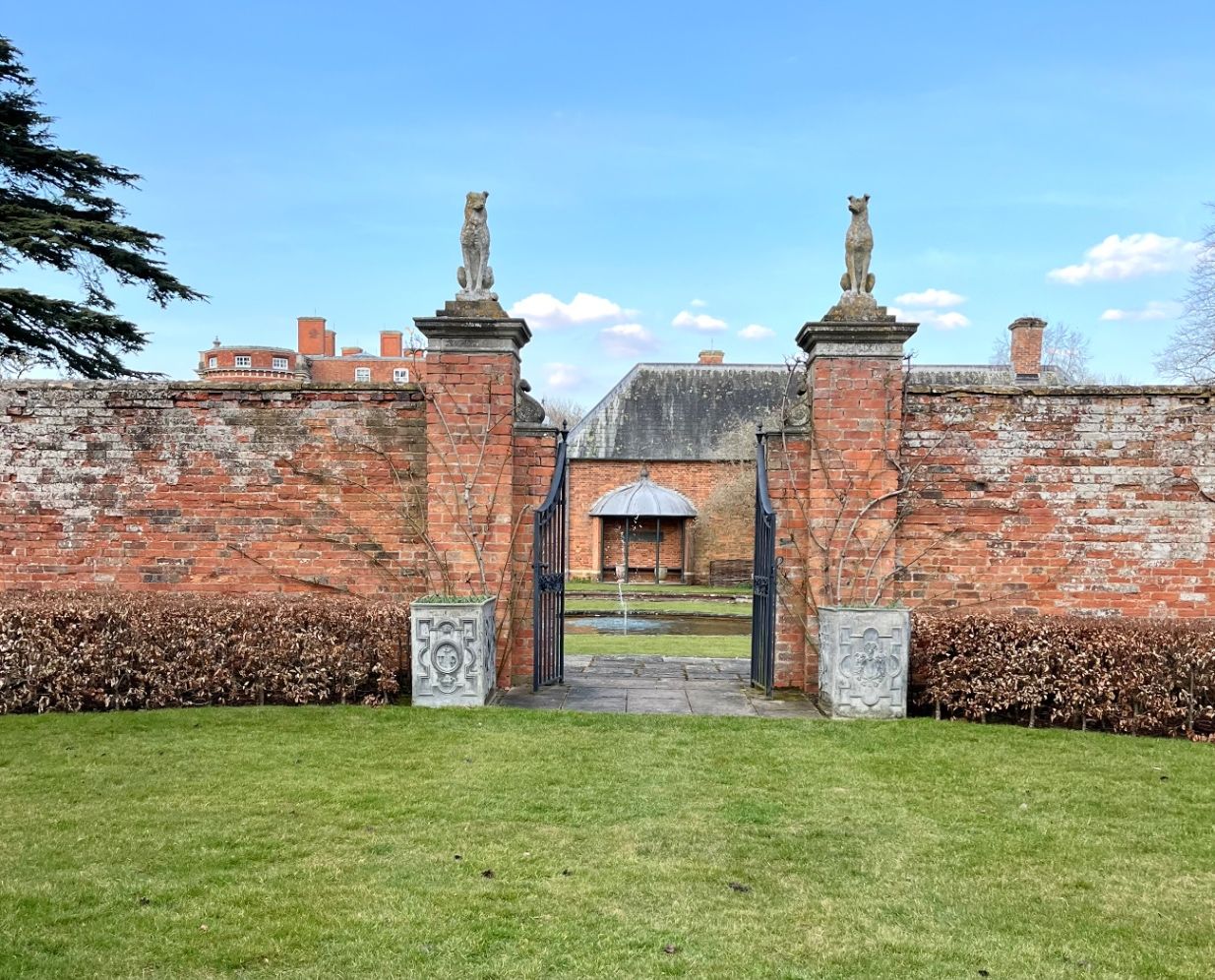
Garden Design begins with some garden history, which Crowe applies in sometimes surprising ways to modern situations. The Moors would have had a lot of time for Californian architecture, she contends, with their integration of indoor and outdoor zones. She describes the Arab love of open spaces, combining with the Spanish desire for enclosure, which helped to create 'one of the great garden traditions of the world'. This chapter made me think of the pool garden at Cottesbrooke, with its visual axis, from the pavilion seat, past the pool, past the gates and down an avenue of pleached limes towards rolling Northamptonshire. These views were here before Crowe’s arrival but she quietly perfected them, not least with the brilliantly placed semi-circular pavilion, built against the unclassical laundry building. On discussing the gardens of the Alhambra she writes: 'All have a sense of privacy, of secrecy and of being safely closed in within the encircling bower of plants; but in each there is still the glimpse of the bigger paradise without, and always the sight and sound of the glorietta’s own spring of water.'
I felt drawn back to Cottesbrooke, and wanted to pay a visit to my former boss, Alastair Macdonald-Buchanan. After a long drive I let myself into the pool garden and I take a rest on the built-in bench in the pavilion, which is bathed in late afternoon sunshine. Alastair appears, and we shout over the sound of the fountain. I suggest to him that maybe this is all you need in a garden: water, walls, and a place to sit. And, ideally, a change of level. Then I ask if he considers it to be the heart of the garden. 'Yes, without a doubt,' he says, continuing: 'Is it my favourite part of the garden? Yes, definitely, because it’s surrounded by walls. It’s the enclosure. Even if we had just grass, hedges and trees, with no flowers, it would still be a very fine garden.' Sylvia Crowe would have liked his final thought: 'We have great bones here.'
Cottesbrooke Hall is open for the NGS on the afternoon of 27 April, 2-5.30pm.