The Monster Behind the Shed
Buried behind Sandra Lawrence's shed was a colossal lawn roller, a relic of Britain's lawn-mad past. Uncovering its history led her into a forgotten world of striped grass, concrete-chic gardenalia, and a time when every respectable gardener needed an impracticably heavy roller.

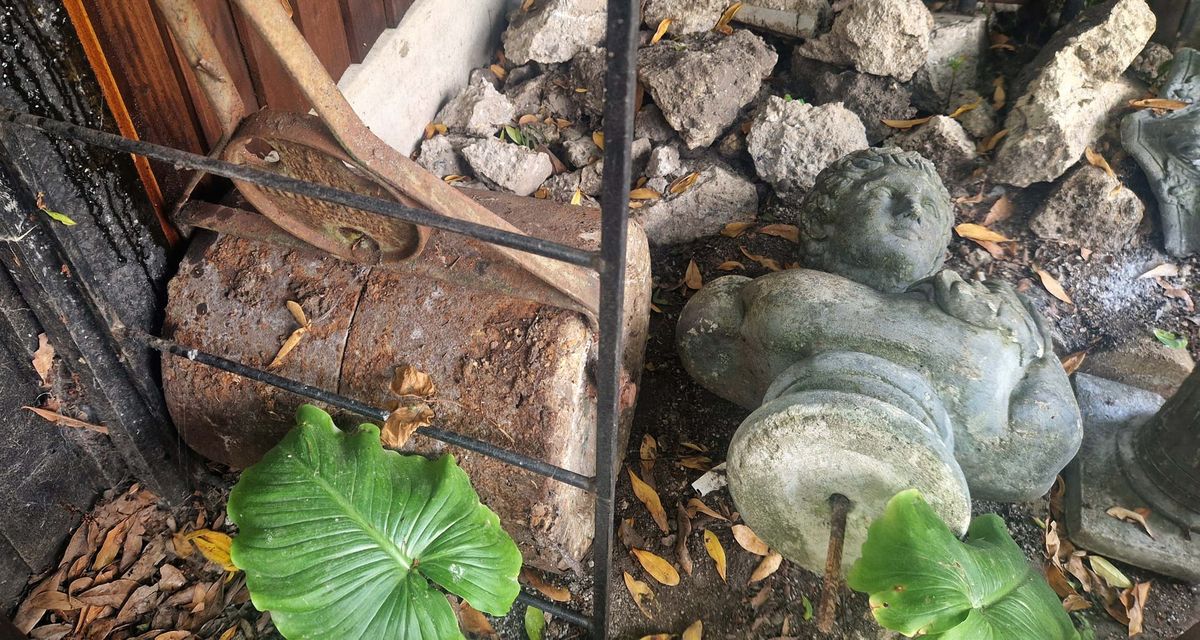
Okay, hands up: who else has dug up the bones of a monster lurking at the back of their garden, left over from the Lawntaceous Era of the Mower-zoic Period and occurring in Jurassic strata between early Triassic lawn making and the Cretaceous As-long-as-it's-green-it'll-do era we know today?
The lawn roller is the Brontosaurus of garden palaeontology, usually found behind elderly sheds or under a load of rubble at the back of the garden, and left by residents who simply couldn't lift it to shift it and probably didn't want to anyway.
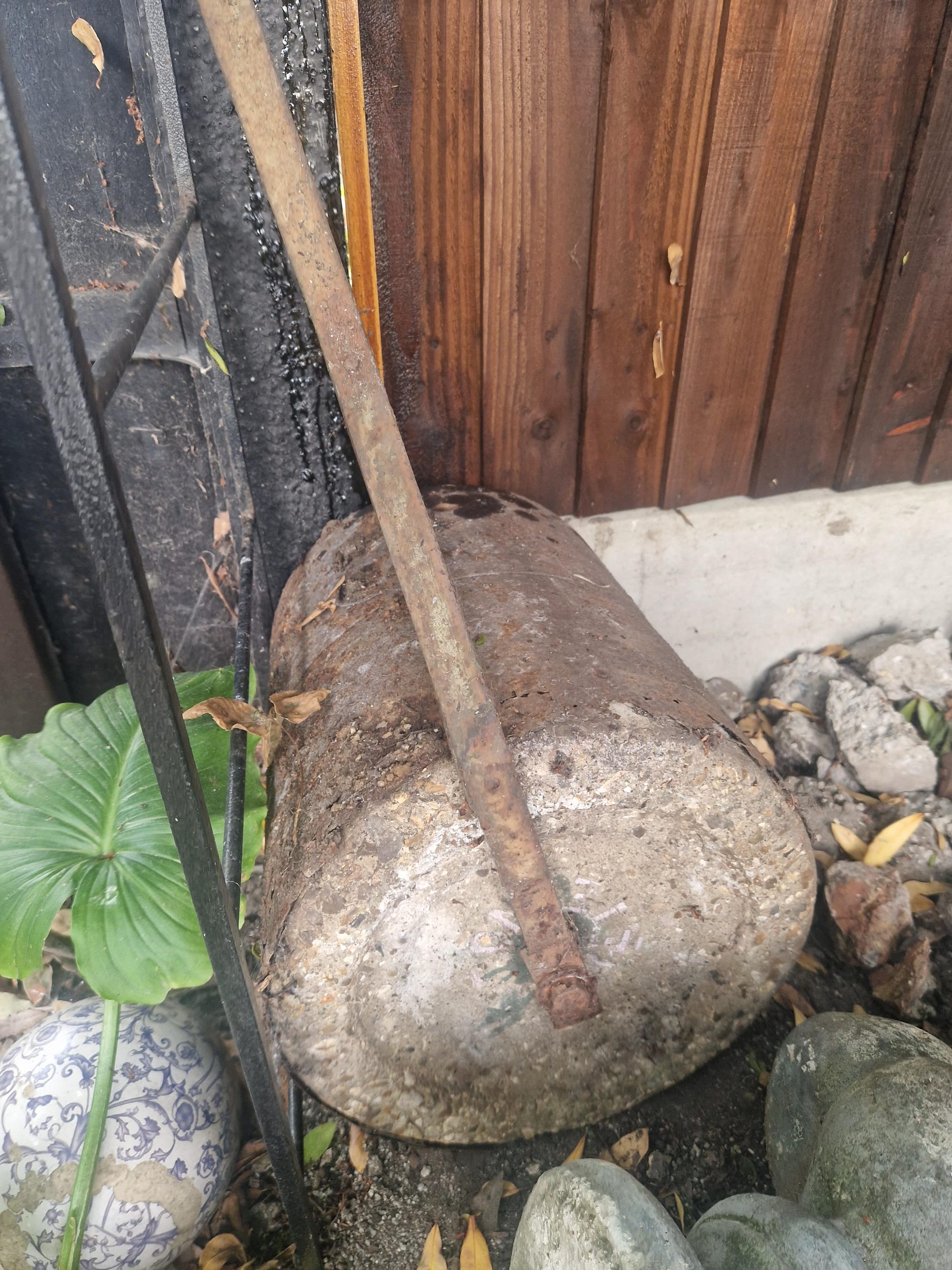
My example is nearly complete, missing only its wooden handle and any reason to still exist. My "lawn" (and I put that in inverted commas because it is not even an apology for such a thing) is, and always was, even back in the day, not six metres by three, and yet my forebears were so proud of it they purchased a gigantic roller to keep it stripy at all times. If it managed seven stripes across, I'd be amazed, but that's how much people in the twentieth century cared about neat and tidy gardens.
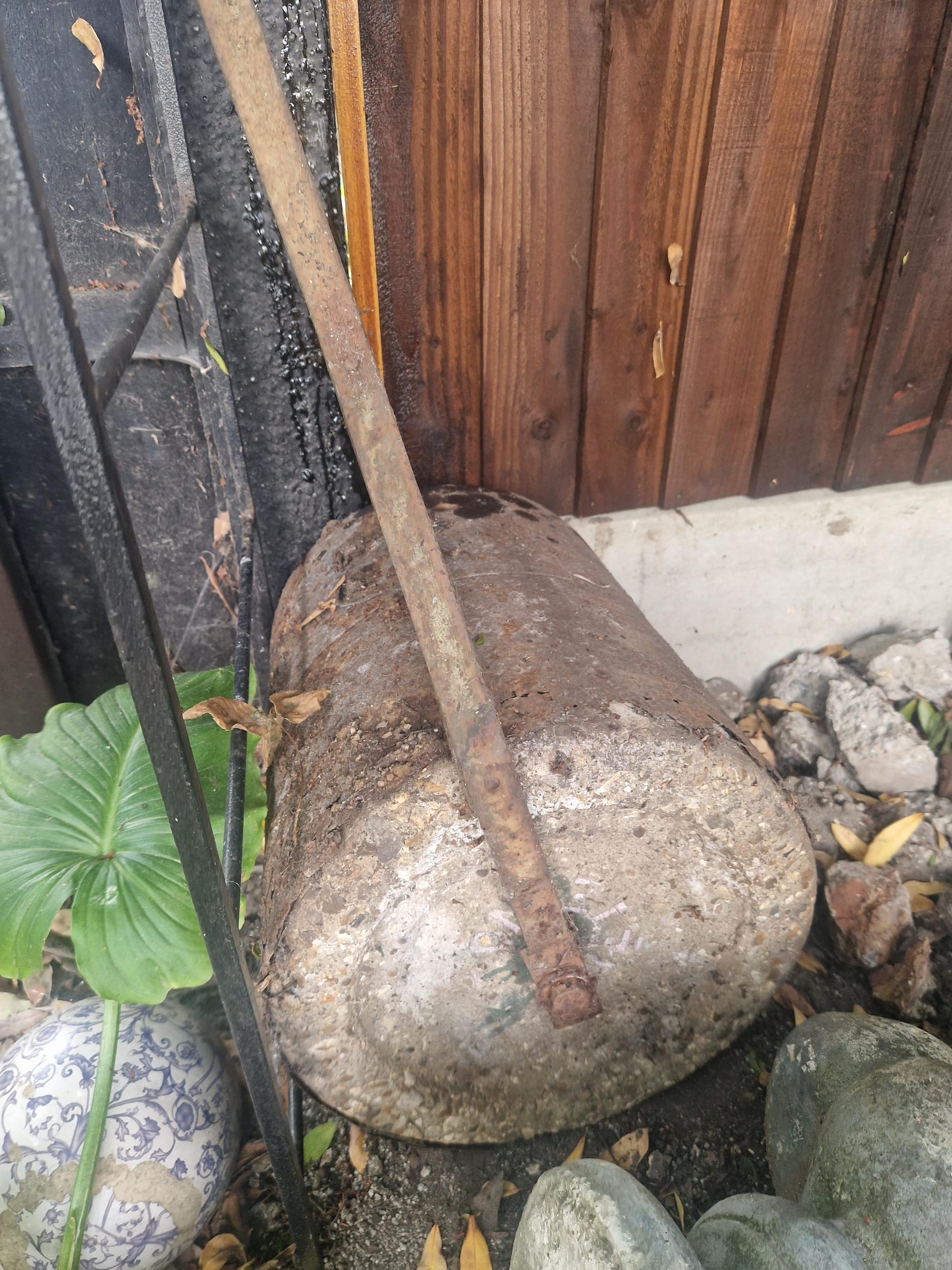
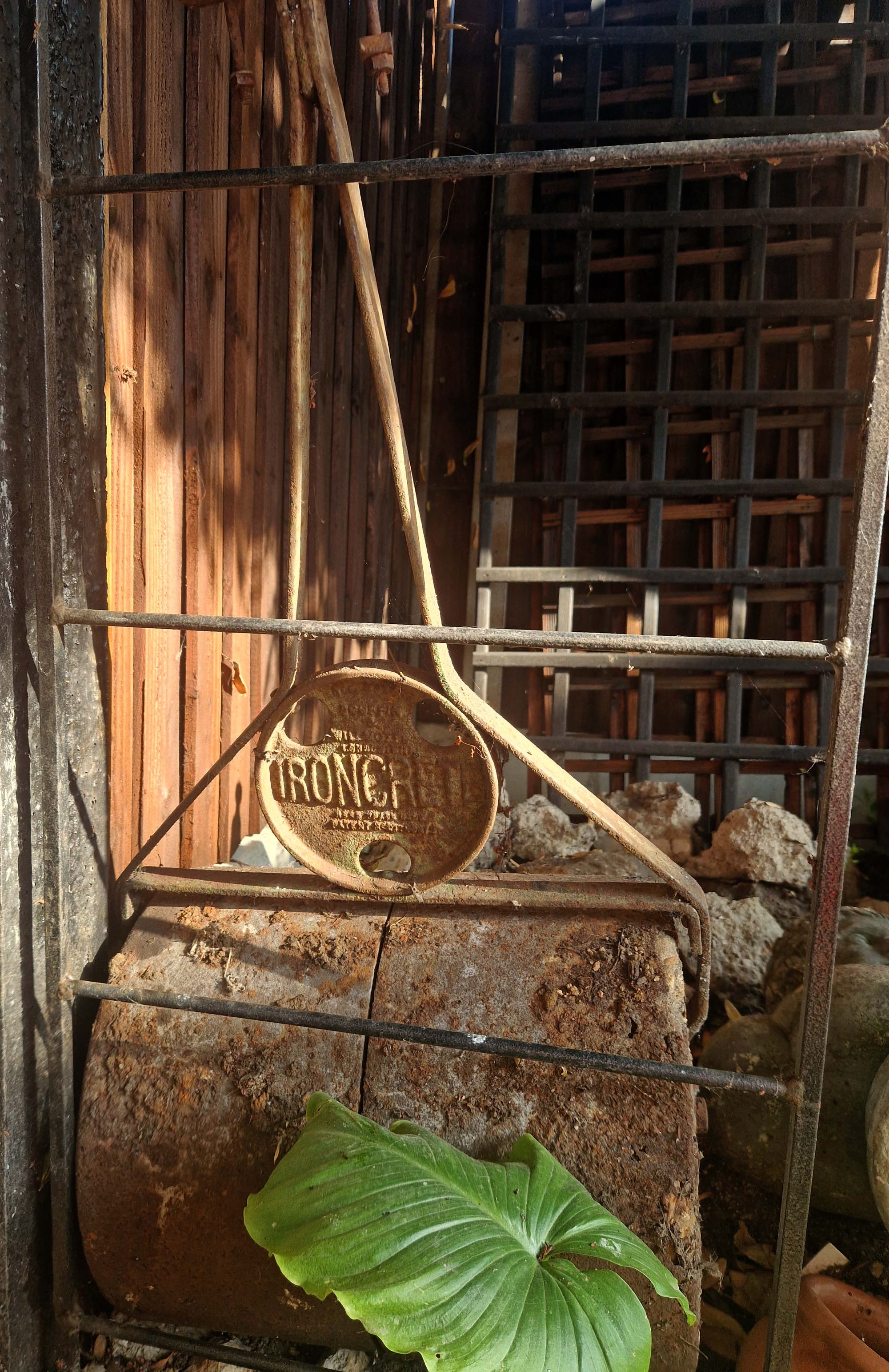
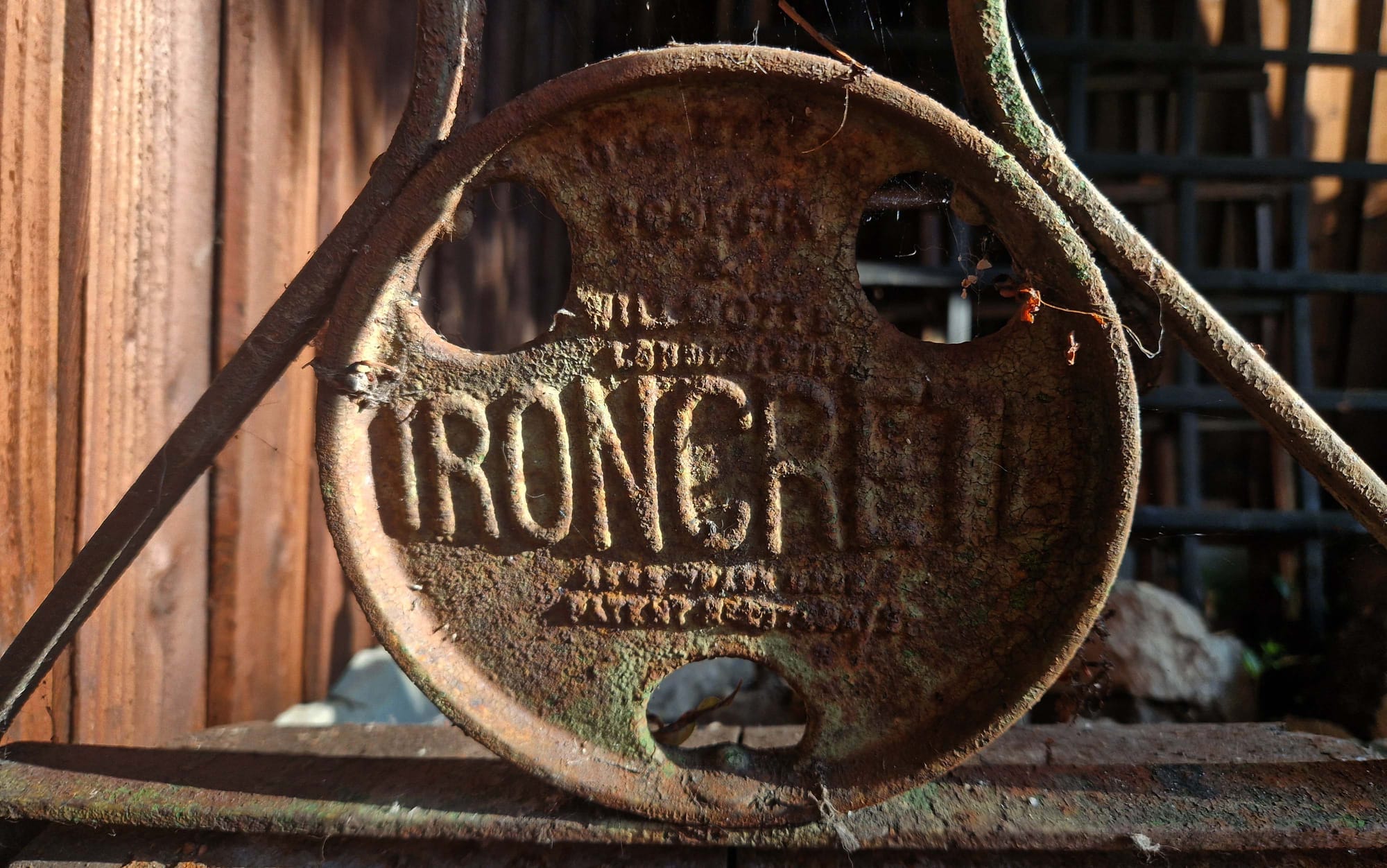
It's a relatively local beast, made by the Ironcrete Company of Barking, which I have had a huge amount of trouble trying to find information about. There's virtually nothing in books, newspapers or online, and what information does exist is so full of AI slop that it's hard to tell what was patently made up by a robot and what is merely quirky but true. Here I have to thank Barking and District Local History Group for some of the only reliable information there is to be easily-ish had out there.
It seems that, sometime in the 1920s, a Mr Scoffin and a Mr Willmott loved each other very much and had a bouncing, several-tonne baby they called Ironcrete.
Sounds like a superhero, huh? And in some ways it was. Early twentieth-century Britain was obsessed with lawns, and getting yours absolutely flat, absolutely trimmed to perfection and absolutely stripy was not just a matter of pride: it was everything. Neighbours noticed, and even if your lawn was just a couple of metres square, it needed constant rolling to bowling-green standards.
Mr Scoffin—Stanley Archibald (1899–1966)—and Mr Willmott—Harold Edgar (1897–1936)—saw a blade-of-grass-sized gap in the market and sat down at the drawing board.
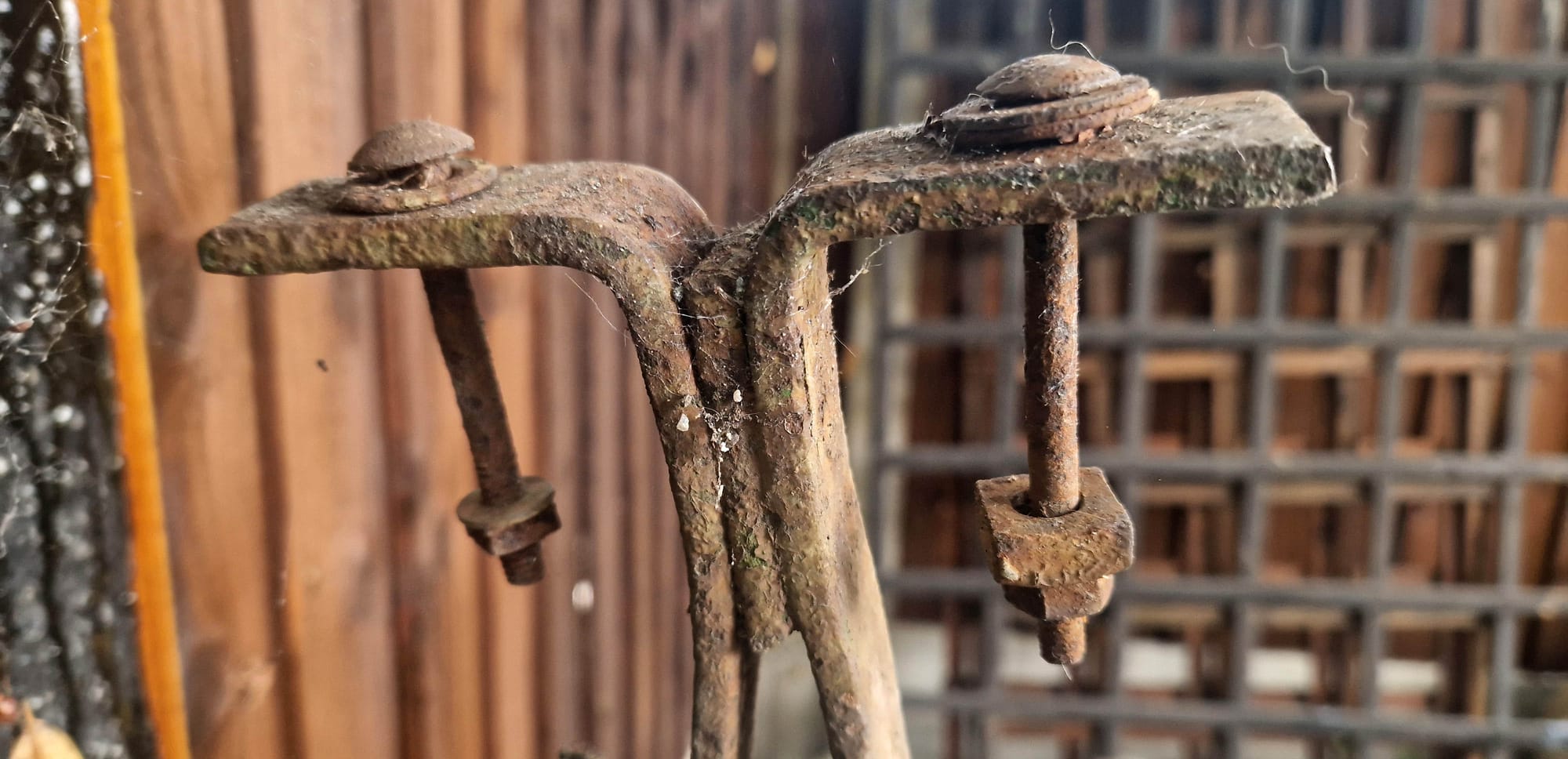
The name was pretty self-explanatory. The Ironcrete roller was a giant cylinder of puddingstone concrete with a thin coating of iron, and a cast-iron steering column with a polished wooden handle. Simple, elegant, bloomin' heavy. I dread to think of the poor horse and cart that had to deliver that across the ferry and up Greenwich Hill.
Ironcrete became a staple of 1920s gardening for all classes. If you had a garden, you needed a roller. My house is a narrow terraced job and, at one point, it was home to eleven adults and Lord knows how many kids, as they don't appear on the electoral register. They had to carry that thing through an extremely tight corridor—it probably took all eleven of them to manoeuvre it through—just so they could roll it over a lawn the size of a handkerchief.
They might choose to decorate that handkerchief with lovely ornaments from Ironcrete's Abbey range. At first I assumed the name referred to the only bit of green space in the area at the time—the remains of Barking Abbey—but actually it's because the firm originated in Abbey Road, Stratford, whose DLR station seems to have been deliberately named in 2011 to discombobulate as many Beatles-fan tourists as possible.
The Abbey range was made from artificial stone, and keen gardeners could choose anything from pools, fountains and statuary to rockery sinks, urns, seats, sundials and bird baths. For some reason there was also an entire forest's worth of variously sized concrete toadstools.
Thing is, such back-garden ornamenteers were not alone. Everyone had them. By 1929, the illustrious journal The Hardwareman, Ironmongers' Chronicle & Builders Merchant, was telling its trade readers, in announcing a 41% increase in Ironcrete sales:
"A rolling stone gathers no moss, but it does get polished. And so with Ironcrete Rollers; they move too easily and sell too quickly to gather anything but profits for ironmongers."
The rollers don't seem to feature much in consumer magazines, just a couple of ads in The Gardener's Chronicle. And that tells us something interesting about gardeners' habits. Unlike today, people relied on the advice of local nurseries for plants and local merchants for hardware, so it was most important for Ironcrete to sell to retailers, not consumers.
So we mainly learn about the company through obscure trade journals such as The Wire Industry, The Sanitary Record and Municipal Motor. The Municipal Journal and Public Works Engineer tells us:
"The No. 8 Asphalt Roller is particularly easy running, and free from the annoying clangour usually associated with ordinary iron rollers."
They continue:
"ONE MAN CAN USE IT."
Clearly one very burly man.
We also learn about the company's other products, including the Ever-Flow hosepipe and some fabulously named wheelbarrows, including the Navvy, the Joyride and, I kid you not, the Whopper. I would pay good money to witness their Sweepmaster self-shovelling and tipping barrow, lauded by Parks and Recreation magazine as late as 1970.
For this wasn't just twenties-and-thirties fun. People were still into their lawns in the 1950s—perhaps more than ever in the brave new world after the Second World War—and continued through the 70s into the 80s, 90s and even the twenty-first century. And let's face it, some people still enjoy a lawn.
Hell, I still enjoy a lawn—as long as I'm not the one rolling it. And there are enough people who love billiard-table green that there is a small but thriving trade in new garden rollers and, I note, second-hand Ironcretes. One company, Simply Garden Rollers, specialises in selling spares and, if you like, will even restore yours to full glory.
So what am I going to do with mine?
Frankly, restoration's out. I just don't have the energy. I've already ascertained that I can't get rid of it, even if I sold or gave it away, I'd be scared to take it through the house; the floor would fall in.
So it's going to stay pretty much where it is, quietly mouldering away among the rubble that will soon become my splendid Meditation on the Fall of Rome fernery. My best friend suggested I disguise it as a broken Ionic column, toppled from some temple, but somehow that feels inauthentic.
It's staying as it is, in all its interwar glory, even if we're not talking about the Punic and Etruscan Wars. After all, who is still around to tell me there wasn't a Mr Scoffix or a Mr Willmotunus who invented rollers for villas in ancient Ironcreteanum?