The Utens Lunettes
A little-known Flemish painter produced one of the masterpieces of Italian Renaissance garden art

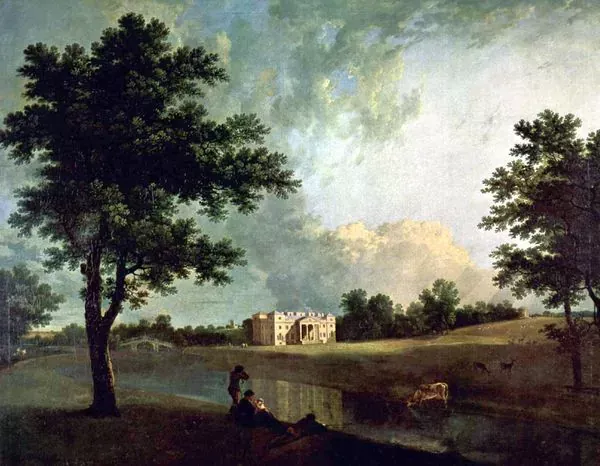
Gardens and paintings are two of my passions, so when they overlap my enjoyment is limitless. My tastes are catholic; from Richard Wilson’s sublime 18th-century view of Croome Court, bathed in Turner-esque light, to the more prosaic but equally striking domestic garden scenes captured in the 20th century by the brothers Paul and John Nash.
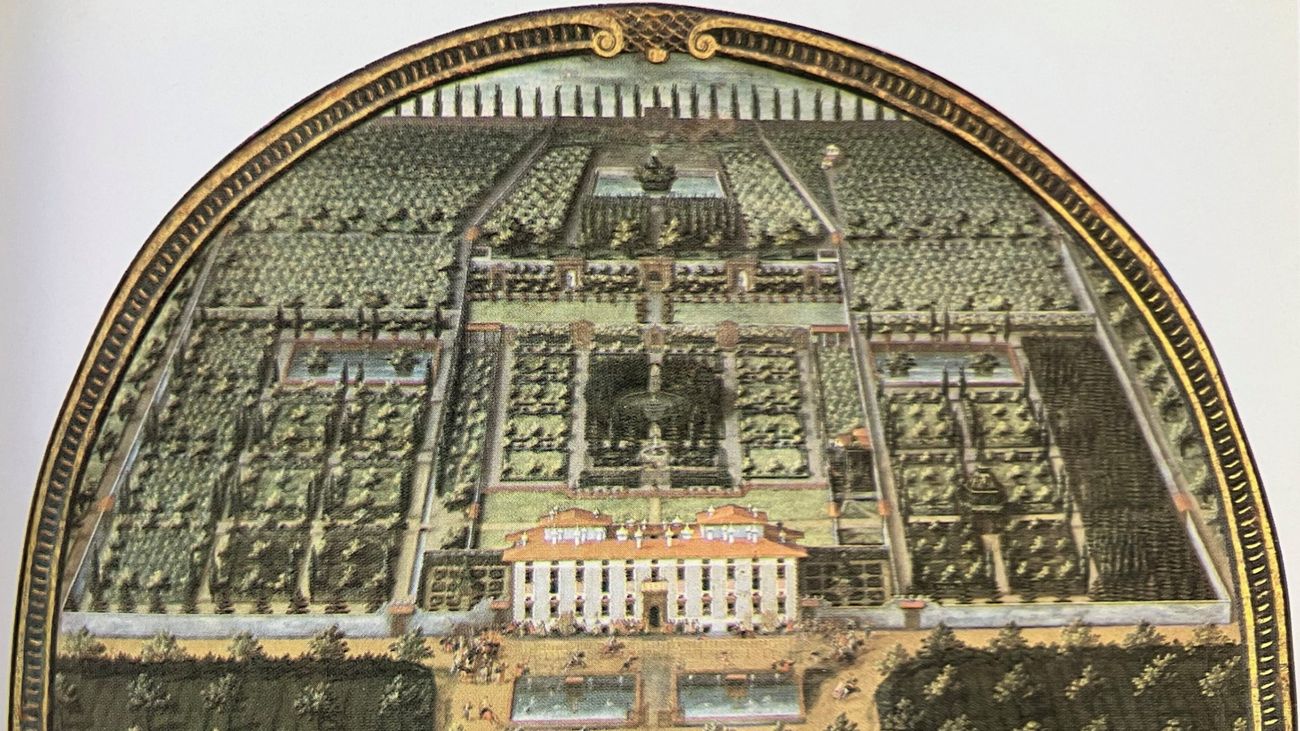
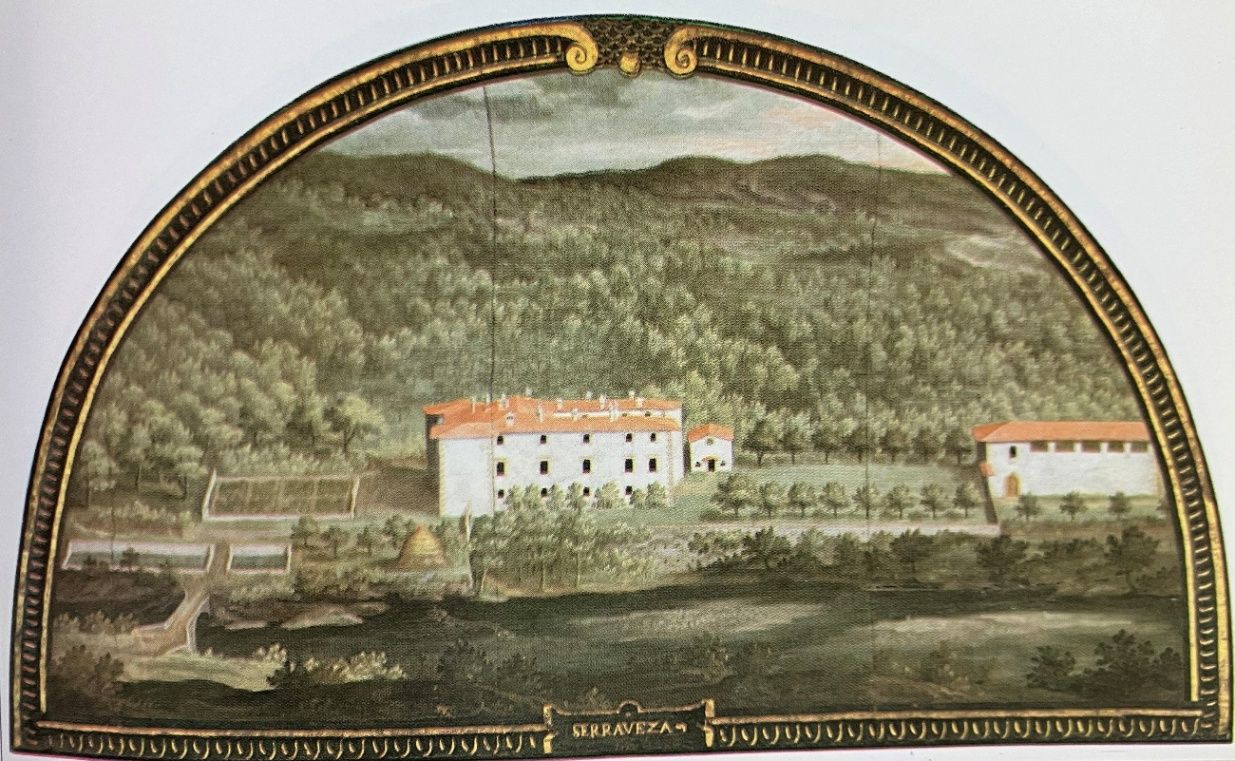
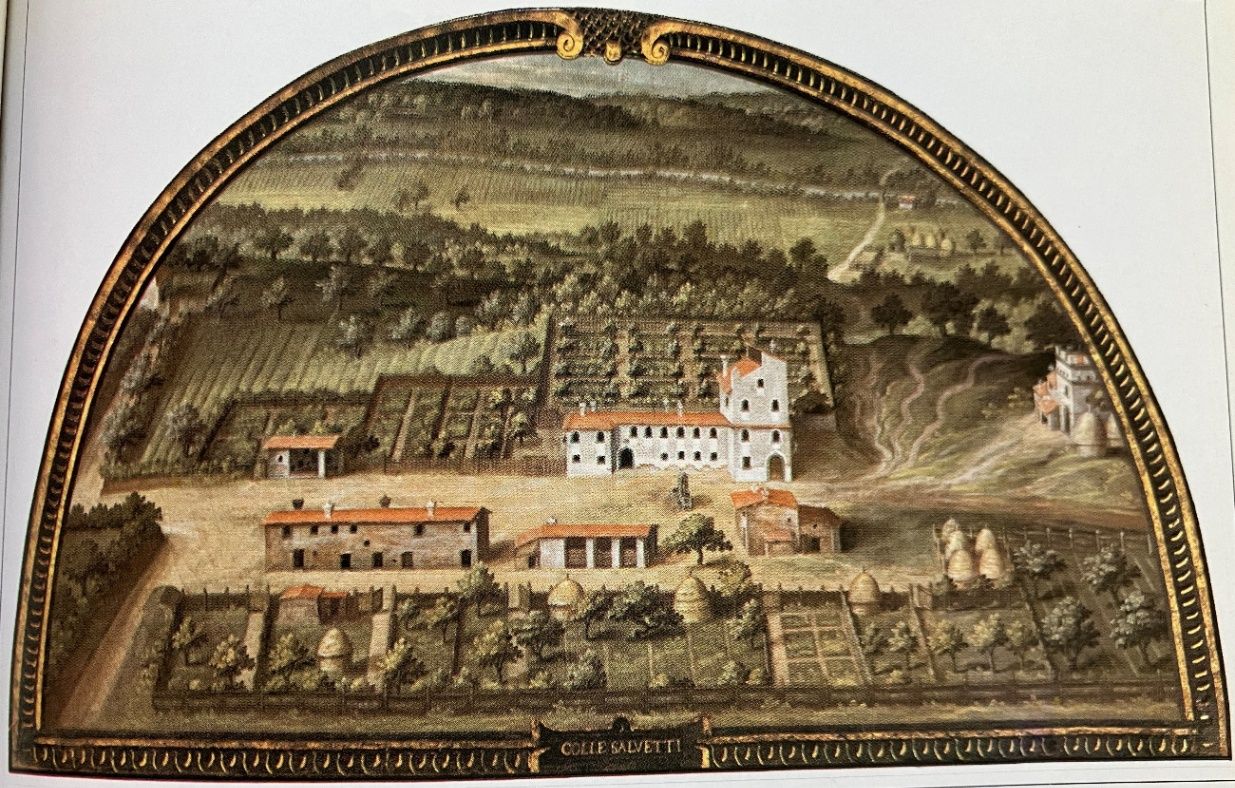
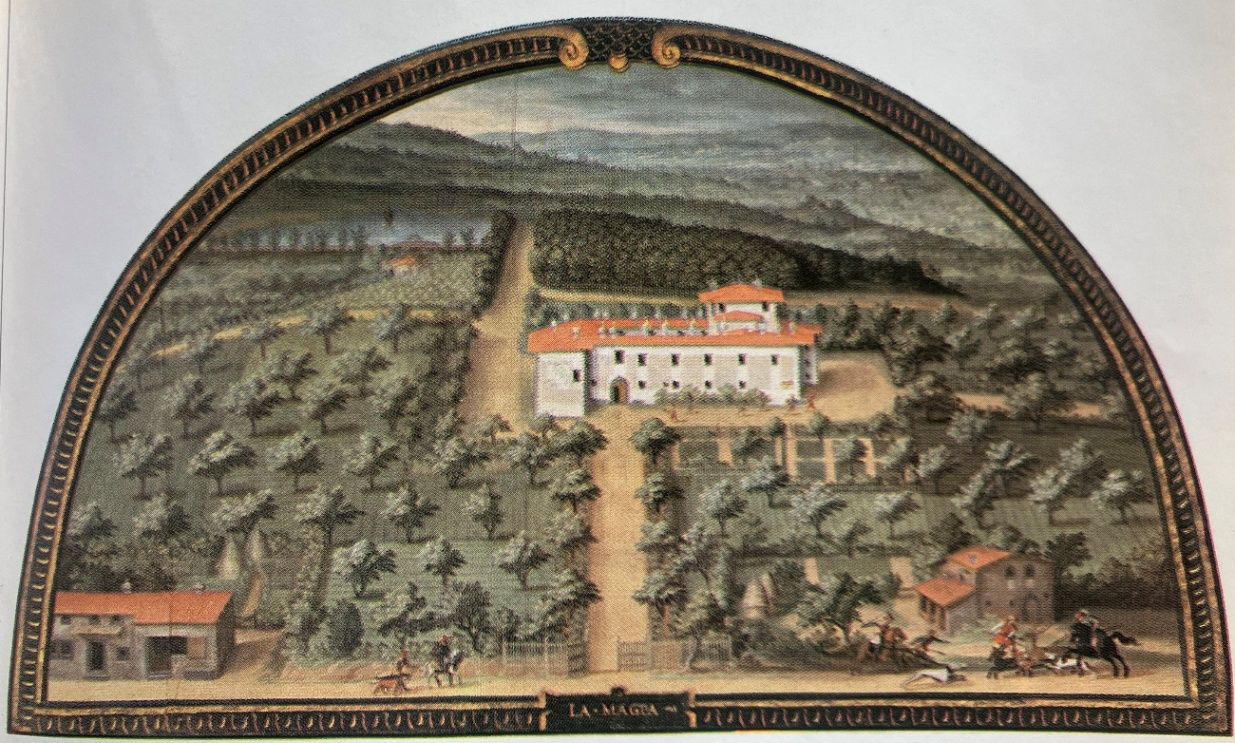
There is, however, one group of paintings which have a uniquely special place, not only in my affection but also in the history of art. They are the 14 lunettes of the Medici villas and their gardens painted towards the end of the 16th century by Giusto Utens. Those are the basic facts behind which lies the story of a shadowy but brilliant artist and his powerful but munificent patron, Ferdinand I de Medici, Grand Duke of Tuscany, who together created one of the most memorable contributions to garden art.
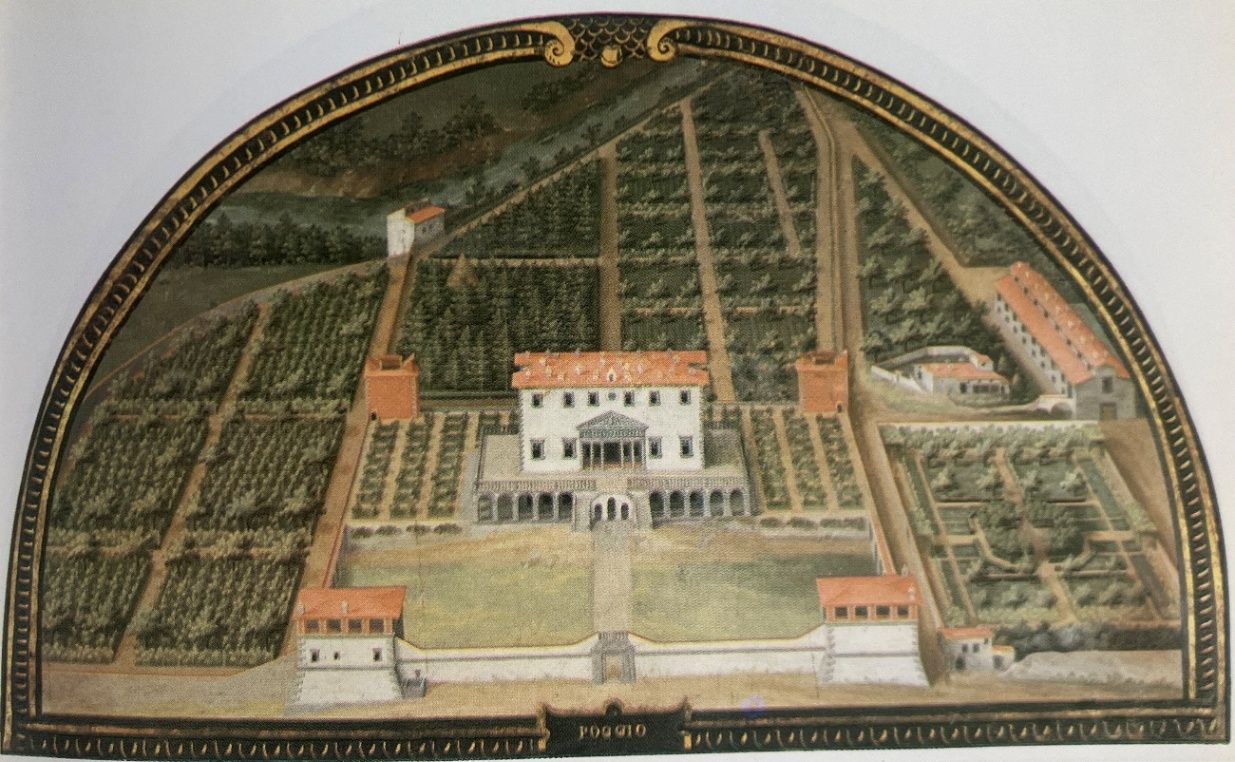
The paintings are unparalleled for a number of reasons, not least because there is no other group anywhere in the world that illustrate and catalogue such a large quantity of homes and gardens belonging to one family. They survive as a very individual record of Italian Renaissance achievement which, as well as confirming the unrivalled power and wealth of the Medici family, illustrate in fine detail the villas and gardens which were such integral parts of the Italian Renaissance artistic lexicon.
In recent years they have become invaluable heritage evidence, in particular contributing to the decision in 2013, to name The Medici Gardens and Villas of Tuscany a World Heritage Site. It was the villas and gardens as a group, which the Utens lunettes catalogue, which was crucial for the UNESCO award, as made clear in this description which formed part of the nomination: ‘The Medici villas form the first example of the connection between architecture, gardens and the environment and became an enduring reference for princely residences throughout Italy and Europe. Their gardens and their integration into the natural landscape helped develop the appreciation of the landscape characteristic of Humanism and the Renaissance.'
The Italian Renaissance was liberally populated with artists of great talent who have always remained shadowy, little-known figures, none more so than Giusto Utens. We know he was Flemish, born in Brussels and that he settled in Carrara in north-west Tuscany, a town famous for its white marble prized by Renaissance artists such as Michelangelo. In 1588 Utens married, at some stage he became a naturalised Italian and he died in Carrara in 1609. He had a son called Domenico who was also an artist. This is pretty much the extent of the biographical details that are known and although Utens must have had a wider career as a painter, no works other than the Medici lunettes are either discussed or illustrated in relevant literature.
Far more is known about his patron, Grand Duke Ferdinand I de Medici who was born in 1549 and died in 1609. A son of Cosimo I who established himself as the first Grand Duke of Tuscany, Ferdinand succeeded his older brother Francesco I to become the third Grand Duke in 1587. From the establishment of Medici’s Florentine power with the foundation of the family bank by Giovanni de Medici towards the end of the 14th century, the dynasty’s wealth remained constant, but its power and success ebbed and flowed.
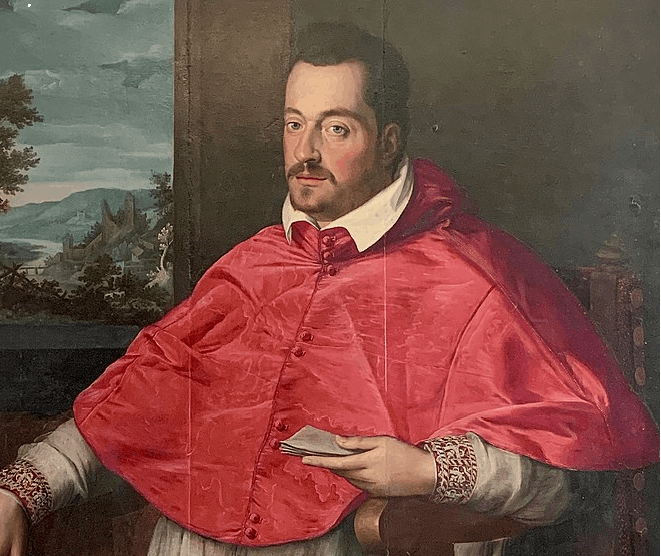
Ferdinand I’s period was one of outstanding success which saw not only considerable expansion in the wealth, but also the independence of Tuscany re-established with accompanying economic prosperity. The Medici family’s power and fortune may have originally been established in banking but Ferdinand demonstrated how property – and its successful management and growth – was the source of real power and authority.
This attitude underpinned his pride in the Medici villas and their surrounding gardens and estates and inspired his decision to commission the set of lunettes from Giusto Utens. They were to decorate the reception hall in the Villa Artimino which was built for Ferdinand by Bernardo Buontalenti between 1596 and 1600. Artimino’s geographical position was significant; sitting in the hills of Carmignano to the west of Florence it lay at the heart of the Medici empire which stretched from Florence to Pisa and Livorno on the coast, and so was deemed by Ferdinand the most appropriate place to house his illustrated record of the family properties.
The lunettes are as much inventory as they are art, as explained by Antonio Paolucci in his Introduction to the booklet by Daniela Mignani, The Medician Villas by Giusto Utens, published in 1991:
‘In a bird’s eye view perspective, the Flemish painter lists with impartial and scrupulous preciseness everything that is included in (or defined by) the boundaries of the properties... The uniting element is not the medium of light, nor the loving curiosity for reality, as is the case in the tradition of the great Italian landscape painters from Carpaccio to Bellotto. It is rather the need to list and define, as if the figurative act aimed only to transform itself into a true and scrupulous seal of property.’

Various researchers have shed glimmers of light on some details of Utens’ commission. As a result we know that the artist was paid 90 denari in order to ‘bring his family from Seravezza to Florence'. Various other payments are recorded for different aspects of the commission, continuing up to the last recorded one in 1602.
The scale of the commission must have been daunting, as suggested by Daniela Mignani: ‘We also learn that Utens visited each villa personally to take the measurements of the constructions and surrounding land which he and his assistants needed to accomplish the work…It is this precision in the architectonic relief that, together with a marked sensitivity to colour, determines the high documentary value represented by the lunettes.’
Another element of the project's scale is the fact that the lunettes are large, each measuring around 1.5m by 2.5m. They are painted in tempera on canvas and are all in gilded carved wood frames with the name of each villa in a central panel at the bottom.

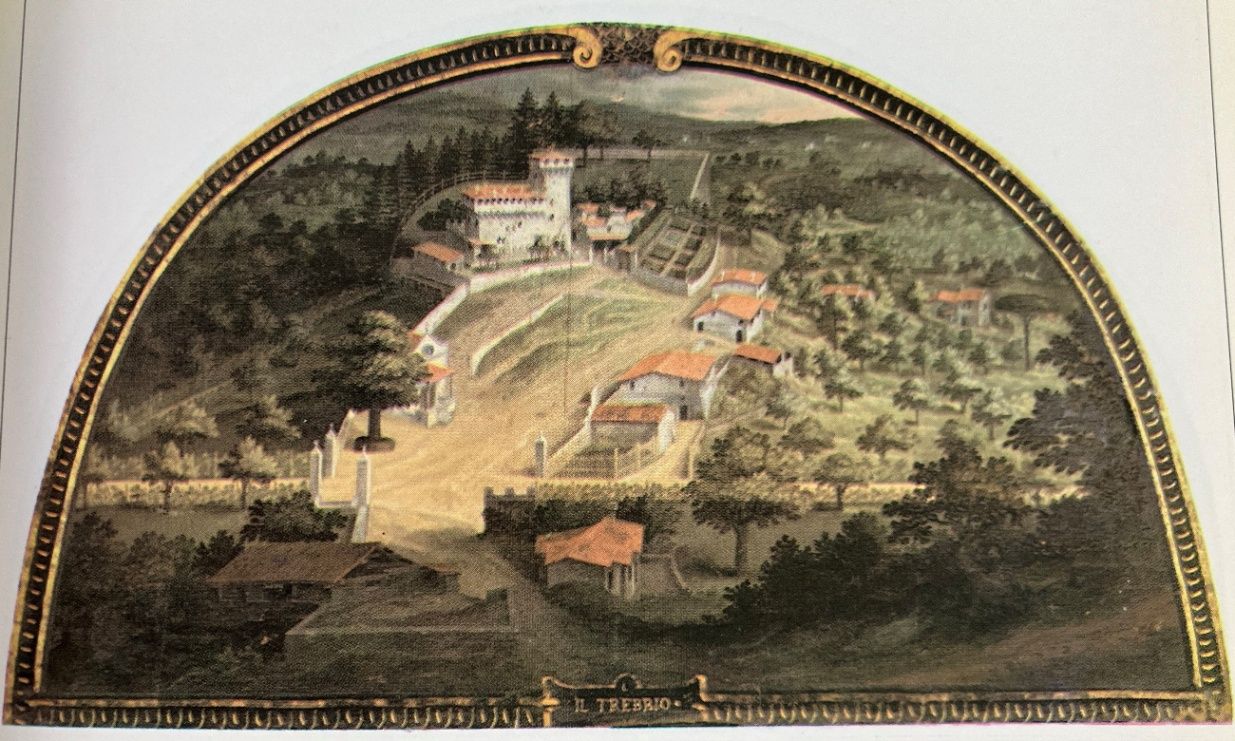
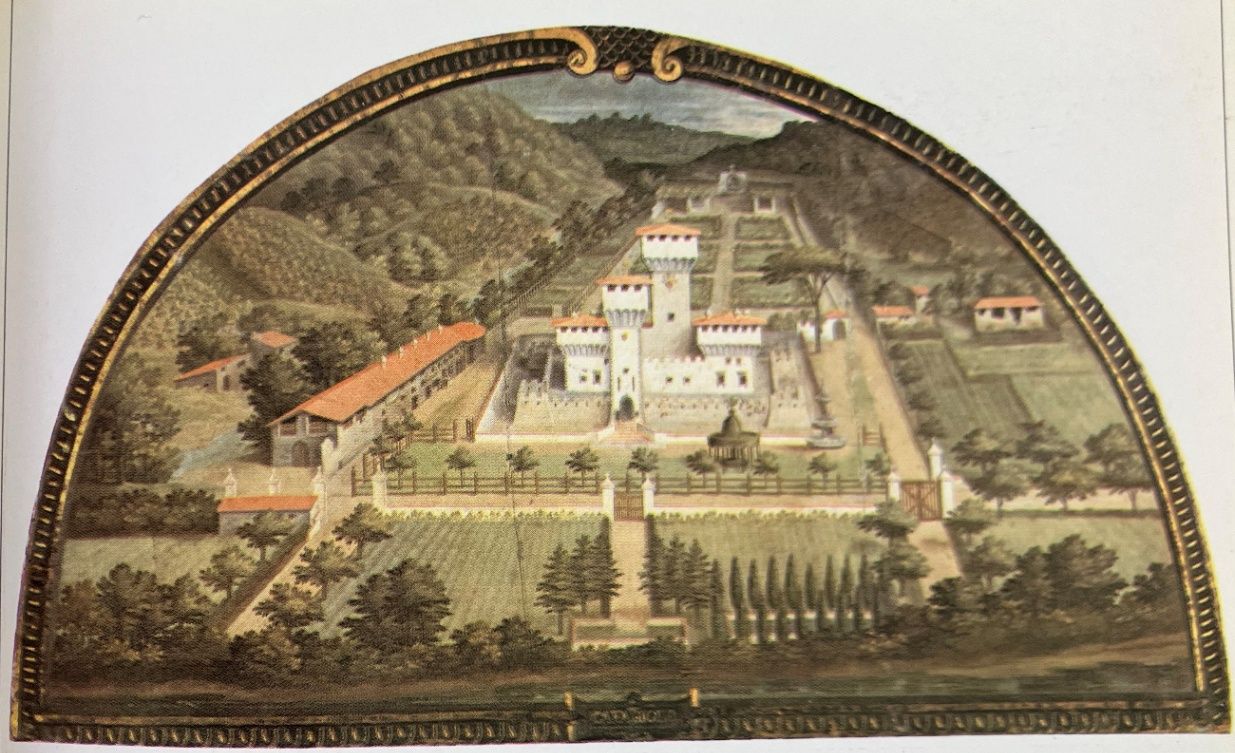
One of the chief delights of the lunettes is their balance of uniformity and variety. They are quite clearly a set and yet each one is wholly individual, bringing to life the architectural and topographical features of every place. In some the gardens are a minor feature, with stables and farm buildings more prominent – as at Cafagiolo – or there is an impressive landscape in the background as at Monte Veturino. But others depict gardens that are major features of the wider story of Italian Renaissance gardens, from medieval Il Trebbio dating from the 14th century to two giants of the 16th century, created at the zenith of Renaissance gardens; Villa Castello designed by Niccolo Tribolo for Ferdinand’s father Cosimo, and Pratolino designed by Buontalenti for his brother Francesco.

Intriguingly, the inventories of Artimino villa list 17 lunettes, including three other Medici properties. They do not include Artimino itself, perhaps because as the original home of the paintings it was deemed not necessary for inclusion.
During the 20th century the lunettes were acquired by the Italian State and held for many years in the historical or topographical museum of Florence. Following the closure of that museum in 2010 they were relocated to La Petraia, one of the closest Medici villas to the centre of Florence and it was thence that I was able to make my personal pilgrimage which makes for a light-hearted footnote to this article.
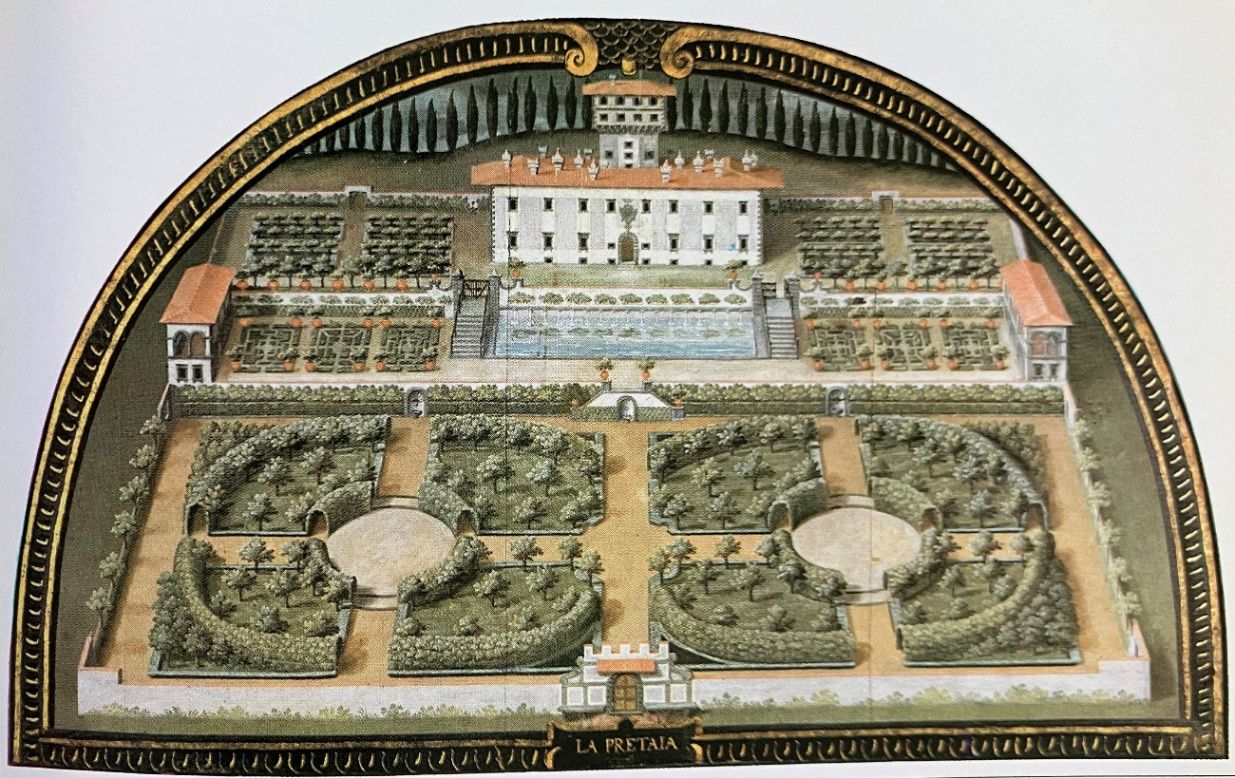
In the summer of 2016 my wife Annabel and I spent a few days in Florence before travelling on to Umbria. Having discovered – after extensive and challenging research – that the Florence topographical museum had actually closed and that the lunettes had been moved to La Petraia, a visit to see them was to be a highlight of our Florence stay. On our last day we navigated our way through the Florentine suburbs and having found La Petraia, parked at the bottom of the terraced garden. It was a very hot day and the terraces seemed to rise forever. We made our way up completely alone, out of breath we arrived at the villa and made our way to a modest looking half-open door.
Inside we found a small hall with a table on which was a manual clock whose hand was clearly pointing to the bottom and a sign which, with the clock confirmed that tours started at 30 minutes past the hour. Behind the table sat an Italian man smoking, who was dressed on top in only a leather waistcoat and below, in very scruffy trousers and sandals. As we entered the electric clock on the wall clicked from 1.30pm to 1.31pm. With only poor Italian between us, we looked at the attendant who looked at us and pointed to the clock on the table. We had clearly missed the 1.30pm slot and even though there was no one else in sight, we were going to have to wait another 59 minutes until 2.30pm.

A drinks machine in one corner that dispensed bottles of warm water and cans of Coke or Fanta did not do much to alleviate the stifling heat, but we waited patiently. As the time passed, we were joined by one other young couple and the attendant smoked five cigarettes. At last, at the appointed hour, the attendant stood up and with a loud ‘Pronto!’ rattled a large bunch of keys and made for one door out of the hall which he unlocked. Following anxiously, we entered another room that was completely empty except for four of the Utens lunettes hung so high on the wall it was hard to take them in. After a few minutes there was another ‘Pronto!’ and we moved to the next room, exactly the same.
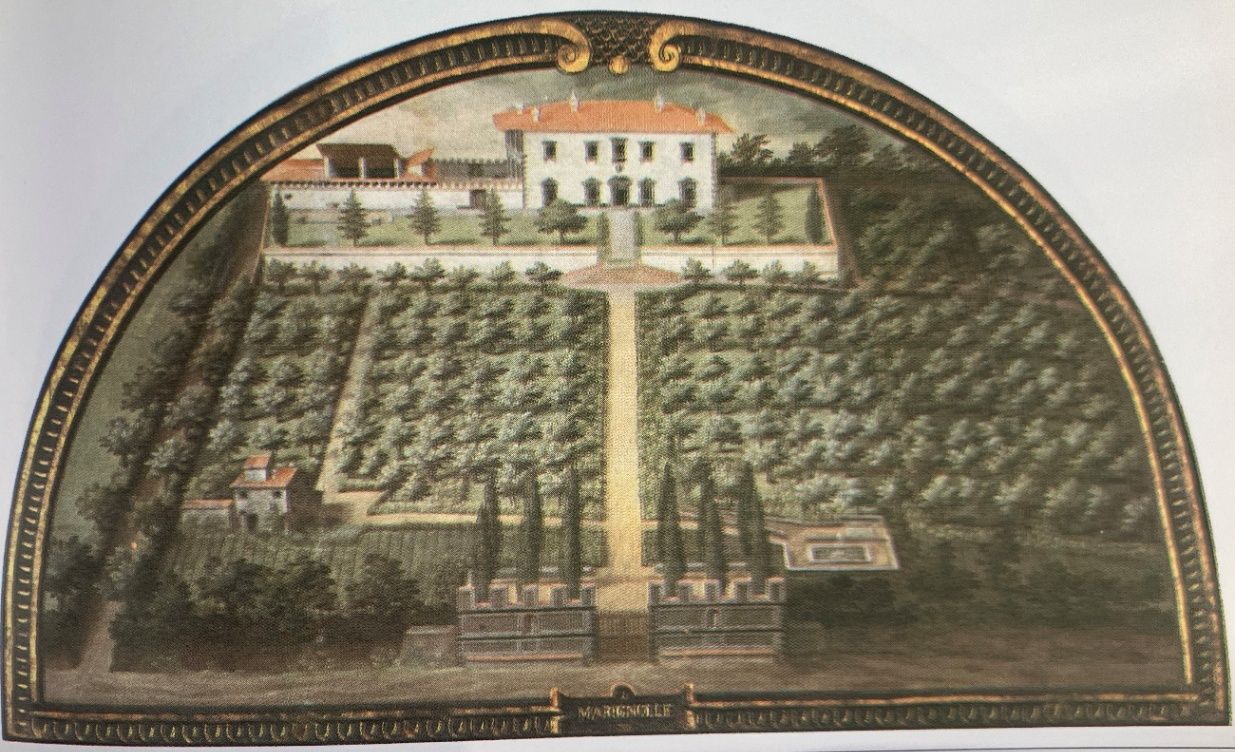
The whole tour – advertised as 50 minutes long – lasted a little over 10 minutes during which the attendant only ever said ‘Pronto!’ and in each room there was only the Utens hung high, no signs or literature of any kind. It was a tantalising introduction to this magical highlight of the Italian Renaissance which I had waited over 30 years to see. But I have seen them, and one day will see them again, with any luck in more advantageous circumstances.