The Vagaries of Garden Maths
April at Mutton Hill


April at Mutton Hill continued to be fairly cold, though warmer spring weather did pop through the chill from time to time. I was finally able to get most of the beds around the gardens prepped for spring. Otherwise, much of the work in the gardens revolved around starting seeds in the greenhouse, nurturing seedlings, and finishing up the terraces above the pond, a project that had begun last autumn but stalled once the snow began to fly. This was a project that was years coming. The terraces cover a hillside that had long been an eyesore in the gardens. It was comprised of hard-packed clay, tree roots and rocks, and sloped down to a small lawn. I had tried year after year to get it to grow more than ragweed, dock, and wild grasses to no avail. The only plants that took were some narcissus and two very slow-growing cotinus (their slow growth a testament to the quality of the soil).

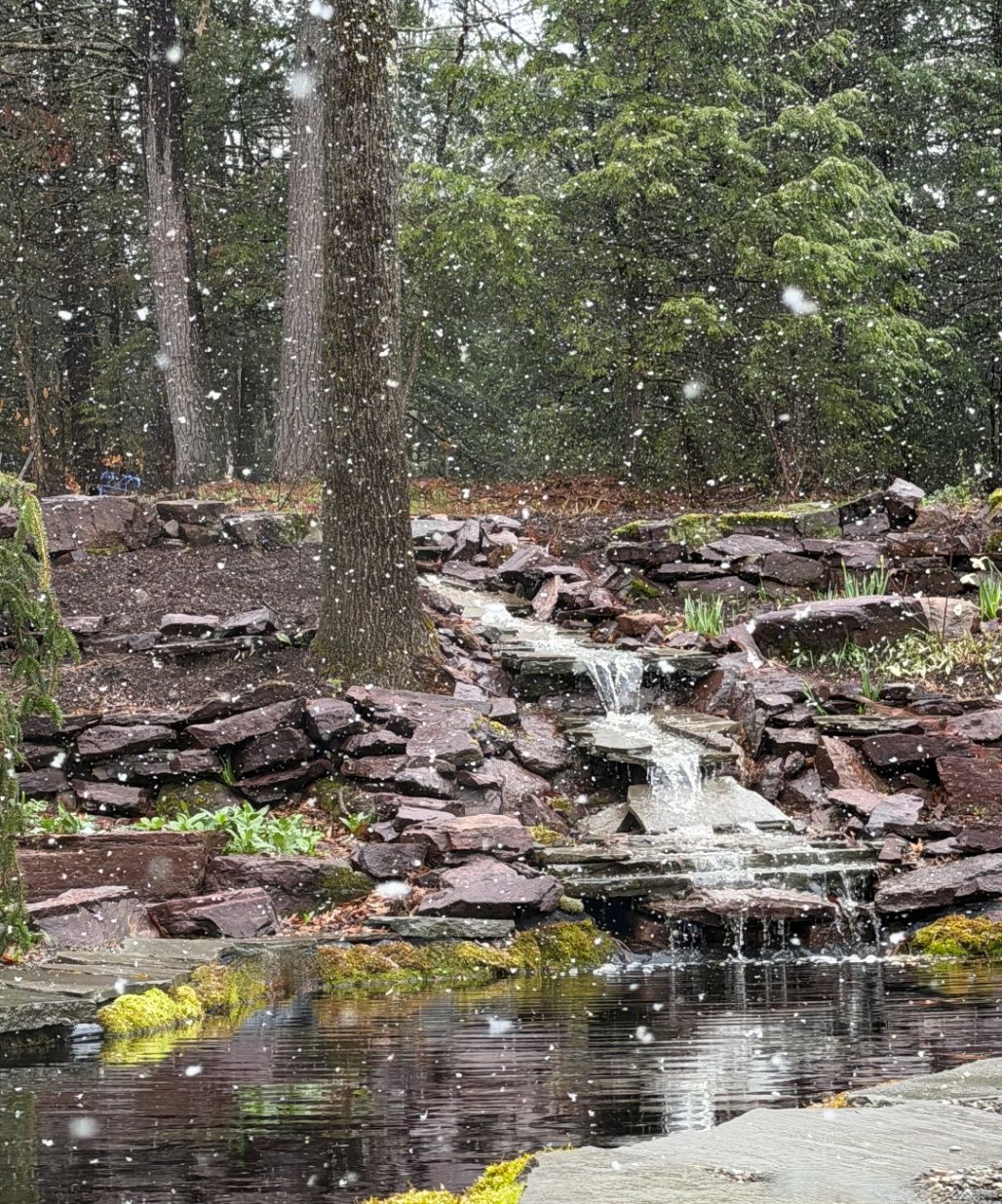
The final straw was the installation of the koi pond and waterfall last summer. The waterfall, while lovely, somehow drew even more attention to the sad state of the hillside, so I decided to terrace it. Luckily, my rock farm continues to produce, so I spent much of the autumn and this spring digging up rocks with my tractor and piling them into rock walls.
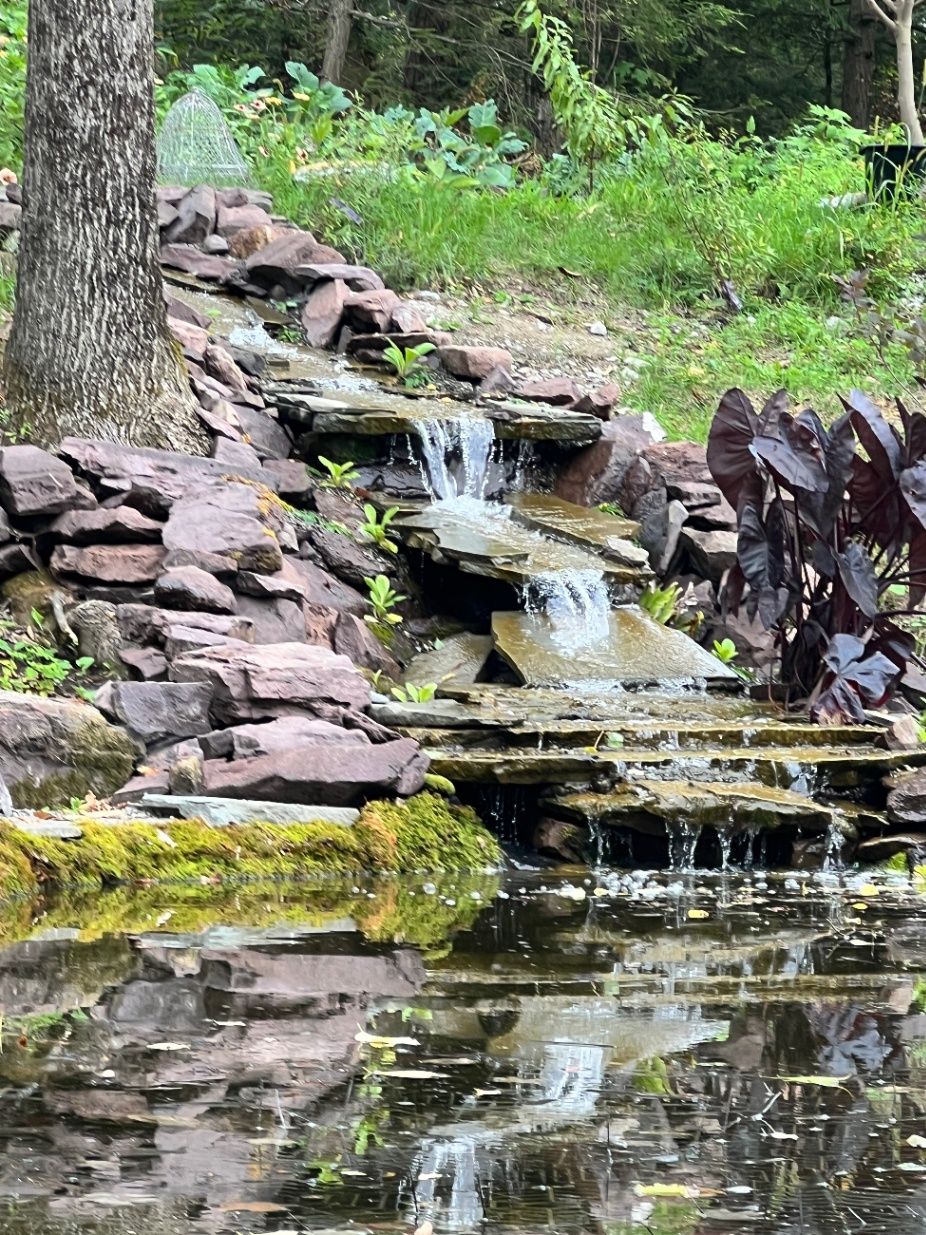
The terraces are finished now, and ready to plant, which is very exciting, yet also emblematic of one of the ironies of gardening. Nothing seems more exciting to me than the prospect of new garden beds to fill. It is the gardener's equivalent of a blank sheet of paper. At the same time, nothing looks sadder at the height of summer than a half-empty bed filled with tiny starts. This means that my thrill at the possibilities is also tinged with a bit of panic as I rush around my garden splitting out plants before they are too far along, seeding flat after flat in the greenhouse, and putting orders in for some new varieties I have had my eye on. With any luck, by the middle of July, the new terraces will look at least somewhat mature and lush. Of course the flip side of this is, that by then they will be full. This doesn't mean that they will be finished, as I use annuals to fill the spaces that the perennials will eventually mature to occupy, but I will once again have no room at the inn for new plants.
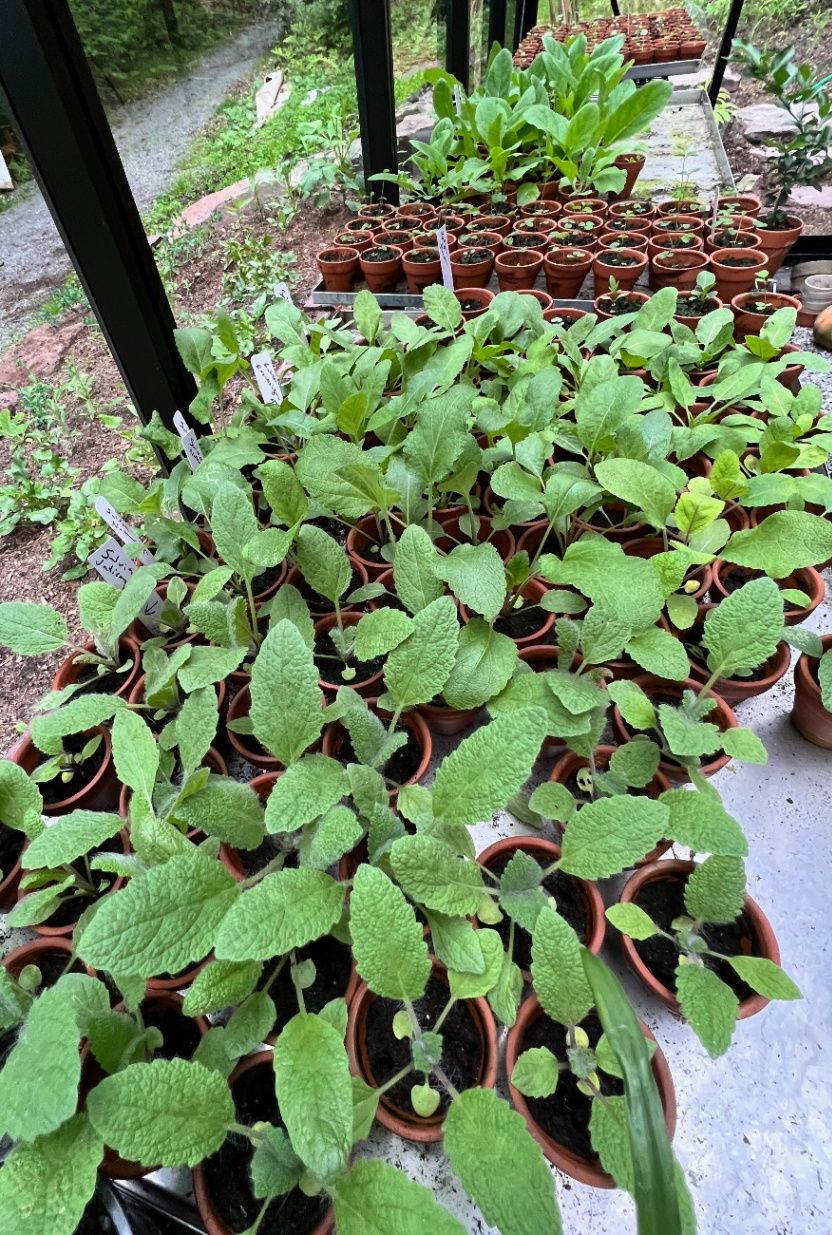
I find that this is generally when the local nurseries stock something so tempting that I bring home a few despite having no idea where I will put them. Or, a new-to-me plant will have been featured in a magazine, or book that I am reading and I will order seeds and begin propagating. And, when propagating I always start a lot, because something might happen along the way and I want to ensure that I eventually get several healthy new plants (which invariably means that they will all survive). By the end of the summer, I will have many full pots and will yet again be in search of new ground. This illustrates one of the vagaries of garden maths, there is either too much space to fill, or no space to put anything.
Another variation of this is what I like to think of as the phenomenon of rose coloured glasses garden planning. This is a three-stage process: Stage 1 - start project and immediately fall behind, Stage 2 - order plants in autumn for spring planting with much overconfidence, Stage 3 - panic when said plants arrive and you have no place to put them. The latest iteration of this phenomenon at Mutton Hill began last July. This is when we decided to install a new orchard above the vegetable garden. Of course this area wasn't empty, but was full of brambles, sumac, a few weedy trees, and multiple stumps. This was much more my husband's project than mine, and while I worked on the koi pond, he cleared and created dead hedges. By the time the Fedco Trees catalogue (a much anticipated annual event in our household) arrived that autumn, he had made substantial progress. Did this mean the orchard was ready to plant? No. While much had been done, the project was moving much more slowly than we had hoped for, as life (family emergencies, health issues, and work-- i.e. life) kept getting in the way of gardening. That being said, we had the winter and spring to finish up, and while it would be cold, we usually had enough time without snow cover in that time frame to get the job done. So it was with much confidence that we perused the offerings and chose a handful of cherries and quince for this new orchard. If this were a horror movie, the moment I pressed the order button, a scare chord would have rung out and the button would have initiated some dramatic turn in the workings of the universe which then resulted in the coldest and snowiest winter in the past decade. Needless to say, when the shipped notification arrived in my inbox this spring, a mad scramble ensued. We were thankfully able to clear individual spaces for each tree, but the whole of the orchard space needs much work. And this is great, because it is always easier to manoeuvre a tractor and clear brush while trying to avoid newly-planted trees. Right?

I would like to be able to say that this was something that happened just this year, because of a mixture of bad luck and bad weather, but that wouldn't be true. My rose coloured glasses garden planning has over the years resulted in an elm tree that spent two years in a pot before its home was ready for it. Two lilacs and a rhododendron spent several years settling into their new home, surrounded by bracken and dead hemlock trees before we got around to creating the garden we had planned for that space. Indeed, I currently have two magnolias and a Japanese maple in pots that I overwintered in a shed, because I haven't quite decided where I want them to go. They will in all likelihood spend a few more years as patio pots before I hit upon the perfect place for them. And this is fine. I mean, if I never tell anyone that I didn't buy them to be in patio pots no one will ever know. And, they do look lovely on the patio.

Indeed, patio pots are the perfect antidote for those suffering from the rose coloured glasses gardening phenomenon or the related end of the season my-eyes-were-too-big-for-my-garden phenomenon. If you don't know where to put that tree/shrub/flower that you just had to have, arranging it on the patio is the perfect solution. Your friends will delight in your eclectic and complex tableaus. At least until there is no room to walk or sit and enjoy a glass of wine together admiring your work. Then you just might have to admit you have a problem. Luckily, I have a large patio, which gives me a bit of a buffer before I might have to finally admit that I am a crazy plant lady. Until then, denial is the name of the game!