Train Track Takeover: Wilding Along the Railway Lines
Staring out of the window: weeds, wilderness and railways.

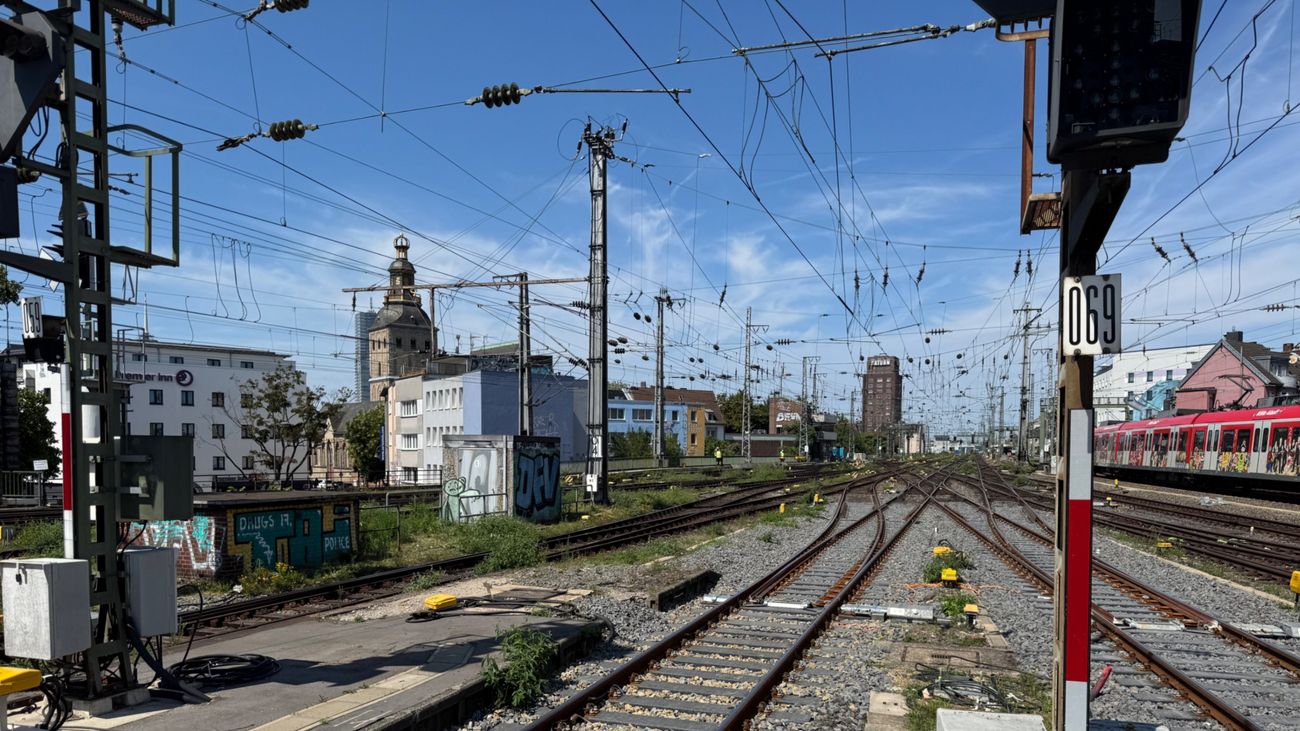
I spend a lot of my life on trains: I am not complaining as I quite enjoy flitting from Norwich to Neasden and Basingstoke to Burnley. I like looking out of windows and tend to get quite a lot done – this article, for example, was written entirely on a train. Over the past month or so my travels have included trains to Copenhagen, Stockholm, Scotland, Devon and a short visit to Münster in Germany, a town famous for (at least) two things. Firstly, because it was temporarily overtaken by a group of Anabaptists in 1534 who insisted that all the citizenry should disrobe in preparation for the second coming. Secondly, because it is the place where I was born many years ago – though more recently than the 16th century.
Much as I am sure you would like to hear me chat about gazing out of the window at the joys of northern Europe I will spare you that excitement and instead concentrate on a journey to the west coast of Scotland. This particular trip begins in Milton Keynes which is often seen as a bit of a joke: not by me as I have great fondness for the chessboard of boulevards and abundance of trees. It is also the home of one of my favourite stories.
Did you know that the original size of all the roundabouts (and there are about 130 of them) that link all the gridded streets together was modelled on the size of the chief planner’s coffee mug? This was a long time before computer-aided design, and everything was drawn using tracing paper and Rotring pens so it was a simple thing to just draw around a coffee cup!
I hope said cup holds a place of honour in the Milton Keynes Municipal Hall of Fame. Sadly, however, I have a horrible suspicion that this might be one of those apocryphal stories that could be easily debunked by a spoilsport with an internet connection.

The swaggering pigeon
Moving back to the point, walk with me to Milton Keynes Central Station. To be more precise, Platform 5 at Milton Keynes Central Station. There are the usual offices – kiosks selling soggy croissants and burnt coffee, uncomfortable benches and the odd bumptious pigeon (the sort that swagger and look as if they would spit in your eye for a couple of plain crisps). Just across the line is a deep siding that has been colonised by Buddleias, birches, and balsam. Scrubby goat willow has sown itself in damper corners and the brambles are sprawling like drunken Cossacks.
Nobody has planted this; in fact Network Rail probably look over their spectacles in disapproval at such behaviour, but this is the result of a perfect storm – one that is not unique to Milton Keynes but affects every railway in the world. Railways have a lot of empty, free draining ground, weeding is extremely labour intensive (thus expensive) and trains are very effective gardeners. The slipstream of a speeding locomotive whisks up seeds and carries them along thus spreading plants further and faster.
As a result, wherever you travel by rail, a rich collection of self-sown plants will follow.
We leave the delights of Platform 5 behind us and the first part of this journey is relatively uninteresting, involving whizzy trains that carry us beyond Birmingham and up into the spectacular Pennines and Lakes towards Scotland. However, wherever we pause there are bits of unloved ground where plants have magically appeared. Willowherb at Warrington Bank Quay, convolvulus in Carlisle, evening primrose in Penrith, knotweed in Kirtlebridge and ox-eye daisies in Oxenholme. And buddleia everywhere: from Birmingham International to Borehamwood and Barrow-upon-Soar to Betws-y-Coed. This is a plant that loves a bit of brownfield and thrives on bombsites and sidings.
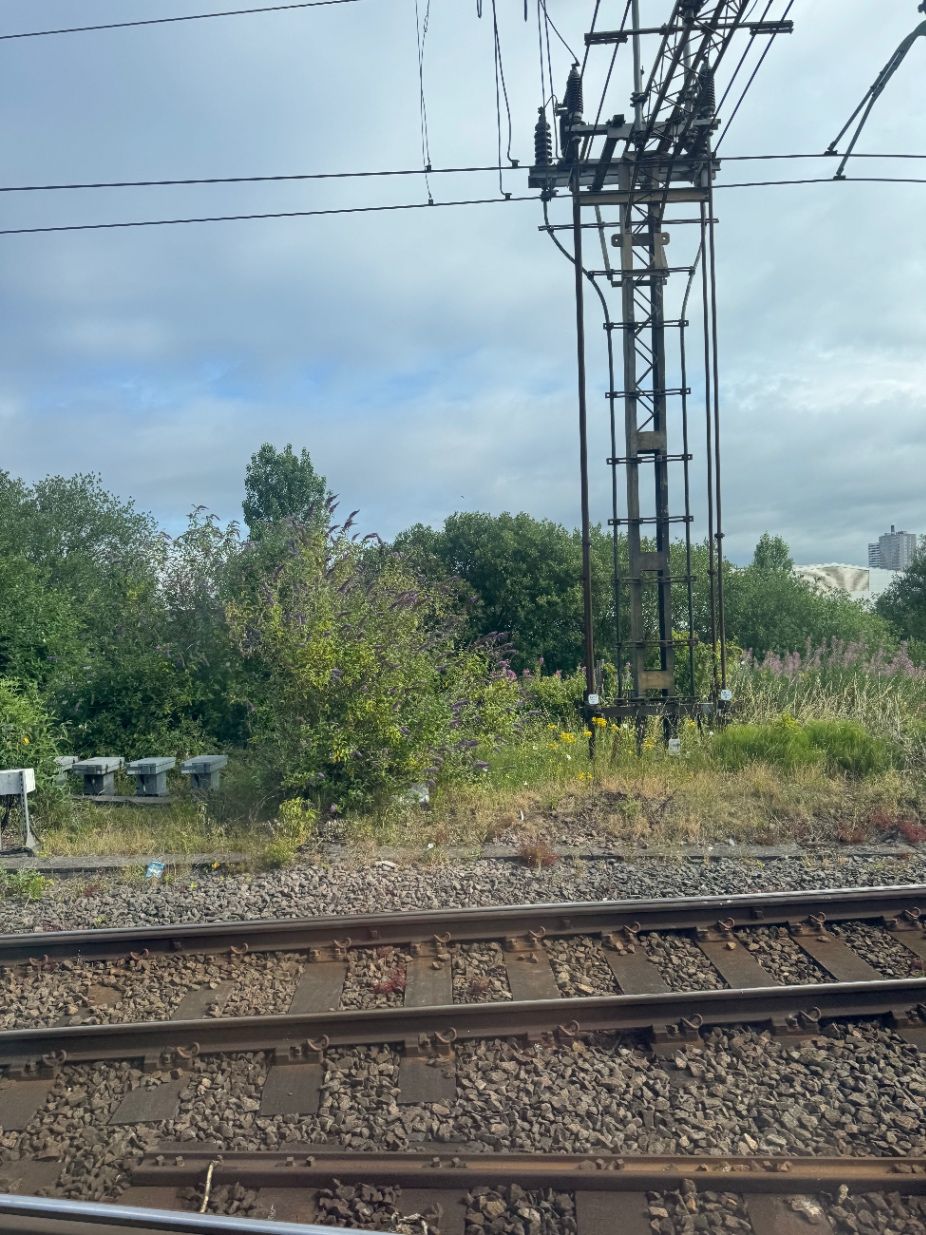
Diddly-dum, diddly-dum
Failte gu Alba: we cross the border and rumble our way into Glasgow Central. I come here quite a lot as it is the home city of Horatio's Garden, Scotland. I designed the garden at the Spinal Injuries Unit here way back in 2016.
We shift stations and board the rattly two carriage diesel that carries you along the Clyde and up into the Highlands. Those of you with a few years under your belt will remember the rhythm of train wheels – diddly-dum, diddly-dum, diddly-dum, diddly-dum. It doesn’t often feature any more with high speed trains and smooth suspensions but this is the noise that carried one of the few snippets of poetry I can easily remember:
This is the night mail, crossing the border
Bringing the cheque and the postal order.
Letters for the rich, letters for the poor
The shop at the corner, the girl next door.
W.H. Auden’s words (and Benjamin Britten’s music) accompany a film called The Night Mail which was essentially an advertisement for the Post Office. A long time before Fujitsu, Horizon and Mr Bates appeared.
Birch and midges
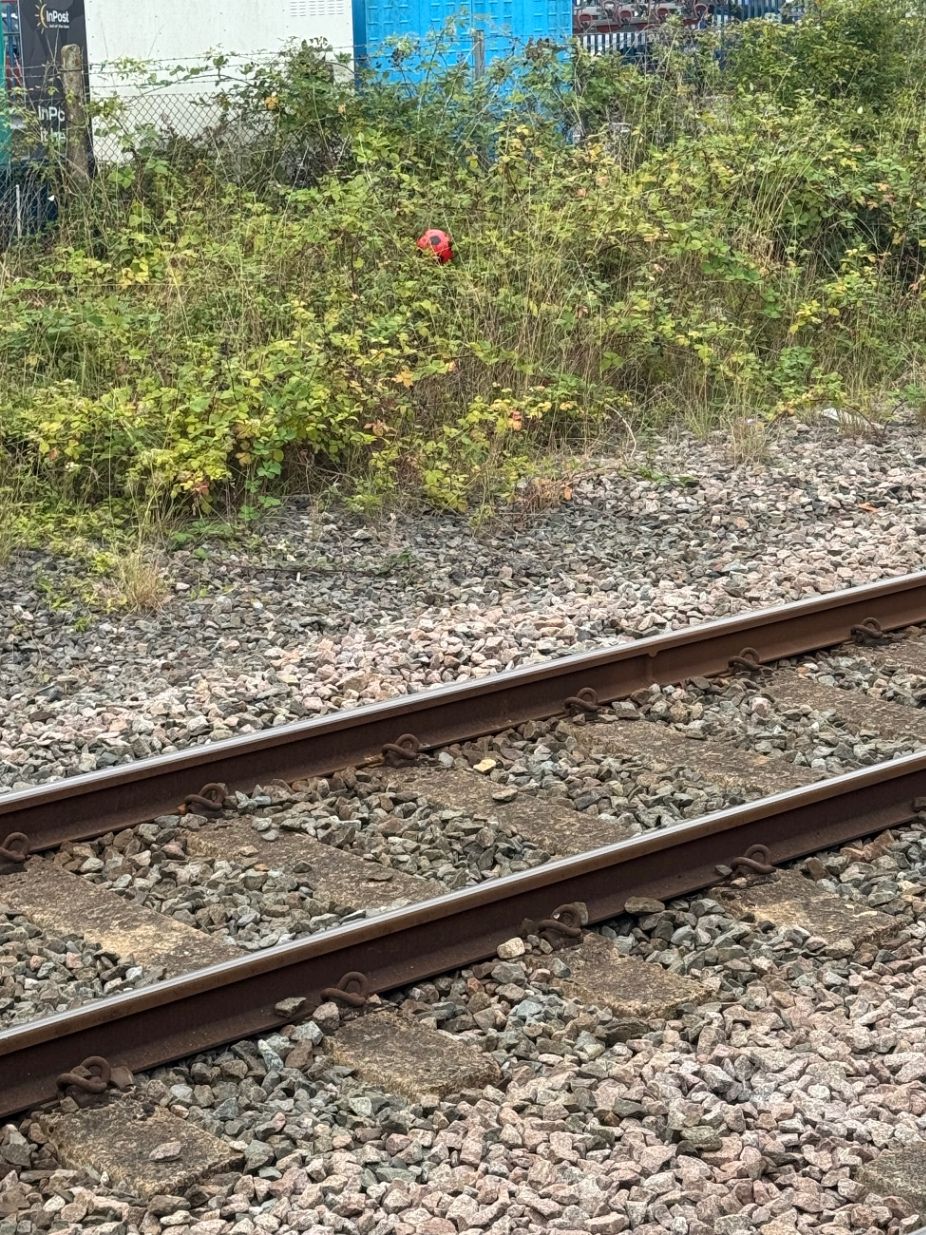
The mood has changed on this line. It is much smaller and there is less empty ground for the self seeders to colonise. Instead the native greenery on the banks presses closer. We pass through evocatively named stations where on some platforms an effort at gardening has been made, less so at others.
At Garelochead there is a single pot with a yucca.
At Helensburgh Upper there are youths without shirts sharing bottles of Bucky (Buckfast Fortified Wine - made by monks, drunk by Scottish people seeking recreational oblivion).
Tyndrum has rain and many midges.
The Falls of Cruachan has a beautiful name and two pink Phormiums in half barrels.
Crianlarich is the height of Highland sophistication with a tea room and an accessible toilet.
As we trundle ever northward the birch and rhododendron push against the train so that the branches clatter on the windows like mistuned xylophones. It is a Tolkienish fantasy where the trees are nudging the ramparts of civilisation: one more shove (or fewer trains) will mean that the rails are engulfed and the network is surrendered to the greenery.
Awe inspiring
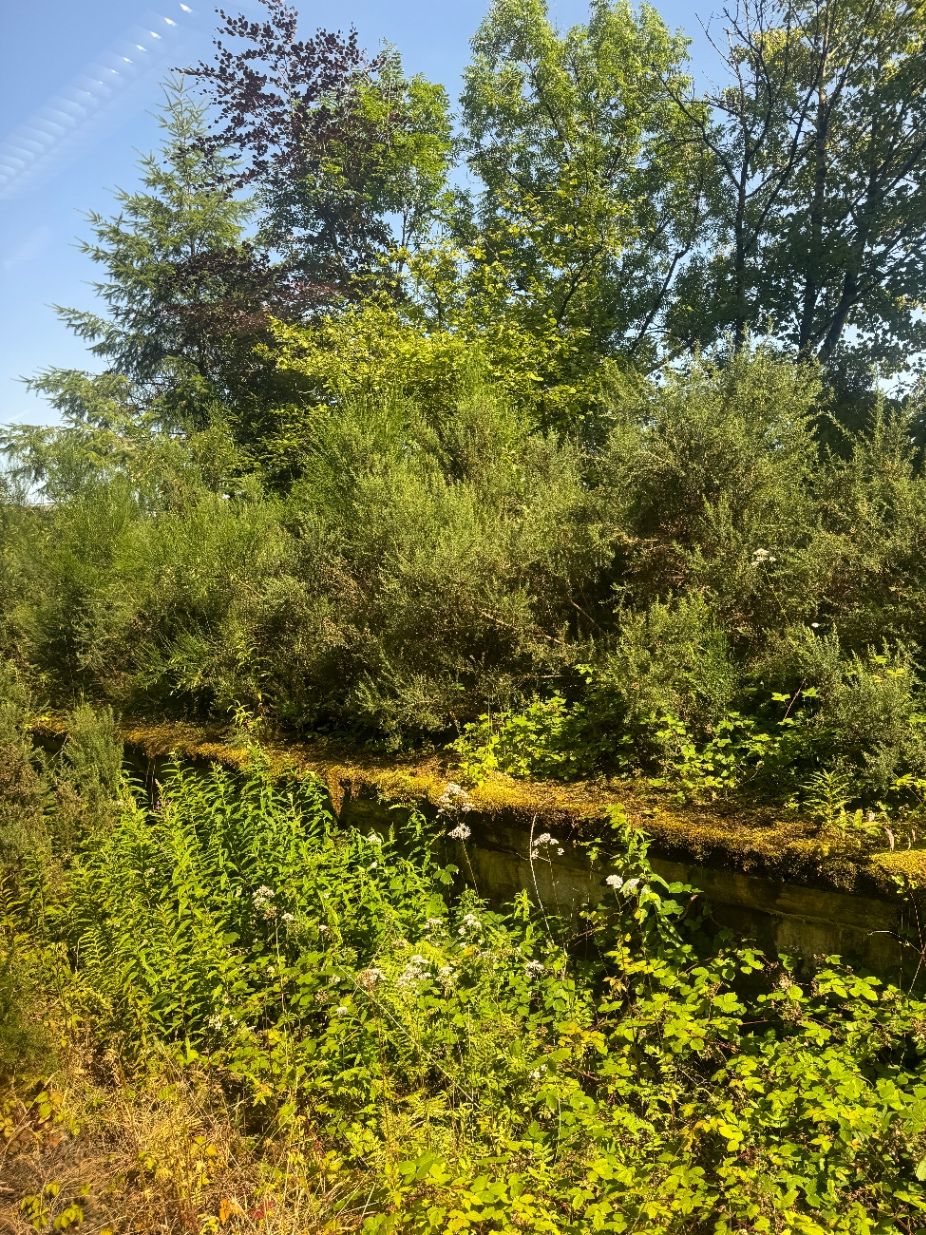
This is admirably demonstrated a bit further up the line at Loch Awe. Once upon a time, this place was obviously much busier. There would have been passengers, baskets of produce and porters keeping the commercial blood of the Highlands flowing. Today the burden of holiday and business traffic is shared with the roads and the internet so Platform 2 has been very effectively reabsorbed. Not rewilded as that changes the feel, raises hackles and sounds like a deliberate act. Instead this is the simple result of humankind losing interest in an area and nature reoccupying the place. A similar sort of thing happened at Machu Picchu and Angkor Wat when the jungle returned and draped itself all over the (spectacular) efforts of man. This is that but on a gentler, more Scottish scale. Reabsorbing in action...
There is gorse lining the places where there were benches. The edge of the platform once occupied by a stern stationmaster with whiskers and a pewter fob watch is now home to a barrage of willowherb and bramble. The reabsorbing process follows these steps:
The trains no longer need the platform so the people withdraw.
Moss grows (it is a very damp bit of Scotland after all)
The concrete platform cracks, the moss (mixed with dust and fallen leaves) decays and becomes compost. This compost fills the cracks, seeds blow in and germinate in the crevices and, before you know it, there are shrubs, perennials and annuals all over the place. Insects move in, birds pitch up to eat the insects, decide to stay and make nests, bigger birds fly in to eat the little ones (sorry but nature is not always kind), rabbits, mice, voles and sundry small mammals arrive etc etc etc.
Life happens. Nature 2, People 0.
Next stop is Oban. Once very glamorous, now a little seedy and smelling of fresh fish and cheap fudge. I have stories about Oban involving Scottish dancing and a man whose trousers spontaneously descended much to the amusement of my children but they are not really anything to do with gardening. We get on a ferry and tootle off to the Isle of Colonsay (about which I will tell you more on another day).
- Listen to James in conversation with Jane Perrone about this article in the Deep Dive podcast.