What is the greatest 'garden book'?
So often garden writing is writing about gardening, but Sandra Lawrence explores the atmospheric genre of writing about gardens. As settings for love, loss and war, or as love letters to a place, here are four novels to put on your list for the darker months.


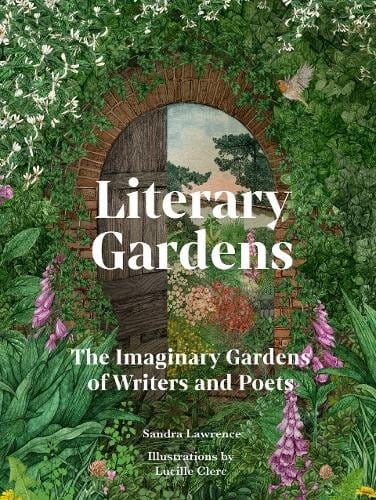
I had this problem last year while writing Literary Gardens – the imaginary gardens of writers and poets – and I'm still not sure I nailed it. In fact, I know I didn't nail it, not least because for space reasons I had to leave out at least three personal favourites. I also know I'm on a hiding to nothing here, as no one is going to agree with my choices, but it's Book Month, and with the nights drawing in, beckoning us to cosy up by the fire with a cup of cocoa and a good read, let's kick off the debate.
Now, so we won't be here all day, I'm going to narrow things down a bit. I've already talked about my obsession with the vast number of gardens in children's fiction, but just for this post, I'm also going to lose non-fiction, short stories, poetry and plays – sorry, Jamaica Kincaid, M. R. James, Italo Calvino, Alain-Fournier, William Shakespeare, Oscar Wilde, Vivant Denon and Jorge Luis Borges, whose interpretation of gardens is particularly wild.
That still leaves a ridiculous amount of choice, so, for the moment, we'll also temporarily bench regular novels where the garden is so important it becomes a major character, and great novels with gardens in them.
Bye-bye, Daphne du Maurier, Patrick White, Agatha Christie, Sandra Cisneros and F. Scott Fitzgerald. We will be back…
For now, I've artificially narrowed it down to just novels about gardens, and I'd like to briefly recommend four of my favourites today. Of course, very few of these are actually about gardens.
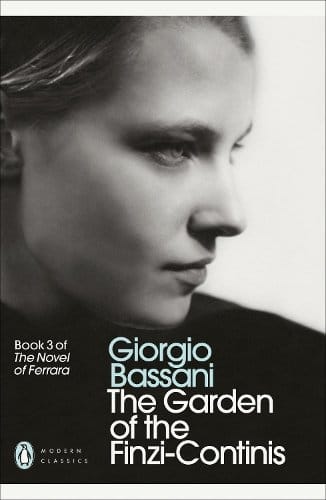
Take The Garden of the Finzi-Continis, by Giorgio Bassani. Many people have suggested that the Barchetto del Duca, a secret garden in the fictional city of Ferrara, is based on Ninfa, the world's most romantic garden.
This claim seems to stem mainly from the fact that Bassani was close to the Caetani family who, several hundred kilometres away from the fictional city of Ferrara, created the famous garden within the walls of a ruined medieval city, but I did buy the idea at first.
Certainly the way the garden is set up in the book – with its high walls, towering trees and a princess waiting to be kissed – could be an Italian fairy tale if it weren't for the gas chambers.
For this is a book about missed opportunities and loss, and the more I read it now, the less Ninfa I find in it. In many ways, the less garden I find in it either, as the Barchetto del Duca becomes a gilded ghetto for the story's increasingly marginalised Jewish and homosexual characters.
It is leafy, beautiful and silent, but outside lies an Italy that will be destroyed, like most of the characters, by World War II. By the way, I am not giving away any of the plot here – you find all this out at the very beginning of the novel. It is a towering book about a garden that isn't about a garden, and I highly recommend it.
I wrote Literary Gardens as a follow-up to a previous book, Lost Gardens. At first this may seem a strange sequel, but The Garden of the Finzi-Continis is an example of why I did that. The sheer number of broken, lost gardens in literature is extraordinary.
The Garden of Evening Mists has become one of my favourite literary gardens. Yet again, it's all about a broken garden, though this time it is at least ostensibly about creating a new one.