Why Flowers Smell - and What Your Lawn Is Telling You
Can you smell Freesias and do you know when your lawn cries out for help? Discover some of the fragrant facts that shape our garden.

I am no scientist
In June I wrote about yellow; this month I would like to explore another subject that fascinates me, and that is scent. I must begin with a caveat, that I am no scientist! A declaration that my long-suffering biology teacher Jean Humber would most certainly agree with. Although thinking back, my GCSE Biology results were not that shabby.

Let’s begin by looking at why plants are scented (spoiler alert here), it’s most certainly not for the benefit of us humans. Scent is a method of attracting pollinators but also can be a way of warning off predators. However, not all flowering plants produce a distinguishable scent, and so these plants must rely on other methods for reproduction.
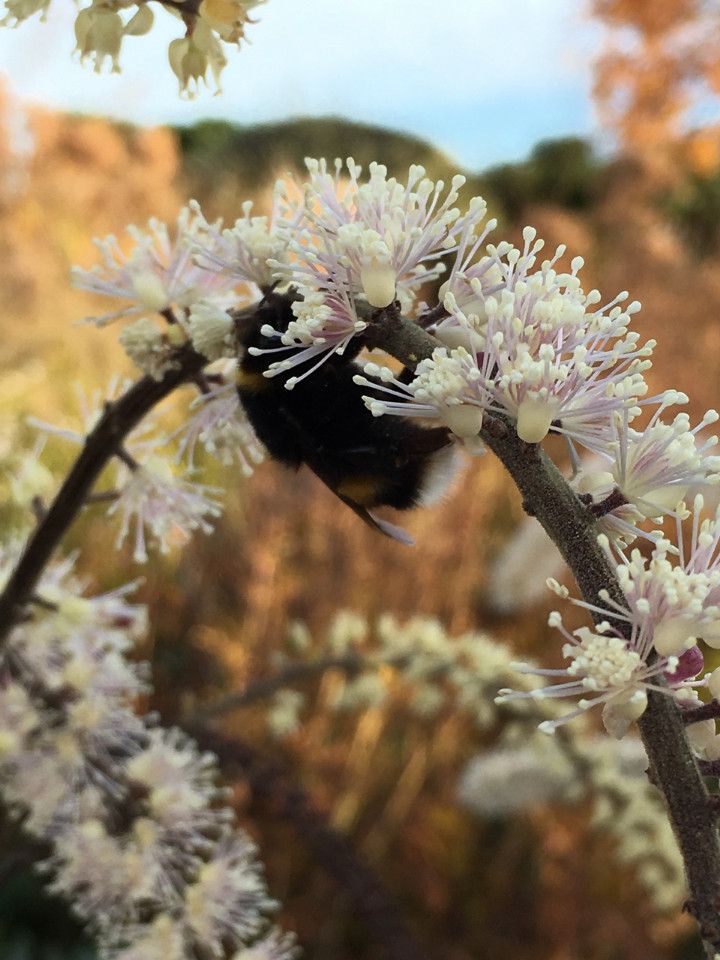
Generally, but not always, scent is produced by glands located in the flower petals and is made up of volatile organic compounds or VOCs. No two floral scents are the same, this is crucial because each flower species is trying to attract specific pollinators; of course, the pollinators are in search of nectar. Sweetly-scented plants will attract birds, bees and butterflies and those not-so-sweetly scented (take a good sniff of an Astrantia for example) will attract flies and beetles. Flowers release the maximum scent at the point at which they are ready for pollination; once pollinated, the fragrance diminishes significantly. Plants that are strongly scented by day are usually pollinated by bees and butterflies, whereas those that are most fragrant after dark, rely on bats and moths for their pollination. Some flowers such as Antirrhinums have a simple blend of approximately seven to ten VOCs in the make-up of their scent, whilst other species such as orchids have approximately 100 VOCs in their fragrance.
When your lawn cries out for help
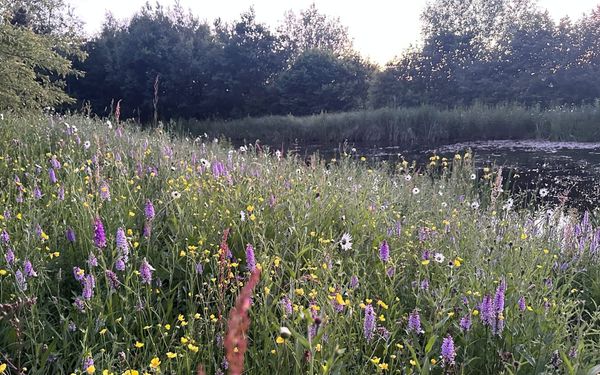
Studies have shown that some plants can also emit a smell when under attack from predators, the theory being that the smell will help to attract the predator of the predator. Agricultural scientists are working on the idea of using these natural, plant-produced chemicals instead of synthetic chemicals for crop protection. If you think this sounds far-fetched then think about the strong smell that occurs when you cut the lawn, this scent is emitted by green leaf volatiles (or GLVs). So, when you are enjoying that evocative fragrance of cut grass, this is actually your lawn crying out for help!
In 1969 a study was carried out that revealed a minority of Europeans have specific anosmia (or loss of scent) when sniffing Freesias. Although the majority of Europeans report that the scent from Freesias is extremely strong, almost overpowering. It was concluded that this inability to perceive the scent is a recessive character. Over 1600 people were tested and results showed that the frequency of the recessive character was higher in those of Eastern European and British Celtic descent (at about 10%) and low in those of Scandinavian, English and German descent (at about 4%).
Scent and memories
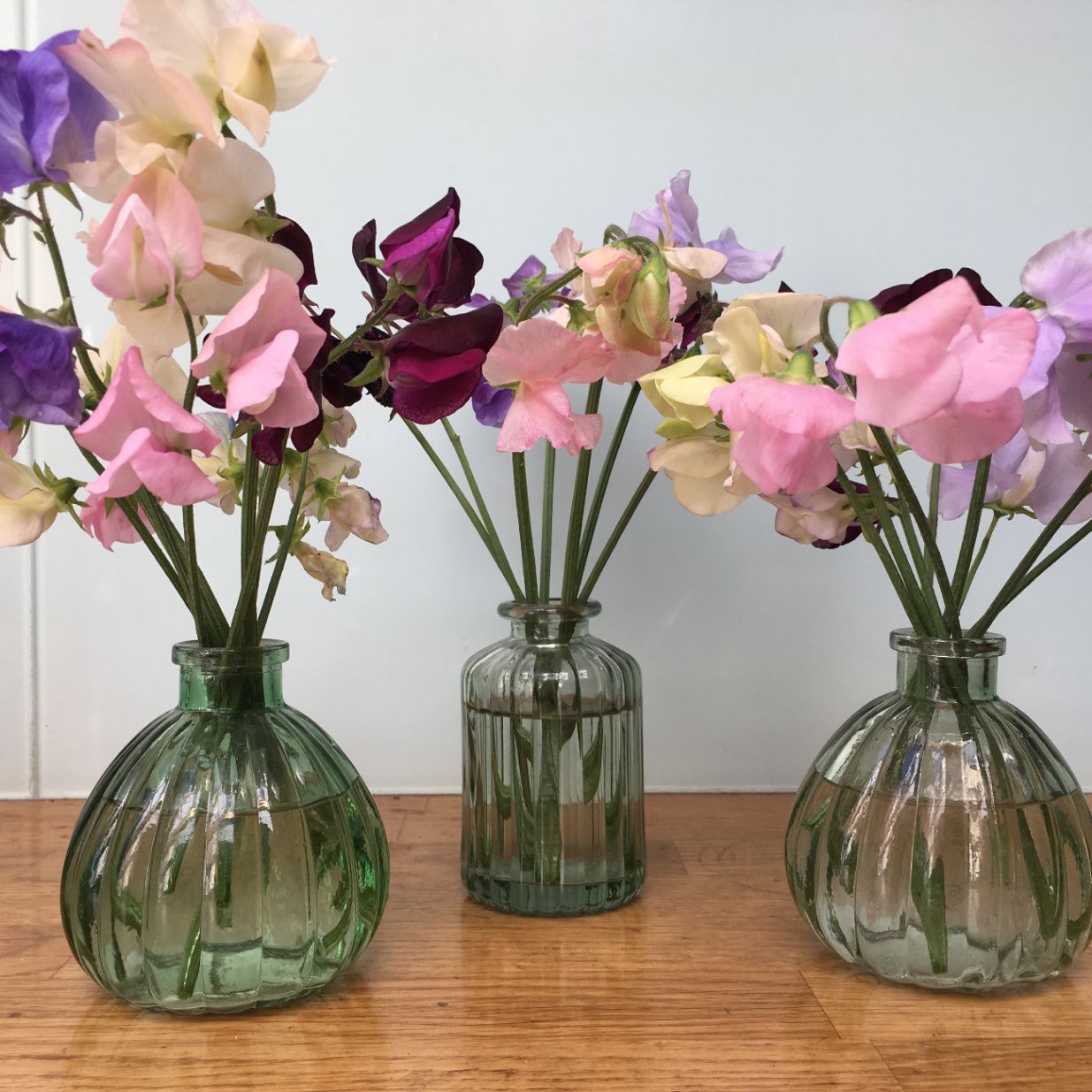
A fascinating study indeed and one that leads me onto the subject of how scent and memory are inextricably linked. How often do you stop in your tracks having smelled something that transports you back to a moment in time, such as childhood? It is thought that smells have a stronger link to memory than any of the other senses. Sometimes referred to as ‘A Proustian moment’, but before I dive into that deep, philosophical rabbit hole, I must return to the garden. There are several flowers whose scent will instantly transport me back to my childhood garden on Exmoor; Rosa ‘New Dawn’ which smothered the fences around the garden, Convallaria majalis (lily of the valley) that inhabited the shady crevices in the walls, Lonicera periclymenum (honeysuckle) that grew prolifically in the hedges and Lathyrus odoratus (sweet peas) grown by my father every summer without fail. One of the strongest and most evocative fragrances is that of the foliage (when crushed) of Artemisia abrotanum (Southernwood or lad’s love as we called it in Somerset). This extremely pungent, aromatic plant has a camphor-like scent and consequently may not be to everyone’s liking. It was most likely used as a strewing herb once upon a time to mask the unpleasant smells and today can be used as an effective moth deterrent.
Fragrant foliage
As with the Artemisia, it is not only flowers that can emit scent. In certain plants, fragrant oils are produced by glandular ducts or hairs on the leaf surface, which when touched release their scent as a defence mechanism to ward off potential predators. Brush your fingers over a tomato leaf or crush a blackcurrant leaf and you get an intense smell of the fruit. In fact, last winter when moving an old blackcurrant shrub, even the roots gave off a strong fruity fragrance, which was not something I had ever encountered before. Of course, many fragrant leaves are used for making teas, flavouring and cooking.

When designing planting plans, I will always include scented plants, positioning them close to seating, providing an essential uplift in winter and acting as seasonal markers. What would mid-winter be like without Hamamelis or Edgeworthia? Daphnes are obligatory in my plans, especially Daphne bholua ‘Jacqueline Postill’. I will prioritise strongly scented winter bulbs, such as Narcissus ‘Segovia’ or Thalia over the less scented ones. As spring emerges Osmanthus delavayi is a must, with Syringa x persica ‘Alba’ hot on its heels. Damp meadow planting is transformed with Filipendula ulmaria’s sweet summer scent.

Not forgetting trees that have strongly scented flowers, such as Tilia x europaea in high summer filling the air with sweetness (and always covered in bees). Autumn is the time for a very special tree, Heptacodium miconioides, perfect for a time of year that can be a little lacking in scent. I simply cannot leave out Cercidiphyllum japonicum with that distinctive candyfloss aroma that hangs in the autumn air and will transport you to a fairground of the past.
A few more shrubs that I must include are Itea ilicifolia, with the common name of sweet honey spire (I think that says it all); Philadelphus mexicanus has the most delicious citrus scent in June and Syringa meyeri ‘Palibin’ which sometimes flowers twice, is very lovely indeed. For climbers, of course I include Trachelospermum jasminoides with its knock-you-off-your-feet perfume, (ideally suited to a sheltered, south-facing wall) and in contrast Clematis ‘Betty Corning’ with her delicately scented flowers in late spring.
But what do the others think?
I always like to consider the opinions of others and so I began with rosarian Michael Marriott, who worked at David Austin Roses for over 30 years. Michael told me, ‘Roses are second to the tropical, epiphytic orchids in having a wide range of fragrances. Roses can make use of about 500 different oils to make up their fragrance. Usually there will be three or four dominant oils in addition to various others that will add the nuance’.
Michael went on to explain that roses have five basic scents, which are: Old Rose – the classic fragrance (rose oil is a crucial ingredient in many top perfumes). Fruit -a whole range of perfumes that include just about every fruit, from apples and pears to guavas and lychees. Myrrh - not the biblical one but more like Myrrhis odorata. Tea - has the scent of a freshly opened packet of China tea. Musk - this rich and heady aroma comes from the stamens as opposed to the petals.

Many rose varieties, especially the more modern ones, will feature a blend of scents. Interestingly, it is thought that the strength of the fragrance in a rose is affected by the temperature when the flower is at the bud stage. I asked Michael for a few of his favourite scented roses which are: R. ‘Lady Emma Hamilton’; R. ‘Gertrude Jekyll’; R. ‘Buttercup’; R. ‘Hansa’ and R. ‘Rambling Rector’.
I consulted a few more people about their thoughts on scent, starting with nursery owner extraordinaire Derry Watkins, who told me, ‘Scent is low on my list after colour, shape and foliage’. Whereas with flower farmer Rachel Siegfried, ‘Scented plants are really important to me. Imported flowers have had the scent bred out of them in exchange for a longer vase life. Which in my mind feels like a removal of what makes them so special and life enhancing’. She continued, ‘People are surprised and delighted when they smell my flowers, as if it is a new discovery to them’. Rachel’s favourite scented flower? Of course, it has to be the rose, and her very favourite is ‘R. Chandos Beauty’.
I then asked Dan Pearson for his advice on using scent in the garden, to which he replied, ‘Always find a place where it will be harboured or revealed to you. A still place, a warm wall or near surfaces that will liberate perfume; placed upwind so it finds you downwind’. Some of Dan’s favourite scented plants include Magnolia wilsonii, Populus balsamifera, Cistus ladanifer and Rosa eglantine.
Plantsman Keith Wiley told me, ‘I rarely plant for scent alone, oriental lilies in courtyard being one of the few exceptions. I have planted Azaleas and deciduous Rhododendrons like viscosum, atlanticum and arborescens. I will use smaller plants that punch above their weight with a powerful scent, too many to mention but a constant source of delight to sink your nose into’.
Top florist and fellow Scribehounder Simon Lycett shared his thoughts on scent - ‘Having been a florist for over 35 years, I soon realised that the first thing any recipient does when given flowers is smell them! And many modern varieties are rather disappointingly scentless, so for years I have always used fresh herbs and other scented stems as well as flowers, to add extra abundance of fabulous fragrance! Colour is usually the client’s main preoccupation - and sometimes if arranging decorations for a dinner, the need to minimise scent is requested as some people find it overwhelming.
When I asked Simon how important scent is in floristry he replied, ‘Fragrance is SO important – we know how it triggers memories and emotions, and if by adding some scented stems I can transport a client back to a special time, or indeed inspire new magical memories, then I have done my job well! However, there are a few flowers which have a scent that can, even to my greedy mind, become almost too much – newly opened hyacinths are heaven, but when fully opened can be a bit cloying! Likewise, things like Brompton Stock and Lilac – a waft is wonderful, but too much can be – well – too much for my nose! And to my fickle nose, the best scents – Margaret Merril roses, lily of the valley – and freshly cut rocket!’
Robert Vernon from the marvellous Bluebell Nursery in Derbyshire once told me this when I asked him about scent; ‘Alas plant breeders tend to be men who often don’t seem to even consider scent. I presume this is because when selecting for free flowering, or a commercially shorter growing season and flower colour, no one actually considers breeding for scent as well’. ‘I’m on several RHS woody trials panels and I’ve several times asked if we might employ a professional parfumier to join and advise us, for instance when judging Wisteria but that request has so far always fallen on stony ground!’
Fragrance pranksters
I will end this article with two extraordinary plantspeople from the Pacific Northwest whose nursery, Far Reaches is one of the most inspiring places that I have ever been to. They are Kelly Dodson and Sue Milliken. When I asked them about scented plants, they wanted to share their ideas about ‘fragrance pranking’ or the not-so-sweetly scented!
Scoliopus bigelovii (or fetid adder’s tongue) is a big favourite, as according to Kelly, ‘The numerous, finely detailed flowers smell like a wet dog in a high school hockey team’s locker room. Difficult to smell in the garden due to its size, so we keep some in pots for people to smell when we tell them it’s very fragrant. Another prank is to have a friend rub the leaves of Codonopsis, many species have a strong, skunky odour’. He continues, ‘We grow a lot of Podophyllum (or Dysosma depending on your taxonomic preference), these flowers have an undeniable presence, which mimics the compounds of cadaverine and putrescine, whose smell is universally associated with the not-so-recent dead. However, once pollinated by various insects and slugs, the flowers lose their distinctive odour’. Kelly and Sue are just the best, but please don’t let their wicked sense of humour put you off visiting Far Reaches if you happen to be close to Port Townsend.
I would really love to hear about your favourite scented flowers and which fragrances evoke special memories?